


Chassis Lube tips?
Thread Starter
|
Freshman User
Joined: Jul 2006
Posts: 34
Likes: 0
From: Coon Rapids, MN
Chassis Lube tips?
I've always changed my own oil and taken my vehicles in a couple of times a year for grease jobs but now I'd like to start doing the grease job at home too. I guess what I'm looking for are a few tips on what grease to use, how to locate the fittings on my trucks and exactly how to use a grease gun. Thanks in advance for any help.

Postmaster

Joined: Mar 2001
Posts: 4,968
Likes: 3
From: So Cal
Tell us what year and model truck you have. I porbably will screw up the names of things that follow, but if you see one you know what it is...
In general, if you see a Zerk fitting, grease it. Usually they are on the upper and lower parts of the Steering knuckle. Also there is usually one or two on the tie rods from the steering box. Ball joints usually have them and some universal joints have them. Wild wild guess is the front end of the truck has about 3-4 zerks per wheel. I haven't seen any zerks on the rear of my 94 F250 and no zerks on the U joints either.
I like one of the old fashioned hand pump type guns with the big cartridges. Those little hand jobs are handy but you run out of grease fast and the cartridges are more expensive per amount you get.
There are some cool looking pneumatic and electric guns. They might be good but I think you run more risk of popping a boot.
I like to use synthetic grease, usually Valvoline brand. A good name brand dino grease is probably fine. I have heard that Shell Marine grease is very good.
You pump the Zerk with grease until you see the rubber boot around the joint swell a bit. Don't pump so much that the grease oozes out in gobs or so much that you pop the rubber boot.
Wipe each fitting before and after greasing to prevent collecting dirt.
Good Luck,
Jim Henderson
In general, if you see a Zerk fitting, grease it. Usually they are on the upper and lower parts of the Steering knuckle. Also there is usually one or two on the tie rods from the steering box. Ball joints usually have them and some universal joints have them. Wild wild guess is the front end of the truck has about 3-4 zerks per wheel. I haven't seen any zerks on the rear of my 94 F250 and no zerks on the U joints either.
I like one of the old fashioned hand pump type guns with the big cartridges. Those little hand jobs are handy but you run out of grease fast and the cartridges are more expensive per amount you get.
There are some cool looking pneumatic and electric guns. They might be good but I think you run more risk of popping a boot.
I like to use synthetic grease, usually Valvoline brand. A good name brand dino grease is probably fine. I have heard that Shell Marine grease is very good.
You pump the Zerk with grease until you see the rubber boot around the joint swell a bit. Don't pump so much that the grease oozes out in gobs or so much that you pop the rubber boot.
Wipe each fitting before and after greasing to prevent collecting dirt.
Good Luck,
Jim Henderson
Last edited by jim henderson; Jun 7, 2007 at 10:31 AM.
Thread Starter
|
Freshman User
Joined: Jul 2006
Posts: 34
Likes: 0
From: Coon Rapids, MN
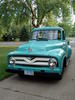
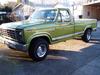
Thanks for the response Jim. I have a 1955 F250 and a 1976 F150 4x4. It sounds easy enough. I think that I'll hit the local Fleet Farm this weekend for a gun and some grease and give the 76 a try.

Posting Guru

Joined: Jun 1999
Posts: 1,642
Likes: 6
From: Northern California
TON10291, in addition to what Jim posted -- here is something to consider. If it has been a long time (or if you are not sure when your Fords were greased) it might be a good thing to remove your old zerk fittings, and replace them with brand new zerk fittings.
A blister packet or small box of fittings is very cheap. You can either get the same as what is on the truck, or various 45 and 90 degree angle fittings if you so choose.
The new fittings will accept grease from the greese gun very easily. You'll know that the suspension part, or joint, has been lubricated properly.
Old fittings sometimes get hard, closed, where the grease can't get into the zerk. Especially when zerk fittings are exposed to years of road salt, grime, gravel splash, road tar and debris, in the snowbelt states and areas of the USA. Canada as well.
Add new zerk fittings, then cap them with a nylon or plastic cap, designed for just this. Usually they are a bright neon red, green or orange color. The caps then completely protect the grease fitting, for decades. The bright color makes it easy to see where all the fittings are located at a glance - nothing is missed, and again, your suspension receives the correct amount of fresh grease, everytime!
Your truck will love it! Chassis lubes are VERY important, and a very neglected, forgotten, task of maintenence. Not only is the grease, fittings, ect. cheap in price, the grease serves a very usefull purpose.
Even as a teenager driving my first musclecar in the mid 70s, I took pride in knowing the car's suspension and U-joints were always lubricated at the correct time and mileage schedules. My Dad taught me this, and was even more strict with this procedure than me over the years.
He also taught me about lubricating and packing shock bushings, ect. To prevent them from becoming brittle and squeeky after time as well. Many Fords were known for having upper and lower control arm bushings become brittle, cracked, and very noisy (going over a speed-bump, ect.) in the late 50s, 60s and 70s. My Dad eliminated this problem, and even helped friends and neighbors to fix or avoid this problem with their Ford cars, stationwagons, Econoline vans, and F-100 pickups back then.
Ed
A blister packet or small box of fittings is very cheap. You can either get the same as what is on the truck, or various 45 and 90 degree angle fittings if you so choose.
The new fittings will accept grease from the greese gun very easily. You'll know that the suspension part, or joint, has been lubricated properly.
Old fittings sometimes get hard, closed, where the grease can't get into the zerk. Especially when zerk fittings are exposed to years of road salt, grime, gravel splash, road tar and debris, in the snowbelt states and areas of the USA. Canada as well.
Add new zerk fittings, then cap them with a nylon or plastic cap, designed for just this. Usually they are a bright neon red, green or orange color. The caps then completely protect the grease fitting, for decades. The bright color makes it easy to see where all the fittings are located at a glance - nothing is missed, and again, your suspension receives the correct amount of fresh grease, everytime!
Your truck will love it! Chassis lubes are VERY important, and a very neglected, forgotten, task of maintenence. Not only is the grease, fittings, ect. cheap in price, the grease serves a very usefull purpose.
Even as a teenager driving my first musclecar in the mid 70s, I took pride in knowing the car's suspension and U-joints were always lubricated at the correct time and mileage schedules. My Dad taught me this, and was even more strict with this procedure than me over the years.
He also taught me about lubricating and packing shock bushings, ect. To prevent them from becoming brittle and squeeky after time as well. Many Fords were known for having upper and lower control arm bushings become brittle, cracked, and very noisy (going over a speed-bump, ect.) in the late 50s, 60s and 70s. My Dad eliminated this problem, and even helped friends and neighbors to fix or avoid this problem with their Ford cars, stationwagons, Econoline vans, and F-100 pickups back then.
Ed

Senior User
Joined: Sep 2004
Posts: 181
Likes: 0
Work the joints when you grease the front. I like to crank the wheels, give each joint a couple pumps of grease, crank the wheels the other way and give 'em a couple more. If the truck has kingpins instead of balljoints, lift the front by the frame and grease them with the weight off the tires. I usually lift the rear by the frame and squirt a little in between the spring leafs -- they're metal, they rub together, can't hurt to lube 'em. If it's a two-piece driveshaft, there's probably a zerk on the slip-yoke. Sway bars may have zerks.
If it's your first time greasing the truck, make sure the undercarriage is clean. Grab a pick and check that a zerk hasn't fallen out or broken off -- if there's no zerk on a joint, poke and scrape around the metal parts, top, bottom, and sides, to see if the zerk-hole might be packed with dirt/crud/old grease.
While you're under the truck, keep a can of water-proof oil handy -- spritz your linkages. (I use BG's HCF, but that's not available in parts stores -- I'm not sure what is.)
For a grease-gun, get one with a pistol-grip and at least a 10" hose.
If it's your first time greasing the truck, make sure the undercarriage is clean. Grab a pick and check that a zerk hasn't fallen out or broken off -- if there's no zerk on a joint, poke and scrape around the metal parts, top, bottom, and sides, to see if the zerk-hole might be packed with dirt/crud/old grease.
While you're under the truck, keep a can of water-proof oil handy -- spritz your linkages. (I use BG's HCF, but that's not available in parts stores -- I'm not sure what is.)
For a grease-gun, get one with a pistol-grip and at least a 10" hose.

Postmaster
Joined: Jul 2001
Posts: 4,956
Likes: 10
From: MD
Originally Posted by IowaTower
I usually lift the rear by the frame and squirt a little in between the spring leafs -- they're metal, they rub together, can't hurt to lube 'em. If it's a two-piece driveshaft, there's probably a zerk on the slip-yoke. Sway bars may have zerks.
 Lubricating the tips of the leaves in the spring packs is an excellent tip.
Mountain Pass
Joined: Sep 2006
Posts: 193
Likes: 0
From: roseville
i have an '80 f150 and was wondering if those two round things on the front side of the rear axle about halfway to the wheel on each side are little plastic caps with zircs under them? If not I don't want to mess with them/ If so, do thjey pry off or unscrew? thanks for any help (2wd)
Trending Topics

Post Fiend
Joined: Jun 2001
Posts: 5,228
Likes: 5
From: Running Springs CA
Those are vents, not grease fittings, that are designed to not let water in. That axle is lubed entirely by gear oil, all the way out to the wheel bearings. Yours is probably a Ford 9".
Jim
Jim
FTE Stories
Ford Trucks for Ford Truck Enthusiasts

10 Things Every Truck Owner NEEDS (2026 Edition)
Michael S. Palmer
Rezvani's Latest Post-Apocalyptic Monster Is a Ford F-150 Raptor Underneath
Verdad Gallardo
Top 10 Most Expensive Ford Trucks Ever Sold on Bring a Trailer
Joe Kucinski
2027 Ford Super Duty Buyer's Guide (Every Model, Engine, & Package)
Brett Foote
Top 10 Ford Truck Tragedies
Joe Kucinski
AEV FXL Super Duty - the Super Duty Raptor Ford Doesn't Make
Brett Foote
Lobo Vs Lobo: Proof the F-150 Lobo Should Be Even Lower!
Michael S. Palmer
Ford's 2001 Explorer Sportsman Concept Looks For a New Home
Verdad Gallardo
10 Best Ford Truck Engines We Miss the Most!
Joe Kucinski
Mountain Pass
Joined: Sep 2006
Posts: 193
Likes: 0
From: roseville
Thanks, Jim. So, it has the two vents at each sideon thwe front half of the axle, and directly behind the drivers side on the back side is a brake line union/splitter with a vent on it as well? that means there are three vents on that axle?

Thread
Thread Starter
Forum
Replies
Last Post
Greywolf
All Things Towing
26
May 14, 2018 09:35 PM
ddmnam
1980 - 1986 Bullnose F100, F150 & Larger F-Series Trucks
2
Oct 13, 2009 08:43 PM
