When you click on links to various merchants on this site and make a purchase, this can result in this site earning a commission. Affiliate programs and affiliations include, but are not limited to, the eBay Partner Network.
Max HP (what is advertised) does not tell the whole story. Not saying, or even implying, but here is a scenario where higher peak HP would not be preferable unless you are consistently doing a specific job, like drag racing. I would prefer the Green curve over the Red one for my purposes.
I really wish there were a standardized format for defining "power under the curve over a defined RPM", such as "average power between 20 and 80% of engine operating range". For instance, if an engine idles at 500 RPM and redlines at 6000, it would be the average power between 1600 - 4900 RPM, at say 100 RPM increments. This would tell a much more meaningful story, JMO. If such a thing exists, I've never heard of it.
Yup i don't care much about peak numbers, i just study the torque curves first, noted the rpm bands where they are climbing and levelled off and then as an afterthought look at the hp the same way. With the core understanding front of mind that Torque being the total work potential, HP being the speed of work,....the work number and where it is in the rpm band is the most important for what trucks do imo.
other differences 10r100 and 10r140
738 ft/lb input shaft vs 1050 ft/lbs
10r100 first 3 gears a little deeper, the rest nearly identical
weight, can't recall but i think it's closer in weight to the 1/2 ton 10r80 (590 ft/lb input) than the 10r140 weight
other differences 10r100 and 10r140
738 ft/lb input shaft vs 1050 ft/lbs
10r100 first 3 gears a little deeper, the rest nearly identical
weight, can't recall but i think it's closer in weight to the 1/2 ton 10r80 (590 ft/lb input) than the 10r140 weight
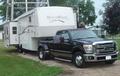
That alone would make a 6.8 a no go for me, if I didn't work my SD trucks hard I would stay with a F150, we have a F150 at our home base that we use for light duty hauling and the F350 gets parked until we need it.
Denny
That alone would make a 6.8 a no go for me, if I didn't work my SD trucks hard I would stay with a F150, we have a F150 at our home base that we use for light duty hauling and the F350 gets parked until we need it.
Denny
so Ford undersized the bulk fleet work setup? Or did they just slap the diesel tranny behind the 7.3 to get it out the door in 2020 and then come up with more suitable yet still well over spec input shaft in 2023? And as 5-star found out the combo put more power to ground, which Ford prolly already knew...what could they be thinking putting such a light duty transmission behind the 6.8???? Retards eh???? Hahaha
I find the whole 6.8 vs. 7.3 thing pretty amusing really; they are the exact same engine 'cept for the 8% change in displacement and the corresponding power difference. The 7.3 has a forged crank which is a stouter pce but it really doesn't make any functional difference unless the 6.8 cranks start braking under long term use....which I doubt. The minor difference in compression ratios and bore vs. stroke are negligible. I'm sure the 6.8 will prove to be a fine engine as is the slightly larger and more powerful 7.3
As far as the trannies go; Ford didn't "slap in the diesel tranny behind the 7.3 to get it out the door in 2020" nor is the 10R100 "more suitable" as evidenced by the fact that they still use the 10R140 behind the 7.3 in the F350 and F250 Tremors......there must be a reason for them to still spec the heavier duty tranny in those applications, right? ;-)
I'm sure the lighter 10R100 has less parasitic losses, perhaps even enough to make up for the power difference between the 7.3 and 6.8 but since I buy my trucks to tow and haul stuff rather than drag race them, I'd still go for the heavier duty 10R140 myself unless I get the 6.8 instead of the 7.3. I'm sure both work fine.
I agree it may take a long time and a lot of work done to see a difference in durability as they are so close to same thing. There apparently is a difference if you drive them both back to back or own both. It’s mostly just fun between guys pissing in each other’s cornflakes.
so half ton gets a tranny built for nearly 200 ft/lbs more at inputs shaft than motor can do, the 10r140 gets behind a motor that does less than half the input rating and the 10r100 gets behind motors with 253 to 293 ft/lbs less than input rating and anyone would worry? It’s more right sizing and improving drive dynamics and efficiency imo. I’ll take that and the deeper first 3 gears regardless of motor, just logic based reasoning verified by the drive reports.
so fleets don’t work their trucks as hard as the regular people? Ford made a mistake? Or correct one? 😉
Last edited by 26 Peasant Ranch; Mar 26, 2026 at 05:39 PM.
As far as the trannies go; Ford didn't "slap in the diesel tranny behind the 7.3 to get it out the door in 2020" nor is the 10R100 "more suitable" as evidenced by the fact that they still use the 10R140 behind the 7.3 in the F350 and F250 Tremors......there must be a reason for them to still spec the heavier duty tranny in those applications, right? ;-)
They do spec the 10R100 behind the 6.8 in F350 applications though. I am willing to bet on average the commerical XL 6.8 F350 buyers work their trucks as hard if not harder than retail buyers of the 7.3 F350. I'm sure compromises were made to make the 100 but it would be company ending level of brand-suicide if they knowing built a more disposable transmission that's widely used by fleet buyers.
Last edited by twobelugas; Mar 26, 2026 at 05:52 PM.
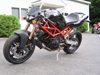
As someone who owns a dyno ( motorcycle) I always try and shop motors based on the curves, I want to see a good smooth curve and torque where I will plan to be.
Comparing the 6.8 curves and stock dyno power ( runs from 5-star) I am sure stock will be fine for me and if not there will be tunes available. In stock trim you can see both engines are done by 5000rpm in stock trim with peak torque right around 4000rpm
I find the whole 6.8 vs. 7.3 thing pretty amusing really; they are the exact same engine 'cept for the 8% change in displacement and the corresponding power difference. The 7.3 has a forged crank which is a stouter pce but it really doesn't make any functional difference unless the 6.8 cranks start braking under long term use....which I doubt. The minor difference in compression ratios and bore vs. stroke are negligible. I'm sure the 6.8 will prove to be a fine engine as is the slightly larger and more powerful 7.3
This entire thing with having two gas engines that are so similar and two different transmissions to go with them is amusing at best, odd really.
I understand in the past Ford always had two gas engines at the same time for the Super Duty line, be it 5.4 v8and 6.8 v10, or 6.8 V10 and 6.2 V8, or 6.2 V8 and 7.3 V8, now 6/8 v8 and 7.3 v8, but they are the only one that does it, Ram at one point offered both 5.7 and 6.4 Hemis are the same time but that was only for a few years and they have since consolidated down to one gas engine with one transmission for that engine, same as GM. Maybe when they were running all SOHC gas motors one could argue the 6.8L V10 was an upgrade for those who want to tow more, but now they are back to OHV engines again, there is no penalty in low end torque anymore.
Is there a contractual reason Ford has to have two SD gas v8s at all times?
Last edited by twobelugas; Mar 27, 2026 at 01:13 PM.
This Hennessey Takes the Expedition Tremor's Off-Roading Capability to the Next Level
Slideshow: The VelociRaptor Expedition gains a lift, upgraded suspension, Brembo brakes, and trail-ready equipment while retaining the stock 440-horsepower EcoBoost V6.
Rezvani's Latest Post-Apocalyptic Monster Is a Ford F-150 Raptor Underneath
Slideshow: Called the Fortress, the 850-horsepower pickup combines Raptor underpinnings with military-inspired features, survival equipment, and a starting price of $285,000.