When you click on links to various merchants on this site and make a purchase, this can result in this site earning a commission. Affiliate programs and affiliations include, but are not limited to, the eBay Partner Network.
Flameridge,
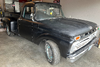
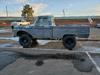
Looking at your pics again, I noticed that the fuel supply line coming to the 2-barrel Holley carburetor has a hose clamp still attached. This would indicate to me that the Previous Owner (PO) had a rubber/plastic fuel supply hose feeding the carburetor. I would suggest THIS may be a prime indicator as to what was the primary reason for the engine fire. All Original Equipment by Manufacturer (OEM) and most rebuilt fuel systems run solid metal (steel lines) or at least stainless steel braided lines up stream from the fuel pump, where the fuel pump boosts the line pressure and the line is subjected to higher heat exposures up and over the engine. The increased pressures and heat are also the reasons not to install an inline fuel filter between the fuel pump and carburetor. Installing an inline fuel filter between the tank outlet and the fuel pump places it low - out of the heat - opposite side of the exhaust - and only has gravity-fed fuel pressures to deal with - a better and safer option.
Realize too, the Offenhauser intake manifold is also a pricey, high performance part. I'd try to clean and salvage it.
I am not too sure the Holley is salvageable....but maybe....
BarnieTrk
Here's how they did it originally. There is even a bracket on the one bolt of the thermostat housing that holds both the fuel and vacuum advance lines where they pass in front of the valve cover to keep vibrations to a minimum.
Here's how they did it originally. There is even a bracket on the one bolt of the thermostat housing that holds both the fuel and vacuum advance lines where they pass in front of the valve cover to keep vibrations to a minimum.
That makes sense. I could add a bracket of some kind.
I'd suggest checking the brakes, rubber lines, fluid condition, etc. When I started working on cars (air cooled VWs) I had a book by John Muir that emphasizes - Make sure you can stop before you worry about getting it to go! If not, it's easy to forget in the excitement of hearing it run for the first time. He also said to always tie your hair back before leaning over the fan belt. That was the 60s.
I'd suggest checking the brakes, rubber lines, fluid condition, etc. When I started working on cars (air cooled VWs) I had a book by John Muir that emphasizes - Make sure you can stop before you worry about getting it to go! If not, it's easy to forget in the excitement of hearing it run for the first time. He also said to always tie your hair back before leaning over the fan belt. That was the 60s.
Makes total Sense. Replaced the master cylinder today and filled it with fluid. The brakes are working much better after all that. I live on a hill and wanted to be able to stop when I finally take it out of the garage.
I took a picture of some valve stem seals. I believe these are for a 240/300 6 cylinder. If you look close many of them even have the FoMoCo logo inside of a small oval molded into the rubber. These are what I mentioned live underneath the valve springs under the valve cover. To get to them a person has to remove the keepers and retainers and lift the springs off, which would let the valve fall. Might not be a problem if the piston is at TDC but if it's well down in the hole you can actually drop the valve down into the cylinder. That usually requires further disassembly i.e. removing the cylinder head. To avoid that you can rotate each piston to TDC before working on its related valves. A person can also pressurize the cylinder through the spark plug hole using compressed air to hold the valves in place. Or you can work a clothesline cord into the spark plug hole temporarily filling the cylinder partially so the valve can't drop so far. Might not be a concern in this case but a decent engine fire can at a minimum sometimes warp the rubber if it doesn't outright melt. Warping is usually enough to compromise them which can lead to additional blowby getting into the rocker arm area which can lead to sludge buildup and other problems like carbon build up on the valves and increased oil consumption. Just something to be aware of.
I took a picture of some valve stem seals. I believe these are for a 240/300 6 cylinder. If you look close many of them even have the FoMoCo logo inside of a small oval molded into the rubber. These are what I mentioned live underneath the valve springs under the valve cover. To get to them a person has to remove the keepers and retainers and lift the springs off, which would let the valve fall. Might not be a problem if the piston is at TDC but if it's well down in the hole you can actually drop the valve down into the cylinder. That usually requires further disassembly i.e. removing the cylinder head. To avoid that you can rotate each piston to TDC before working on its related valves. A person can also pressurize the cylinder through the spark plug hole using compressed air to hold the valves in place. Or you can work a clothesline cord into the spark plug hole temporarily filling the cylinder partially so the valve can't drop so far. Might not be a concern in this case but a decent engine fire can at a minimum sometimes warp the rubber if it doesn't outright melt. Warping is usually enough to compromise them which can lead to additional blowby getting into the rocker arm area which can lead to sludge buildup and other problems like carbon build up on the valves and increased oil consumption. Just something to be aware of.
Thank you for the information. I did some cleaning before I put the valve cover on.
For me, the biggest challenge is learning as I go. Once I figure out what my issue is, then I need to figure out how to fix it. I usually do not have the correct tools or supplies and have to purchase whatever is needed. It took a couple of weeks to fix two bolts in the thermostat housing. Now moving on to the radiator.
Strong work, dude. For me, the fun part about these trucks (for a hobbyist like myself) is learning as I go, and collecting the tools I never had. I love getting help from this forum, and YTU (YouTube University). Keep this pics coming.
Strong work, dude. For me, the fun part about these trucks (for a hobbyist like myself) is learning as I go, and collecting the tools I never had. I love getting help from this forum, and YTU (YouTube University). Keep this pics coming.
I'm just a hobbyist as well. I could not have gotten this far without this forum and YTU. I am looking forward to the day that I can finally hear the truck run for the first time.
This Hennessey Takes the Expedition Tremor's Off-Roading Capability to the Next Level
Slideshow: The VelociRaptor Expedition gains a lift, upgraded suspension, Brembo brakes, and trail-ready equipment while retaining the stock 440-horsepower EcoBoost V6.