When you click on links to various merchants on this site and make a purchase, this can result in this site earning a commission. Affiliate programs and affiliations include, but are not limited to, the eBay Partner Network.
We may be going down the rabbit hole... But I'd stick to the Walmart Maxx batteries and maybe replacing some cables, and/or adding some new grounds... Jack is one of the most honest and true [what is wrong with my electrical] person I've met...
He would be the Yoda of the 6.0 electrical series of films... Check what he asks, and you will be just fine...
David, there's a way of putting together a sound system that looks and performs well. It depends on what your needs are. You could buy the stock cables at a reasonable replacement cost a few years ago. Unfortunately, Ford does not have them now. It looks like your issue is the positive cables. They can be replaced easily by purchasing from a good supplier and hunting down items at reasonable costs.
It depends on your goals—staying in the stock design with improved reliability to a situation where high power is needed and other needs. It doesn't have to be expensive. And somewhat, it depends on what your abilities are. I can stamp out any cables I want with my tools. But I still have purchased cables from a supplier that Scott (diesel_dan) pointed me to. And I have other sources. Many NAPA stores also make up cables to the direct inch as required. Not as nice as some suppliers, but in line with Tractor Supply. I can walk to my Tractor Supply; I know the store.
It depends on what your needs are. A reliable truck to run around is a good start. It looks like the previous owner took some shortcuts for his problem. If the base cables are good, and you can crimp or solder lugs onto them, you might be able to use what you have. If you know an electrician with good crimpers for the larger cables, he could install lugs that would make these work properly if the cables are not corroded internally. But even if they are, cables to the exact inch can be easily purchased that are better adapted than getting store cables that are limited to available lengths.
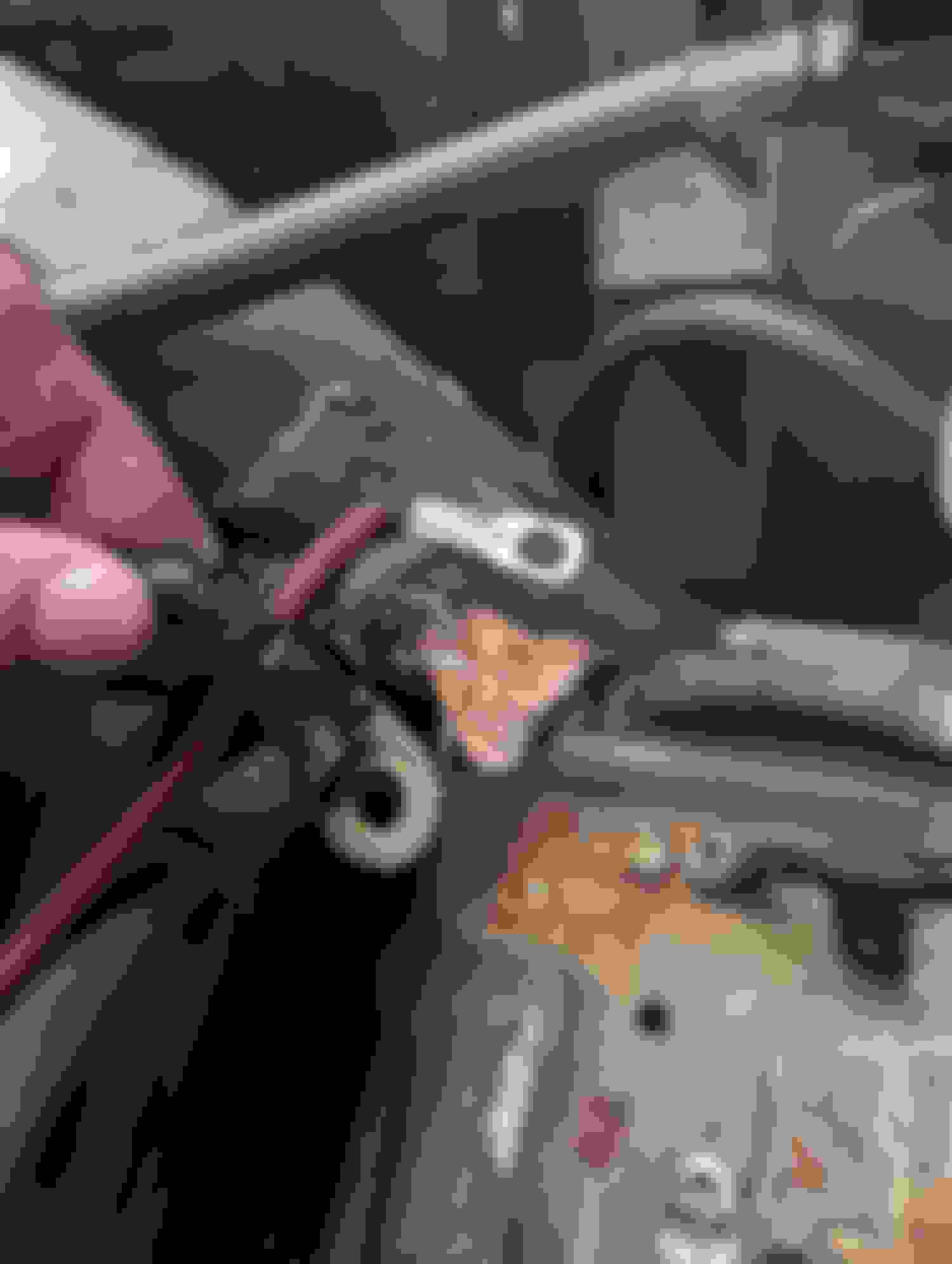
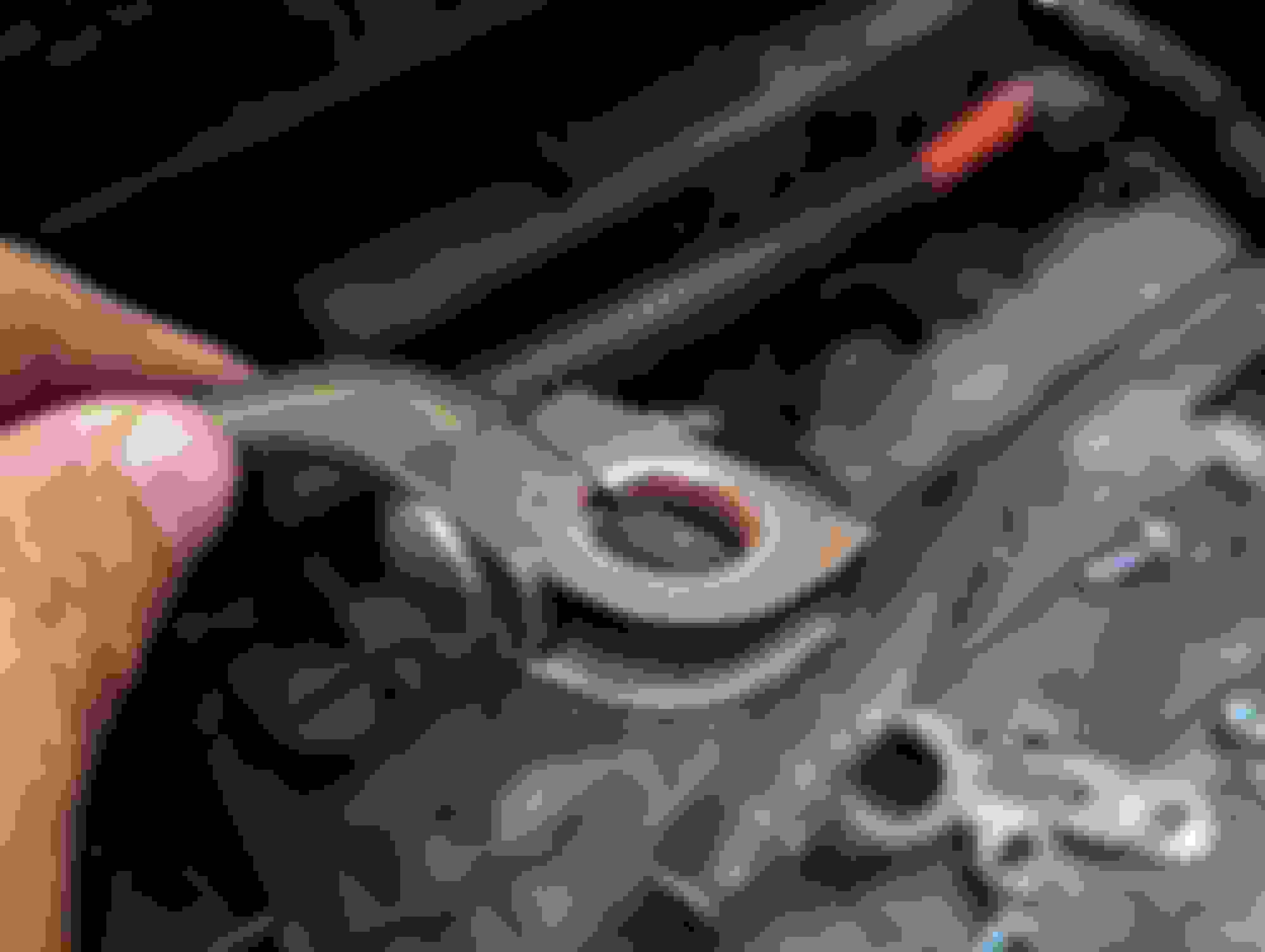
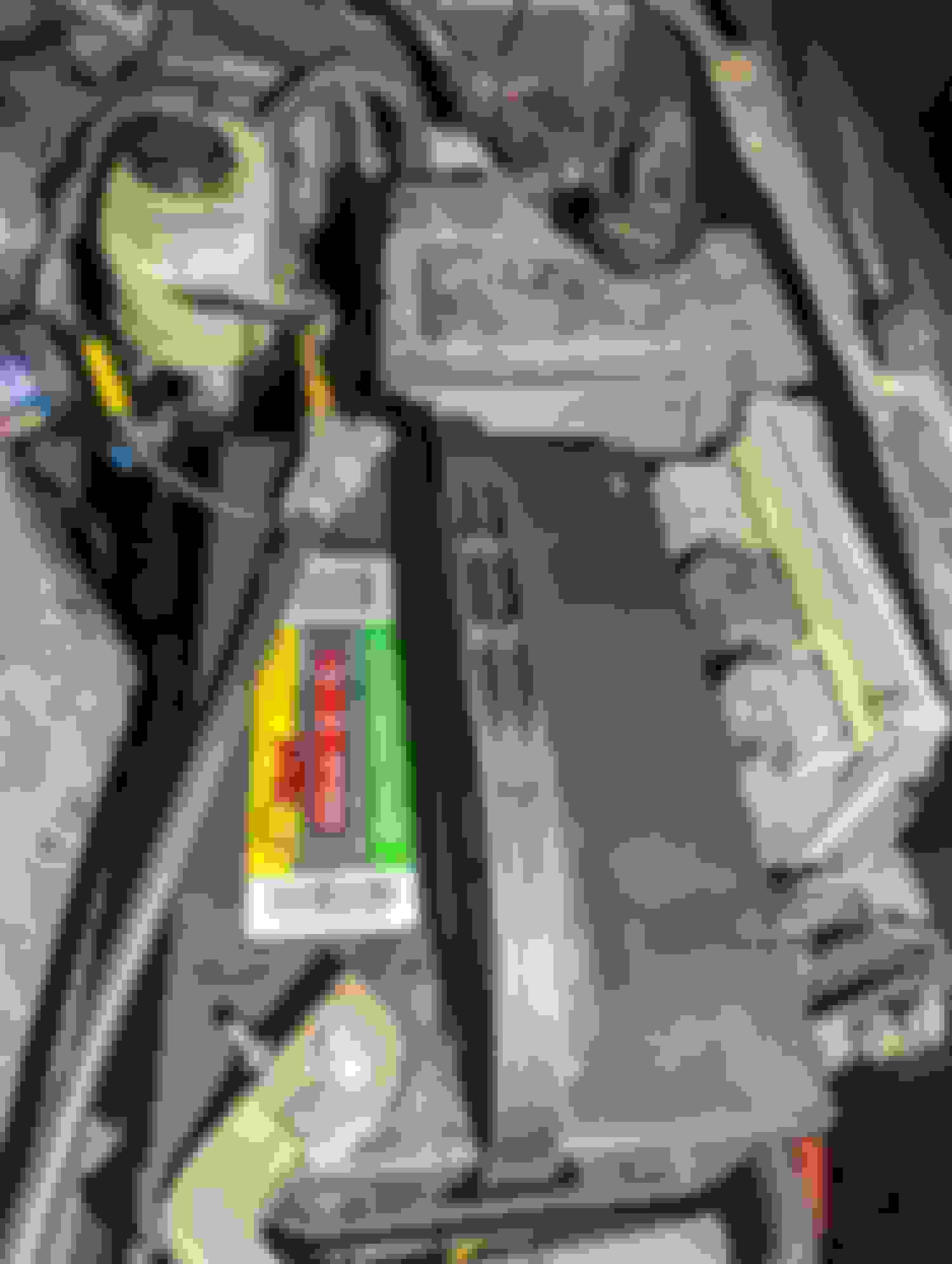
Okay, so I replaced both batteries, replaced the crossover cable, and cleaned the rest of the connections as much as I could. For the crossover, I used a 2 gauge battery cable from AutoZone that was just long enough. The good news is, the battery voltages now match and there is continuity between the positive terminals. There is also continuity through the negative terminals through the ground system. When I tried to start it, all the gauges acted normal, including the fuel gauge and the starter sounded stronger than it ever has. The bad news, it still didn't start. I don't know if the not starting is unrelated to the electrical, or if there is a lingering effect, or if something is still wrong. The only theory I can come up with is electricity to the fuel pump but I would think that is cured. The positive terminal on the driver side looked a little melty. I used the connection built into the battery cable I used at the crossover to replace it Pre clean up on the passenger side. The starter cable, from the alternator, and a stereo add on Cleaned up negative terminal on the drivers side. Cleaned up negative terminal on the passenger side Passenger side final. You can see the other end of the crossover attached here as well as the starter, alternator, and stereo. I had to reuse this connector since the ones I had would only hold up to 2 gauge, but I cleaned it thoroughly. Driver Side Final. You can see how I used the battery cable on this side. Also attached are a cable that probably goes to the fuse box and another small yellow one that I do not know what it does.
I would just spend the money and buy a new positive cable set.
There a few good suppliers that also have fair pricing.
A new cable will come with the positive clamps, the crossover and a line down to the starter.
This will get rid of all that old cable that I am willing to bet is corroded under the insulation.
Myself, I would spend the money on the cabling before getting into the AGM batteries.
Also being it's a dual battery system you want to always replace in pairs.
In case you wondering about the state of the cables you can do this test.
To check the fuel pump - remove the cap on your secondary fuel filter, then remove any standing fuel. Have someone turn the key on to see if the fuel pump will fill the bowl. Have that person ready to turn the key off quickly. You might as well watch for bubbles as it fills.
Get a good scan tool to troubleshoot with. Every 6.0L owner really should have one. The smartphone apps are very inexpensive. ForScan is highly recommended. Your no-start could be due to any number of things. Just be aware that low system voltage can ruin your FICM.
ForScan Lite or Torque Pro are the best choices IMO. ForScan does the best at reading codes. and this can be very helpful. You will also need an OBDII adapter. Apparently ForScan is stopping support of ELM327, so the adapter cost might be higher with it (depends on your phone). The BAFX brand adapters work well with Torque Pro (BlueTooth for Android), and they are inexpensive ($35 ish). Torque Prop will work on an iPhone that has iOs 8.0 or better. The BAFX WiFi adapter used to work with ForScan Lite on iOs, not 100% sure anymore with the new ForScan versions.
ForScan website recommends adapters. VGate Vlinker for Android/BlueTooth is inexpensive. The only one they seem to be recommending now for iOs is the (fairly expensive) OBDLink MX+ adapter. For my older version of ForScan Lite, the BAFX brand WiFi adapter (also inexpensive) has worked just fine.... FWIW.
You improved the cable situation. A ways to go for perfect, but serviceable. At some point you need to replace the lug on the cable from the alternator. The one the previous owner put on is too light for the current it carries.
As Mark pointed out, now you need monitoring instrumentation to troubleshoot the starting issue. It's really needed if you own a Powerstroke for all the time. At wait to start, the fuel pump should be easily heard with the door open or the window down.
The risk you have with the discontinuity of the cables between the batteries, and the low voltage of the driver's battery as a result, is a hurt FICM. With the monitoring equipment, you can tell if the power board side is hurt, outputting a low voltage, especially at first start.
Okay, hooked up the scanner and had the following codes
P0403-E0 EGR Valve Position Control Circuit
P0405-E0 EGR Sensor A Circuit Low
P0480-60 Cooling fan 1 control Circuit Malfunction
P1000-60 OBD System Readiness test not complete
P2614-E0 Camshaft Position Output Circuit Open
I believe the first 2 have always been there. The cooling fan one and the cam position are new and the cam position seems particularly like it could be an issue.
I did the FICM test from another post and got the following readings
FICMSYNC - No (could this be related to the cam position sensor above?)
FICM_LPWR - 10.5V
FICM_MPWR - 48.5V
FuelPW - 0.00
ICP - .96V
RPM - 154
Vref - 5V
Thank you Sean. I would like to do that but my goal was a trip this morning so I didn't have time to get that in. I did go ahead and get batteries although ended up with the Maxx rather than the AGM. I will eventually get all the cabling replaced but I did what I could last night to try to get it working. I think it was at least reasonably successful, at least on some metrics.
Thank you Mark. I have a scanner. I did get Forscan this morning. I had a lesser app that didn't show several of the things that are in the FICM testing recommendations. Don't have a helper for the fuel test but I can hear the pump I think and it seems that there might be other issues from the scan
Okay, hooked up the scanner and had the following codes
P0403-E0 EGR Valve Position Control Circuit
P0405-E0 EGR Sensor A Circuit Low
P0480-60 Cooling fan 1 control Circuit Malfunction
P1000-60 OBD System Readiness test not complete
P2614-E0 Camshaft Position Output Circuit Open
I believe the first 2 have always been there. The cooling fan one and the cam position are new and the cam position seems particularly like it could be an issue.
I did the FICM test from another post and got the following readings
FICMSYNC - No (could this be related to the cam position sensor above?)
FICM_LPWR - 10.5V
FICM_MPWR - 48.5V
FuelPW - 0.00
ICP - .96V
RPM - 154
Vref - 5V
Thanks for the data. What was the IPR % duty cycle. With a failed Cam sensor it typically will default to 15%.
Sorry for my mistake. The real default for the IPR is 14% with a bad cam or crank sensor. I corrected my post above. "Old-timers" kicking in!
Looks like it could be a cam sensor (or its connector/wiring). You might also have a FICM issue since that is common when voltage problems are encountered.
PC/ED manual - page 4-26:
No fuel command signal when the ICP, RPM, and VPWR signals are correct usually indicates a loss of CMP signal. Go to PinPoint test V. Fuel PW defaults to 0 with no CMP or CKP signal. The CMP sends the sync signal to the PCM. No Sync while cranking the engine with the ICP, RPM, and VPWR signals correct usually indicates a loss of the CMP or CKP synchronization signal. Without a CKP or CMP signal, you should also see 0 fuel pulse width AND the IPR should default to 14%.
Rezvani's Latest Post-Apocalyptic Monster Is a Ford F-150 Raptor Underneath
Slideshow: Called the Fortress, the 850-horsepower pickup combines Raptor underpinnings with military-inspired features, survival equipment, and a starting price of $285,000.