When you click on links to various merchants on this site and make a purchase, this can result in this site earning a commission. Affiliate programs and affiliations include, but are not limited to, the eBay Partner Network.
As to intent the unit should power my whole house during an outage. I have UPS power on sensitive electric devices such as router and computer intranet. The rest of the items are lights, pumps, freezers, & fridge. Not sure if the Heatpump would take me over my 8KW RMS so that is not part of the current plan.
I expect to use a adjustable 2-groove sheave driving A belts. The pulley and belts are readily available for around $50-100.
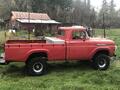
When I went to build my generator (a few years ago) new small Diesel engines were $3000. I got the truck for $1000 and made a HD pickup bed trailer out of the back half (the trailer is awesomeness). The engine and front half were for my generator. Initially was intending on setting up dual fuel and run WVO as much as possible. Since then, the biodiesel movement has dried up the WVO sources and I have just decided to move ahead on this project to get it functioning and outta my shop! This is set up so I can tow it with my tractor or truck.
I'm no expert on generators but I have been on large vessels that had diesel powered generators. They ran very steady at the same rpm probably because they were charging the ships batteries. Regardless of the power demands seemed to stay on the same rpm. There didn't seem to be a feedback loop to a speed controller. Probably the house batteries act as a buffer taking out any demand spikes.
I used to use my truck to yard large logs, some up to 24 inch diameter and 50 foot long up a steep incline that must have been steeper than 45 degrees, up and over the top and on to a flat landing for stacking and eventually for firewood. Using 4x low range 1st gear and no additional throttle...just idling, slipped out the clutch and those big logs came up and over the ridge to the landing like child's play. The engine never bogged down or hesitated. All done at idle. I mention this as testament to the amazing low end torque the 6.9 generates.
Probably wouldn't blink at the generator facing additional power demand. But I really don't know. Might be worth doing some testing once you get it set up with your initial ratio selection before setting up a control circuit.
The closer you can run your system to idle speeds the better IMHO. You reduce fuel consumption, noise and local air fouling...not to mention more economical.
I'm no expert on generators but I have been on large vessels that had diesel powered generators. They ran very steady at the same rpm probably because they were charging the ships batteries. Regardless of the power demands seemed to stay on the same rpm. There didn't seem to be a feedback loop to a speed controller. Probably the house batteries act as a buffer taking out any demand spikes.
I used to use my truck to yard large logs, some up to 24 inch diameter and 50 foot long up a steep incline that must have been steeper than 45 degrees, up and over the top and on to a flat landing for stacking and eventually for firewood. Using 4x low range 1st gear and no additional throttle...just idling, slipped out the clutch and those big logs came up and over the ridge to the landing like child's play. The engine never bogged down or hesitated. All done at idle. I mention this as testament to the amazing low end torque the 6.9 generates.
Probably wouldn't blink at the generator facing additional power demand. But I really don't know. Might be worth doing some testing once you get it set up with your initial ratio selection before setting up a control circuit.
They still would have had speed controllers ALL generators do.
And that is the whole idea of the speed controller to hold the engine at the same RPM regardless of load. The fact you saw the engines change RPM just tells you the governors were doing their job.
They still would have had speed controllers ALL generators do.
And that is the whole idea of the speed controller to hold the engine at the same RPM regardless of load. The fact you saw the engines change RPM just tells you the governors were doing their job.
My plan is to put it together and test it. If the speed changes much when a large load is added, I will install the governor.
If you are going to try it without a governor, I would run the rpms a little higher. Yes you would use more fuel, but these engines are pretty good on fuel anyway. And yes you would be making more hp than you need, but that would mean the varying loads on the generator will have less affect on the gen speed. If you run the engine really slow, I don't think it's going to work correctly even with a governor. When one of the compressors on the fridge or the freezer kicks on, that is a very large instant load. The generator will have to "wake up" and compensate for this sudden load, and it takes time for it to do this. In the mean time your compressor is basically in "brown out" conditions and will not be happy. If you run the engine at higher rpms, it will be more "online" ready to take any sudden surges.
Did this truck happen to have cruise control? You can use it as a governor. You will just have to rig up the speed sensor somewhere, we had a thread on that in here about a couple weeks ago. You just set the cruise and that is your governor. I know of people who take the front of old cars like you did, and run sawmills off them. They need a governor also. They just hook the driveshaft off the transmission to the sawmill, set the cruise control and that throttles it when the saw starts cutting wood. They leave the hood and everything in place and it keeps the engine out of the weather.
All the glow plugs tested out at around 1 Ohm so I will move on to the wiring. Pictures from today status. I plan to use the stock gages for tach, fuel, temperature, and oil pressure.
To me, it's not worth the effort to figure out and wire up the stock gauges. They tell you nothing except "normal" whatever that is. I would go down to the store and get a cheap set of triple mechanical gauges that have real numbers on them. That will be a little less wiring also. You do not need to mess with that spaghetti mess of wiring you have in the picture. Just a couple toggle switches and a couple of wires here and there, and the mechanical gauges.
My plan is to put it together and test it. If the speed changes much when a large load is added, I will install the governor.
We're all familiar with typical job site generators that have controllers. You plug in your skilsaw and initiate a cut, the voltage drops and the engine speeds up to compensate. But on marine installations that are parallel with the battery bank power draws are shared by the batteries and the generator. That means any control needs are more subtle.
Since the 6.9 has about 2.5 times more horse power at idle than your generator requires and the torque requirements are over matched as well the need for speed control will be way more subtle than for an engine more typically matched for the application.
In essence the 6.9 will be like having a big flywheel turning from which stored power in the form of kinetic energy may be drawn without needing an immediate addition of fuel to catch up to that increased demand. In that regard flywheels are kinetic battery storage devices. I'm thinking that the 6.9 will recover well from power demands and trying it costs nothing.
My plan is to put it together and test it. If the speed changes much when a large load is added, I will install the governor.
ANY load changes will affect the engine RPM. And any RPM changes will affect the fequency of the voltage being supplied, it is not the voltage fluctuations that are the issue but the frequency, If all you are powering are pure resistive loads (incandescent lights etc) it does not matter, but if you are powering inductive loads (motors or ANY electronics) you need to stabilize the frequency.
This is very precise control you are not just spinning a saw blade here the controllers/governors make sure the frequency of the supplied power is stable irrespective of the load on the generator and irrespective if that load is resistive or inductive.
If your frequency is not stable you WILL fry electronics and motors.
ANY load changes will affect the engine RPM. And any RPM changes will affect the fequency of the voltage being supplied, it is not the voltage fluctuations that are the issue but the frequency, If all you are powering are pure resistive loads (incandescent lights etc) it does not matter, but if you are powering inductive loads (motors or ANY electronics) you need to stabilize the frequency.
This is very precise control you are not just spinning a saw blade here the controllers/governors make sure the frequency of the supplied power is stable irrespective of the load on the generator and irrespective if that load is resistive or inductive.
If your frequency is not stable you WILL fry electronics and motors.
How does your power company keep the frequency and voltage stable over wide areas where people are adding loads and turning them off and on all the time?
How does your power company keep the frequency and voltage stable over wide areas where people are adding loads and turning them off and on all the time?
Differance is the voltage supplied from the source is not the same voltage at the outlet,
What you get at your outlet typically is 4000 times lower than what is generated at the source.
It is the amperage load that drags down a generator.
When you are supplying at the source 500KV the amperage required to do the same work as 100 Amps (typical house panel ) at 120V is minuscule (24 milliamps to exact).
And the supply is 3 phase while your home is single phase in most cases.
So there is that...
Also, the Generators supplying the system are RPM managed by governors and synchronization within the grid it's self, typically voltages will drop first as the load exceeds the output capacity of the generator, if a generator supplying the system sees ANY RPM fluctuations it will drop out immediately.
The primary goal of the utility is to maintain the frequency minor voltage fluctuations are not a big deal, frequency fluctuations on the other hand....
Frequency fluctuations will fry anything with a chip, which today is absolutely everything just try to name AN ELECTRICALLY POWERED product today without a chip in it, the ONLY thing I can think of is an incandescent light.
So there is that reason for maintaining frequency and then the big one. They need to maintain synchronization with other generators supplying the grid, wanna see a 100-ton Generator do a backflip, just it let fall out of synchronization with the rest of grid.
You guys are hilarious! I do appreciate the information and help! I understand.
I guess I was thinking the 6.9 putting out 60Hp and 100ftlb torque at 1000 RPM would not change RPM when 20Hp and 50ftlb torque resistance was applied but it will. Question I will test is how much will it change.
You guys are hilarious! I do appreciate the information and help! I understand.
I guess I was thinking the 6.9 putting out 60Hp and 100ftlb torque at 1000 RPM would not change RPM when 20Hp and 50ftlb torque resistance was applied but it will. Question I will test is how much will it change.
The actual question is: how much frequency variation will the devices you are going to power with it take before they go up in smoke. That is the real question.
Rezvani's Latest Post-Apocalyptic Monster Is a Ford F-150 Raptor Underneath
Slideshow: Called the Fortress, the 850-horsepower pickup combines Raptor underpinnings with military-inspired features, survival equipment, and a starting price of $285,000.