





1973 Ford brake trouble

Thread Starter
|
5th Wheeling
Joined: Apr 2021
Posts: 27
Likes: 0
From: Las Vegas, NV
1973 Ford brake trouble
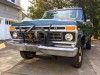
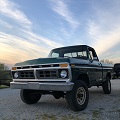
Hey guys, this is my first post, and it is about the brakes on my truck. I have been referencing this website for a while and figured it's time I started actually participating. Anyway, my 1973 f100's brakes have been acting real funny recently. About a month ago I replaced the front passenger wheel cylinder that had gone out and then bled them. After that they worked fantastically. The other day though they started sinking to about halfway before engaging. The weird thing about it is that it is random. Sometimes they work fine and other times they sink to halfway first. I would suspect the master cylinder but that is pretty new at about a year old. It is slightly leaking from the bottom though, but I can't figure out where from because the connections are dry and so is where it connects to the booster. Also, about a year ago both of my rear wheel cylinder's were stripped at the bleeder valves so I took it to a mechanic and instead of putting in new wheel cylinders he just tapped a new hole and put bigger bleeder valves in. there is a very, very slight leak around these. I know that is a lot of information, but if any of you guys can help me out I'd really appreciate it.

Cargo Master


Joined: Jul 2005
Posts: 2,311
Likes: 367
From: Kansas
any leaking of brake fluid can cause issues. If the master is leaking, I would replace it. Wheel cylinders are cheap, no reason to try repairing them by drilling/tapping. Personally I wouldn't do any additional trouble shooting until the master and leaky rear wheel cylinders are replaced and the system gets properly bled.
Tuned
Joined: Apr 2021
Posts: 284
Likes: 85
Replace all the wheel cylinders, including the ones with leaking bleeders in the back. Check the lines for leaks and kinks. Did the master run low on fluid while you did this? It might need bleeding too.
Also, it's not unusual for a master cylinder to start failing after bleeding the brakes. The extra pistol travel can stir up dirt/corrosion that weren't causing trouble before.
Also, it's not unusual for a master cylinder to start failing after bleeding the brakes. The extra pistol travel can stir up dirt/corrosion that weren't causing trouble before.
Thread Starter
|
5th Wheeling
Joined: Apr 2021
Posts: 27
Likes: 0
From: Las Vegas, NV
Thanks guys, I called the auto parts store and ordered a new master cylinder, and new wheel cylinders, springs, and shoes for the rear. When I did the front left wheel cylinder the springs and shoes basically fell apart, so I'm assuming that the rears will be the same way. Anyway, I really appreciate all the help and I will let you guys know the results as soon as I get it all replaced.
More Turbo

Joined: Feb 2020
Posts: 633
Likes: 84
From: AL
I’d go ahead and spring for new hoses, too. They’re not terribly expensive, and after those you can pretty much say the brake system is new. Last thing you want is to do all that work, then step on the brakes and a hose let’s go.
Thread Starter
|
5th Wheeling
Joined: Apr 2021
Posts: 27
Likes: 0
From: Las Vegas, NV
Trending Topics

Tuned

Joined: Jan 2006
Posts: 356
Likes: 78
1973F100,
Take your time and bench bleed the master cylinder carefully. Make sure you have no air bubbles before you move to the truck. Make sure to have your fender properly protected, as brake fluid from the bench bleed will destroy your paint. You are doing the right thing in replacing brake parts. Always good insurance.
Take your time and bench bleed the master cylinder carefully. Make sure you have no air bubbles before you move to the truck. Make sure to have your fender properly protected, as brake fluid from the bench bleed will destroy your paint. You are doing the right thing in replacing brake parts. Always good insurance.
FTE Stories
Ford Trucks for Ford Truck Enthusiasts

Rezvani's Latest Post-Apocalytic Monster Is a Ford F-150 Raptor Underneath
Verdad Gallardo
Top 10 Most Expensive Ford Trucks Ever Sold on Bring a Trailer
Joe Kucinski
2027 Ford Super Duty Buyer's Guide (Every Model, Engine, & Package)
Brett Foote
Top 10 Ford Truck Tragedies
Joe Kucinski
AEV FXL Super Duty - the Super Duty Raptor Ford Doesn't Make
Brett Foote
Lobo Vs Lobo: Proof the F-150 Lobo Should Be Even Lower!
Michael S. Palmer
Ford's 2001 Explorer Sportsman Concept Looks For a New Home
Verdad Gallardo
10 Best Ford Truck Engines We Miss the Most!
Joe Kucinski
2026 Shelby F-150 Off-Road: Better Than a Raptor R?
Brett Foote


Thread
Thread Starter
Forum
Replies
Last Post
ricksta56
1948 - 1956 F1, F100 & Larger F-Series Trucks
5
Jun 23, 2008 11:39 AM
Papas Ford Girl
1961 - 1966 F-100 & Larger F-Series Trucks
7
Aug 25, 2002 01:08 AM