


Generator

Thread Starter
|
Mountain Pass
Joined: May 2018
Posts: 114
Likes: 3
From: Webster
Generator
Someone please school me on my generator. The light is on dim about 75 o/o of the time. I don’t drive the truck that often and when I do it’s for 10 - 20 miles. Does the light on indicate a problem? 1961 F100 223.

Post Fiend
Joined: Apr 2002
Posts: 19,311
Likes: 97
From: Waterloo, Iowa
Yes, if the generator light is illuminated it indicates a problem. It will tend to glow slightly at a slow idle, that isn't a cause for concern. Once the RPM spools up though it should go out and stay out.
You'll need to run some tests to determine if it's the regulator or the generator itself. Has it been working OK up until recently or? How about a little background.
If it doesn't get driven much, it could be something as simple as skunged up contacts in the regulator. Those need careful dressing with a spoon or riffler file once in a while, maybe once or twice a year in humid areas wouldn't be too often, or there will be trouble.
You'll need to run some tests to determine if it's the regulator or the generator itself. Has it been working OK up until recently or? How about a little background.
If it doesn't get driven much, it could be something as simple as skunged up contacts in the regulator. Those need careful dressing with a spoon or riffler file once in a while, maybe once or twice a year in humid areas wouldn't be too often, or there will be trouble.
Thread Starter
|
Mountain Pass
Joined: May 2018
Posts: 114
Likes: 3
From: Webster
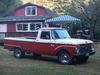
Thanks for the reply Tedster9. I bought the truck this summer from a guy that had it stored in a building for six years. I believe he started it occasionally but didn’t drive it. Since I’ve had it I have replaced the driveshaft, wheel bearings and brakes and rebuilt the carburetor all the while exercising it a few miles at a time building up a little trust that I would make it back home. The gen light has always been on and off during this time and not just at idle. It has a new battery so I didn’t think much about it until recently when it turned over slowly after a 20 mile run so I thought it might be working somewhat.
Logistics Pro


Joined: Jun 2018
Posts: 3,554
Likes: 442
Did you polarize the regulator?
When and How to Polarize a Generator
Polarization is a procedure which matches the polarity for the generator and the voltage regulator by permitting a surge of current to flow through the generator, correctly polarizing it. Damage to electrical components can occur if polarities do not match.
Ferguson tractors have utilized both positive and negative ground systems.
Delco 6V systems have positive ( + ) ground. Delco 12 V systems have negative ( - ) ground. Lucas systems for both 6V and 12V models have positive ( + ) ground.
Polarization of the generator should take place whenever any of the following events occur:
1. The battery is replaced or disconnected from the tractor 2. The generator is replaced or serviced 3. The regulator is replaced or serviced
If any of these events occurred, do not start the engine until polarization is done. The polarity of the generator must be set to match that of the voltage regulator.
Make a jumper wire (14 or 16 gauge) long enough to reach from the battery to the generator. Put alligator clips on both ends.
To polarize a generator on a tractor having a Delco 6V positive ground system or a Lucas 6V or 12V positive ground system, attach one clip to the A terminal on the generator. With the other clip, briefly for only a split-second (or a spark occurs) tap the negative ( - ) terminal on the battery.
To polarize a generator on a tractor having a Delco 12V negative ground system, attach one clip to the A terminal on the generator. With the other clip, briefly for only a split-second (or a spark occurs) tap the positive ( + ) terminal on the battery.
Turn on the ignition switch. On models with the charge indicator light (TE/TEA/TO-20), the light should come on (indicating discharge) before the engine is started. Once the engine starts and the system is charging, the red light should go off, just like the idiot light on many cars and trucks.
If the engine is running slowly so the generator is not charging enough to overcome the load (ignition/lights) the red light should come back on or glow slightly. Also, because the cut out relay in the regulator will not close (and connect the generator to the battery to charge it) until the generator starts putting out enough power to charge the battery, the light may stay on or the ammeter will show discharge until the throttle is opened enough to raise the engine rpm enough to get the generator provide enough current to charge the battery.
If the ammeter needle moves in a negative (discharge) direction when the engine is revved up, you must reverse the two wires on the back of the ammeter.
When and How to Polarize a Generator
Polarization is a procedure which matches the polarity for the generator and the voltage regulator by permitting a surge of current to flow through the generator, correctly polarizing it. Damage to electrical components can occur if polarities do not match.
Ferguson tractors have utilized both positive and negative ground systems.
Delco 6V systems have positive ( + ) ground. Delco 12 V systems have negative ( - ) ground. Lucas systems for both 6V and 12V models have positive ( + ) ground.
Polarization of the generator should take place whenever any of the following events occur:
1. The battery is replaced or disconnected from the tractor 2. The generator is replaced or serviced 3. The regulator is replaced or serviced
If any of these events occurred, do not start the engine until polarization is done. The polarity of the generator must be set to match that of the voltage regulator.
Make a jumper wire (14 or 16 gauge) long enough to reach from the battery to the generator. Put alligator clips on both ends.
To polarize a generator on a tractor having a Delco 6V positive ground system or a Lucas 6V or 12V positive ground system, attach one clip to the A terminal on the generator. With the other clip, briefly for only a split-second (or a spark occurs) tap the negative ( - ) terminal on the battery.
To polarize a generator on a tractor having a Delco 12V negative ground system, attach one clip to the A terminal on the generator. With the other clip, briefly for only a split-second (or a spark occurs) tap the positive ( + ) terminal on the battery.
Turn on the ignition switch. On models with the charge indicator light (TE/TEA/TO-20), the light should come on (indicating discharge) before the engine is started. Once the engine starts and the system is charging, the red light should go off, just like the idiot light on many cars and trucks.
If the engine is running slowly so the generator is not charging enough to overcome the load (ignition/lights) the red light should come back on or glow slightly. Also, because the cut out relay in the regulator will not close (and connect the generator to the battery to charge it) until the generator starts putting out enough power to charge the battery, the light may stay on or the ammeter will show discharge until the throttle is opened enough to raise the engine rpm enough to get the generator provide enough current to charge the battery.
If the ammeter needle moves in a negative (discharge) direction when the engine is revved up, you must reverse the two wires on the back of the ammeter.
Post Fiend
Joined: Apr 2002
Posts: 19,311
Likes: 97
From: Waterloo, Iowa
^^ The above is a bunch of bull ****.
There's no need to polarize a generator after simply disconnecting the battery, replacing the battery, disconnecting the regulator, replacing the regulator etc.
Further, using the Delco polarization procedure on your Ford will probably roast the voltage regulator. Don't do this.
Ford aka type "B" generators: With engine off, disconnect both the BAT and FLD wires at the regulator. Touch them together briefly. May see a spark. Done.
There's no need to polarize a generator after simply disconnecting the battery, replacing the battery, disconnecting the regulator, replacing the regulator etc.
Further, using the Delco polarization procedure on your Ford will probably roast the voltage regulator. Don't do this.
Ford aka type "B" generators: With engine off, disconnect both the BAT and FLD wires at the regulator. Touch them together briefly. May see a spark. Done.
Thread Starter
|
Mountain Pass
Joined: May 2018
Posts: 114
Likes: 3
From: Webster
While we’re on the subject I have a factory amp meter gage that has never been hooked up. How do I get this wired up?
Trending Topics
Thread Starter
|
Mountain Pass
Joined: May 2018
Posts: 114
Likes: 3
From: Webster
FTE Stories
Ford Trucks for Ford Truck Enthusiasts

3 Best / 3 Worst Parts of Modern Ford Ownership
Brett Foote
10 Amazing Upgrades That Solve Common Ford Truck Owner Headaches
Pouria Savadkouei
Every 2026 Ford Engine Explained
Brett Foote
10 Ugly Ford Trucks That We Still Kinda Love
Joe Kucinski
10 Things Every Truck Owner NEEDS (2026 Edition)
Michael S. Palmer
Rezvani's Latest Post-Apocalyptic Monster Is a Ford F-150 Raptor Underneath
Verdad Gallardo
Top 10 Most Expensive Ford Trucks Ever Sold on Bring a Trailer
Joe Kucinski
2027 Ford Super Duty Buyer's Guide (Every Model, Engine, & Package)
Brett Foote
Top 10 Ford Truck Tragedies
Joe Kucinski
Lead Gopher


Joined: Aug 2012
Posts: 10,066
Likes: 1,621
From: Seattle

That's not a factory gauge. That is a replacement Stewart-Warner (SW) gauge. The 1961-1964 (and 1965 before 624,001) originals ran a very large wire from the junction block under the hood to the Ammeter, through a loop on the back and back again. Almost all of the current travels through this one wire and so the gauge can pick up on that value.
Since this is an aftermarket gauge you will likely need the instructions on how to hook it up correctly. The originals they warn about not connecting the wire up backwards or passing it through the loop backwards. I'm not sure of what to watch out for on the aftermarket gauges.
If you click on this link you can see what an original looked like
https://www.ebay.com/itm/NOS-1961-1964-FORD-F100-F250-F350-AMMETER-AMPS-GAUGE-C1TZ-10850-A-NEW-ORIGINAL/391702525034?hash=item5b334a346a:g:R-4AAOSwZAtXI~e-:rk:2
 f:1&frcectupt=true
Chad

Thread
Thread Starter
Forum
Replies
Last Post
YWAMNick82f150
1980 - 1986 Bullnose F100, F150 & Larger F-Series Trucks
2
Sep 19, 2002 01:47 PM