


The 360 Engine....


Cross-Country
Joined: Apr 2017
Posts: 98
Likes: 3
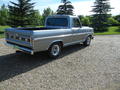
I've had my 69 F250 (that my Dad bought new) for 44 years and the 360 always starts, never smokes, and has been an extremely reliable engine. That being said, I cannot for the life of me understand why Ford didn't use the 428 crank and rods for a 410 Mercury displacement. All of the parts were on the shelf!!
I would love to do that
I would love to do that

Mountain Pass


Joined: Jun 2006
Posts: 239
Likes: 10
 Completely agree!
I've had my 69 F250 (that my Dad bought new) for 44 years and the 360 always starts, never smokes, and has been an extremely reliable engine. That being said, I cannot for the life of me understand why Ford didn't use the 428 crank and rods for a 410 Mercury displacement. All of the parts were on the shelf!!
I would love to do that
I would love to do that
 's parsimonious ways, a suspicion is that Ford must have had a bunch of 352 crankshafts laying around and kept using them until they ran out. If so, that's not a very good engineering reason for a short stroke combined with a relatively lower RPM engine.
Here's what gets me: through head, cam, and carb selection, you can take a 360/390 block, put a 428 crankshaft in it, and make yourself a fuel economical engine, a heavy-load stump puller, or a quick acceleration/high speed racing powerhouse. Gearing and transmission choices make the
FE 410 one of the most versatile engines Ford ever made.


Mountain Pass
Joined: Jun 2006
Posts: 239
Likes: 10
An aluminum intake manifold goes a long way to reducing the weight. The stock FE cast iron manifold is quite heavy. Ditto aluminum heads, which combined puts you close to the factory weight of a Windsor engine.

Post Fiend
Joined: Jun 2003
Posts: 8,209
Likes: 12
From: Black Hills of SD
Well, it is only speculation why Ford didn't lockstep with Chevy on lightweight performance. Or why the good stuff they did make was so dam obscure and they were so stingy with it. They wouldn't even put a 390 in a 4x4, like they thought the drive train couldn't handle all the unleashed torque of 30 more cubes.
I have had a lot of FEs over the years and they have great virtue. But in this day and age, an engine last made over 40 years ago tends to loose a little luster over the small blocks. I think a well built 347 would be a great choice for a non-towing or light occasional towing application. Better availability of parts, lighter and better fuel economy. That being said, I wouldn't remove a good running FE to go that direction
I have had a lot of FEs over the years and they have great virtue. But in this day and age, an engine last made over 40 years ago tends to loose a little luster over the small blocks. I think a well built 347 would be a great choice for a non-towing or light occasional towing application. Better availability of parts, lighter and better fuel economy. That being said, I wouldn't remove a good running FE to go that direction

Mountain Pass


Joined: Dec 2016
Posts: 112
Likes: 6
I too heard nothing but negative about the 360 but, my experience with my 69 F350 tells a different story.
i can let that truck sit for months and when i need it, it fires right up and immediately purrs like a kitten.
It will overheat if I let it idle for too long because there is no radiator shroud, but other than that, my 360 is great engine.
i can let that truck sit for months and when i need it, it fires right up and immediately purrs like a kitten.
It will overheat if I let it idle for too long because there is no radiator shroud, but other than that, my 360 is great engine.

Rabbit-Hole Researcher


Joined: Feb 2004
Posts: 466
Likes: 6
From: Middle of Ohio

The 360 was a truck engine. Low-rpm and tough, hauling a load, was the purpose. If you want performance, update the exhaust manifolds, distributor advance, cap, wires. When the valves get done, make sure you have seats for unleaded gas. We are running alcohol in the gas usually, and the jets must be larger.
Beyond that, you may want to spend money on a perky mid-range camshaft, intake manifold, larger exhaust, and higher compression. Those things generally come as a stage-two set of modifications.
Most owners have a challenge just getting the wiring and tuning restored, so leave a budget for all the normal operational-restoration stuff first. You will want brakes and steering to work before you hotrod the thing! Ha!
Beyond that, you may want to spend money on a perky mid-range camshaft, intake manifold, larger exhaust, and higher compression. Those things generally come as a stage-two set of modifications.
Most owners have a challenge just getting the wiring and tuning restored, so leave a budget for all the normal operational-restoration stuff first. You will want brakes and steering to work before you hotrod the thing! Ha!

Thread
Thread Starter
Forum
Replies
Last Post
wildhog8
FE & FT Big Block V8 (332, 352, 360, 390, 406, 410, 427, 428)
6
May 17, 2007 06:31 PM
The67Beast
FE & FT Big Block V8 (332, 352, 360, 390, 406, 410, 427, 428)
7
Oct 26, 2004 06:53 PM
Campbell 56
1967 - 1972 F-100 & Larger F-Series Trucks
11
Apr 28, 2004 08:09 PM






