When you click on links to various merchants on this site and make a purchase, this can result in this site earning a commission. Affiliate programs and affiliations include, but are not limited to, the eBay Partner Network.
No problems with hot starts, IPR at hot idle 22-23%.
Doing dummy plugs and standpipes. Just preventative, and a way to wet my feet on 6.0 maintenance. I'm an engineer by day job but would consider myself an just an average wrench-turner.
Passenger side standpipe clearance issues. I've been debating on whether to replace it now by loosening/removing the oil rail or just leave it and tackle it when the rail has to come off.
So, the question: Would the risk of leaving the 10mm allen standpipe in the rail (low failure rate according to DTR) outweigh the risk of rocking/pulling the rail, or vice-versa? I don't want to invite a problem with the rail or upper O-rings unless the risk of leaving the standpipe in there is greater. Without doing the job prior, I don't have a feel for the risk or whether the time investment is worth the benefit. Thoughts?
There is no need to pull the oil rail. The stand pipe is a two piece design so the clearance issue is not a problem. If you are removing the valve covers then by all means change the pipes and plugs just so you know they have been updated.
My truck when I bought it had 150k on it and had the 10mm pipes and plugs and never gave any indication they needed changed but I proactively changed them so I wouldn't have an issue.
If you replace them use lots and lots of oil too lube them when installing. Lessens the chance of tearing an oring.
No problems with hot starts, IPR at hot idle 22-23%.
Doing dummy plugs and standpipes. Just preventative, and a way to wet my feet on 6.0 maintenance. I'm an engineer by day job but would consider myself an just an average wrench-turner.
Passenger side standpipe clearance issues. I've been debating on whether to replace it now by loosening/removing the oil rail or just leave it and tackle it when the rail has to come off.
So, the question: Would the risk of leaving the 10mm allen standpipe in the rail (low failure rate according to DTR) outweigh the risk of rocking/pulling the rail, or vice-versa? I don't want to invite a problem with the rail or upper O-rings unless the risk of leaving the standpipe in there is greater. Without doing the job prior, I don't have a feel for the risk or whether the time investment is worth the benefit. Thoughts?
When I did the pipes and plugs on my 06' i lifted the passenger side oil rail to gain clearance. Just be sure that the oil rail gets set squarely back on its mounting points and is fully seated. I would change that standpipe too.
There is no need to pull the oil rail. The stand pipe is a two piece design so the clearance issue is not a problem. If you are removing the valve covers then by all means change the pipes and plugs just so you know they have been updated.
Will the standpipe come out far enough to separate it, assuming it comes out in one piece?
If you want a good "get to know her" project, do the STC fitting. Minimally invasive on the engine itself, lots of good updating to do on the way in, and it's more likely to leave you with a lawn ornament than the stand pipe/rail plugs.
IMO. Do whichever you prefer, things just get more delicate under the valve covers. And if something does start to leak, you'll be disturbing your new parts and wondering if you need to replace the replacements when that time comes.
If you want a good "get to know her" project, do the STC fitting. Minimally invasive on the engine itself, lots of good updating to do on the way in, and it's more likely to leave you with a lawn ornament than the stand pipe/rail plugs.
IMO. Do whichever you prefer, things just get more delicate under the valve covers. And if something does start to leak, you'll be disturbing your new parts and wondering if you need to replace the replacements when that time comes.
Just keep tight hold on all the tools and parts. You don't want to have to go fishing for a
small object like a nut/bolt or a socket. That would just suck.
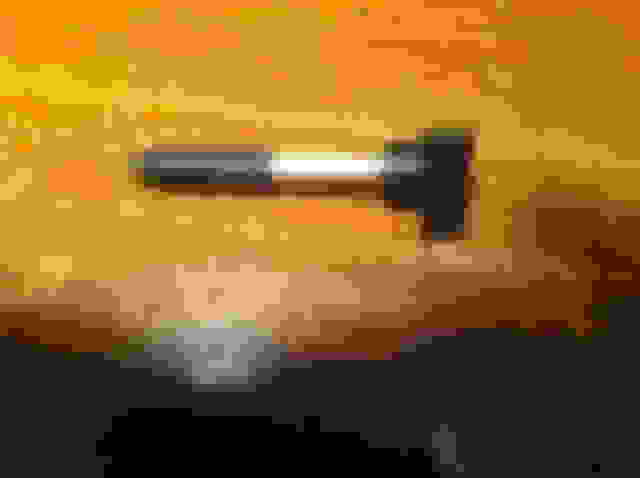
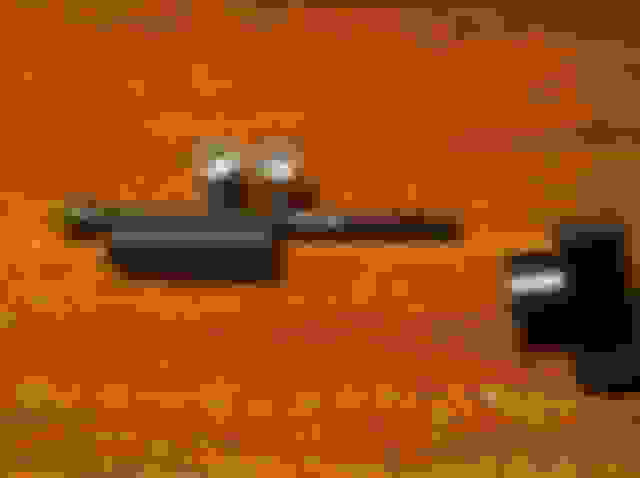
They make a tool for pulling the lower pipe. But Rotunda wants too much for it. SO I made one.
Works really nice.
You will need a ¼-20 cap screw, a ¼-20 thumb nut and some ¼ ID rubber hose.
I used 2 Rivnuts to act as a pusher when you crank the thumb nut down to expand
the rubber to grip the inside of the lower section of stand pipe. The Rivnuts have
a slight flange that does well pushing the rubber. I bet you could find some aluminum
tubbing that would work just find. That just happened to be would I grabbed. The
project was about $8.00 in parts.
Thanks for the advice, perspectives, and tool ideas. Never fails to impress.
I am planning on reassembling without swapping the PS standpipe. It appears to have potential to go south while gaining minimal benefit, as I read that the PS dummy plugs are the trouble point, and I did swap that. I will save the PS standpipe for when the oil rail is required to come off (or when it fails). If nothing else, this exercise has helped me understand how to get underneath the cover and what it looks like.
I do plan on STC, EGR delete, and oil cooler work this fall. I got a $1200 labor quote from a well-respected local shop and, after digging around at bolt locations no engineer with a brain should have designed on this last foray, $1200 is not looking so bad. We'll see.
There is zero reason to remove an oil rail to install a stand pipe.
Make the tool I posted and it the sections separate then use it to
pull the lower half. As for being a problem the one style was a bit
but the latest ones are not. The white teflon split washer solved that.
What can cause issues is not using oil on the D-rings before installing
them. One old issue was replacing D-rings and not giving them time
to relax back into shape. Took about 30~90 minutes to do that.
I guess because of the training I have with aircraft I don't have any
real issues with where bolts are. On a plane they stiff bolts in some
out of the way places. When you have the right tools it not an issue at all.
I gave it the old college try.
Came out in one piece, was able to separate and get top piece out. Bottom piece won't clear, despite cold-working the heat shield and holding my mouth in any iteration of a nine-line bind. Lacks a frog's hair, but stil need that hair.
What am I missing?
All my o-rings have come out in great shape. Any harm in installing new top into existing bottom?
Do I need to man up and rock/pull rail tomorrow?
Thanks to all who chimed in. Replaced the top half passenger side standpipe. Got it all back together and, using three 15 second crank cycles (last one using key), got it to fire. Couple on ramp runs and the air appears to be mostly gone. Thanks again for the tips and encouragement.
Just keep tight hold on all the tools and parts. You don't want to have to go fishing for a
small object like a nut/bolt or a socket. That would just suck.
They make a tool for pulling the lower pipe. But Rotunda wants too much for it. SO I made one.
Works really nice.
You will need a ¼-20 cap screw, a ¼-20 thumb nut and some ¼ ID rubber hose.
I used 2 Rivnuts to act as a pusher when you crank the thumb nut down to expand
the rubber to grip the inside of the lower section of stand pipe. The Rivnuts have
a slight flange that does well pushing the rubber. I bet you could find some aluminum
tubbing that would work just find. That just happened to be would I grabbed. The
project was about $8.00 in parts.
Hey , I came across your text and it sounds pretty helpful. Can you tell me where you bought the parts to make device to remove the half of standpipe? Thanks in advance
Rezvani's Latest Post-Apocalyptic Monster Is a Ford F-150 Raptor Underneath
Slideshow: Called the Fortress, the 850-horsepower pickup combines Raptor underpinnings with military-inspired features, survival equipment, and a starting price of $285,000.