



The IDI Myth Thread....

i ain't rite
Joined: Mar 2005
Posts: 65,587
Likes: 5,616
From: Marlboro Mental Hospital.

3 inch. it does not reduce and then open up. i am pretty sure it it is a 4 inch wheel
Thread Starter
|
Postmaster


Joined: Dec 2004
Posts: 2,941
Likes: 32
From: Maple Valley, WA
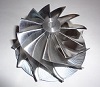
The factory turbo has a 2.229" exducer on the turbine wheel... That's the diameter of the exit of the turbine housing.... And it has a wheel occupying that space as well...
3" is plenty sufficient for any of us, but going bigger doesn't hurt, just better scavenging...
3" is plenty sufficient for any of us, but going bigger doesn't hurt, just better scavenging...

Lead Driver
Joined: Apr 2008
Posts: 6,945
Likes: 13
Dont have any rock solid evidence of why the 7.3 wears more, it could very well be the "improved" seals.
If I could afford roller rockers I would get them, they virtually eliminate lateral loading.
I have used them on many gas engines, and since we have a relatively fast and high lift cam they would be the ticket.
If I could afford roller rockers I would get them, they virtually eliminate lateral loading.
I have used them on many gas engines, and since we have a relatively fast and high lift cam they would be the ticket.
7.3 had revised seals to reduce the amount of oil consumption (read:guide lubrication)

Postmaster
Joined: Aug 2010
Posts: 2,554
Likes: 9
From: Northern Arizona

Thread Starter
|
Postmaster
Joined: Dec 2004
Posts: 2,941
Likes: 32
From: Maple Valley, WA
2: Yes...
The PSD and IDI valve springs are the same.
Only springs to use in my opinion are the comp 910-16's...

Elder User
Joined: Sep 2012
Posts: 776
Likes: 3
From: Philly, PA USA
interesting thread! Some knowledgeable guys on here with thorough explanations. Glad I saw this
FTE Stories
Ford Trucks for Ford Truck Enthusiasts

Top 6 Best Deals Available on New Fords & Lincolns Right Now
Brett Foote
This Hennessey Takes the Expedition Tremor's Off-Roading Capability to the Next Level
Verdad Gallardo
Top 10 Fords at 2026 Carlisle Ford Nationals
Joe Kucinski
3 Best / 3 Worst Parts of Modern Ford Ownership
Brett Foote
10 Amazing Upgrades That Solve Common Ford Truck Owner Headaches
Pouria Savadkouei
Every 2026 Ford Engine Explained
Brett Foote
10 Ugly Ford Trucks That We Still Kinda Love
Joe Kucinski
10 Things Every Truck Owner NEEDS (2026 Edition)
Michael S. Palmer
Rezvani's Latest Post-Apocalyptic Monster Is a Ford F-150 Raptor Underneath
Verdad Gallardo




Elder User
Joined: Sep 2007
Posts: 662
Likes: 0
myth 3 inch exhaust is all an idi needs.
fact any turboed engine will use a cone as the ideal exhaust, so larger is better, but may not be necessary for your setup
myth there is no stroker kit for these motors ( as i was told on other sites)
fact yes there is and its costly though, someone may remember the name.
myth there are no proformance parts for the idi
fact yes there is cams, rockers, valve springs, upgraded turbo setups, higher cc pumps, a girdle, lower cr pistons, and more
myth glow plugs suck
fact improperly functioning gps suck, but a well maintained system with all the proper parts will be a lifesaver
myth do not use starting fluid
fact its fine as long as you do not use gps also, disconnect the gps when using the starting fluid. i have proven this batteling with following many of the manual control systems out there. if you use manual control keep the copper squiggle (resistor) as it will drop the voltage and keep you from burning up plugs.
some id like answers to
whats the best pop pressure for an injector?
is there an injector better than others?
has anyone removed the gp system for something else? like an air grid?
fact any turboed engine will use a cone as the ideal exhaust, so larger is better, but may not be necessary for your setup
myth there is no stroker kit for these motors ( as i was told on other sites)
fact yes there is and its costly though, someone may remember the name.
myth there are no proformance parts for the idi
fact yes there is cams, rockers, valve springs, upgraded turbo setups, higher cc pumps, a girdle, lower cr pistons, and more
myth glow plugs suck
fact improperly functioning gps suck, but a well maintained system with all the proper parts will be a lifesaver
myth do not use starting fluid
fact its fine as long as you do not use gps also, disconnect the gps when using the starting fluid. i have proven this batteling with following many of the manual control systems out there. if you use manual control keep the copper squiggle (resistor) as it will drop the voltage and keep you from burning up plugs.
some id like answers to
whats the best pop pressure for an injector?
is there an injector better than others?
has anyone removed the gp system for something else? like an air grid?
Thread Starter
|
Postmaster
Joined: Dec 2004
Posts: 2,941
Likes: 32
From: Maple Valley, WA
1- Depends on the amount of Fuel being run.
2- Only if the injector is new, otherwise, no.
3- Don't know, works on a Cummins, don't see why it wouldn't work on our engines. I don't think the GP's are much of an issue though?


Senior User
Joined: Oct 2009
Posts: 288
Likes: 0
From: Gridley Ks
The facts are the IDI has more immobile surface area than piston surface area. Regardless of the power you've made (Well done!
 ) the fact is... Pre-cups do hinder performance if for no other reason than they exist.
 I'm not busting *****, I found this and your other threads while doing some research for my own IDI 6.9. I hope you can prove me wrong

Thread Starter
|
Postmaster
Joined: Dec 2004
Posts: 2,941
Likes: 32
From: Maple Valley, WA
I'm curious about this... how did you come to this conclusion?
The facts are the IDI has more immobile surface area than piston surface area. Regardless of the power you've made (Well done!) the fact is... Pre-cups do hinder performance if for no other reason than they exist.
I'm not busting *****, I found this and your other threads while doing some research for my own IDI 6.9. I hope you can prove me wrong
The facts are the IDI has more immobile surface area than piston surface area. Regardless of the power you've made (Well done!
) the fact is... Pre-cups do hinder performance if for no other reason than they exist. I'm not busting *****, I found this and your other threads while doing some research for my own IDI 6.9. I hope you can prove me wrong
The number one reason I have come to this conclusion is simple.... The conclusion...
The fact that we can produce 2.81hp/cc is the reasoning behind it not being a restriction (At least on these particular engines, at these particular fuel levels, at these particular RPM's, at these particular timing specs). Granted, that was done on an engine with only 130ccs of fuel, and comparision engines so far (My DB2 dyno and DB4 dyno's) have tossed down 2.61 and 2.13* cc/hp (*hp/tq peaked at less than previous dyno runs due to a slipping clutch, numbers show it was down 50whp) those particular pumps had stockish fueling curves as well. Even a 7.3psd struggles to get to 2.81hp/cc (Read never) unless it is a highly tuned/optimized engine, and that is with computer controls. Our engines can only be tuned mechanically, which relegates us to base timing, fuel inlet pressure, and injector pop-pressure.
This is my theory on the matter. We can compare our engines to the 7.3psd, because they are nearly identical, aside from the injection type/control system. I feel that direct injection is superior in a highly tunable, high pressure computerized system, but when comparing a lower pressure mechanical or computer operated system, the injection pressure is key, and this is why IDI was engineered in the first place. You can use a lower injection pressure and achieve the combustion characteristics of a direct injected engine, it was the bandaid to do the very thing that common rail does today (Obviously in a less sophisticated form)....
Now, the same characteristics that make IDI comparible (NOT the same, NOT as Good, but comparible in characteristics) to commonrail, also make it achieve a better burn. Ive researched just about any study I could find on combustion characteristics in a diesel engine, and the one correlation that has never made sense, is the idea that IDI is a slower burn process. This is completely untrue. The IDI burn starts slower (Initial flame front, etc) but catches up and surpasses a burn of a low pressure DI setup. The reason this happens is the obvious, the pre/semi-combusted fuel is forced through the "little throat" everybody complains about at far more of a pressure than a DI nozzle injects fuel into the piston of a DI engine.
So where is the proof?
I would say the proof is that we make the HP/TQ numbers at far less timing than any DI engine could imagine. The big IDI numbers we have put down are in the 6-8* BDTC base range, with full timing in the 12-14* range. Not only are we utilizing the fuel we are burning, but we are burning it in less time.
That is my conclusion on IDI not being limited like you always hear.... At least on this particular platform....