





The IDI Myth Thread....

Senior User
Joined: Oct 2009
Posts: 288
Likes: 0
From: Gridley Ks
Very well explained, I hadn't thought about it till now but the DI's PW might be a bigger restriction than the over-squared non-moving surface area in an IDI.
I'm totally on-board with the flame propagation you eluded to, the combination of high PSI and forced travel creates a "Squinch" similar to a tight combustion chambered Gasser.
Just a thought.... I know you guys have been lowering the piston, are you dishing it or is it flat? Dishing would bring back some surface area and could tip the energy back toward the piston a little.
I'll try to keep up as you go along, I love simple tech and as complex as it sounds the IDI is beautifully simple.
I'm totally on-board with the flame propagation you eluded to, the combination of high PSI and forced travel creates a "Squinch" similar to a tight combustion chambered Gasser.
Just a thought.... I know you guys have been lowering the piston, are you dishing it or is it flat? Dishing would bring back some surface area and could tip the energy back toward the piston a little.
I'll try to keep up as you go along, I love simple tech and as complex as it sounds the IDI is beautifully simple.

Postmaster
Joined: Mar 2013
Posts: 3,066
Likes: 7
From: Over There
I may be putting my foot in my mouth here as I'm not the IDI expert that Racin is but I see it a little different. I see the IDI in particular this IDI as a the perfect combination of attributes between a big block gasser and a tough diesel.
For starters fuel is fuel, heat is heat, and pressure is pressure. That said it's not fair to compare an electronically fuel injected diesel to a mechanically injected diesel in comparing DI to IDI. In comparing mechanically injected diesels between DI and IDI the only shortcoming in the IDI design is a slightly larger surface area in the head that sucks the heat out of the cylinder into the coolant instead of doing work.
However there are many other advantageous attributes created by the IDI design. Chief among them is that because the initial BANG is contained largely in the pre-cup the rest of the structure of the engine can be built much lighter for the same amount of displacement and power. This allows for an overall much lighter engine that can rev faster making it much more practical for pickup applications. Secondly because the fuel impacts and is contained in the pre-cup on injection they aren't sensitive to injector issues like even fine atomization of the fuel making them much more durable and tolerant. This combined with the quinch mentioned above and the swirl it creates in the pre-cup makes for a very complete burn without the added and tempermental complications of other engines.
This brings up why it's unfair to compare the IDI to modern electronically injected engines(even though they are better ) In these later engines the stress of the BANG is minimized by limiting the initial injection.
So to me it's all about an engine that gets close to the size, weight, and revving/rpm ability of a 460 with the torque, toughness, reliability, and fuel tolerance of an old school mechanical diesel all in a very efficient package.
For starters fuel is fuel, heat is heat, and pressure is pressure. That said it's not fair to compare an electronically fuel injected diesel to a mechanically injected diesel in comparing DI to IDI. In comparing mechanically injected diesels between DI and IDI the only shortcoming in the IDI design is a slightly larger surface area in the head that sucks the heat out of the cylinder into the coolant instead of doing work.
However there are many other advantageous attributes created by the IDI design. Chief among them is that because the initial BANG is contained largely in the pre-cup the rest of the structure of the engine can be built much lighter for the same amount of displacement and power. This allows for an overall much lighter engine that can rev faster making it much more practical for pickup applications. Secondly because the fuel impacts and is contained in the pre-cup on injection they aren't sensitive to injector issues like even fine atomization of the fuel making them much more durable and tolerant. This combined with the quinch mentioned above and the swirl it creates in the pre-cup makes for a very complete burn without the added and tempermental complications of other engines.
This brings up why it's unfair to compare the IDI to modern electronically injected engines(even though they are better
) In these later engines the stress of the BANG is minimized by limiting the initial injection. So to me it's all about an engine that gets close to the size, weight, and revving/rpm ability of a 460 with the torque, toughness, reliability, and fuel tolerance of an old school mechanical diesel all in a very efficient package.
Senior User
Joined: Oct 2009
Posts: 288
Likes: 0
From: Gridley Ks
I may be putting my foot in my mouth here as I'm not the IDI expert that Racin is but I see it a little different. I see the IDI in particular this IDI as a the perfect combination of attributes between a big block gasser and a tough diesel.
For starters fuel is fuel, heat is heat, and pressure is pressure. That said it's not fair to compare an electronically fuel injected diesel to a mechanically injected diesel in comparing DI to IDI. In comparing mechanically injected diesels between DI and IDI the only shortcoming in the IDI design is a slightly larger surface area in the head that sucks the heat out of the cylinder into the coolant instead of doing work.
However there are many other advantageous attributes created by the IDI design. Chief among them is that because the initial BANG is contained largely in the pre-cup the rest of the structure of the engine can be built much lighter for the same amount of displacement and power. This allows for an overall much lighter engine that can rev faster making it much more practical for pickup applications. Secondly because the fuel impacts and is contained in the pre-cup on injection they aren't sensitive to injector issues like even fine atomization of the fuel making them much more durable and tolerant. This combined with the quinch mentioned above and the swirl it creates in the pre-cup makes for a very complete burn without the added and tempermental complications of other engines.
This brings up why it's unfair to compare the IDI to modern electronically injected engines(even though they are better) In these later engines the stress of the BANG is minimized by limiting the initial injection.
So to me it's all about an engine that gets close to the size, weight, and revving/rpm ability of a 460 with the torque, toughness, reliability, and fuel tolerance of an old school mechanical diesel all in a very efficient package.
For starters fuel is fuel, heat is heat, and pressure is pressure. That said it's not fair to compare an electronically fuel injected diesel to a mechanically injected diesel in comparing DI to IDI. In comparing mechanically injected diesels between DI and IDI the only shortcoming in the IDI design is a slightly larger surface area in the head that sucks the heat out of the cylinder into the coolant instead of doing work.
However there are many other advantageous attributes created by the IDI design. Chief among them is that because the initial BANG is contained largely in the pre-cup the rest of the structure of the engine can be built much lighter for the same amount of displacement and power. This allows for an overall much lighter engine that can rev faster making it much more practical for pickup applications. Secondly because the fuel impacts and is contained in the pre-cup on injection they aren't sensitive to injector issues like even fine atomization of the fuel making them much more durable and tolerant. This combined with the quinch mentioned above and the swirl it creates in the pre-cup makes for a very complete burn without the added and tempermental complications of other engines.
This brings up why it's unfair to compare the IDI to modern electronically injected engines(even though they are better
) In these later engines the stress of the BANG is minimized by limiting the initial injection. So to me it's all about an engine that gets close to the size, weight, and revving/rpm ability of a 460 with the torque, toughness, reliability, and fuel tolerance of an old school mechanical diesel all in a very efficient package.
The IDI isn't slightly larger in non-piston surface, it much larger. In fact a PSD piston along with all the other DI engine pistons have the combustion chamber in the piston. This does put the stress on the piston as you point out but that is the reason they will always make more power. The piston surface is much larger than the head surface and there's no Pre-cup.
That said I think it's alright to compare the 2. I could care less about chasing HP on a dyno, I get enough of that and while I love to watch and participate 99% of diesel owners will never dyno their trucks. I have and will again but it's just for me, I'm too old to care what others think about my slow junk LOL.
I do agree that the IDI is a fantastic design for what it is. While Justin and Justin strive to find more power I just want mine to perform flawlessly and give me about 200-250 hp. That's very respectable in a truck considering a 460 or 454 won't do that at pulling RPM. However the design was never intended to be a racer. The 2 chamber design makes them perfect for retaining combustion heat and burning completely. Even though the VE suffers it allows you to sip the fuel and still make good power at hiway rpm.
Senior User
Joined: May 2013
Posts: 286
Likes: 0
From: Salem, OR
1800joedaddy, I agree with most of what you have said.
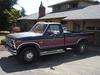
My '86, 6.9, looks like a POS from closer than 50 yards, is bone stock, will never be dyno'd (that would just scare me), but it runs great. It starts and runs reliably, gets 16/17 mpg at freeway speed, and the limiting factor on what I can pull is traction. It doesn't look good but is well built, the running gear is reliable and economical (sort of), and I wouldn't trade for a psd anytime.
My '86, 6.9, looks like a POS from closer than 50 yards, is bone stock, will never be dyno'd (that would just scare me), but it runs great. It starts and runs reliably, gets 16/17 mpg at freeway speed, and the limiting factor on what I can pull is traction. It doesn't look good but is well built, the running gear is reliable and economical (sort of), and I wouldn't trade for a psd anytime.
Postmaster
Joined: Mar 2013
Posts: 3,066
Likes: 7
From: Over There
If I might...?
The IDI isn't slightly larger in non-piston surface, it much larger. In fact a PSD piston along with all the other DI engine pistons have the combustion chamber in the piston. This does put the stress on the piston as you point out but that is the reason they will always make more power. The piston surface is much larger than the head surface and there's no Pre-cup.
The IDI isn't slightly larger in non-piston surface, it much larger. In fact a PSD piston along with all the other DI engine pistons have the combustion chamber in the piston. This does put the stress on the piston as you point out but that is the reason they will always make more power. The piston surface is much larger than the head surface and there's no Pre-cup.

More Turbo


Joined: Aug 2011
Posts: 717
Likes: 1
From: Independence, Mo
screw power chokes i love my old idi 23.657 mpg average on my trip empty to Lawrence and back and she ain't fast but is a semi... no and look at what they can pull.
Fact--- The idi dose the job we want and that is hauling and towing that's why we still own them and they are reliable
ps they do go fast eventually just takes awhile to get there my needle is bouncing in my pic
Fact--- The idi dose the job we want and that is hauling and towing that's why we still own them and they are reliable
ps they do go fast eventually just takes awhile to get there my needle is bouncing in my pic
Thread Starter
|
Postmaster


Joined: Dec 2004
Posts: 2,941
Likes: 32
From: Maple Valley, WA
The combustion-in-piston method loses heat as well, and arguably worse, because the piston is aluminum (unless you ceramic coat them). The oil from the piston squirters removes a bunch of heat from the pistons and transfers it to the oil.
The only extra surface area in the prechamber that is susceptible to heat loss is the head side of that, and there is less surface area there than the cup of the piston in a DI engine. The actual cup insert is something we want to get hot and transfer heat, that's why these things make so much more power when heat soaked.
All else aside, at some point, the precups will become a restriction, but we may never know where that is, its certainly not at the 4-500 horse level, and until P-pumps become the fashion ( ) that's about what we are limited to fuelwise....
The only extra surface area in the prechamber that is susceptible to heat loss is the head side of that, and there is less surface area there than the cup of the piston in a DI engine. The actual cup insert is something we want to get hot and transfer heat, that's why these things make so much more power when heat soaked.
All else aside, at some point, the precups will become a restriction, but we may never know where that is, its certainly not at the 4-500 horse level, and until P-pumps become the fashion (
) that's about what we are limited to fuelwise....
FTE Stories
Ford Trucks for Ford Truck Enthusiasts

Top 6 Best Deals Available on New Fords & Lincolns Right Now
Brett Foote
This Hennessey Takes the Expedition Tremor's Off-Roading Capability to the Next Level
Verdad Gallardo
Top 10 Fords at 2026 Carlisle Ford Nationals
Joe Kucinski
3 Best / 3 Worst Parts of Modern Ford Ownership
Brett Foote
10 Amazing Upgrades That Solve Common Ford Truck Owner Headaches
Pouria Savadkouei
Every 2026 Ford Engine Explained
Brett Foote
10 Ugly Ford Trucks That We Still Kinda Love
Joe Kucinski
10 Things Every Truck Owner NEEDS (2026 Edition)
Michael S. Palmer
Rezvani's Latest Post-Apocalyptic Monster Is a Ford F-150 Raptor Underneath
Verdad Gallardo
Senior User
Joined: Oct 2009
Posts: 288
Likes: 0
From: Gridley Ks
This is why they are soo efficient, but also why they'll never be "High Performance" I'm ok with that.

On edit: Don't missunderstand, I'm beating them up just being realistic. I think by understanding the restrictions and limits they can be improved upon. Look at what Justin and Justin have done in a little over a year. Maybe some day someone will come up with a custom precup or injector design....?
Thread Starter
|
Postmaster
Joined: Dec 2004
Posts: 2,941
Likes: 32
From: Maple Valley, WA
That's exactly what it does. The energy is the heat due to expansion. I don't want to get into a discussion on thermodynamics, it should be obvious. Put simply.....the largest suface area will absorb most of the heat. The piston being aluminum does heat as much as the iron around it, it just disapates it faster leaving the heat in the chamber.
This is why they are soo efficient, but also why they'll never be "High Performance" I'm ok with that.
On edit: Don't missunderstand, I'm beating them up just being realistic. I think by understanding the restrictions and limits they can be improved upon. Look at what Justin and Justin have done in a little over a year. Maybe some day someone will come up with a custom precup or injector design....?
This is why they are soo efficient, but also why they'll never be "High Performance" I'm ok with that.
On edit: Don't missunderstand, I'm beating them up just being realistic. I think by understanding the restrictions and limits they can be improved upon. Look at what Justin and Justin have done in a little over a year. Maybe some day someone will come up with a custom precup or injector design....?
That being said, I think its so minimal in either case, it hardly makes a difference.
Ill put things this way... In my opinion, the only thing holding these particular IDI engines back is the lack of fuel these pumps can put out, not any thermodynamic aspect. Soon enough we will be able to compare what a 190cc pump will do in regards to a 190cc setup on a 7.3 DI engine.
Lead Driver
Joined: Apr 2008
Posts: 6,945
Likes: 13
By your logic you dont even need a stroke, just a very large piston... If anything, in my opinion VE is higher in an IDI than a DI, thermal efficiency maybe not.
As far as 1800 goes, you want to minimize heat absorbed into the engine, any heat absorbed is power lost. You dont want the piston to absorb heat... the opposite in fact, however the reality is that it is going to, we just do our best to minimize it.

Senior User
Joined: Mar 2012
Posts: 317
Likes: 1
From: Back in the sticks of VA
Here's one.
Myth: IDI's are naturally greased pigs!
Fact: Any engine can be bone dry with proper care and the IDI is no exception.
Wish I could say mine was bone dry. It's nothing but a greased pig. Someday it will get cleaned. LOL Love this thread.
Myth: IDI's are naturally greased pigs!
Fact: Any engine can be bone dry with proper care and the IDI is no exception.
Wish I could say mine was bone dry. It's nothing but a greased pig. Someday it will get cleaned. LOL
Love this thread.