



Urgent.

Post Fiend
Joined: Mar 2009
Posts: 11,798
Likes: 14
From: Mt. Shasta California
Look inside the socket/wrench. See how much surface there is to contact the bolt head face? Then look at a 6 point. After you wrench every day for 10 years your learn your lesson on 12 pointers.

Hotshot


Joined: Aug 2006
Posts: 17,400
Likes: 319
From: Whittier, CA
I think he is trying to say that the bolts are 12 point, and he is right, many driveshafts are that way.
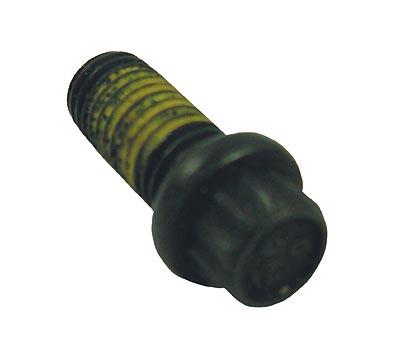
You must use a 12 point socket on those, because a 6 point won't work.
Whether you replace them with hex heads is debatable. I would only use an OEM bolt there, but that is JMO. A 12 point box end on a 12 point bolt head is very strong. They use them on drive shafts so that smaller head bolts can be used where there is limited space.
You must use a 12 point socket on those, because a 6 point won't work.
Whether you replace them with hex heads is debatable. I would only use an OEM bolt there, but that is JMO. A 12 point box end on a 12 point bolt head is very strong. They use them on drive shafts so that smaller head bolts can be used where there is limited space.

Junior User
Joined: Sep 2009
Posts: 54
Likes: 0
only reason I would use a 6 point bolt is because you can force more leverage on them with a cheater bar than you can on a 12 point. The odds of a six point wrench slipping are far less than a twelve point. 12 points have a tendancy to round off easier than a 6, even with a twelve point socket or wrench, GENERALLY SPEAKING.
If you use hex heads you give yourself more surface contact for the wrench/socket to contact upon. This will allow more torque to be transfered to the head of the bolt. A 12 point head has less surface area since there are more corners and by having more corners, there is less surface area for the socket/wrench to engage. With less surface area you increase the chances of rounding off the head (I really really hate it when that happens) so stick with a hex head.
Its also worth noting that the really really important bolts, i.e. the bolt that holds the drive belt gear to the crank snout that requires 150 ft.lb. of torque is a hex bolt. Most engine fasteners are hex bolts. Why? Engineers say they're better for the same reason as above.
If you use hex heads you give yourself more surface contact for the wrench/socket to contact upon. This will allow more torque to be transfered to the head of the bolt. A 12 point head has less surface area since there are more corners and by having more corners, there is less surface area for the socket/wrench to engage. With less surface area you increase the chances of rounding off the head (I really really hate it when that happens) so stick with a hex head.
Its also worth noting that the really really important bolts, i.e. the bolt that holds the drive belt gear to the crank snout that requires 150 ft.lb. of torque is a hex bolt. Most engine fasteners are hex bolts. Why? Engineers say they're better for the same reason as above.
Hotshot
Joined: Aug 2006
Posts: 17,400
Likes: 319
From: Whittier, CA
There is an engineering reason for using a 12 point bolt in that application. If you look at that picture of the Ford bolt you might figure it out. But I don't think we should clutter up the OP's thread discussing bolts and wrenches.
Hotshot
Joined: Aug 2006
Posts: 17,400
Likes: 319
From: Whittier, CA
I was speaking of this photo, Brent -
I'm pretty sure that is what the OP has on his drive line pinion flange. It's the Ford way.
Look at the size of the head compared to the size of the bolt. It is a smaller head, and that is because there is very limited space around the universal joint. You cannot get a full sized head in there, so they use an undersized head, and make it 12 point so you can turn 1/12 of a turn at a time. If you replace that with a full sized hex head, I don't think you can get a box end wrench on the head.
They didn't make it 12 point just to **** us off, there was a good reason for it.
Some cars will use an allen socket head there because of the space limitation. I think this Ford way is better.
I'm pretty sure that is what the OP has on his drive line pinion flange. It's the Ford way.
Look at the size of the head compared to the size of the bolt. It is a smaller head, and that is because there is very limited space around the universal joint. You cannot get a full sized head in there, so they use an undersized head, and make it 12 point so you can turn 1/12 of a turn at a time. If you replace that with a full sized hex head, I don't think you can get a box end wrench on the head.
They didn't make it 12 point just to **** us off, there was a good reason for it.
Some cars will use an allen socket head there because of the space limitation. I think this Ford way is better.

Thread Starter
|
Junior User
Joined: Jan 2004
Posts: 95
Likes: 0
yeah I see what you guys are saying, lastnight while trying to force it, I started to feel it round off so i backed away in hopes that letting it soak overnight will help !
FTE Stories
Ford Trucks for Ford Truck Enthusiasts

Top 10 Fords at 2026 Carlisle Ford Nationals
Joe Kucinski
3 Best / 3 Worst Parts of Modern Ford Ownership
Brett Foote
10 Amazing Upgrades That Solve Common Ford Truck Owner Headaches
Pouria Savadkouei
Every 2026 Ford Engine Explained
Brett Foote
10 Ugly Ford Trucks That We Still Kinda Love
Joe Kucinski
10 Things Every Truck Owner NEEDS (2026 Edition)
Michael S. Palmer
Rezvani's Latest Post-Apocalyptic Monster Is a Ford F-150 Raptor Underneath
Verdad Gallardo
Top 10 Most Expensive Ford Trucks Ever Sold on Bring a Trailer
Joe Kucinski
2027 Ford Super Duty Buyer's Guide (Every Model, Engine, & Package)
Brett Foote
Cargo Master
Joined: Jun 2008
Posts: 2,752
Likes: 5
From: Stillwater, OK
In my experience, a good, undamaged 12-pt set will get it done as long as you're SURE you're using the right size... many problems arise when somebody uses a 9/16" instead of a 14mm or something similar...
as time goes on, the 12pts will wear out and begin to lose their bite on 6 point bolts simply due to slack in the teeth.
12-pt bolt heads are stronger, that's why you can use a smaller head for the same torque. When you use a smaller head, each corner has to be able to take more force...but there are twice as many corners to spread the load over. 6 points round out because you exert too much force on the area the wrench bites. A 6-pt wrench will get you a little bit more force than a snug 12-pt before it rounds the bolt off, but the only advantage is the support midway between the corners... this area doesn't put any torque on the bolt itself.
The effectiveness of a wrench is really a ratio of the size of the bolt head to the distance force is applied. You wouldn't want a 1" wrench that was only 3" long, would you? But a 3" long wrench for a 1/4" bolt head is plenty. All of the force multiplied by the distance you apply it at divided by half of the wrench size goes into those 4, 6, or 12 corners... at some point...they just shear.
as time goes on, the 12pts will wear out and begin to lose their bite on 6 point bolts simply due to slack in the teeth.
12-pt bolt heads are stronger, that's why you can use a smaller head for the same torque. When you use a smaller head, each corner has to be able to take more force...but there are twice as many corners to spread the load over. 6 points round out because you exert too much force on the area the wrench bites. A 6-pt wrench will get you a little bit more force than a snug 12-pt before it rounds the bolt off, but the only advantage is the support midway between the corners... this area doesn't put any torque on the bolt itself.
The effectiveness of a wrench is really a ratio of the size of the bolt head to the distance force is applied. You wouldn't want a 1" wrench that was only 3" long, would you? But a 3" long wrench for a 1/4" bolt head is plenty. All of the force multiplied by the distance you apply it at divided by half of the wrench size goes into those 4, 6, or 12 corners... at some point...they just shear.
Post Fiend
Joined: Mar 2009
Posts: 11,798
Likes: 14
From: Mt. Shasta California
In my experience, a good, undamaged 12-pt set will get it done as long as you're SURE you're using the right size... many problems arise when somebody uses a 9/16" instead of a 14mm or something similar...
as time goes on, the 12pts will wear out and begin to lose their bite on 6 point bolts simply due to slack in the teeth.
those 4, 6, or 12 corners... at some point...they just shear.
as time goes on, the 12pts will wear out and begin to lose their bite on 6 point bolts simply due to slack in the teeth.
those 4, 6, or 12 corners... at some point...they just shear.
Post Fiend
Joined: Mar 2009
Posts: 11,798
Likes: 14
From: Mt. Shasta California
Originally Posted by bpounds;
I was speaking of this photo, Brent -
I'm pretty sure that is what the OP has on his drive line pinion flange. It's the Ford way.
Look at the size of the head compared to the size of the bolt. It is a smaller head, and that is because there is very limited space around the universal joint. You cannot get a full sized head in there, so they use an undersized head, and make it 12 point so you can turn 1/12 of a turn at a time. If you replace that with a full sized hex head, I don't think you can get a box end wrench on the head.
They didn't make it 12 point just to **** us off, there was a good reason for it.
Some cars will use an allen socket head there because of the space limitation. I think this Ford way is better.
I'm pretty sure that is what the OP has on his drive line pinion flange. It's the Ford way.
Look at the size of the head compared to the size of the bolt. It is a smaller head, and that is because there is very limited space around the universal joint. You cannot get a full sized head in there, so they use an undersized head, and make it 12 point so you can turn 1/12 of a turn at a time. If you replace that with a full sized hex head, I don't think you can get a box end wrench on the head.
They didn't make it 12 point just to **** us off, there was a good reason for it.
Some cars will use an allen socket head there because of the space limitation. I think this Ford way is better.

Posting Guru
Joined: Jul 2007
Posts: 1,543
Likes: 0

The torch would probably be the way to go, along with several licks from a hammer to break the seal. Don't forget to put some anti-seize on the threads when you put it back together. This just goes to show not to under estimate the potential of damage due to a u-joint going bad. I dropped a shaft a few years ago, but thankfully no damage, it did happen on the expressway during rush hour of course.
Thread Starter
|
Junior User
Joined: Jan 2004
Posts: 95
Likes: 0
Well guys ... after some hard work, help (from you guys of course), determination, and the willingness to break it ... I finally got everything off and ready tomorrow to strip the TC apart and figure out why oh why the damn thing keeps popping into N ...
At the end of the day, it took me about 45 mins (20 of which to construct a special tool) which allowed me to get more leverage in those tight areas and the other 25 just undoing those 6 bolts ! none of which broke by the way !!! and I believe only 1 rounded off a bit!
here is the damaged piece I was trying to explain to everyone earlier how it was cracked ...


At the end of the day, it took me about 45 mins (20 of which to construct a special tool) which allowed me to get more leverage in those tight areas and the other 25 just undoing those 6 bolts ! none of which broke by the way !!! and I believe only 1 rounded off a bit!
here is the damaged piece I was trying to explain to everyone earlier how it was cracked ...