







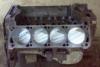

Newly built 351 M question

Thread Starter
|
New User
Joined: Dec 2008
Posts: 3
Likes: 0
Newly built 351 M question
Hello guys:
New guy here..........
I am an auto shop teacher in Toronto and as a school project we have done a rebuild on a 1977 F150 XLT. This has been an excellent project and it is now getting to the final stages. I purchased this truck about 3 years ago and it has been totally done at the school and by the students.
The question that I have for you is about the engine. We have a 351 M engine that has had some machine work. Ten thou off the heads and ten off the block (deck) edlebrock intake and 600 cfm Holley. #268 comp cam.
It starts and runs very rough, backfires and generally just runs terrible. I am wondering if the cam is wrong. Can someone tell me what would be the ideal cam for this engine??? I am hearing the term "RV" cam what number would this be. Any help would be appreciated
Garry
New guy here..........
I am an auto shop teacher in Toronto and as a school project we have done a rebuild on a 1977 F150 XLT. This has been an excellent project and it is now getting to the final stages. I purchased this truck about 3 years ago and it has been totally done at the school and by the students.
The question that I have for you is about the engine. We have a 351 M engine that has had some machine work. Ten thou off the heads and ten off the block (deck) edlebrock intake and 600 cfm Holley. #268 comp cam.
It starts and runs very rough, backfires and generally just runs terrible. I am wondering if the cam is wrong. Can someone tell me what would be the ideal cam for this engine??? I am hearing the term "RV" cam what number would this be. Any help would be appreciated
Garry

Cargo Master


Joined: Dec 2004
Posts: 2,232
Likes: 3
From: NE Texas
I agree with Bullits suggestion. Although in my opinion, the 268 is too much cam for this engine and situation, it should not run rough.
RV usually means a cam in the 206 degrees @ .050 area. IMHO the 252H would be the ideal cam for that truck. It would help with the low compression of the truck and help build off idle torque which is about the only area this engine can be expected to build torque.
That said, just find your problem and the 268 will work okay. In my experience, these engines are really touchy about ignition advance. If you get too much in them they will indeed spit, cough and complain. Try retarding the timing after you've checked the firing order.
Good luck and my best to you and your students. There need to be more auto shop instructors and more good students for them. It's honorable work.
RV usually means a cam in the 206 degrees @ .050 area. IMHO the 252H would be the ideal cam for that truck. It would help with the low compression of the truck and help build off idle torque which is about the only area this engine can be expected to build torque.
That said, just find your problem and the 268 will work okay. In my experience, these engines are really touchy about ignition advance. If you get too much in them they will indeed spit, cough and complain. Try retarding the timing after you've checked the firing order.
Good luck and my best to you and your students. There need to be more auto shop instructors and more good students for them. It's honorable work.
Thread Starter
|
New User
Joined: Dec 2008
Posts: 3
Likes: 0
Appreciate The Help
Thanks for the help guys I really appreciate it. I have gone over the timing many times and I have shimmed the rockers. However, after saying that it is possible that I have not shimmed enough. My next step is to re-check this clearance as many of you advised. I will let you know how this turns out, or if I have any further questions. I am very happy as I get so many nice comments on how the truck looks when people stop into the shop. I will post some pictures. I am now on the seach for my next truck project and of course it will be another "Dent Side"
Trending Topics

Posting Guru
Joined: Oct 2005
Posts: 1,017
Likes: 3
From: Longwood, Fl
I vote for checking the lifter pre-load. One other thing that I have personally seen that gave lots of problems, is that when a higher lift cam is installed, you must check valve spring clearance for max lift (dont ask how I know). Not sure about the 77 351M, but the 79 400's had exaust valve rotators installed on the exaust springs. They are an ultra thick retainer, easy to compare to a normal retainer. If these rotators are not removed, the exaust spring may well coil bind. Dont know the lift specs on your 268 cam, but you should check for max lift allowed by a spring with a rotator. You may be very glad that you cant get it to run well 
My .02 is that even with a little too much cam it will just not have power where you want it, but will still run and sound good. The 79 400 I mentioned, the pedestals were shimmed and the preload was corrected, after the rotator removal. That cam was a Crane "Blazer" series, I think it was 224/224, 500 at valve, 110 CL. Duration may have been 220/220---not sure, been a while.
My .02 is that even with a little too much cam it will just not have power where you want it, but will still run and sound good. The 79 400 I mentioned, the pedestals were shimmed and the preload was corrected, after the rotator removal. That cam was a Crane "Blazer" series, I think it was 224/224, 500 at valve, 110 CL. Duration may have been 220/220---not sure, been a while.
FTE Stories
Ford Trucks for Ford Truck Enthusiasts

Top 10 Most Expensive Ford Trucks Ever Sold on Bring a Trailer
Joe Kucinski
2027 Ford Super Duty Buyer's Guide (Every Model, Engine, & Package)
Brett Foote
Top 10 Ford Truck Tragedies
Joe Kucinski
AEV FXL Super Duty - the Super Duty Raptor Ford Doesn't Make
Brett Foote
Lobo Vs Lobo: Proof the F-150 Lobo Should Be Even Lower!
Michael S. Palmer
Ford's 2001 Explorer Sportsman Concept Looks For a New Home
Verdad Gallardo
10 Best Ford Truck Engines We Miss the Most!
Joe Kucinski
2026 Shelby F-150 Off-Road: Better Than a Raptor R?
Brett Foote
2027 Super Duty Carhartt Package First Look: 12 Things You NEED to Know!
Michael S. Palmer
Cargo Master
Joined: Dec 2004
Posts: 2,232
Likes: 3
From: NE Texas
Do a compression check. If compression checks good, then the rough running is not due to valves not closing.
I never experienced rocker arm geometry problems on my 400 because I converted to adjustable rockers from the get go. It's most definitely a worthwhile mod. I used the Crane stud kit and big block Chevy rocker arms. Works great in spite of the blasphemy of using bow tie parts.
I never experienced rocker arm geometry problems on my 400 because I converted to adjustable rockers from the get go. It's most definitely a worthwhile mod. I used the Crane stud kit and big block Chevy rocker arms. Works great in spite of the blasphemy of using bow tie parts.

Thread
Thread Starter
Forum
Replies
Last Post
23racer
1973 - 1979 F-100 & Larger F-Series Trucks
7
Jun 8, 2012 04:08 PM
lhansman
6.0L Power Stroke Diesel
10
May 15, 2010 01:27 PM