






Bondo's bad?

Thread Starter
|
Junior User
Joined: Jul 2008
Posts: 75
Likes: 0
From: Dallas TEXAS!!!
 Bondo's bad?
I might be asking for it here, but I have to ask. Seems there's quite a few posts where people moan about Bondo. My NTM (new-to-me) F-100 needs quite a bit of cosmetic body work, but my wife's uncle told me that it's nothing I couldn't fix with a little Bondo. Having worked almost exclusively on old Jap bikes (70's/80's), I never really had to mess with body work. If a tank was shot, you bought or fab'ed a new one- simple as that.
So before I commit high treason or the 8th deadly sin, can someone give me the finer points/commandments of body work? Is Bondo really that bad? Sounds to me like working with the automotive equivalent of drywall mud, and that's bad?
Please hold back the flames, and just give me the high points.
Thanks!
So before I commit high treason or the 8th deadly sin, can someone give me the finer points/commandments of body work? Is Bondo really that bad? Sounds to me like working with the automotive equivalent of drywall mud, and that's bad?
Please hold back the flames, and just give me the high points.
Thanks!

Fleet Owner


Joined: Jan 2004
Posts: 26,007
Likes: 575
From: Brentwood,CA

A lot of people tend to over bondo. I have seen people fill 3'' deep dents with over 2 gallons of the stuff. Bondo is also not the best body filler. 3M makes good light weight poly body filler and VHT makes crack proof body filler. I tend to use fiberglass enhanced filler for larger dings and use plastic filler to fix seams and body panels.
Thread Starter
|
Junior User
Joined: Jul 2008
Posts: 75
Likes: 0
From: Dallas TEXAS!!!
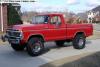
He was suggesting it to fill in rust holes in my quarter panels and in the tailgate. See example below...
https://www.ford-trucks.com/user_gal...194733&width=2
So I guess what I'm hearing is, "It's not bad, just often misused".
https://www.ford-trucks.com/user_gal...194733&width=2
So I guess what I'm hearing is, "It's not bad, just often misused".

Post Fiend
Joined: Jul 2004
Posts: 8,786
Likes: 28
From: Northern California
you don't want to use bondo to fix those rust holes in the bed.
You need to use a patch panel.
You can get by with fiberglass enhanced filler, but the patch panel is best.
Bondo has a life of around 5 to 10 years then it may start to crack and has to be redone, so keep that in mind too.
You need to use a patch panel.
You can get by with fiberglass enhanced filler, but the patch panel is best.
Bondo has a life of around 5 to 10 years then it may start to crack and has to be redone, so keep that in mind too.

Senior User
Joined: May 2008
Posts: 453
Likes: 0
From: Royse City TX
you don't want to use bondo to fix those rust holes in the bed.
You need to use a patch panel.
You can get by with fiberglass enhanced filler, but the patch panel is best.
Bondo has a life of around 5 to 10 years then it may start to crack and has to be redone, so keep that in mind too.
You need to use a patch panel.
You can get by with fiberglass enhanced filler, but the patch panel is best.
Bondo has a life of around 5 to 10 years then it may start to crack and has to be redone, so keep that in mind too.
Trending Topics
Thread Starter
|
Junior User
Joined: Jul 2008
Posts: 75
Likes: 0
From: Dallas TEXAS!!!
FTE Stories
Ford Trucks for Ford Truck Enthusiasts

3 Best / 3 Worst Parts of Modern Ford Ownership
Brett Foote
10 Amazing Upgrades That Solve Common Ford Truck Owner Headaches
Pouria Savadkouei
Every 2026 Ford Engine Explained
Brett Foote
10 Ugly Ford Trucks That We Still Kinda Love
Joe Kucinski
10 Things Every Truck Owner NEEDS (2026 Edition)
Michael S. Palmer
Rezvani's Latest Post-Apocalyptic Monster Is a Ford F-150 Raptor Underneath
Verdad Gallardo
Top 10 Most Expensive Ford Trucks Ever Sold on Bring a Trailer
Joe Kucinski
2027 Ford Super Duty Buyer's Guide (Every Model, Engine, & Package)
Brett Foote
Top 10 Ford Truck Tragedies
Joe Kucinski
Senior User
Joined: May 2008
Posts: 453
Likes: 0
From: Royse City TX
Yeah, but unless you're going to be runing over Smart Cars, again be sparing. Don't put a 3" thick bead all the way around your patch. Just enough that it's solid and youre not going to accidently knock it off. You don't want a huge bead to show trhough the bed.

Elder User
Joined: May 2007
Posts: 514
Likes: 0
From: Northern Colorado
Also make sure that wherever filler is used, it is not directly exposed to moisture, i.e. old moulding holes. The inside of the repair (inside of the panel) would still have the filler exposed and it will wick moisture, causing worse trouble down the road. Moulding holes should be filled with metal.
Senior User
Joined: Dec 2005
Posts: 399
Likes: 0
He was suggesting it to fill in rust holes in my quarter panels and in the tailgate. See example below...
https://www.ford-trucks.com/user_gal...194733&width=2
https://www.ford-trucks.com/user_gal...194733&width=2
Yeah, you want a patch panel for the place over your rear wheel well. See my gallery for what I did to mine. Bodywork was new to me so it took a long time but it's held up pretty well so far. But my truck is not a daily driver so it's not out in the elements much. If you are lucky you will not have to patch the inner part of the wheel well. Mine was rusted through there, too.
There are lots of opinions in the paint and bodywork forum.... Good luck whatever you decide to do and let us know how it turns out.

Senior User
Joined: Apr 2008
Posts: 224
Likes: 0
From what I know (and I know some people that do $40G+ paint jobs on classic cars, mirror finishes) you should use bondo (or some filler) with a long sanding block (I've seen as long as 3ft. for long straight pieces)to fill in all the remaining imperfections in the final stage. Paying extra attention to those final details before you paint is what makes your paint job look like a show car job instead of a Maaco Presidential Special.
Lead Driver
Joined: Apr 2008
Posts: 6,945
Likes: 13
dont apply bondo over 1/4" if the dent is worse than that do some metal finishing. As far as rust goes... you can sand blast it and put fiberglass on it which works nicely. but if you plan on keeping it... patch it, it will be alot better for you down the road. When you paint, you want the material to be as thin as possible to avoid cracks and chips. The thicker bondo is the sooner it cracks.