When you click on links to various merchants on this site and make a purchase, this can result in this site earning a commission. Affiliate programs and affiliations include, but are not limited to, the eBay Partner Network.
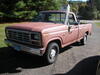
1982 f150 4.9l 300 straight 6. Got from original owner a few months back. Recently had issues with pressing the gas pedal on the lighter side and it hesitating a bit unless I gave it more gas. Decided to try and swap the fuel filter first. Swapped and tried to run it, gas dripped out from fuel rail side. Turned off and got a thread sealant as I did notice a teflon tape like stuff on the fuel rail nut when I removed it. Found permatex seal and lock for fuel lines and applied. I did over tighten the filter and fuel came from the top....got another and did it all again. Now it won't really start. If I put the pedal down while trying it kinda would start, all be it rough so I stopped that. Learned of priming and tried the key cycles to only today find out its mechanical not electrical so duh. Now I know it could be either a lever to pump...don't see one but not sure where it may be. Or put gas into the carb, but where? Fuel pump is here it seems.
Last edited by Gutsnglory; Oct 30, 2025 at 03:54 PM.
Yes, the mechanical fuel pump is that item on the engine block in the last picture.
Normally with the engine cold, you push the gas pedal once to the floor to set the choke, that top plate on the carb. Then try to start the truck without touching the gas pedal again until after it fires up and is idling.
The third picture shows the choke plate is closed.
Fuel rail... I guess you are young and have not worked on old stuff. Fuel rail is on fuel injection engines.
The experts will chime in soon.
Remember, tightness doesn't make a good seal. You need clean sealing surface and then just tight enough. Over tightening doesn't help. Teflon tape is used if you know how to and how much to use.
Last edited by Max Capacity; Oct 30, 2025 at 05:30 PM.
The tube nut on the hardline, do not put anything on those threads, the threads dont seal, the seal is the double flare of the hardline itself. When you use teflon in this instance it can find its way into the carb and cause all kinds of problems.
Only time you use a sealer on threads is on pipe threads. The filter that screws into the carb bowl that thread is pipe thread, you can use tape but you will be better off with ARP Thread sealer its a paste liquid that you apply lightly to the threads then thread in spot.
you will be better off with ARP Thread sealer its a paste liquid that you apply lightly to the threads then thread in spot.
All excellent advice from Rusty S. The only thing I'd add for paste sealer on tapered pipe threads: Apply it sparingly but leave the first two threads bare. If applied all the way to the end of the threads, some of that sealer will get pushed ahead into the carb.
As far as understanding how the metal pipe is sealed at the filter inlet: As Rusty S said, the sealing is done by metal on metal contact on the flared surfaces. Those threads only provide the clamping force to squeeze the two parts together. No point in adding sealer on those threads. This is different from the tapered pipe threads where the filter threads into the carb body, which do provide sealing action.
The leak is between the metal supply line and filter inlet, right? Might be worth trying a different brand of filter. Had a new filter leak there a couple of years ago. The mating surface wasn't properly machined.
Another trick is to make sure the metal line goes straight into the filter inlet. If cocked to one side, it won't seal well. I've had to apply a little side pressure on the line while tightening that nut.
Yes, the mechanical fuel pump is that item on the engine block in the last picture.
Normally with the engine cold, you push the gas pedal once to the floor to set the choke, that top plate on the carb. Then try to start the truck without touching the gas pedal again until after it fires up and is idling.
The third picture shows the choke plate is closed.
Fuel rail... I guess you are young and have not worked on old stuff. Fuel rail is on fuel injection engines.
The experts will chime in soon.
Remember, tightness doesn't make a good seal. You need clean sealing surface and then just tight enough. Over tightening doesn't help. Teflon tape is used if you know how to and how much to use.
Ah yes i am, i believe i remember someone in a video refer to it a such when trying to look up how to do this. Either they too were wrong or i am mixing up something.
The tube nut on the hardline, do not put anything on those threads, the threads dont seal, the seal is the double flare of the hardline itself. When you use teflon in this instance it can find its way into the carb and cause all kinds of problems.
Only time you use a sealer on threads is on pipe threads. The filter that screws into the carb bowl that thread is pipe thread, you can use tape but you will be better off with ARP Thread sealer its a paste liquid that you apply lightly to the threads then thread in spot.
So how do I prime it to get the air out? I am under the understanding that part of my problem is that I need to get the air out and id have to prime it. Since it should be a mechanical pump, id have to find a lever to pump if it is there or potentially put gas into the carborator to get it to run and build pressure. Just not sure entirely if any of this is correct and where to pour the gas into.
All excellent advice from Rusty S. The only thing I'd add for paste sealer on tapered pipe threads: Apply it sparingly but leave the first two threads bare. If applied all the way to the end of the threads, some of that sealer will get pushed ahead into the carb.
As far as understanding how the metal pipe is sealed at the filter inlet: As Rusty S said, the sealing is done by metal on metal contact on the flared surfaces. Those threads only provide the clamping force to squeeze the two parts together. No point in adding sealer on those threads. This is different from the tapered pipe threads where the filter threads into the carb body, which do provide sealing action.
The leak is between the metal supply line and filter inlet, right? Might be worth trying a different brand of filter. Had a new filter leak there a couple of years ago. The mating surface wasn't properly machined.
Another trick is to make sure the metal line goes straight into the filter inlet. If cocked to one side, it won't seal well. I've had to apply a little side pressure on the line while tightening that nut.
I will say the newer filter was slightly longer at the top where the filter threads into the carb. As for why i even put a seant on was because of it leaking a bit the first time i installed the filter and remembered there was a small old piece of thread tape on the threads on the line that went into the filter. So due to it leaking and that fact further lead me to believing it did need something to seal it. I will say at this point I really just need to understand how to go about priming it once I correct this. Gas into the barb? If so where do I pour it? And if I might have a lever (something I read online that the pump may have) Where because I don't see one. Would it be somewhere else or right there by the pump, which I don't see so I assume it doesn't have one.
Don't pour gas into anything yet. Do you know if you're getting fuel into the carb? You said it kinda starts but rough. With the engine off, have someone press the gas pedal while you hold the choke open and look into the carb for fuel spray. If you do, then sounds like you just might need to work the pump a little to get the air all out. I've had the carb and fuel line off my truck and IME the pump will cycle up the gas quick enough, just don't kill your battery/starter while doing it. Karl and Max are already here, I'm sure The Daves will join the in AM to explain the technical details better than I can.
ETA: I should also add, have you ensure the filter isn't leaking anymore? I'd start there first.
Last edited by Staticbuster; Oct 30, 2025 at 09:43 PM.
So how do I prime it to get the air out? I am under the understanding that part of my problem is that I need to get the air out and id have to prime it. Since it should be a mechanical pump, id have to find a lever to pump if it is there or potentially put gas into the carborator to get it to run and build pressure. Just not sure entirely if any of this is correct and where to pour the gas into.
There is no need to prime it. As you crank on the engine or the engine is running the mechanical fuel pump will pull fuel from the tank and pump it to the carb. The float will act upon the needle and seat on the inlet of the carb in the fuel bowl and will control fuel level.
If you are not getting fuel at the carb, then there are a few things that can cause that.
1) a clog in the hardline, mechanical fuel pumps are very low pressure and a clog would be enough to stop flow. I had this issue on my Fairlane, could blow through the hardline but once liquid was applied nothing could flow, it was the mesh screen on the carb inlet that was clogged that would allow air to flow but not a liquid.
2) a weak fuel pump, a weak mechanical fuel pump would not have enough pressure to push fuel up to the carb if its weak enough.
3) fuel pick up issue, fuel pumps are not designed to pull fuel but push fuel this is the same for both electric and mechanical. It is why you want the pick up in the fuel tank at the bottom so the weight of the fuel will create a syphon effect that will keep fuel flowing on its own to the pump on the suction side. Its possible your suction side is dry and it cant get the fuel flowing for some reason, a non vented fuel tank can cause this if the fuel tank cant vent then fuel cant flow on its own.
Don't pour gas into anything yet. Do you know if you're getting fuel into the carb? You said it kinda starts but rough. With the engine off, have someone press the gas pedal while you hold the choke open and look into the carb for fuel spray. If you do, then sounds like you just might need to work the pump a little to get the air all out. I've had the carb and fuel line off my truck and IME the pump will cycle up the gas quick enough, just don't kill your battery/starter while doing it. Karl and Max are already here, I'm sure The Daves will join the in AM to explain the technical details better than I can.
ETA: I should also add, have you ensure the filter isn't leaking anymore? I'd start there first.
Sounds like a plan. If no gas, I can try seeing if this filter is no good and still got the old one that works. If there is gas, working the pump as you say to get the air out is where I am lost. That is the part I need help on cause i dont know how to get the air out.
Sounds like a plan. If no gas, I can try seeing if this filter is no good and still got the old one that works. If there is gas, working the pump as you say to get the air out is where I am lost. That is the part I need help on cause i dont know how to get the air out.
You do not need to do any special procedure to get the air out. The fuel system will fill on it's own from cranking the engine. Check the carb for fuel like was mentioned by taking the aircleaner off, manually open the choke door on top of the carb, and take your other hand and push the throttle wide open. This is all done with the engine off. You should see one single stream of fuel squirt into the engine. If you do, you have fuel. If you don't see fuel, crank the engine some. Then go out and check it again.
You may need to remove the fuel line coming from the tank to the fuel pump and make sure it is not blocked, stopping or restricting fuel flow to the fuel pump.
Sounds like you were driving the truck at one time so, can we assume the engine idled well ?
Yes, verifying fuel flow is one of the steps, to fixing...
Even though you replaced the filter, there should be plenty fuel in the carb to start the engine which well run the fuel pump and fill the carb.
This is all done with the engine off. You should see one single stream of fuel squirt into the engine. If you do, you have fuel...
Allow me to add one little tidbit. Cycle the throttle two or three times, not just once.
The fuel squirt you should see is from the accelerator pump, which draws fuel from the main float chamber. The accel pump refills after each shot. If you only cycle the throttle once, it does not verify if the main chamber has an adequate level of fuel. If the second and third attempts come up dry, that confirms the main float chamber is empty.
All good information so far.
I would start, motor off, by opening the choke looking down inside and move the throttle and see if you see fuel squirt and if not you can either spray a little starting fluid down inside the carb and see if it will start.
Or keep cranking it, may take a bit of cranking to fill the carb fuel bowl.
I have to crank my motor, a 300 six like yours, a lot when it sits for a bit to fill the carb bowl. I also pump the throttle like a mad man when cranking till it comes to life.
If you still are not getting fuel to the carb, even with starting fluid 2 or 3 times you will need to look into why now fuel to the carb.
I would undo the hard line from the screw in filter. BTW you turned it in to far. It uses pipe threads that have a taper to no need to "run it home" till tight. You cant loosen it now as it will leak and hope you can use a new filter down the road and not have it leak. Once the hard line is loose have something to catch fuel out of the line and crank the motor and see if fuel comes out.
If not report back and we can go from there on what to check.
Oh if you have been moving the throttle a lot you may have flooded the motor. If you think that is why it will not start and see fuel squirt then try holding the choke open with a large screw driver, hold the throttle to the floor and try and start.
Dave ----
ps every motor with a carb starts a different way, 1 pump or 2 or none when cold or hot. That is all the fun of owning something old
Or keep cranking it, may take a bit of cranking to fill the carb fuel bowl.
I have to crank my motor, a 300 six like yours, a lot when it sits for a bit to fill the carb bowl…
One more caution. Reading between the lines, you’re new to a carbureted engine and mechanical fuel pump. If the carb is indeed empty, you will need to crank the starter a bit to get fuel up to the carb. This is perfectly normal.
However, be careful not to use the “crank and pray” method. Don’t just crank and crank and crank that poor starter. If fuel is not reaching the carb within 20 seconds or so, stop cranking and investigate why. Let the starter rest for several minutes before trying again.
Sadly, we’ve had too many tales of guys running down the battery or burning up a perfectly good starter. If you don’t get the desired result, continued cranking of the starter isn’t going to change anything. Stop and investigate why.
Rezvani's Latest Post-Apocalyptic Monster Is a Ford F-150 Raptor Underneath
Slideshow: Called the Fortress, the 850-horsepower pickup combines Raptor underpinnings with military-inspired features, survival equipment, and a starting price of $285,000.