When you click on links to various merchants on this site and make a purchase, this can result in this site earning a commission. Affiliate programs and affiliations include, but are not limited to, the eBay Partner Network.
Not impressed with the top seal - I would use a battery box (standard practice anyway) if I bought this for the boat. It should be fine for land use without the box.
I like the fact you can take that one apart and work on it. its basically the same as a DIY but with a fancy case that makes it palatable for the masses in so far as the top seal goes I think spraying the case edge with liquid wax and then putting a coat of polyurethane sealant around the top edge and sitting them together will net you a worthy seal. the liquid wax will allow you to disassemble it later as the polyurethane will only stick to the lid side. treat it just like a gasket on an oil pan, lay a bead set it in place but do not tighten it down all the way for 24 hours and wala! instant waterproof seal. you can do the same for the terminals if they are not sealed properly.
I guess the next question is how many of these would you need to power the Yacht for one night without running the genset, only a power audit will answer that!
whats your next project after your shelving unit? where you live I would definitely build a stand along panel system just to power my a/c. don't tie into grid and tell them to have a nice day on their exorbitant electric bills. there are DIY split packs these days specifically designed to be used with a battery less inverter. so panels to inverter, inverter to the split pack, and once the array starts to make enough power to run the load, off it goes, no batteries, no tie ins to grid mains nothing that the electrical service provider overlords can say about it. City council is a different hurdle to jump, I suggest catching them all in compromising situations and holding the proof over their heads...
I have an HOA where I live now unfortunately. Getting the first system (which is fully certified to all commercial standards) approved was already an act of congress. I can only imagine the screeches from the Karens if I try to build a homebrew system. Here's what my system generated starting from about midmorning yesterday.
I have an HOA where I live now unfortunately. Getting the first system (which is fully certified to all commercial standards) approved was already an act of congress. I can only imagine the screeches from the Karens if I try to build a homebrew system. Here's what my system generated starting from about midmorning yesterday.
nice! I run through 24~30 kw/ per 24hr period running the cabin and the panels have the batteries fully charged by 1000 or so in the summer. that must save you a grip on your ac bill i would guess.
...I guess the next question is how many of these would you need to power the Yacht for one night without running the genset, only a power audit will answer that!
I actually know this one from our years of being on the hook with our previous boat in the summer months. We go through about 80-100 Ah per day in the summer months (no problem keeping that fed with 1250 watt average solar per 24 hours), but that's with very hot temps and running the 12V fridge. Much cooler weather with a 50% larger 12V fridge and shorter days (winter) with more lights will likely bump it to 150-200 Ah. We'll likely be on shore power more often than not during the cold months, and summer months will provide a lot more solar than our previous boat.
One elephant in the room with differing battery technologies - the DC to DC converter.
Lead (Pb) batteries are familiar to all of us, whether they are flooded, AGM, deep cycle, marine, or any combination thereof.
Putting aside the outside technologies (EV, hybrid, lithium ion, and various other batteries), I'm focusing on a safe battery technology available today:
LiFePO4 - or lithium ferric phosphate - or lithium phosphate - or LFP... they all mean the same thing.
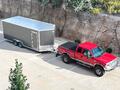
LFP uses a different voltage than lead, has a different charge profile and limit, and can never ever be tied directly to a conventional lead battery or alternator configured for lead batteries. My truck camper has an LFP battery, and I plug the camper into Frankenstinky's 7-blade RV towing connector. Because of that battery charge pin on the connector, doing this directly before making changes would blow the truck alternator - and maybe cook the truck batteries.
I can no longer find this product on the Victron site, so I don't know what the story is there. It is completely programmable with my phone (via bluetooth), so I dialed it to not charge the camper until the diesel was happy after recovering from a cold start (glow plugs active). What that really means is I told it not to charge the camper until the truck volts are over something like 13.2. This prevents the camper from stealing power from the truck when it's not running and already has a good charge. I also set the charge limit to 10 amps - through efficiency losses, that's closer to about 12 amps from the truck. The truck has a 30-amp fuse on that circuit, but all the wiring is now 24 years old - so I leaned into caution.
I have separate circuits for solar and plugged-in charging, I count on those to really keep the LFP battery up with an additional 35s amp of charge available. The battery can take 50 amps of charge, but I programmed the system so it could not exceed the limit if everything was charging simultaneously.
Saying all of that, my next boat is going to need a bigger DC-DC converter because of the capacity of the house batteries. This video gave me Spock eye (raised an eyebrow).
The alternators on my (proposed) boat put out 135 amps each. Hmmmmm.
Rich, the big news from Victron this year is the new Orion XS, 50 amps, smaller and lighter than the 18 or the 30, and less heat produced. I went with the Orion 30 though for my Sprinter which is more than enough but it is actually bigger and heavier than the new XS, https://www.victronenergy.com/dc-dc-...attery-charger
Not to worry. There will be many exciting projects to come once I am able to move the trailer to its proper parking spot and the workbench is completed.
The SOK has a pretty solid following in the solar community, I would rate them as an Up and coming overall as they have been out for a while and have few complaints (that I have seen to date) and at that price even if they die in say 5-7 years you got your money's worth at that price point.
much better pricing than battle born and battle born is already waffling on some of their warranty claims.
edit: sorry almost forgot, pretty sure they use a JK BMS system which makes it easy to swap if the BMS goes bad from El Noobo De Solar abusing it.
where did you order it from? that was a fast delivery.
I just got my spare inverter I ordered used off of fleabay, it seems that I might have got it from a person who is honest. I will take it up to the cabin and test it before leaving feedback.
For our RV energy storage upgrade from 4x 6v Trojan T-105 FLA batteries prior to another long distance trip I plan to go with ~ 450 Ah of SOK or Epoch.
Both seem to have a good reputation and following.
Rezvani's Latest Post-Apocalyptic Monster Is a Ford F-150 Raptor Underneath
Slideshow: Called the Fortress, the 850-horsepower pickup combines Raptor underpinnings with military-inspired features, survival equipment, and a starting price of $285,000.