When you click on links to various merchants on this site and make a purchase, this can result in this site earning a commission. Affiliate programs and affiliations include, but are not limited to, the eBay Partner Network.
If I understand correctly, we have been given a green light to post an off-topic thread on solar power. So...here it is.
I have some interest as I had a solar array installed on my garage in 2015, when we bought this house. I have a 72 panel 19.4kWp system. Last winter, I added a 43.5 kWh backup battery so I can utilize the solar array when the power goes out. I got the backup system more as a matter of prepping than the somewhat regular power outages that we have but it is nice to have, rather than roll out the generator. For the backup battery, I found a local, homeschooled guy who is capable of working outside the box. He got a good deal on the battery and configured it for my use. Most of the installers are just that, installers who are incapable of thinking outside the box that they were trained in. I couldn't be happier with my setup.
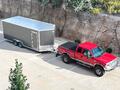
on a small scale, I put this on our Raptor pickup yesterday, it is parked way out back, no grid power for it, the Raptor has so much Electronics on that is Always Powered up, it drains the battery dry in about 8 weeks.
Lesson learned, had to replace the battery last February.
I would love to pair some solar with my existing backup power supply. I am interested to see how the lithium iron stuff sorts out. Or even the compressed cells that don’t use lithium.
on a smaller scale, my tractor is maintained with a solar cell because it is away from line power. It works really well
My battery pack is LiFePO but I don't know much about them. From talking to the guy who built and installed it, they have good charge and discharge rates and supposedly have 20 year guarantees. I'll need to build a heated box for them though, because they don't charge below the freezing point.
I recently got solar installed by Sunrun on the house. They offered a backup power option but was told
it was not worth the cost given the low probability of power outage around here.
Funny this popped up. I just ordered 8 6V L16 flooded batteries for my solar system this morning . It's my understanding that flooded lead acid are better for back up power, lithium better if you are pulling juice from them on a regular basis, and I don't know anything about what you have.
The solar panels, generator and battery bank came with my house when I bought it. I have to have the batteries for the system to work, I would rather have gotten rid of the battery bank. I could listen to the propane generator running for a long time before 3k would seem like a good idea for batteries that will be dead again in 10 years.
Hopefully your battery bank will last longer and serve you well.
If I understand correctly, we have been given a green light to post an off-topic thread on solar power. So...here it is.
Since when did we need approval to start random threads about all manner of unrelated nonsense?
Solar is a good one though. Been half a dozen years or so since I went for a tumble down that rabbit hole. Good time for a refresher I suppose. YouTube here I come.
I recently got solar installed by Sunrun on the house. They offered a backup power option but was told
it was not worth the cost given the low probability of power outage around here.
Solar panels in Vegas, they outta have your meter spinning like a Griswold Christmas only backwards.
Funny this popped up. I just ordered 8 6V L16 flooded batteries for my solar system this morning . It's my understanding that flooded lead acid are better for back up power, lithium better if you are pulling juice from them on a regular basis, and I don't know anything about what you have.
The solar panels, generator and battery bank came with my house when I bought it. I have to have the batteries for the system to work, I would rather have gotten rid of the battery bank. I could listen to the propane generator running for a long time before 3k would seem like a good idea for batteries that will be dead again in 10 years.
Hopefully your battery bank will last longer and serve you well.
Damn, 3 grand? You'd think being LA things would be low tech enough that provided the voltage was correct you could fudge the bank capacity to something a little friendlier on the wallet. Obviously I have no idea what your setup is or it's requirements, only speculating
I recently got solar installed by Sunrun on the house. They offered a backup power option but was told
it was not worth the cost given the low probability of power outage around here.
I have started sending emails like that to SPAM....
our local Power Grid is near 99.5% online 24/7/365
we get the occasional blip when a car hits a power pole, but that only lasts for an hour or three.
I have a Transfer Panel setup on the house, to let me use a 10KW peak AuxGen..... it will run 8 hours on one tank of E0 gasoline.
the last time one of those Solar companies tried to get me to convert the house to power, I ran the numbers.... it would take 25 years to Break Even with the initial cost, and by that time, the battery bank would have to be replaced at a cost equal to the original install.
**** on that, I will stay with my AuxGen, it went 4 hours w/o even starting it up the last time. I shut the gas off at the tank, and let it run until the carb goes dry, as per the Instructions printed on the thing.
turn on gas, wait 15 seconds, close choke, hit starter, it whirls over twice and Varoom..... don't need solar.
We only use 15k propane generators now. Never have the problems we did using gas ones, and a 80 gallon tank usually lasts for a week. Even in the worst hurricanes, we have power restored in less than a week.
My battery pack is LiFePO but I don't know much about them. From talking to the guy who built and installed it, they have good charge and discharge rates and supposedly have 20 year guarantees. I'll need to build a heated box for them though, because they don't charge below the freezing point.
what type of battereis did you use in your system? this will determine what sort of battery bank heater to use. I use individual LiFePo4 and LifeYPo4 cells (CALB and Winston, nylon cased cells vice the aluminum, more on why later).
I use a 1/4" aluminum plate as a cell compression fixture, (a compression fixture is reccomended by all makers for best cells life, but many do without it.) but by me making mine from aluminum plate it can and does serve the dual purpose as a heating device. I use 12 volt 25w silicone heating pads spread across the outside of the aluminum plate, using the aluminum as a heat spreader to make the heat more even for the cells.
many different ways to skin this proverbial cat, some use temp controllers and relays I do not (anymore) originally I did but the available temp controllers , relays and voltage converters needed for that system was onerous, and trouble prone.
These days I rely upon Ohm's law (along with a few others) and simply wire pads in series. each time you half the voltage going to the cells you drop the heat output to 1/4 of its rated output. so two 12 volt 25 watts in series only put out about 8.8 watts per pad. wire 8 in sereis with a 48 volt input and proper insulation and my batteries stay in the happy zone through the winter with no issues and low overall draw from the cells themselves. attached are photos of the cells in the aluminum compression rig and then with the heating pads applied.
Battery bank is in my shop remote form house so it offers some advantages in regards to safety. (fire from bad/loose connections, overheated components etc.)
blue cells are CALB SE180 or 180 amp hours per cell wired in a 3p16S setup for 540 amp hours or 29.5kWh of storage. the yellow ones are the larger format winstons in 16s for 400 aH per bank or 800 for the two or 44kWh of storage for a total of a little over 1300 aH or 71kWh of total storage.
you can see the blue XPS box next to these cells, that is the first set enclosed in the XPS foam with eh joints sealed with expanding foam.
the above photo was while commissioning the cells so the wiring is setup for that, in normal use the wires are almost twice as thick and the BMS sits separatly with a 1/2" insulation matt between it and the top of the cells.
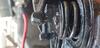
You're asking the wrong, guy, my solar guy would have to answer all of those questions. Here are two pictures of the battery pack, in hopes that you can tell from them.
for those not immersed in the field like I have become, here are your pros and cons with the different chemistries
flooded lead acid: very very robust in regards to temperature, but must be fully charged at least once a week to avoid sulphation, this can be hard to do with solar unless your PV array is very, very large. accepts power very slowly as it gets closer to full so initially it will charge fast for the first 75-80% then as its voltage rises, its internal resistance also rises making it charge slower and slower at the end, therefore you need to charge hard and fast until you hit that point and then continue to charge to full and then you need to allow the batteries to hold that "full" voltage for a while to absorb. this is critical for long life of flooded lead acid batteries. You must also do a equalizing charge on a periodic basis, as well as check the water level on a regular basis (weekly at first, then you can space it out as you find out how much water you go through.). msut be kept in the 60% and higher range for longest life cycle which for most people is 8-12 years.
AGM: same attributes as flooded lead acid, but 2x price. do not need to monitor water level, all else is the same (chargeing voltage is different, and the equalizing charge is about 1/4 compared to FLA. must be kept in 60% and higher depth of discharge for longest life which for most people is 4-8 years
Lithium cells: avoid all cell chemistries other than LiFePo4 or LiFeYpo4.
these two are very stable and long lived, they also have a very good safety history for the cells themselves, issues are you need a BMS, cannot charge when below 0 (for LiFePo4) and LiFeYPo4 does not have this issue but there is only one maker (winston) and they cost 4x other cells.
you have aluminum cased, and nylon cased, both have advantages, and disadvantages, contact me for indepth as its too much for one post. if you are using in a mobile system, keep your cell size to the 100-180 aH size (learned from the Yachting crowd). the larger ones are problematic on a vessel that shifts a lot.
Pros:
They do not need absorb time, will charge at full speed up until they are full, do not need to be fully charged every day for long life can honestly be used down to 10% with no ill effects on longevity. best when kept between 90-10% so almost full to almost empty is fine, completely empty will cause a reduction in lifespan as will totally 100% full (brief periods to full while charging are OK, do not hold there.) life cycle if kept between 90-10% above freezing while charging, and preferably below 30°c (85f) will net most solar users a 15-25 year life span with 20 being the average. there are folks in Austrailia where lifepo4 cells are common with 20 year old cells that still put out 95% capacity or higher.
scary lithium fires! Lifepo4 will not self ignite, there are tests with video proof on youtube of fire departments testing LiFePo4 cells and purposly abusing them with overcharge, direct shorts, puncturing them with pick axes and none of them spontaneously catch on fire or explode. the same cannot be said for other lithium based chemistries.
Cons:
needs a BMS (batteyr management system)
must be kept above freezing for charging either by location, or with heating pads like I use.
should be kept below 85F for longest life must be kept below 40c during charge, discharge and storage.
very, very high current capable: the cells have very low internal resistance, which in a nutshell means they can dump a huge amount of energy very, very quickly... short one and find out! (yes i have, was not fun).
due to the high ucrrents you can run at, your wiring must be on point! no loose connections, no cheap ****ty wire, must preapre this like its a nuke carrier when you do wiring, clean connecitons, coat with anit oxidant (RTFM on this one) and then properly torqued, with torque checks once a month initially, and then every 6 -12 months thereafter. loose connections are the cause of (to date from my experience and reading, following this subject for the last 6 years) of all battery bank fires, that and seriously overcharging or draining to complete zero. Overcharging or undercharging will not cause the fire, it is the damage done to the cell with dendrite growth that casues the issue.(internal short) .
Rezvani's Latest Post-Apocalyptic Monster Is a Ford F-150 Raptor Underneath
Slideshow: Called the Fortress, the 850-horsepower pickup combines Raptor underpinnings with military-inspired features, survival equipment, and a starting price of $285,000.