When you click on links to various merchants on this site and make a purchase, this can result in this site earning a commission. Affiliate programs and affiliations include, but are not limited to, the eBay Partner Network.
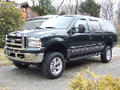
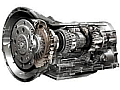
New to me 2001 6.7 diesel. I bought it with reverse shot and replaced transmission.
I was told reverse going out is not uncommon, and that it is geared high for backing uphill with a load on it.
Well that's exactly what I do, my driveway is steep uphill so backing in with my backhoe on the trailer is hard and if I have a load in the dump body it is a heavy push.
heavy.I read that others shift to 4WD LOW to back up hills. That makes sense to me but my driveway is asphalt, it will surly put a bind in the drive train in 4x4 low, it seems like I would be better to go to low with my hubs unlocked to reduce binding but I'm unsure if that could put unnecessary force in a spot I'm not thinking of.
I would be glad for some insight and opinions please.
If you have a manual transfer case you can put the transfer case in 4 low and not lock in the hubs. This will give you a significantly lower gear, will not hurt a thing in the drive train.
Yep. I have the ESOF system on my TT tow rig and since it almost never leaves the pavement I just leave the actuator unplugged and use 2WD LOW range whenever I back the big TT up, makes everything easier at a nice more controlled slow speed with plenty of grunt.
My owners manual states, (I have manual hubs), that engaging the transfer case with the hubs in the unlocked position will damage the transfer case.
Curious though,,,,,,,if backing in a straight line, why can't you use 4X4? In 4X4 on pavement, its the act of turning the wheel that makes the front diff bind.
My owners manual states, (I have manual hubs), that engaging the transfer case with the hubs in the unlocked position will damage the transfer case.
If you are stopped when you engage 4WD, no harm will be done. I run my ESOF truck (with manual Milemarker hubs) in 2-Low frequently. And yes, if you go in a straight line, you can use 4WD on dry pavement in a very limited way.
My owners manual states, (I have manual hubs), that engaging the transfer case with the hubs in the unlocked position will damage the transfer case.
Curious though,,,,,,,if backing in a straight line, why can't you use 4X4? In 4X4 on pavement, its the act of turning the wheel that makes the front diff bind.
Just looking for clarification.
for me, I have to back it up off the road so it is a bend.
My owners manual states, (I have manual hubs), that engaging the transfer case with the hubs in the unlocked position will damage the transfer case.
Curious though,,,,,,,if backing in a straight line, why can't you use 4X4? In 4X4 on pavement, its the act of turning the wheel that makes the front diff bind.
Just looking for clarification.
When you put your truck into 4 wheel drive, 2 things happen.
First, the transfer case applies power to the front drive shaft. This power goes to the front differential and to the front axle shafts.
Second, the hubs lock the wheels to the axle shafts. This allows the power in the axles to be applied to the road.
Engaging a 4 wheel drive mode but not locking the hubs means at worst your front axle shafts will spin without power being applied to the ground. No mechanical part will be forced to do something it wasn’t designed to do in the first place.
Backing up in 4 wheel drive, in a straight line, is OK. My problem is that my trailer reversing is almost never in a straight line. I’ll always take up 12 feet of a 10 foot driveway.
Engaging a 4 wheel drive mode but not locking the hubs means at worst your front axle shafts will spin without power being applied to the ground. No mechanical part will be forced to do something it wasn’t designed to do in the first place.
Agreed, there is no risk of damaging the front drivetrain with the hubs unlocked.
The issue is the rear axle and driveshaft. By putting the transfer case in low, the torque sent to the driveshaft and rear axle is multiplied by the low range ratio of 2.7:1. So the driveshaft and axle can see 2.7 times the torque they were designed to handle. Will that break something? I don't have that answer, but it would sure worry me if it were my truck.
Agreed, there is no risk of damaging the front drivetrain with the hubs unlocked.
The issue is the rear axle and driveshaft. By putting the transfer case in low, the torque sent to the driveshaft and rear axle is multiplied by the low range ratio of 2.7:1. So the driveshaft and axle can see 2.7 times the torque they were designed to handle. Will that break something? I don't have that answer, but it would sure worry me if it were my truck.
Well from everything I have seen and been told here it has no effect to the parts. You are right about increasing the torque delivered but that is a good thing.
If I'm backing up hill with a load in the back, or if Im backing uphill with the trailer (empty or loaded) I really have to give her the juice in 2WD, it seems to be reving to much and slipping the clutches in the auto transmission.
Going into low range the motor is moving the truck and load uphill right off idle. Nice and slow total control. Hopefully I never have the pleasure of replacing the transmission again.
Photos are of the 87 F-350 6.9 IDI ZF-5. It doesnt like reverse either but it's 2WD so...heavy loads in forward only.
You are right about increasing the torque delivered but that is a good thing.
It is, unless it gets to the point it breaks parts.
Originally Posted by Roundgunner
If I'm backing up hill with a load in the back, or if Im backing uphill with the trailer (empty or loaded) I really have to give her the juice in 2WD, it seems to be reving to much and slipping the clutches in the auto transmission.
Under those conditions if the clutches are really slipping you've already destroyed the transmission. Two to three seconds of slipping under a heavy load will destroy the clutch. What you are seeing is the torque converter slipping, and that is what it is designed to do.
Well from everything I have seen and been told here it has no effect to the parts. You are right about increasing the torque delivered but that is a good thing.
If I'm backing up hill with a load in the back, or if Im backing uphill with the trailer (empty or loaded) I really have to give her the juice in 2WD, it seems to be reving to much and slipping the clutches in the auto transmission.
Going into low range the motor is moving the truck and load uphill right off idle. Nice and slow total control. Hopefully I never have the pleasure of replacing the transmission again.
Photos are of the 87 F-350 6.9 IDI ZF-5. It doesnt like reverse either but it's 2WD so...heavy loads in forward only.
some mighty nice looking firewood ya got there.... you can drop it off in muy front yard and I will dispose of it for free