





Flat towing

Thread Starter
|
Cross-Country
Joined: Aug 2021
Posts: 96
Likes: 55
Flat towing
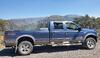
I know this is backwards for trucks that are meant to pull. And I have never seen it, but seeing a car being flat towed behind an RV made me wonder if it's even an option for our Super Dutys.

Fleet Mechanic
Joined: Nov 2006
Posts: 1,664
Likes: 219
From: Northwest
A lot of variables to your question.
There is probably some guidelines in the owner's manual about towing a Super Duty.
Perhaps one of the tow truck drivers can chime in. Seems there is a mileage limit a vehicle can be towed. Something like 15 miles +/- then the drive shaft must be disconnected.
The problem is having the drive shaft spinning the gears in the transmission and not getting proper lubrication in the transmission.
A 4 wheel drive can have the front hubs locked out and that keeps that drive shaft from spinning.
There is probably some guidelines in the owner's manual about towing a Super Duty.
Perhaps one of the tow truck drivers can chime in. Seems there is a mileage limit a vehicle can be towed. Something like 15 miles +/- then the drive shaft must be disconnected.
The problem is having the drive shaft spinning the gears in the transmission and not getting proper lubrication in the transmission.
A 4 wheel drive can have the front hubs locked out and that keeps that drive shaft from spinning.

More Turbo


Joined: Nov 2009
Posts: 523
Likes: 270
From: Kansas
Manual tranny in neutral might be ok. Transfer case in neutral might be ok (If that's still possible, i don't mess wIth 4WD). Another option is pull the axle shafts out of rear. Easily done, slightly messy, simple cover for the hole.
Hotshot


Joined: Dec 2014
Posts: 17,823
Likes: 3,101
From: Jersey Shore
The concept of using a heavy Superduty as a run-a-round vehicle is not one I've ever imagined.
If doing it, I'd pull the axles out of the hubs so only the axle bearings would see wear. Plates could be made to replace the axles, or cut salvaged axles to a short stub to retain the o-ring. You can lift one side of the axle off the ground so the oil stays in the hub when removing that side, cap, then do the other side.
If doing it, I'd pull the axles out of the hubs so only the axle bearings would see wear. Plates could be made to replace the axles, or cut salvaged axles to a short stub to retain the o-ring. You can lift one side of the axle off the ground so the oil stays in the hub when removing that side, cap, then do the other side.

Cargo Master

Joined: Oct 2018
Posts: 2,808
Likes: 1,895
From: unfortunately Germany

I maneuver trucks on my site according to the flat towing principle.
Tight turns are difficult.
Driving backwards is almost impossible.
(Just as info)
https://www.ford-trucks.com/forums/1...uty-truck.html
Tight turns are difficult.
Driving backwards is almost impossible.
(Just as info)
https://www.ford-trucks.com/forums/1...uty-truck.html
Cargo Master
Joined: Oct 2018
Posts: 2,808
Likes: 1,895
From: unfortunately Germany
I understood that Jack. I just wanted to say that driving tight corners is not possible.
Apart from all the other technical things like brakes and trans lubrication, that would be reason enough for me not to do it with our Superduty trucks.
Apart from all the other technical things like brakes and trans lubrication, that would be reason enough for me not to do it with our Superduty trucks.
Trending Topics
Hotshot
Joined: Dec 2014
Posts: 17,823
Likes: 3,101
From: Jersey Shore
Sorry, being so far away, and I did not know if the practice was done in Europe.
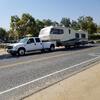
In the more open roads of the USA, you can even do a triple; Truck, trailer, towed vehicle.
In the more open roads of the USA, you can even do a triple; Truck, trailer, towed vehicle.
FTE Stories
Ford Trucks for Ford Truck Enthusiasts

10 Best Ford Truck Engines We Miss the Most!
Joe Kucinski
2026 Shelby F-150 Off-Road: Better Than a Raptor R?
Brett Foote
2027 Super Duty Carhartt Package First Look: 12 Things You NEED to Know!
Michael S. Palmer
10 Most Surprising 2026 Ford Truck Features!
Joe Kucinski
Top 10 Ford Trucks Coming to Mecum Indy 2026
Brett Foote
5 Best / 5 Worst Ford Truck Wheels of All Time
Joe Kucinski
Ford Super Duty: 5 Things Owners LOVE, 5 Things They LOATHE!
Joe Kucinski
Every 2026 Ford Truck Engine RANKED from WORST to FIRST!
Michael S. Palmer
The Best F-150 Deal of Every Trim Level (XL through Raptor)
Joe Kucinski
Fleet Mechanic


Joined: Mar 2023
Posts: 1,576
Likes: 926
The concept of using a heavy Superduty as a run-a-round vehicle is not one I've ever imagined.
If doing it, I'd pull the axles out of the hubs so only the axle bearings would see wear. Plates could be made to replace the axles, or cut salvaged axles to a short stub to retain the o-ring. You can lift one side of the axle off the ground so the oil stays in the hub when removing that side, cap, then do the other side.
If doing it, I'd pull the axles out of the hubs so only the axle bearings would see wear. Plates could be made to replace the axles, or cut salvaged axles to a short stub to retain the o-ring. You can lift one side of the axle off the ground so the oil stays in the hub when removing that side, cap, then do the other side.
Wouldn't doing as you suggested make it so the wheel bearings are no longer getting oil supplied to them and they'd therefore burn up after a little while?

...


Hotshot
Joined: Dec 2014
Posts: 17,823
Likes: 3,101
From: Jersey Shore
Isn't it the motion of the ring gear spinning that causes oil to flow down the axle shaft tubes to lube the wheel bearings??
Wouldn't doing as you suggested make it so the wheel bearings are no longer getting oil supplied to them and they'd therefore burn up after a little while?
...
Wouldn't doing as you suggested make it so the wheel bearings are no longer getting oil supplied to them and they'd therefore burn up after a little while?
...
In something like Fleet Owner or Trucking magazine, a long, long time ago was a story, or paragraph within a story, about you can tell when a long-haul truck fleet repeatedly has driver's side hub bearing failures they do not have a good maintenance program. Differential lubricant levels were not checked—long highway straights with the normal slight angle to the right shoulders, high side starved.

Thread
Thread Starter
Forum
Replies
Last Post
whattatruck250
1999 - 2016 Super Duty
9
Aug 5, 2007 10:52 AM