When you click on links to various merchants on this site and make a purchase, this can result in this site earning a commission. Affiliate programs and affiliations include, but are not limited to, the eBay Partner Network.
At 351k miles, with metal showing up in the engine oil, I figure it's time to give the thing a proper rebuild. As with all the stuff I've previously done to this truck it'll be a learning experience, but I'm confident I should be able to pull it off with some help from the FTE brain trust. I know it'll be mentioned but OEM spec long-blocks from reputable builders are almost a grand more expensive with massive lead times, so aren't being considered right now. In terms of my aims, a reliable 375-400 HP good for towing and a little bit of fun for years to come. I don't want smoke, I don't want (too) loud, I don't want flash. I spend most of my time between 1500 and 2500 RPM so efficient performance in that range is what I care most about.
Here's what I have to work with right now:
E99 block w/forged rods
AB injectors, Bosch glow-plugs
Good water pump & hoses, maybe good front-cover, fan clutch, power steering pump
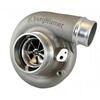
T4 Kit w/ BW 363 SXE 63/68 0.91 A/R
RRD Plenums and boots, AIS intake
Four-line feed, resealed fuel bowl
CNC HPOP lines, couple working HPOPs
Hydra, stock IDM and PCM, refurbished wiring harness
Good EBP sensor and tube, good ICP sensor, all other sensors seem to be working fine too
L99 starter
Golden nugget dipstick adapter, non-rotted oil pan
Non-rotted exhaust manifolds, valve covers
Other details: planning on 285/75r16 tires, 3.73 gearing (might switch to 4.10 at some point), 4r100 will be built. Stock exhaust w/4" down-pipe.
I won't know until I dig in and see where the metal is coming from, but I'm assuming all of the above should be re-usable without issue. The injectors I'll send out to replace with premium rebuilt injectors, and the HPOPs I'll send to terminator to make a T500 out of. What I need to know is what else should be considered re-usable? If the pushrods are straight? If the rollers roll smooth and aren't scratched up? What about crank studs and bearing-cap bolts/nuts?
Machining would consist of
Magnaflux
Block cleaning and cylinder boring (I have low blow-by so 0.01 aught be sufficient), check deck for flatness (don't think it'll need to be decked)
Cylinder heads which includes valve seats and guides (if necessary)
Check if crank is in spec, polish
Check is cam is in spec, polish
Balance rotating assembly
I will go through and clean all threads with brush and taps
Here's the preliminary parts list:
Heads
Mahle head gasket kit
Includes head gaskets, HPOP gasket, exhaust manifold gaskets, valve seals, o-rings
Motorcraft stock pushrods
Mahle valves, valve seats, valve guides
910-16 springs
Mahle rollers
Studs
Don't think I really need studs, more for future-proofing in case I go down the VGT road in the future
RRDP stainless injector cups
Premium rebuilt injectors
New injector harness
Block
Mahle lower gasket set
Mahle main bearings, cam bearings, connecting bearings
Melling LPOP / front seal
Oil cooler
Welded jets
Oil pickup tube
Stock harmonic balancer & tensioner
Stock main and rod bolts/nuts (will re-use if possible?)
Stainless exhaust manifold bolts
Transmission adapter (if current one isn't in spec per TSB)
Summit Racing flexplate
Pistons
Mahle pistons, wrist pins, and rings
Second ring modified to be gapless
For reduced blowby/less soot in the oil, efficiency
Ceramic coating
For longevity, efficiency, to avoid cracks
Does this list seem comprehensive and appropriate enough for my goals? Are there any big things I'm missing?
One thing I really need help with is injector sizing. Intuition tells me that 160/30 should result in higher fuel efficiency/cleaner running truck due to higher injection pressure/cleaner burn, as well as more bottom end response, but I'd be running them near the top of their operating range and ICP drop at higher RPM is a potential factor. 200/30 hybrids could be de-tuned to operate well for my goals, but I worry the consequence will be worse fuel efficiency and more propensity to smoke/haze.
The first step in this process will be pulling and stripping the engine. Any pointers for best way to pull it? I'd prefer to not discharge the AC system if possible. Also what is the best way to remove the cylinder heads so as to reduce chances of warping (I think it's reverse torque sequence)? There anything to know about removing the front cover?
Look forward to documenting this journey, and also look forward to hearing everyone's thoughts and advice : )
@SkySkiJason has ample experience with engine pulling, has a video that I was unable to find.
Not sure stainless bolts for the exhaust manifolds are the best choice. Great to avoid rust but tensile strength of ss is kinda wimpy. Compare torque spec on the bolts with strength of the size bolts you'll need.
I'm thinking with a T4 setup you can get to 400hp with 160/0 injectors with proper tuning. That will benefit low power/RPM drivability. But I am no expert.
Very glad you are taking the bull by the horns here.
Don't think I really need studs, more for future-proofing in case I go down the VGT road in the future
[size=33px]
I’m FTN and I approve this statement.
What is your budget? I would add replacing the oil pan and getting the dipstick bung welded in to the list. Fire-ringing, while probably excessive for your goal, adds a lot of peace-of-mind. Those are the first things that come to mind. I will be editing this post as I read through yours more carefully.
Edit 1: Consider upgraded pushrods because of the higher rate valve springs.
Edit 2: Leaving the rear cab mount bolts loose but in place, jacking the front of the cab up and then wedging 2x4s edgewise between the cab and the frame gives you enough clearance to get the engine out with the turbo in place. I prefer that over removing the turbo first. I assume you will be hot-tanking all the bigger pieces after the engine is dismantled?
Edit 3: Whether you are keeping the original transmission adapter or not, add steel thread inserts for the starter bolt holes so they don’t wear out so quickly. Also add a drain pipe from the rear valley drain hole to the hole in the bottom of the block so the bellhousing cavity stays cleaner.
Not sure stainless bolts for the exhaust manifolds are the best choice. Great to avoid rust but tensile strength of ss is kinda wimpy.
The bolts I picked were used by another member here and designed by a fastener company for this application. I think they will work alright.
Originally Posted by aawlberninf350
Very glad you are taking the bull by the horns here.
Haha thanks. I'm hoping I don't pull a Knoxville!
Originally Posted by FordTruckNoob
I’m FTN and I approve this statement.
I don't think I'd go as nuts as you, but there's no question a VGT or ebooster would help the old 7.3 drive like a more modern truck.
Originally Posted by FordTruckNoob
What is your budget? I would add replacing the oil pan and getting the dipstick bung welded in to the list. Fire-ringing, while probably excessive for your goal, adds a lot of peace-of-mind. Those are the first things that come to mind.
We are looking to keep this to between 7 and 8. Obviously it'll be more if the crank and cam journals got all scratched up from the metal in the oil.
My oil pan is in good shape so I'll clean it out and re-use. Will have a local company put bed-liner on the outside to make it last. Weld-in dipstick is a good idea but the expensive adapter I got right doesn't leak and is paid for. If I can sell it I might do the weld-in thing.
If this were a 6.0 I'd agree with fire-ringing but 7.3's hardly ever have head gasket issues, especially with studs. Fire rings would nuke the budget.
Originally Posted by FordTruckNoob
Consider upgraded pushrods because of the higher rate valve springs.
I've thought about this but, from my limited reading, it seems like a lot of bent pushrod issues stem from stuck valves or hydrolock. If something is going wrong enough to bend the rod, I'd rather the rod be bent vs the energy being directed to more expensive components. Would welcome more input though.
Originally Posted by FordTruckNoob
I assume you will be hot-tanking all the bigger pieces after the engine is dismantled?
Yeah that's part of the prep at the machine shop.
Originally Posted by FordTruckNoob
Whether you are keeping the original transmission adapter or not, add steel thread inserts for the starter bolt holes so they don’t wear out so quickly. Also add a drain pipe from the rear valley drain hole to the hole in the bottom of the block so the bellhousing cavity stays cleaner.
Was planning on using studs. Should accomplish same thing and make it easier to mount the starter. Yes, valley drain pipe is in the cards. Also thinking about tapping the turbo oil supply and drain so as to not deal with o-rings anymore.
I don't think I'd go as nuts as you, but there's no question a VGT or ebooster would help the old 7.3 drive like a more modern truck.
Some say I should be committed.
Originally Posted by PriusLover
We are looking to keep this to between 7 and 8. Obviously it'll be more if the crank and cam journals got all scratched up from the metal in the oil.
My oil pan is in good shape so I'll clean it out and re-use. Will have a local company put bed-liner on the outside to make it last. Weld-in dipstick is a good idea but the expensive adapter I got right doesn't leak and is paid for. If I can sell it I might do the weld-in thing.
I guess it does not make much sense to switch to a weld-in if you have already spent the money on a solution. I had assumed you were still using the factory configuration.
Originally Posted by PriusLover
If this were a 6.0 I'd agree with fire-ringing but 7.3's hardly ever have head gasket issues, especially with studs. Fire rings would nuke the budget.
That’s understandable. You probably have much more self-control than I do so your risk of blowing a head gasket is much lower.
Originally Posted by PriusLover
I've thought about this but, from my limited reading, it seems like a lot of bent pushrod issues stem from stuck valves or hydrolock. If something is going wrong enough to bend the rod, I'd rather the rod be bent vs the energy being directed to more expensive components. Would welcome more input though.
Even with upgraded pushrods they should still be the weakest link in the valvetrain unless you are going with monster pushrods.
Originally Posted by PriusLover
Was planning on using studs. Should accomplish same thing and make it easier to mount the starter. Yes, valley drain pipe is in the cards. Also thinking about tapping the turbo oil supply and drain so as to not deal with o-rings anymore.
That’s a good idea too. Just check to see if you have enough room in front of the starter to the crossmember to slide the starter onto the studs. My Denso starter sits within a quarter inch of the crossmember when mounted.
How is the plate from your T4 kit going to interface with the tapped oil supply and drain holes? Just drill the holes in the plate big enough to go around the fittings screwed directly into the block?
Even with upgraded pushrods they should still be the weakest link in the valvetrain unless you are going with monster pushrods.
Fair enough. Just trying to avoid mission creep where I can.
Originally Posted by FordTruckNoob
That’s a good idea too. Just check to see if you have enough room in front of the starter to the crossmember to slide the starter onto the studs. My Denso starter sits within a quarter inch of the crossmember when mounted.
How is the plate from your T4 kit going to interface with the tapped oil supply and drain holes? Just drill the holes in the plate big enough to go around the fittings screwed directly into the block?
Will have to measure and confirm it'll work. The L99 starter on there now isn't very long.
Yeah I'd drill out the plate enough to accommodate the fittings. I think I'll still use the valley oil drain because presents less obstruction than the factory location.
I’m not sure if fire rings are necessary, but I know fresh head gaskets and studs didn’t hold up in my truck. From what I understood from swamps if you are building big boost if you add studs to virgin sealed heads( factory) then you are good to 60 lbs of boost but with fresh build I believe you might be on the threshold. But I’m no expert
Torque on exhaust manifold bolts is only 45ft lbs. After seeing so many useless rusty bolts on exhaust manifolds and up-pipes, I don’t think this is a bad idea. I do not think exhaust manifold gaskets are a good idea though. I’ve removed many of these because they were blown out.
Definitely de-lipped and ceramic coated piston tops and Teflon skirts.
I feel like 160/30 is the perfect injector. Expect 320-350hp in a daily driver/tow tune that is FUN to drive and plenty of power for towing. With good tunes and your 363sxe, EGT should never be a problem and no smoke in DD/tow tunes.
Get a weld-in dipstick flange and consider having a new oil pan professionally sprayed with bedliner.
Definitely de-lipped and ceramic coated piston tops and Teflon skirts.
I wasn't planning on getting the piston machining done. It's not cheap and, after talking with the coating company, I feel the coating itself should provide adequate protection against heat induced cracks.
Originally Posted by SkySkiJason
Get a weld-in dipstick flange and consider having a new oil pan professionally sprayed with bedliner.
Why not just have my current oil-pan bed-lined? Was also going to do valve covers too; have heard they can help quiet engine noise.
I wasn't planning on getting the piston machining done. It's not cheap and, after talking with the coating company, I feel the coating itself should provide adequate protection against heat induced cracks.
Why not just have my current oil-pan bed-lined? Was also going to do valve covers too; have heard they can help quiet engine noise.
If your pan isn’t deteriorated, you can have it prepped and painted. New Spectra oil pan (Canadian) is about $100 and requires very little prep to apply the bedliner. The pans I’ve done this to look just like they did in the pics above several years later.
Not sure I’d put much stock in noise reduction, but it can’t hurt. The common failure mode is oil pan paint gets compromised from rock chips, etc and then grease/mud traps moisture - inducing corrosion. The bedliner resists the coating failure that initiates this process.
Originally Posted by brokestroke
If you are going to have it all apart....Why not a set of aftermarket connecting rods, and a stage 1 cam? Have you thought about behive valve springs?
’Good’ rods are over $2k alone. I might consider cryo’ed forged rods as an upgrade if it wasn’t too much $$$. The aftermarket cams have mixed reviews. Not sure it’s worth it? Stiffer valve springs probably don’t have an advantage at <400 peak HP and likely increase wear on lifters, etc.
If your pan isn’t deteriorated, you can have it prepped and painted. New Spectra oil pan (Canadian) is about $100 and requires very little prep to apply the bedliner. The pans I’ve done this to look just like they did in the pics above several years later.
Not sure I’d put much stock in noise reduction, but it can’t hurt. The common failure mode is oil pan paint gets compromised from rock chips, etc and then grease/mud traps moisture - inducing corrosion. The bedliner resists the coating failure that initiates this process.
’Good’ rods are over $2k alone. I might consider cryo’ed forged rods as an upgrade if it wasn’t too much $$$. The aftermarket cams have mixed reviews. Not sure it’s worth it? Stiffer valve springs probably don’t have an advantage at <400 peak HP and likely increase wear on lifters, etc.
Looked around and aftermarket rods are 'out of stock' everwhere.
Rezvani's Latest Post-Apocalyptic Monster Is a Ford F-150 Raptor Underneath
Slideshow: Called the Fortress, the 850-horsepower pickup combines Raptor underpinnings with military-inspired features, survival equipment, and a starting price of $285,000.