




back home, projects to start

Thread Starter
|
Logistics Pro


Joined: Jul 2014
Posts: 4,673
Likes: 532
From: Houston, Texas
back home, projects to start
OK guys, the Bonehead is back, ready to screw up some more vehicles for your viewing pleasure. Crawled back after the hillbilly tweakers stole my truck, trailer and tools. Spent the last cash I had fixing my first bus - barely - and nursing it around the country a couple of times. Then made what most would call a risky bet by buying a second bus with the first little money I made and a small loan - with other bills staring me in the face.
Then, that bet seemed to blow up in my face when the bus hydrolocked in that frozen Minneapolis parking lot, and after fixing that, blew the transmission in Oklahoma on the way home. Few would believe this 64-year old man could have pulled that tranny out of the other broke ambulance in the muddy storage lot over Christmas and New Years, sleeping in my other bus with my dog. But to then repeat the process in the azzhole OKlahoma tech's driveway, pulling the bad tranny and putting in the replacement, with nothing but a floor jack, boards, and handtools. Bonehead is not an undeserved username.
Now, that bus has made 6 trips for me, almost 30,000 miles in less than 5 months. It runs great. Has a power steering leak, and like almost every Superduty I've owned, the AC doesn't work; but, the engine runs like you'd expect a truck with only 100k to run. Great deltas, no coolant leaks/loss, no oil leaks/loss, no tranny issues.
And it's a money-maker! These E-series can't pull much, so I'm no longer hauling the heavy equipment I did with the F450; but, it's got enough torque to get about 6-7000lbs over the mountains and between what I fit inside the bus and in the enclosed trailer I pull, I'm netting more than I made with the truck. Plus, I can sleep comfortably in the bus, so I'm saving hundreds each trip on motels. Finally, it's getting about 13mph with these more profitable loads while my truck would get 11.
As an aside, I'd also tell you that this set-up is invisible to LEOs. I look like an old retired guy going camping. I've driven right through traps looking for guys just like me, had the troopers assigned to find us drive right along beside me.
But, it's getting hot outside now; so, no more sleeping in the bus. And, I've caught up all my bills and have some mad money; so, it's time to try to get another of my vehicles running again. Once I get the vehicles gone, I can quit this driving gig and start remodeling my house - my last must-do project before retiring.
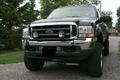
First up is the F450, and the first problem is that I'm getting "network" errors when I try to scan for codes. And, for some reason, the key no longer turns over the starter, but it starts up from the wire. I'm wondering if someone didn't try to steal it again from my driveway while I was out of town. Maybe even got it started, then heard how loud it is without the cat and fled. The passenger door still has the broken handle, so it's not locked. SMH
The main problem is all the oil in the degas bottle. But, it does crank smoothly, and runs fine, although it takes longer to fire the first time. Still no turbo boost, but I'm going to check the EBP and MAP hose. Wondering if by driving it after they removed the cat they might have plugged up the EBP tube with soot. They'd also removed the air cleaner.
I'm assuming the EGR cooler and/or oil cooler, have leaks. However, I did have the EGR blocked off with the freeze plug and metal plate solution Jack made for me. Would that have prevented damage to the EGR cooler, such that it doesn't need replacement? I'd prolly just delete it anyway, but thinking I can just reinstall it as it was with Jack's parts blocking it again. I'm not sure, but I may sell this truck once I got it going again.
Need to research the process for cleaning all the oil out of the cooling system prior to replacing an oil and EGR cooler. Wish me luck - the last oil cooler I tried to replace has been sitting in the ambulance parked in my back yard the last 3 years. That will be the next project after I get this truck going again.
Then, that bet seemed to blow up in my face when the bus hydrolocked in that frozen Minneapolis parking lot, and after fixing that, blew the transmission in Oklahoma on the way home. Few would believe this 64-year old man could have pulled that tranny out of the other broke ambulance in the muddy storage lot over Christmas and New Years, sleeping in my other bus with my dog. But to then repeat the process in the azzhole OKlahoma tech's driveway, pulling the bad tranny and putting in the replacement, with nothing but a floor jack, boards, and handtools. Bonehead is not an undeserved username.
Now, that bus has made 6 trips for me, almost 30,000 miles in less than 5 months. It runs great. Has a power steering leak, and like almost every Superduty I've owned, the AC doesn't work; but, the engine runs like you'd expect a truck with only 100k to run. Great deltas, no coolant leaks/loss, no oil leaks/loss, no tranny issues.
And it's a money-maker! These E-series can't pull much, so I'm no longer hauling the heavy equipment I did with the F450; but, it's got enough torque to get about 6-7000lbs over the mountains and between what I fit inside the bus and in the enclosed trailer I pull, I'm netting more than I made with the truck. Plus, I can sleep comfortably in the bus, so I'm saving hundreds each trip on motels. Finally, it's getting about 13mph with these more profitable loads while my truck would get 11.
As an aside, I'd also tell you that this set-up is invisible to LEOs. I look like an old retired guy going camping. I've driven right through traps looking for guys just like me, had the troopers assigned to find us drive right along beside me.
But, it's getting hot outside now; so, no more sleeping in the bus. And, I've caught up all my bills and have some mad money; so, it's time to try to get another of my vehicles running again. Once I get the vehicles gone, I can quit this driving gig and start remodeling my house - my last must-do project before retiring.
First up is the F450, and the first problem is that I'm getting "network" errors when I try to scan for codes. And, for some reason, the key no longer turns over the starter, but it starts up from the wire. I'm wondering if someone didn't try to steal it again from my driveway while I was out of town. Maybe even got it started, then heard how loud it is without the cat and fled. The passenger door still has the broken handle, so it's not locked. SMH
The main problem is all the oil in the degas bottle. But, it does crank smoothly, and runs fine, although it takes longer to fire the first time. Still no turbo boost, but I'm going to check the EBP and MAP hose. Wondering if by driving it after they removed the cat they might have plugged up the EBP tube with soot. They'd also removed the air cleaner.
I'm assuming the EGR cooler and/or oil cooler, have leaks. However, I did have the EGR blocked off with the freeze plug and metal plate solution Jack made for me. Would that have prevented damage to the EGR cooler, such that it doesn't need replacement? I'd prolly just delete it anyway, but thinking I can just reinstall it as it was with Jack's parts blocking it again. I'm not sure, but I may sell this truck once I got it going again.
Need to research the process for cleaning all the oil out of the cooling system prior to replacing an oil and EGR cooler. Wish me luck - the last oil cooler I tried to replace has been sitting in the ambulance parked in my back yard the last 3 years. That will be the next project after I get this truck going again.

Hotshot


Joined: Dec 2014
Posts: 17,838
Likes: 3,143
From: Jersey Shore
The plugs would have prevented any hot gasses from getting into the cooler, so it couldn't overheat. And with the plate at the intake manifold connection, if it did leak no coolant could get into the cylinders.
Oil in the coolant. Three reasons, not in order.
Oil in the coolant. Three reasons, not in order.
- Failed oil cooler
- Failed oil cooler housing gasket
- Pinhole in the front cover
Thread Starter
|
Logistics Pro
Joined: Jul 2014
Posts: 4,673
Likes: 532
From: Houston, Texas
The plugs would have prevented any hot gasses from getting into the cooler, so it couldn't overheat. And with the plate at the intake manifold connection, if it did leak no coolant could get into the cylinders.
Oil in the coolant. Three reasons, not in order.
Oil in the coolant. Three reasons, not in order.
- Failed oil cooler
- Failed oil cooler housing gasket
- Pinhole in the front cover
Recall that the truck was fine, got stolen, and came back with oil in the coolant, no cat, no air box, and a turbo that doesn't work. The OBDII is giving me network errors for most of the systems, so not much help with codes. It has 305k/m on what I assume is the original oil cooler - I put the last 160k/m on it and no sign it had been replaced before that.
But it starts and runs OK, for no turbo. I drove it home from KC like that and it never overheated, although I couldn't read data then. Smooth crank. Now that I think about it, I need to confirm the oil level hasn't risen.
I agree the gasket would be the first thing to check, Jack; but, I figure if I'm in that deep, after all the flushing to get the coolant system clean, and with that many miles, I'll just replace the cooler as well, especially since I don't have to replace the EGR cooler. I may be able to fix this for just a few hundred dollars and my labor.
So, I need to flush first, which means that first I actually need to fix/replace/rig my exhaust. The thieves didn't cut the cat out, so if I find a stock unit, I'm good. I pulled the cat off my Eseries ambulance hoping to swap it in; but, the front flange comes out at a more downwards angle. The muffler shop I used for other jobs says they won't mess with rigging up cats - they only install new ones. I may just buy some flexpipe and rig it up long enough to do the engine flush and fix the cat later.

Cargo Master

Joined: Oct 2018
Posts: 2,813
Likes: 1,920
From: unfortunately Germany

Your truck did not had problems with oil in the coolant before the theft, is that correct? Have you renewed oil and coolant in the meantime? Maybe the thieves filled oil in the coolant?
Thread Starter
|
Logistics Pro
Joined: Jul 2014
Posts: 4,673
Likes: 532
From: Houston, Texas
Damn, Hartwig, that's a great suggestion. I do recall that there was an empty bottle of some kind of diesel additive among the clutter in the truck. And they definitely mucked around under the hood. I really haven't done anything but take a cursory look at the truck at this point, while I was jumping it off.
But, how could I know if that had happened? And would it still clog up the oil cooler? At minimum, I'd still have the heavy flushing to clean up the coolant.
That leads to another question I've been wondering. If I'm supposed to flush the coolant before replacing the oil cooler, but I have a blown oil cooler that's leaking oil into the coolant, how can that happen? If what you theorize happened, would flushing the coolant reveal that when it got clean and stayed clean? IDK why, but I doubt that's the case.
So, how would I confirm whether the oil cooler is still good? I'm still thinking that a cooler with 300k/m subjected to this abuse is prolly a good candidate for replacement.
Another question - Jack suggests that my EGR cooler is prolly still good since I had it blocked off at both ends. I want to confirm that, maybe during dismantle. So, first, I'll pull the EGR valve with the truck downhill. If there's wetness, would that mean coolant, and that oil, had gotten in the EGR cooler, or if not, that it was coming from a head gasket or worse? Next, if I have to remove it, is there a procedure I should follow to collect evidence of the EGR cooler's condition? Or, do I not care at all since it's blocked off? I seem to recall Jack telling me at the time he provided that kit that I might still get a little exhaust in from around the freeze plug, but so little it didn't matter. I don't know how any of that works exactly.
But, how could I know if that had happened? And would it still clog up the oil cooler? At minimum, I'd still have the heavy flushing to clean up the coolant.
That leads to another question I've been wondering. If I'm supposed to flush the coolant before replacing the oil cooler, but I have a blown oil cooler that's leaking oil into the coolant, how can that happen? If what you theorize happened, would flushing the coolant reveal that when it got clean and stayed clean? IDK why, but I doubt that's the case.
So, how would I confirm whether the oil cooler is still good? I'm still thinking that a cooler with 300k/m subjected to this abuse is prolly a good candidate for replacement.
Another question - Jack suggests that my EGR cooler is prolly still good since I had it blocked off at both ends. I want to confirm that, maybe during dismantle. So, first, I'll pull the EGR valve with the truck downhill. If there's wetness, would that mean coolant, and that oil, had gotten in the EGR cooler, or if not, that it was coming from a head gasket or worse? Next, if I have to remove it, is there a procedure I should follow to collect evidence of the EGR cooler's condition? Or, do I not care at all since it's blocked off? I seem to recall Jack telling me at the time he provided that kit that I might still get a little exhaust in from around the freeze plug, but so little it didn't matter. I don't know how any of that works exactly.
Thread Starter
|
Logistics Pro
Joined: Jul 2014
Posts: 4,673
Likes: 532
From: Houston, Texas
Truth, lol. But, to be fair, most of the times I had resurrected that dead mouse first - these are like zombie mice now. And that whole sacrificial ritual thing I do, the blood-letting, the screams, the carcasses hurled into the molten lava - you don't see cats do that (except maybe Sean's at this point, lol).
Trending Topics
Thread Starter
|
Logistics Pro
Joined: Jul 2014
Posts: 4,673
Likes: 532
From: Houston, Texas
OK, so I know you guys giggle over these diagnostic procedures documents with the wife before falling asleep at night, but they're killing me. The going back and forth between the pics and diagrams and processes trying to remember circuit numbers, wire colors, and the numbers...maybe 20 years ago I could have done this, but this isn't looking pretty. But then, nothing I ever do looks pretty.
The processes seem so simple, once I've read each one four times, at which point I have to review how I got there before moving to the next step. Yes, it's dementia, I understand that. Just saying, this will be another Miracle on the Bayou if I ever get the AC working on this shuttle bus, either one of the ACs. I've tried to think how I could let a shop that specializes in auto electronics look at it, but it's just too scary.
When I used to sell to the defense contractors, I had one engineer tell me that software was invented by the defense industry as a way to charge more for the planes/boats and have them still float/fly. It's the same with auto electronics. If there was a level below XL, I'd go for it. I was good until they went with pollution control back in '73.
The processes seem so simple, once I've read each one four times, at which point I have to review how I got there before moving to the next step. Yes, it's dementia, I understand that. Just saying, this will be another Miracle on the Bayou if I ever get the AC working on this shuttle bus, either one of the ACs. I've tried to think how I could let a shop that specializes in auto electronics look at it, but it's just too scary.
When I used to sell to the defense contractors, I had one engineer tell me that software was invented by the defense industry as a way to charge more for the planes/boats and have them still float/fly. It's the same with auto electronics. If there was a level below XL, I'd go for it. I was good until they went with pollution control back in '73.
FTE Stories
Ford Trucks for Ford Truck Enthusiasts

Top 6 Best Deals Available on New Fords & Lincolns Right Now
Brett Foote
This Hennessey Takes the Expedition Tremor's Off-Roading Capability to the Next Level
Verdad Gallardo
Top 10 Fords at 2026 Carlisle Ford Nationals
Joe Kucinski
3 Best / 3 Worst Parts of Modern Ford Ownership
Brett Foote
10 Amazing Upgrades That Solve Common Ford Truck Owner Headaches
Pouria Savadkouei
Every 2026 Ford Engine Explained
Brett Foote
10 Ugly Ford Trucks That We Still Kinda Love
Joe Kucinski
10 Things Every Truck Owner NEEDS (2026 Edition)
Michael S. Palmer
Rezvani's Latest Post-Apocalyptic Monster Is a Ford F-150 Raptor Underneath
Verdad Gallardo
Fleet Owner

Joined: Nov 2003
Posts: 27,931
Likes: 3,653
Damn, Hartwig, that's a great suggestion. I do recall that there was an empty bottle of some kind of diesel additive among the clutter in the truck. And they definitely mucked around under the hood. I really haven't done anything but take a cursory look at the truck at this point, while I was jumping it off.
But, how could I know if that had happened? And would it still clog up the oil cooler? At minimum, I'd still have the heavy flushing to clean up the coolant.
That leads to another question I've been wondering. If I'm supposed to flush the coolant before replacing the oil cooler, but I have a blown oil cooler that's leaking oil into the coolant, how can that happen? If what you theorize happened, would flushing the coolant reveal that when it got clean and stayed clean? IDK why, but I doubt that's the case.
So, how would I confirm whether the oil cooler is still good? I'm still thinking that a cooler with 300k/m subjected to this abuse is prolly a good candidate for replacement.
Another question - Jack suggests that my EGR cooler is prolly still good since I had it blocked off at both ends. I want to confirm that, maybe during dismantle. So, first, I'll pull the EGR valve with the truck downhill. If there's wetness, would that mean coolant, and that oil, had gotten in the EGR cooler, or if not, that it was coming from a head gasket or worse? Next, if I have to remove it, is there a procedure I should follow to collect evidence of the EGR cooler's condition? Or, do I not care at all since it's blocked off? I seem to recall Jack telling me at the time he provided that kit that I might still get a little exhaust in from around the freeze plug, but so little it didn't matter. I don't know how any of that works exactly.
But, how could I know if that had happened? And would it still clog up the oil cooler? At minimum, I'd still have the heavy flushing to clean up the coolant.
That leads to another question I've been wondering. If I'm supposed to flush the coolant before replacing the oil cooler, but I have a blown oil cooler that's leaking oil into the coolant, how can that happen? If what you theorize happened, would flushing the coolant reveal that when it got clean and stayed clean? IDK why, but I doubt that's the case.
So, how would I confirm whether the oil cooler is still good? I'm still thinking that a cooler with 300k/m subjected to this abuse is prolly a good candidate for replacement.
Another question - Jack suggests that my EGR cooler is prolly still good since I had it blocked off at both ends. I want to confirm that, maybe during dismantle. So, first, I'll pull the EGR valve with the truck downhill. If there's wetness, would that mean coolant, and that oil, had gotten in the EGR cooler, or if not, that it was coming from a head gasket or worse? Next, if I have to remove it, is there a procedure I should follow to collect evidence of the EGR cooler's condition? Or, do I not care at all since it's blocked off? I seem to recall Jack telling me at the time he provided that kit that I might still get a little exhaust in from around the freeze plug, but so little it didn't matter. I don't know how any of that works exactly.
As far as testing the EGR cooler goes, their is a ford procedure on it. IIRC it is to pressure up the coolant side and then submerge into water ..... looking for air bubbles coming out the gas flow end(s).
Thread Starter
|
Logistics Pro
Joined: Jul 2014
Posts: 4,673
Likes: 532
From: Houston, Texas
So I understand, when oil is in the coolant, is it usually because the EGR cooler sprang a leak? If so, since mine is blocked off, thats not the likely cause.
But it's rare? For the oil cooler to actually leak? That's why Jack suggests the gasket, and Hartwig suggests oil was added?
So maybe the cooler is good, hmm. I'd still replace it just because of the mileage, but not a second time after flushing.
But it's rare? For the oil cooler to actually leak? That's why Jack suggests the gasket, and Hartwig suggests oil was added?
So maybe the cooler is good, hmm. I'd still replace it just because of the mileage, but not a second time after flushing.
Fleet Owner
Joined: Nov 2003
Posts: 27,931
Likes: 3,653
Oil in the coolant means an oil cooler leak. The only connection to the EGR cooler is that when the oil cooler plugs up, it restricts coolant flow to the EGR cooler and makes it fail more quickly. It also causes the oil cooler to fail (let oil into the coolant).
The oil pressure is higher than the coolant pressure, so oil goes into the coolant. Some people think that is will make it safe to flush the oil cooler even when it has a leak. The problem with that is that you still can get water into the oil system - especially if you flush with the engine running. When the engine is running, the oil is typically at a higher pressure. However, when you shutdown, the oil pressure drops to zero, but there is still pressure on the coolant side (sometimes a little, sometimes quite a bit).
The suggestion from Hartwig makes it hard. I just don't like the idea of a flush of the coolant system if a leaking oil cooler is suspected.
The oil pressure is higher than the coolant pressure, so oil goes into the coolant. Some people think that is will make it safe to flush the oil cooler even when it has a leak. The problem with that is that you still can get water into the oil system - especially if you flush with the engine running. When the engine is running, the oil is typically at a higher pressure. However, when you shutdown, the oil pressure drops to zero, but there is still pressure on the coolant side (sometimes a little, sometimes quite a bit).
The suggestion from Hartwig makes it hard. I just don't like the idea of a flush of the coolant system if a leaking oil cooler is suspected.
Hotshot
Joined: Dec 2014
Posts: 17,838
Likes: 3,143
From: Jersey Shore
I understand how Mark is thinking about this; it's valid.
It depends on what you are trying to flush out and what chemicals you want to play with. For example, if you want to get G05 silicate out, rust out, or just oil out of the cooling side.
When doing any of this, if you want to keep the coolant out of the oil, keep the degas cap loose, so the pressure is zero on the coolant side. You won't be running hard to get high temps or pressures.
If I wanted to do the full package, I would do all my chemicals with the old cooler, including Cascade, to get as much oil out of the cooling system. Next, install the new oil cooler, then redo the Cascade flush again.
The problem we all have is with any purchased truck, you never know how bad the rust may be in the cooling system, and it's mostly in the heads due to the hotter temps and the possibility of any combustion gasses getting in from that point. And despite the intensity of the flushing, you never can be sure all the particles are out.
There's no "correct" way here.
It depends on what you are trying to flush out and what chemicals you want to play with. For example, if you want to get G05 silicate out, rust out, or just oil out of the cooling side.
When doing any of this, if you want to keep the coolant out of the oil, keep the degas cap loose, so the pressure is zero on the coolant side. You won't be running hard to get high temps or pressures.
If I wanted to do the full package, I would do all my chemicals with the old cooler, including Cascade, to get as much oil out of the cooling system. Next, install the new oil cooler, then redo the Cascade flush again.
The problem we all have is with any purchased truck, you never know how bad the rust may be in the cooling system, and it's mostly in the heads due to the hotter temps and the possibility of any combustion gasses getting in from that point. And despite the intensity of the flushing, you never can be sure all the particles are out.
There's no "correct" way here.
Thread Starter
|
Logistics Pro
Joined: Jul 2014
Posts: 4,673
Likes: 532
From: Houston, Texas
That helps. I was wondering after reading all the threads of guys flushing oil out of their cooling system.
I keep thinking it's going to rain here and I should wait to dive into this. Still no hard rain, day 3, lol.
I keep thinking it's going to rain here and I should wait to dive into this. Still no hard rain, day 3, lol.

