When you click on links to various merchants on this site and make a purchase, this can result in this site earning a commission. Affiliate programs and affiliations include, but are not limited to, the eBay Partner Network.
Not new necessarily to this forum, for some reason, I had no luck recovering my old name.
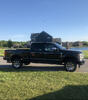
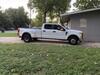
Anyway, I traded my 2014 F150 limited in favor for a 2018 F350 platinum 4x4 with the 6.7, I bought her used to avoid the stupid markups from the dealers. She's a beauty! with that said, a few hours later from driving her home, I got a check engine light on, it was code PO20EE.
The dealer wasn't a Ford dealer and she was sold as is, the truck has maybe 50k miles left of warranty so taking her into a Ford dealer isn't a problem, what is a problem is leaving it there for a few days and not having another truck for work, no loaners either. Anyone else experience this code?
So far I plan on doing an oil change, fuel filter change (both) I did the air filter which was black! and the cabin filter which was black! based on that, it's safe to say the maintenance wasn't great with previous owner so I will treat her like a worst case scenario.
New to diesel so you folks will see more of me on here to learn as much as possible, thanks all.
Miles are at 47,700, Hours, not 100% sure, I will look into that in the morning.
I ask because that looks to be an emissions related code. The engine is the only thing that gets 100k mi. warranty, 60k on the rest of the powertrain. Im not sure what the emissions warranty is.
Might be why the dealer game me the run around, I don't mind doing the work myself, I just can't figure out where to start. I've spent most of the day trying to cram as much info from youtube and forums to understand which sensor I need to replace. I may start with the DEF lines and filters and move forward from there.
I just had the same thing happen on my 2017 with 44000 miles. Check engine came on while driving, no noticable loss of power, code P20EE.
The code is emissions related, the dealer indicated there was a TSB for the issue and re-flashed my PCM, TCM, IC and PM modules.
The TSB number was 19-2082, so far so good. Light has not come on again.
The repair was covered under emissions warranty, no charge.
OBD-II Trouble Code Technical Description Article by Stephen Darby ASE Certified Technician
SCR NOx Catalyst Efficiency Below Threshold Bank 1
What does that mean? This is a generic diagnostic trouble code (DTC) and applies to many OBD-II vehicles (1996-newer). That may include but is not limited to vehicles from Audi, Buick, Chevrolet, Ford, GMC, Mercedes-Benz, Subaru, Toyota, Volkswagen etc. Although generic, the exact repair steps may vary depending on year, make, model and powertrain configuration.
When a P20EE is stored in a diesel powered, OBD-II equipped vehicle, it means that the powertrain control module has detected that catalyst efficiency is below threshold for a certain engine bank. This particular code applies to the downstream catalytic converter (or NOx trap) for engine bank one. Bank one is the bank of the engine that contains the number one cylinder. While modern, clean-burning diesel engines have many advantages over gasoline engines (especially in commercial truck applications), they also tend to produce more of certain harmful exhaust gases than other engines. The most notable of these offensive pollutants are ions of nitrogen oxide (NOx). Exhaust gas recirculation (EGR) systems help to dramatically reduce NOx but many of today’s powerful diesel engines cannot meet strict federal (U.S.) emission standards using the EGR system alone. For this reason, SCR systems were developed. SCR systems inject diesel exhaust fluid (DEF) into the exhaust in front of the catalytic converter or the NOx trap. The introduction of DEF raises exhaust gas temperature and allows the catalyst element to perform more efficiently. It makes the catalyst last longer and allows fewer NOx emissions to be released into the atmosphere. Oxygen (O2) sensors, NOx sensors, and/or temperature sensors are placed before and after the catalyst to monitor its temperature and efficiency. The entire SCS system is controlled by either the PCM or a stand-alone controller which interacts with the PCM. EIther way, the controller monitors the O2, NOx, and temperature sensors (as well as other inputs) to determine the appropriate time for DEF injection. Precise DEF injection is necessary to maintain exhaust temperature within acceptable parameters and promote optimum NOx filtration. If the PCM detects a catalyst efficiency that is insufficient for minimum allowble parameters, a code P20EE will be stored and a malfunction indicator lamp may be illuminated.
Update- Took the truck to my local dealer to work on the P20EE code, I get a call within an hour to tell me she's ready for pickup, all they had to do was reflash the computer and per Ford's bulletin. Drove the truck for about 40 miles and the codes comes back up.. Back to the dealer I guess.
Got mine back from the dealer again, they replaced the front NoX sensor. Apparently it was giving intermittent out of range readings.
They had to drive it while instrumented to find the fault. Hopefully this is the reason, otherwise I’ll be back there again after a couple hundred miles.
They just aren’t very reliable. From pickups, to 18-wheelers, to farm tractors. The emissions stuff gives trouble on all of ‘em.
That makes sense, First diesel so everything is too new to me, the only reason I was freaking out (kinda) was from reading that the truck may go into a speed limited mode which would suck wile traveling with the family.
This Hennessey Takes the Expedition Tremor's Off-Roading Capability to the Next Level
Slideshow: The VelociRaptor Expedition gains a lift, upgraded suspension, Brembo brakes, and trail-ready equipment while retaining the stock 440-horsepower EcoBoost V6.
Rezvani's Latest Post-Apocalyptic Monster Is a Ford F-150 Raptor Underneath
Slideshow: Called the Fortress, the 850-horsepower pickup combines Raptor underpinnings with military-inspired features, survival equipment, and a starting price of $285,000.