





Batteries go dead

Thread Starter
|
Freshman User
Joined: Jul 2019
Posts: 35
Likes: 0
Batteries go dead
6 months ago I bought a 2,000 mile 2003 F250 with a 6.0L. The truck had been stored basically in the guys living room/game room along with several collector cars since new.
I replaced the batteries, all filters and fluids, and bought new tires. I've since driven the truck 400 miles. Five times now the truck has failed to start due to dead batteries.
I first bought two new Interstate batteries, they gave me trouble, and after several replacements I bought two new Deka batteries.
The sitting draw on the batteries is .23 amps, less than any new vehicle sitting on the dealer's lot today. Its not a draw that's killing the batteries. Plus I installed a battery shutdown switch so I can disconnect the batteries when they're on the maintainer.
The alternator charges 14.6 volts. I tried replacing the alternator with a new one from he dealer but nothing has changed other than having a spare alternator on the shelf.
The truck sits most of the time, if it sits more than a week its plugged into a battery maintainer.
Deka replaced the batteries two weeks ago, I brought it home, gave both batteries a good charge on the bench myself to be sure they were both fully charged.
That same day, I had to start the truck and move it twice, when I went to bring it back in, the batteries were dead.
Its as if the batteries don't recover from the glow plug cycle. With fresh batteries, if I cycle the glow plugs once, it cranks over fast and starts right up. If I cycle them twice, the battery is too dead to crank the truck fast enough to start it. A third try and its stone dead,
How long should one of these things be able to sit without killing its batteries?
Its as if it can't recover from the glow plug cycle with just normal use. I start the truck, move it around the yard, and it sits for a few hours, then I go to move it again, and it barely starts. I've added a battery disconnect switch on the truck, but its not helped. Even fully charged batteries seem not to be enough in the colder weather to allow for repeated starts.
I don't drive it much and most trips are less than a mile. Only on occasion does it get driven any distance. Its as if the alternator can't replenish the batteries fast enough unless I go for a day long drive.
When I start this on a cooler day, it takes a long time for the voltage to come back up, even at higher rpms. Unless I drive it for a long distance, the alternator just doesn't seem to keep up with the glow plugs and starter draw over a bunch of short trips.
I replaced the batteries, all filters and fluids, and bought new tires. I've since driven the truck 400 miles. Five times now the truck has failed to start due to dead batteries.
I first bought two new Interstate batteries, they gave me trouble, and after several replacements I bought two new Deka batteries.
The sitting draw on the batteries is .23 amps, less than any new vehicle sitting on the dealer's lot today. Its not a draw that's killing the batteries. Plus I installed a battery shutdown switch so I can disconnect the batteries when they're on the maintainer.
The alternator charges 14.6 volts. I tried replacing the alternator with a new one from he dealer but nothing has changed other than having a spare alternator on the shelf.
The truck sits most of the time, if it sits more than a week its plugged into a battery maintainer.
Deka replaced the batteries two weeks ago, I brought it home, gave both batteries a good charge on the bench myself to be sure they were both fully charged.
That same day, I had to start the truck and move it twice, when I went to bring it back in, the batteries were dead.
Its as if the batteries don't recover from the glow plug cycle. With fresh batteries, if I cycle the glow plugs once, it cranks over fast and starts right up. If I cycle them twice, the battery is too dead to crank the truck fast enough to start it. A third try and its stone dead,
How long should one of these things be able to sit without killing its batteries?
Its as if it can't recover from the glow plug cycle with just normal use. I start the truck, move it around the yard, and it sits for a few hours, then I go to move it again, and it barely starts. I've added a battery disconnect switch on the truck, but its not helped. Even fully charged batteries seem not to be enough in the colder weather to allow for repeated starts.
I don't drive it much and most trips are less than a mile. Only on occasion does it get driven any distance. Its as if the alternator can't replenish the batteries fast enough unless I go for a day long drive.
When I start this on a cooler day, it takes a long time for the voltage to come back up, even at higher rpms. Unless I drive it for a long distance, the alternator just doesn't seem to keep up with the glow plugs and starter draw over a bunch of short trips.
Thread Starter
|
Freshman User
Joined: Jul 2019
Posts: 35
Likes: 0
Thread Starter
|
Freshman User
Joined: Jul 2019
Posts: 35
Likes: 0
Both batteries are Deka (East Penn), 665MF 850 cca.
The originals were Motorcraft BXT65-850.
When it starts, I can see there's a draw for a bit then the volts start coming up in maybe a minute or two. After that it charges at 14.6v. If I find it dead, or near dead, and jump start it, it runs fine till I have to restart it. It never really recovers on its own. If I charge it overnight, then its fine for almost a month. The problem is if I start it and move it to get something else out of the garage, it rarely will start back up a third time without charging it again. They warranted the batteries last week, with brand new batteries it can't handle three cold starts in one day without charging it. Once its warm the glow plugs don't hit it so hard so its not an issue thus why if I spend a day driving it it doesn't have an issue. But if I use it around the yard, starting and stopping it sevearal times, I end up with a dead battery in three or four starts. My driveway and garage have only one entrance, so I often have to move vehicles to get something else out. This morning I pulled the F250 out on the street to get out my van. It was on a battery maintainer in the garage, it started fine the first time, I pulled it out front, pulled the van out, and went and got the F250 and put it back. I didn't put it back on charge since I was only going to be gone for an hour. When I came back, it wouldn't make the third start. I now have both batteries on the charger.
The bad part is they load test fine.
The glow plugs hit the batteries with a 150a load, the starter is drawing about 310 amps while cranking, that goes up as the batteries die and lose voltage.
It acts like weak batteries but it does this with brand new batteries and the chances of 6 bad pairs of batteries is pretty slim.
I still have the set of Interstate batteries the dealer installed, (they didn't stock Motorcraft for some reason in this size, and they installed 750cca Interstate batteries instead). I took those out in favor of the Deka batteries thinking the lesser 750cca batteries may be part of the problem but they actually did better than the Deka batteries.
The replaced the Interstates twice, then I got fed up and bought a pair of Deka batteries, and the first set lasted till mid Sept. Then the next set til the first week in Nov. Now two months later and the third new set of Deka's are dead too.
The alternator was replaced, (I went round and round with the dealer who eventually gave me my money back for the new alternator I didn't need).
The starter was also removed and tested, and I have a used starter here I got from a local junk yard which tests nearly identical to my original starter.
An internet search turned up a ton of issues with these alternators and a long list of high amperage and Delco conversion kits to 'solve' similar problems.
Is this the norm for these things? The problem is it don't seem like an alternator problem as the batteries don't seem to have enough reserve to make multiple starts. Yet the batteries load test just fine.
I've had all the battery cables out of the truck, they're fine, with no voltage drop. What seems to be the bottom line is that a mere 410a start up draw kills two 850 cca batteries and the alternator never puts back enough power unless I drive several hundred miles after each start.
The truck also doesn't start right unless its spinning fast enough, a 'slow' cranking speed takes too long to get it to fire. When the batteries are fully charged, it starts in three of four revolutions. I can't imagine there being to much wrong with a truck that's lived its entire life indoors and has only 2400 miles on it.
The originals were Motorcraft BXT65-850.
When it starts, I can see there's a draw for a bit then the volts start coming up in maybe a minute or two. After that it charges at 14.6v. If I find it dead, or near dead, and jump start it, it runs fine till I have to restart it. It never really recovers on its own. If I charge it overnight, then its fine for almost a month. The problem is if I start it and move it to get something else out of the garage, it rarely will start back up a third time without charging it again. They warranted the batteries last week, with brand new batteries it can't handle three cold starts in one day without charging it. Once its warm the glow plugs don't hit it so hard so its not an issue thus why if I spend a day driving it it doesn't have an issue. But if I use it around the yard, starting and stopping it sevearal times, I end up with a dead battery in three or four starts. My driveway and garage have only one entrance, so I often have to move vehicles to get something else out. This morning I pulled the F250 out on the street to get out my van. It was on a battery maintainer in the garage, it started fine the first time, I pulled it out front, pulled the van out, and went and got the F250 and put it back. I didn't put it back on charge since I was only going to be gone for an hour. When I came back, it wouldn't make the third start. I now have both batteries on the charger.
The bad part is they load test fine.
The glow plugs hit the batteries with a 150a load, the starter is drawing about 310 amps while cranking, that goes up as the batteries die and lose voltage.
It acts like weak batteries but it does this with brand new batteries and the chances of 6 bad pairs of batteries is pretty slim.
I still have the set of Interstate batteries the dealer installed, (they didn't stock Motorcraft for some reason in this size, and they installed 750cca Interstate batteries instead). I took those out in favor of the Deka batteries thinking the lesser 750cca batteries may be part of the problem but they actually did better than the Deka batteries.
The replaced the Interstates twice, then I got fed up and bought a pair of Deka batteries, and the first set lasted till mid Sept. Then the next set til the first week in Nov. Now two months later and the third new set of Deka's are dead too.
The alternator was replaced, (I went round and round with the dealer who eventually gave me my money back for the new alternator I didn't need).
The starter was also removed and tested, and I have a used starter here I got from a local junk yard which tests nearly identical to my original starter.
An internet search turned up a ton of issues with these alternators and a long list of high amperage and Delco conversion kits to 'solve' similar problems.
Is this the norm for these things? The problem is it don't seem like an alternator problem as the batteries don't seem to have enough reserve to make multiple starts. Yet the batteries load test just fine.
I've had all the battery cables out of the truck, they're fine, with no voltage drop. What seems to be the bottom line is that a mere 410a start up draw kills two 850 cca batteries and the alternator never puts back enough power unless I drive several hundred miles after each start.
The truck also doesn't start right unless its spinning fast enough, a 'slow' cranking speed takes too long to get it to fire. When the batteries are fully charged, it starts in three of four revolutions. I can't imagine there being to much wrong with a truck that's lived its entire life indoors and has only 2400 miles on it.

Senior User


Joined: Nov 2014
Posts: 1,776
Likes: 1,584
From: France

No idea how many starts I could do, one after the other as I'm paranoid about flattening the batteries. A 110A alternator probably cost me a FICM a few years ago so I always try to drive minimum 15 minutes after starting the first time from cold.
Trending Topics
Thread Starter
|
Freshman User
Joined: Jul 2019
Posts: 35
Likes: 0
Is it worth looking into an aftermarket alternator upgrade?
When it comes to parasitic battery draw, we always pretty much figured that if it won't light a test light its not enough to be concerned about.
My '03 Towncar has a far more substantial battery draw than this truck has and it's never not started even after sitting for months at a time. I almost forget I have it most of the time. The truck isn't far behind since I've got two other trucks as well.
My TC, 03 F250, and my van sit a lot. I drive my Grand Marquis and old F150 the most.
Its pretty much impossible most of the time to drive the truck 15 minutes or miles every time its started, most of the time its just getting moved out of the way or being used in the yard or around town. The few times I took it for the day were only to give it some running time. I like the truck but I've got other vehicles which I don't care how many miles I put on them.
I rarely put more than a couple hundred miles on any one vehicle per year.
When it comes to parasitic battery draw, we always pretty much figured that if it won't light a test light its not enough to be concerned about.
My '03 Towncar has a far more substantial battery draw than this truck has and it's never not started even after sitting for months at a time. I almost forget I have it most of the time. The truck isn't far behind since I've got two other trucks as well.
My TC, 03 F250, and my van sit a lot. I drive my Grand Marquis and old F150 the most.
Its pretty much impossible most of the time to drive the truck 15 minutes or miles every time its started, most of the time its just getting moved out of the way or being used in the yard or around town. The few times I took it for the day were only to give it some running time. I like the truck but I've got other vehicles which I don't care how many miles I put on them.
I rarely put more than a couple hundred miles on any one vehicle per year.
FTE Stories
Ford Trucks for Ford Truck Enthusiasts

Top 10 Most Expensive Ford Trucks Ever Sold on Bring a Trailer
Joe Kucinski
2027 Ford Super Duty Buyer's Guide (Every Model, Engine, & Package)
Brett Foote
Top 10 Ford Truck Tragedies
Joe Kucinski
AEV FXL Super Duty - the Super Duty Raptor Ford Doesn't Make
Brett Foote
Lobo Vs Lobo: Proof the F-150 Lobo Should Be Even Lower!
Michael S. Palmer
Ford's 2001 Explorer Sportsman Concept Looks For a New Home
Verdad Gallardo
10 Best Ford Truck Engines We Miss the Most!
Joe Kucinski
2026 Shelby F-150 Off-Road: Better Than a Raptor R?
Brett Foote
2027 Super Duty Carhartt Package First Look: 12 Things You NEED to Know!
Michael S. Palmer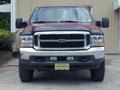
Hotshot


Joined: Dec 2014
Posts: 17,828
Likes: 3,113
From: Jersey Shore
A. A diesel truck is not the best choice for a couple of hundred miles per year. This puppy is going to bite you over and over.
B. None of this makes sense.
The next time you have good batteries and a good start, how about disconnecting the 4ga cable off the passenger battery until the next time you are going to start it. Then when you do connect, see if there is a big spark when reconnecting before starting. Or when shut down, check the amp draw on that cable.
That cable comes from the alternator but also supplies the GPCM/Glow Plugs. For that type of drawdown, there has to be a high amp load all the time. There have been a few occasions where the GPCM is faulted and keeps the GP's on.
B. None of this makes sense.
The next time you have good batteries and a good start, how about disconnecting the 4ga cable off the passenger battery until the next time you are going to start it. Then when you do connect, see if there is a big spark when reconnecting before starting. Or when shut down, check the amp draw on that cable.
That cable comes from the alternator but also supplies the GPCM/Glow Plugs. For that type of drawdown, there has to be a high amp load all the time. There have been a few occasions where the GPCM is faulted and keeps the GP's on.

Lead Driver

Joined: Dec 2006
Posts: 6,496
Likes: 94
From: So. Jersey
You're the cause of your own problem in my opinion. For every start that engine should continue to run for atleast 20+ minutes to recover the energy the glowplugs and starter just sucked out of the batteries. If you are still seeing the alternator putting out 14.6 volts then the batteries are not recovered yet from the start. When the batteries hit full charge or close to the capacity the alternator will put out less, around 13.8 or so volts.
Thread Starter
|
Freshman User
Joined: Jul 2019
Posts: 35
Likes: 0
There is no spark when reconnecting the batteries or alternator.
The draw on the system is minimum. Its not so much the draw that runs the batteries down but the fact that it never seems to recover from the glow plug cycle or cold start.
This don't happen in warm weather, only when the glow plugs are needed to stay on longer. Plugging in the block heater helps but it kills my electric bill. The thing costs me like $40 a month to keep plugged in. The truck is kept in a semi-heated garage. It rarely gets below 50 degrees in there but that's enough to start the problem.
If I put two brand new batteries in the truck, its fine for the first couple starts, I can start the engine and go for a drive. The problem is that sometimes even an extended drive doesn't seem to bring the batteries back to 100% again. It takes a good 24 hours on charge to get them back to full charge. With the first set of batteries I thought it was just that it had the wrong batteries in it, so I switched to the Deka batteries, They were good till the weather cooled off. (When its warm, the glow plug light barely stays lit before starting, and the draw on the batteries a start up in minimal.
The alternator is always over 14 volts, at higher rpm's I've seen it as high as 14.8v. That's not much different from any of my Ford vehicles.
My one Dodge, and one GM both run around 13.8v
I have this because it was a super clean truck for a good price, I didn't particularly go looking for a diesel, but I did need a heavier truck to pull a larger camper from time to time, and to move heavy equipment around as well. 99% of my driving is less than a mile from the house.
None of my other vehicles give me these issues, I owned Ford trucks with diesels in the past and never had these issues before. My 1996 F250 and my 1987 F350 never had a problem with similar use.
I have no problem starting it and letting it run longer but I don't think it would help, if the batteries don't fully recover after a day long drive, then they're not going to recover if left idling for 20 minutes.
To me its as if he batteries aren't able to absorb the charge, the alternator is going full bore but the batteries aren't responding. I see that when I charge them as well. It takes a full 24 or more hours to get them back to the minimum 12.56 volts Ford says they need to be.
I tried something this morning, I left the key off, and simply cranked the engine over about 10 times on freshly charged week old batteries. (Starting volts were 12.64v). The truck had been plugged in over night and the engine was warm via the block heater. After cranking the engine, with no glow plugs or other draw, the batteries dropped to 12.22v and stayed there. I then started the truck by the key, the glow plug light cycled for about 4 seconds, then I started it. It fired up almost instantly.
Watching the volt meter, the glow plug draw or what ever was loading the charging sytem on initial start continued for 80 seconds, at that point the alternator went from 13.2v back up to the normal 14.6v. I took the truck for a 10 mile non stop drive at highway speed. When I backed it into the garage and shut it down, I rechecked the alternator output and it was again at 14.6v. I shut it down, turned off the battery switch, and rechecked the battery voltage, I had only 12.32v after 10 minutes.
I get the exact same thing from ever set of batteries.
In any other vehicle I'd just assume that the batteries were junk. The alternator tests out fine, both on and off the truck, the Ford dealer replaced it once most likely out of not finding anything else. They also replaced the second set of Interstate batteries.
Out of the box, when I changed to the Deka batteries, it was a lot better but they didn't last.
Its as if its doing something to the batteries that makes them hard or slow to take a charge.
The alternator was brand new, OEM Ford, not rebuilt or aftermarket.
I have a dozen different battery chargers here, ranging from older 300 amp multi voltage Marquette starter/chargers on wheels, down to 8 and 10 amp portable chargers. All are older American made chargers that I know work. I had the truck on charge overnight with both batteries separated and each being charged with its own 8 amp portable charger so as not to overheat the battery. Trying to charge them faster just overheats the battery and boils over electrolyte.
The reasoning for replacing the alternator by the dealer was that the tech thought maybe the alternator wasn't putting out clean rectified voltage, possibly putting ac volts to the batteries, but he couldn't prove it so they hung an alternator and regulator. It changed nothing.
The used starter was my doing, but I didn't mind having a spare on hand in the end either way. The original starter is back in the truck.
The battery cables show no resistance or voltage loss, they look brand new, which they should on a 2400 mile truck that's likely never seen bad weather or rain.
The truck has no 'codes' present, the computer is seeing the same voltages as my voltmeter through the NGS scan tool and through my OTC scanner.
I went down to Walmart today and bought two fresh batteries, both are Everstart Maxx brand with an East Penn ID code.
If I take a brand new battery off the shelf, load test it till its low on volts, below 12v. then charge that battery, it recovers rapidly, within 20 minutes back to normal standing voltage. The batteries that have gone down in the truck will not do that. They take 24 hours to recharge with the standing voltage taking 20+ hours to recover back to where they were new.. That tells me its doing something to the batteries somehow but I can't see how.
When its running, with fresh batteries I can drive it all day without ever noticing a symptom unless I am monitoring the battery voltage manually.
The draw on the system is minimum. Its not so much the draw that runs the batteries down but the fact that it never seems to recover from the glow plug cycle or cold start.
This don't happen in warm weather, only when the glow plugs are needed to stay on longer. Plugging in the block heater helps but it kills my electric bill. The thing costs me like $40 a month to keep plugged in. The truck is kept in a semi-heated garage. It rarely gets below 50 degrees in there but that's enough to start the problem.
If I put two brand new batteries in the truck, its fine for the first couple starts, I can start the engine and go for a drive. The problem is that sometimes even an extended drive doesn't seem to bring the batteries back to 100% again. It takes a good 24 hours on charge to get them back to full charge. With the first set of batteries I thought it was just that it had the wrong batteries in it, so I switched to the Deka batteries, They were good till the weather cooled off. (When its warm, the glow plug light barely stays lit before starting, and the draw on the batteries a start up in minimal.
The alternator is always over 14 volts, at higher rpm's I've seen it as high as 14.8v. That's not much different from any of my Ford vehicles.
My one Dodge, and one GM both run around 13.8v
I have this because it was a super clean truck for a good price, I didn't particularly go looking for a diesel, but I did need a heavier truck to pull a larger camper from time to time, and to move heavy equipment around as well. 99% of my driving is less than a mile from the house.
None of my other vehicles give me these issues, I owned Ford trucks with diesels in the past and never had these issues before. My 1996 F250 and my 1987 F350 never had a problem with similar use.
I have no problem starting it and letting it run longer but I don't think it would help, if the batteries don't fully recover after a day long drive, then they're not going to recover if left idling for 20 minutes.
To me its as if he batteries aren't able to absorb the charge, the alternator is going full bore but the batteries aren't responding. I see that when I charge them as well. It takes a full 24 or more hours to get them back to the minimum 12.56 volts Ford says they need to be.
I tried something this morning, I left the key off, and simply cranked the engine over about 10 times on freshly charged week old batteries. (Starting volts were 12.64v). The truck had been plugged in over night and the engine was warm via the block heater. After cranking the engine, with no glow plugs or other draw, the batteries dropped to 12.22v and stayed there. I then started the truck by the key, the glow plug light cycled for about 4 seconds, then I started it. It fired up almost instantly.
Watching the volt meter, the glow plug draw or what ever was loading the charging sytem on initial start continued for 80 seconds, at that point the alternator went from 13.2v back up to the normal 14.6v. I took the truck for a 10 mile non stop drive at highway speed. When I backed it into the garage and shut it down, I rechecked the alternator output and it was again at 14.6v. I shut it down, turned off the battery switch, and rechecked the battery voltage, I had only 12.32v after 10 minutes.
I get the exact same thing from ever set of batteries.
In any other vehicle I'd just assume that the batteries were junk. The alternator tests out fine, both on and off the truck, the Ford dealer replaced it once most likely out of not finding anything else. They also replaced the second set of Interstate batteries.
Out of the box, when I changed to the Deka batteries, it was a lot better but they didn't last.
Its as if its doing something to the batteries that makes them hard or slow to take a charge.
The alternator was brand new, OEM Ford, not rebuilt or aftermarket.
I have a dozen different battery chargers here, ranging from older 300 amp multi voltage Marquette starter/chargers on wheels, down to 8 and 10 amp portable chargers. All are older American made chargers that I know work. I had the truck on charge overnight with both batteries separated and each being charged with its own 8 amp portable charger so as not to overheat the battery. Trying to charge them faster just overheats the battery and boils over electrolyte.
The reasoning for replacing the alternator by the dealer was that the tech thought maybe the alternator wasn't putting out clean rectified voltage, possibly putting ac volts to the batteries, but he couldn't prove it so they hung an alternator and regulator. It changed nothing.
The used starter was my doing, but I didn't mind having a spare on hand in the end either way. The original starter is back in the truck.
The battery cables show no resistance or voltage loss, they look brand new, which they should on a 2400 mile truck that's likely never seen bad weather or rain.
The truck has no 'codes' present, the computer is seeing the same voltages as my voltmeter through the NGS scan tool and through my OTC scanner.
I went down to Walmart today and bought two fresh batteries, both are Everstart Maxx brand with an East Penn ID code.
If I take a brand new battery off the shelf, load test it till its low on volts, below 12v. then charge that battery, it recovers rapidly, within 20 minutes back to normal standing voltage. The batteries that have gone down in the truck will not do that. They take 24 hours to recharge with the standing voltage taking 20+ hours to recover back to where they were new.. That tells me its doing something to the batteries somehow but I can't see how.
When its running, with fresh batteries I can drive it all day without ever noticing a symptom unless I am monitoring the battery voltage manually.
Hotshot
Joined: Dec 2014
Posts: 17,828
Likes: 3,113
From: Jersey Shore
Diesels of any brand even with two batteries, have a deeper depth of discharge of battery capacity then gas motor vehicles. Depth of discharge determines life. And it takes longer to charge. Batteries will only accept a charge based on their internal resistance, which changes in the first 15 seconds of charging. You can have a 500amp alternator, they still will only accept a certain amps. The advantage of having 14.4+volts vs 13 volts is the pressure is higher, the amps will initially in that first 30 seconds will get in faster. At 10 to 15 minutes the resistance and replenishment will have the charge acceptance down to maybe 1 to 3 amps per battery.
if you look at battery manufacturers specs they show it will take 18 to 24 hours to do an absolute recharge. In normal operation we never fully recharge our batteries. And that won’t matter if it’s a 140a, 230a, or 500a alternator.
I said it, Pete said it, this is the wrong type of vehicle for your situation. There may be other factors making this worse, but the number of battery sets you’ve gone through are saying it’s not the batteries themselves.
All the dealer had to do was switch the meter to read AC to tell if there was a diode problem with excessive AC ripple.
if you look at battery manufacturers specs they show it will take 18 to 24 hours to do an absolute recharge. In normal operation we never fully recharge our batteries. And that won’t matter if it’s a 140a, 230a, or 500a alternator.
I said it, Pete said it, this is the wrong type of vehicle for your situation. There may be other factors making this worse, but the number of battery sets you’ve gone through are saying it’s not the batteries themselves.
All the dealer had to do was switch the meter to read AC to tell if there was a diode problem with excessive AC ripple.

Post Fiend
Joined: Apr 2002
Posts: 19,311
Likes: 97
From: Waterloo, Iowa
Measuring ohms resistance of the cables and grounds won't work in a high current low voltage DC circuit as it only takes a few extra hundredths of an ohm to cripple the alternator current output. The cables are 17 years old however. The only practical method is voltage drop testing.
Voltage drop testing
Sealed, "maintenance free" batteries (by far the most commonly sold today) are constructed with slightly different plate alloy material and measure 12.80 volts at 77° F. for a 100% charge level. A tenth or two of a volt doesn't sound like much, but on a percentage basis looms large.
Voltage drop testing
Sealed, "maintenance free" batteries (by far the most commonly sold today) are constructed with slightly different plate alloy material and measure 12.80 volts at 77° F. for a 100% charge level. A tenth or two of a volt doesn't sound like much, but on a percentage basis looms large.
Thread Starter
|
Freshman User
Joined: Jul 2019
Posts: 35
Likes: 0
The cables were checked both by voltage drop and resistance. All the cables are in perfect condition.
I don't doubt some of the problem is due to how its used but it does sit on a maintenance charger when it sits. I've also gone through five battery maintainers.
I added the battery switch to allow the batteries to both be relieved of any draw, and to be able to separate them for charging separately.
A few things stand out to me here, first, the truck is fine in warm weather, the batteries are never 'dead' they just are depleted beyond the ability to start the truck.
This happens at about 11.29 volts. At this point the truck doesn't crank, the solenoid just clicks. If it was anything like a glow plug relay or controller staying on, the batteries would be completely dead, not just too low to start the truck.
Another thing that comes to mind is that my dump truck, a 1997 F350 with a 7.3L, also has two of he same batteries. that truck has 29,000 miles, it sits for two or three months at time It only get used when I need to haul dirt or fire wood. I don't think I've ever had to jump start it and the batteries in that last for 4 to 5 years.
If he 110a alternator is part of the problem would buying an aftermarket upgrade help?
If this truck isn't suited for my use, I'm not sure what I can buy that is.
I need at least a 3/4 ton truck that can tow at least 12,000 lbs. My RV weighs in at 9,300 lbs and I've got several 6 ton equipement trailers I use to move equipment around with.
If this truck isn't going to work out maybe I just need to move it to the back of the garage and find something else. Maybe I'll put it away for another 10 or so years. I can pull the batteries and cover it up. I just hate to let something sit without figuring this out.
I don't doubt some of the problem is due to how its used but it does sit on a maintenance charger when it sits. I've also gone through five battery maintainers.
I added the battery switch to allow the batteries to both be relieved of any draw, and to be able to separate them for charging separately.
A few things stand out to me here, first, the truck is fine in warm weather, the batteries are never 'dead' they just are depleted beyond the ability to start the truck.
This happens at about 11.29 volts. At this point the truck doesn't crank, the solenoid just clicks. If it was anything like a glow plug relay or controller staying on, the batteries would be completely dead, not just too low to start the truck.
Another thing that comes to mind is that my dump truck, a 1997 F350 with a 7.3L, also has two of he same batteries. that truck has 29,000 miles, it sits for two or three months at time It only get used when I need to haul dirt or fire wood. I don't think I've ever had to jump start it and the batteries in that last for 4 to 5 years.
If he 110a alternator is part of the problem would buying an aftermarket upgrade help?
If this truck isn't suited for my use, I'm not sure what I can buy that is.
I need at least a 3/4 ton truck that can tow at least 12,000 lbs. My RV weighs in at 9,300 lbs and I've got several 6 ton equipement trailers I use to move equipment around with.
If this truck isn't going to work out maybe I just need to move it to the back of the garage and find something else. Maybe I'll put it away for another 10 or so years. I can pull the batteries and cover it up. I just hate to let something sit without figuring this out.
