When you click on links to various merchants on this site and make a purchase, this can result in this site earning a commission. Affiliate programs and affiliations include, but are not limited to, the eBay Partner Network.
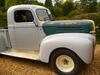
I have a v8 flathead in my 47 1/2 ton and am looking for advice from you experienced folks hear. As you may recall from my previous posts regarding a stuck valve my truck has not been driven for 30 years. Well now after ages repairing it is now drivable and have had the pleasure of gingerly creeping locally about in ever expanding circles waiting for it to break down , happily though it hasn't. So far..
One thing I have noticed is good oil pressure on start up from cold , tapering off to very little as the temperature rises. Should I be concerned? I have removed the oil filter housing as it was damaged and am dumping the oil from the supply tube into the sump. I did have issues with overheating but have cured this by washing out casting sand from the internals of the block . Now things are running cool but its possible bearings have worn due to overheating but there is no rumbling . I have no experience of these engines and so not sure if this low oil pressure is a characteristic . Any suggestions please? many thanks
Had several like that, 40 to 60 psi when cold then down to 15 or 20 when warm or when real hot 10. I always ran 10-40, never had any problems. Tore one down and the bearings were good on the bottom end but the cam bearings were worn. I am sure others with more experience can chime in here.
A flat head doesn't require as much oil pressure as today's engines do as the valve train is down much lower, down in the block. I would say that your oil pressure is fine. I have a 46 Ford 1.5 ton truck and a 50 Ford car both with the flat head V-8. My truck runs about the same oil pressure as yours. My car on the other hand maintains 30-40 psi with a warm engine. I run Pennzoil 10-40 in both of them. My truck is not registered and I only run it a little around the farm but my car is registered and insured for the road. The truck has 63K and my car 34K.
I have and still do own quite a few flatheads in the 42-47 years. I agree your oil pressure sounds ok. 30 years ago I laid awake at night worrying about lower oil pressure. It's great when it's high, but certainly not required. A rebuild if done right is about 5 grand these days. I run 15-40 diesel oil like chevron delo 400 or shell rotella T. More zinc for those flat tappets. Good stuff. Happy motoring.
GB SISSON, Please tell me more about more zinc in the oil. I have been adding lead additive to the gas for all of my old engines (1951 Farmall tractor and a 63 GMC dump truck) but often wonder if I should be doing anything else. I also run ethanol free gas in my older equipment and my more modern 2 stroke engines.
I'm no chemist, but I have read a lot of oil threads on forums. Some of the contributors on the sites are chemists and automotive engineers and even they can't be in total agreement, but I have had lots of diesels and I buy the oil in big jugs, so it's in my shop. Commercial diesels have a hard life, but run many trouble-free miles. Those big fleets demand the best oil. I wonder what UPS uses with all that stop and go torture?
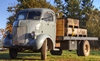
My 47 COE also has low oil pressure at idle once the engine is warm. The engine was rebuilt about 10 years ago and the builder put in a high flow oil pump. Actually he replaced pretty much everything, including the block. Before the rebuild it had low power, smoked like crazy and burned lots of oil. This is a working truck driven about 500 miles per year. I use it to deliver 20 to 30 tons of wine grapes every year.
I now use Classic Car Motor Oil which has zinc and also preservatives that are said to be good for old vehicles that spend a lot of time sitting. While I don't have any direct evidence that CCMO is a lot better than run of the mill oil, I figure it probably is better. They have testimonials on their web site from people such as engine builders that do see a difference.
I also have a tank of non-ethanol gas that is used for my old V8s.
My 47 COE also has low oil pressure at idle once the engine is warm. The engine was rebuilt about 10 years ago and the builder put in a high flow oil pump. Actually he replaced pretty much everything, including the block. Before the rebuild it had low power, smoked like crazy and burned lots of oil. This is a working truck driven about 500 miles per year. I use it to deliver 20 to 30 tons of wine grapes every year.
I now use Classic Car Motor Oil which has zinc and also preservatives that are said to be good for old vehicles that spend a lot of time sitting. While I don't have any direct evidence that CCMO is a lot better than run of the mill oil, I figure it probably is better. They have testimonials on their web site from people such as engine builders that do see a difference.
I also have a tank of non-ethanol gas that is used for my old V8s.
I would love to come fill up at your 'station'. Hard to find non ethanol on this island......
Thank you all for your replies, I thought an update would be good. Just yesterday I removed the engine sump and cleaned debris from the sump filter gauze and sump. Refilling with 20W 40 engine oil the oil pressure was lower and the pressure virtually zero at idle speed with the oil check light flickering and very little at max RPM so.
Refilled with 30W50 and STP engine oil treatment and behold, good pressure at RPM and idle speeds. Seems like every day can be a school day
While under there I had a look at the centre main bearing and it's undersize 10 thou and reasonably good condition. I do now have a small oil leak from the sump so will be getting to that soon and think removing the pump and dismantling for inspection. Question , is the pump removable easily please. Many thanks.
Oil pump is really simple to remove. Well, except for the pan. One bolt with safwety wire holds it onto the block. Have you ever used plastigauge to check bearing clearance /I love the stuff. Look it up. Way more often than not I feel a lot better about an engine after I plastigauge the bearings.
Thanks for your replies, so far I have changed to 50 grade oil and pressure is improved when hot. I removed the oil pump and flattened off the plate on the bottom to remove wear and noticed the clearance from the gears to body of the pump was what I thought excessive so filed away the excess. The engine re assembled and now an increase in pressure at idle and more importantly an increase in pressure with increased engine speed.
I had a look at the big end bearing and it is a fully floating type ???? I have no experience of these but took a few pictures. What do you guys think ?
Thanks for your replies, so far I have changed to 50 grade oil and pressure is improved when hot. I removed the oil pump and flattened off the plate on the bottom to remove wear and noticed the clearance from the gears to body of the pump was what I thought excessive so filed away the excess. The engine re assembled and now an increase in pressure at idle and more importantly an increase in pressure with increased engine speed.
I had a look at the big end bearing and it is a fully floating type ???? I have no experience of these but took a few pictures. What do you guys think ?
The crank looks good, bearings are toast. Looks like its time to do the bottom end bearings. This should solve the low oil pressure issue. And swap out that KG to CM pressure gauge for a proper PSI one, the Metric one is not accurate enough or graduated fine enough for lower pressures as 1 KGcm is equal to 14 PSI so I would swap out that gauge...
Rezvani's Latest Post-Apocalytic Monster Is a Ford F-150 Raptor Underneath
Slideshow: Called the Fortress, the 850-horsepower pickup combines Raptor underpinnings with military-inspired features, survival equipment, and a starting price of $285,000.