





Electrical issues

Thread Starter
|
Freshman User
Joined: Sep 2018
Posts: 29
Likes: 0
Electrical issues
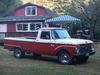
I've never been very good at troubleshooting electrical problems. My 65 style side has come down with a gremlin. First my blinkers wouldn't blink. I replaced the relay and they worked for a bit and then quit again. Now, my dash lights are out and my dome light won't work. The head lights, tail lights and brake lights work fine. Any suggestions? Thanks guys!
Fleet Mechanic
Joined: Jan 2014
Posts: 1,946
Likes: 118
Jim:
Fear not....automotive electrical! Suggestion, get yourself a cheap multimeter like at Harbor Freight. Set it to 12V DC and learn how to test for voltage at various locations such as the light switch terminals mentioned above. Since all the wires you’re trying to trace are color coded, its not that hard. It will be a learning experience, but circuit testing does no harm, you’ll learn a lot, feel more empowered and less like you’re throwing random parts at the truck.
Fear not....automotive electrical! Suggestion, get yourself a cheap multimeter like at Harbor Freight. Set it to 12V DC and learn how to test for voltage at various locations such as the light switch terminals mentioned above. Since all the wires you’re trying to trace are color coded, its not that hard. It will be a learning experience, but circuit testing does no harm, you’ll learn a lot, feel more empowered and less like you’re throwing random parts at the truck.
Thread Starter
|
Freshman User
Joined: Sep 2018
Posts: 29
Likes: 0
Jim:
Fear not....automotive electrical! Suggestion, get yourself a cheap multimeter like at Harbor Freight. Set it to 12V DC and learn how to test for voltage at various locations such as the light switch terminals mentioned above. Since all the wires you’re trying to trace are color coded, its not that hard. It will be a learning experience, but circuit testing does no harm, you’ll learn a lot, feel more empowered and less like you’re throwing random parts at the truck.
Fear not....automotive electrical! Suggestion, get yourself a cheap multimeter like at Harbor Freight. Set it to 12V DC and learn how to test for voltage at various locations such as the light switch terminals mentioned above. Since all the wires you’re trying to trace are color coded, its not that hard. It will be a learning experience, but circuit testing does no harm, you’ll learn a lot, feel more empowered and less like you’re throwing random parts at the truck.

Tuned


Joined: Mar 2017
Posts: 255
Likes: 15
If they turn on, are either the front or rear turn filaments burned out?
A turn signal flasher works sort of like a circuit breaker. When you turn on the circuit, the lights come on for second or 2, the load of the circuit heats up the relay arm in the flasher and the circuit opens - lights shut off. Then the arm cools, the lights turn on again. Repeat, repeat,.... When you have one filament burned out, there is not enough current flow (amperage) to heat up the relay arm in your flasher, and thus the lights stay on and and do not flash (which also is an indicator to the driver to check for burned out bulbs).
Other causes for non-flash condition:
- Poor ground (again, low amperage causes not enough heat for flasher relay arm)
- Did you install an LED bulbs? These require a low amperage LED flasher.
We can help you with that!

Trending Topics
Thread Starter
|
Freshman User
Joined: Sep 2018
Posts: 29
Likes: 0
They don't turn on at all. I plan on checking the ground, using a volt meter or test light to make sure I'm getting power, and then go from there. When I first replaced the relay, they worked fine for a few days, then nothing.
FTE Stories
Ford Trucks for Ford Truck Enthusiasts

10 Best Ford Truck Engines We Miss the Most!
Joe Kucinski
2026 Shelby F-150 Off-Road: Better Than a Raptor R?
Brett Foote
2027 Super Duty Carhartt Package First Look: 12 Things You NEED to Know!
Michael S. Palmer
10 Most Surprising 2026 Ford Truck Features!
Joe Kucinski
Top 10 Ford Trucks Coming to Mecum Indy 2026
Brett Foote
5 Best / 5 Worst Ford Truck Wheels of All Time
Joe Kucinski
Ford Super Duty: 5 Things Owners LOVE, 5 Things They LOATHE!
Joe Kucinski
Every 2026 Ford Truck Engine RANKED from WORST to FIRST!
Michael S. Palmer
The Best F-150 Deal of Every Trim Level (XL through Raptor)
Joe Kucinski
Thread
Thread Starter
Forum
Replies
Last Post
79stepsideF150
1973 - 1979 F-100 & Larger F-Series Trucks
8
Jan 18, 2012 10:39 AM
Shake-N-Bake
1999 - 2003 7.3L Power Stroke Diesel
6
Oct 25, 2011 07:42 PM