When you click on links to various merchants on this site and make a purchase, this can result in this site earning a commission. Affiliate programs and affiliations include, but are not limited to, the eBay Partner Network.
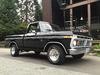
hi there, next week I’m taking my 1976 f100 2wd short box to a shop and getting the original 390 rebuilt. (Leaks and burns lots of oil + bad blow by) It’s currently stock other than hooker headers + true dual exhaust with glass pack, performer rpm intake, and 650cfm thunder avs carb. Truck has 4.10s and a Posi. Stock converter. I want it to still run on 87 as it will be my daily driver. My engine builder recommended forged flat top pistons to bump the compression and a Lunati voodoo 250/256 cam. Couple questions:
1) I for sure want flat top pistons to bump the compression, but is forged worth the extra $$ or necessary? Will cast be fine?
2) what do you guys think of the cam choice? Will it have a noticeable idle, would I be able to go one step up and use a 256/262? Would you guys recommend a totally different cam altogether?
3) any other suggestions/questions/comments?
1) Forged pistons are more tolerant of detonation in case it happens. You can still burn holes in them if you run too lean or too low of octane for your compression but they can tolerate it better than hypereutectic and they don't fail by exploding like the cast. Forged will also allow you to get custom sized pistons so that you can dial in your compression and bore size. By choosing a bore size you can save bore metal by boring only enough to clean your cylinders...no need to take the bores to the next standard size. Forged will also allow you to use a more "modern" ring pack to get a smidge more power and fuel economy.
2) Can't help with cam specs but I will say I like my roller cam. There's no need to be super careful during break-in to prevent wiping a flat tappet cam. Also, a roller cam lets me use any oil I want since I don't need high zinc. I used a high zinc racing oil for several thousand miles. On a whim I switched to motorcraft synthetic blend and get around a half more mile per gallon. When you're around 10-11 mpg, another half mile is something to be proud of. Just make sure you match cam gear to the distributor gear...cast cam needs a cast distributor gear and steel cam needs a steel distributor gear.
You don't need forged pistons or a roller cam, though they do have benefits for their extra cost.
Flat tops and 87 octane? Has the machinist done the math on the compression ratio from using flat tops? I used flat-top TRW forged pistons in my last 390 build and I topped out around 11:1 compression. You're not going to get away with 87 octane with that. Now, my block was decked, and the heads milled slightly, but even still, without a HUGE cam, you're going to have way too much dynamic compression for 87 octane. I had detonation problems with a 292/292 cam and 93 octane that made me do some very weird things with the vacuum and mechanical timing advance
Something down in the 9's would be fine with a mild cam.
hi there, next week I’m taking my 1976 f100 2wd short box to a shop and getting the original 390 rebuilt. (Leaks and burns lots of oil + bad blow by) It’s currently stock other than hooker headers + true dual exhaust with glass pack, performer rpm intake, and 650cfm thunder avs carb. Truck has 4.10s and a Posi. Stock converter. I want it to still run on 87 as it will be my daily driver. My engine builder recommended forged flat top pistons to bump the compression and a Lunati voodoo 250/256 cam. Couple questions:
1) I for sure want flat top pistons to bump the compression, but is forged worth the extra $$ or necessary? Will cast be fine?
2) what do you guys think of the cam choice? Will it have a noticeable idle, would I be able to go one step up and use a 256/262? Would you guys recommend a totally different cam altogether?
3) any other suggestions/questions/comments?
Look forward to your guys feedback!!
jared
Agree with Krewat above. Any forged flat-top pistons I have seen are about 10-12 cc. The KB150 gets you to 20 cc. This 20cc with the stock head chambers with these pistons left me around 9.3:1 which would still, IMO, be too high/unnecessary for the cam you posted. You have 4.10 gears as well. I'd go with the KB150 and jump up 2 cam sizes with that gearing.
I have a Howards cam in mine with these pistons with 215/215 (269/269) durations and love it. I do run 87 in it from time to time and haven't noticed any knocks. I do tend to get 91 if available without ethanol but am not afraid of putting 87 in it, especially if i'm not going to be hauling anything.
Keep close tabs on what you will be spending on these heads. I see you have the RPM manifold, so a heat crossover is a moot point for you already. IMO the ONLY reason to spend money on the old iron heads is to save the crossover for cold weather. Edelbrocks were within about $300-$400 of where I wound up on my heads being rebuilt.
I think with stock heads the 262/268 cam would be capable of about 340-350 honest flywheel HP with that piston combo; About 20-25 more with the Edelbrocks but lighter and slightly better detonation resistance for those 87 octane days.
Are you sure your 76 has a 390, I worked at a Ford dealer in 76 and most of the FE powered pickups that came through the shop had 360's.
390's where a bit rare in pickups.
I rebuilt a GT390 back in the 80's with new TRW forged pistons,(10 to 1 flat tops) cam was a Cam Dynamics grind with something like a .516 lift, 296 duration. It was fine on 87 gas. Drove that 70 F100 with it under the hood to Utah and back on 87, towing a heavily loaded utility trailer. You can do flat tops with the right cam. Also overhauled a 68 Merc's 390 (this was the 10.5 to 1 2 bbl motor) had two busted pistons from detonation. Replaced those two with two from a matching set. Went with a Crane 272 Energizer cam, stock C8AE heads (at 58K they didn't need anything) 428 PI intake, Holley 3310 carb, Pertronix in the stock distributor. It was fine on 89 octane with that cam.
You can use the car "regular fuel" pistons also. They have the approx. 1.77" compression height which brings them up nearly to the deck, but have a slight dish vs. the "premium fuel" pistons which were flat. Both had valve reliefs.
As advertised by Ford in the car motors, they were 9.5 compression. You may have larger combustion chambers, so you have to measure it all out to really know what you will end up with. Including compressed height of your head gasket.
Forged piston are overkill unless you are planning on boost or a serious street/strip engine.
Before you buy pistons, get measurements of your combustion chamber and deck height and do the math - personally I would shoot for that 9.5:1 ish range for your static compression ratio.
If you stick with stock cast pistons, you will end up with a piston compression height of 1.77", either with just valve reliefs or a dish if your heads and block have been milled a fair bit.
Other option if you're bore is good is to use a set of 352/360 rods with your pistons - the longer rod will get your piston up where it needs to be and the longer rod theoretically gives you a low end torque advantage over the stock 390 rod.
Forged piston are overkill unless you are planning on boost or a serious street/strip engine.
Before you buy pistons, get measurements of your combustion chamber and deck height and do the math - personally I would shoot for that 9.5:1 ish range for your static compression ratio.
If you stick with stock cast pistons, you will end up with a piston compression height of 1.77", either with just valve reliefs or a dish if your heads and block have been milled a fair bit.
Other option if you're bore is good is to use a set of 352/360 rods with your pistons - the longer rod will get your piston up where it needs to be and the longer rod theoretically gives you a low end torque advantage over the stock 390 rod.
You do not want to use 352/360 rods in a 390. They're much weaker forgings. Long and skinny vs shorter and beefier.
You do not want to use 352/360 rods in a 390. They're much weaker forgings. Long and skinny vs shorter and beefier.
I am well aware. I have wanted to and have successfully used 352/360 rods in a 390. Unless you add boost or NOS or are trying to rev it to the moon, the lighter rod will never give you a problem.
On a mild build 390, the slight advantage in low end along with the cost savings of not having to buy new pistons is easily worth it, IMO. If you have to buy new pistons, then yes, just get the right piston for the 390 rod.
I am well aware. I have wanted to and have successfully used 352/360 rods in a 390. Unless you add boost or NOS or are trying to rev it to the moon, the lighter rod will never give you a problem.
On a mild build 390, the slight advantage in low end along with the cost savings of not having to buy new pistons is easily worth it, IMO. If you have to buy new pistons, then yes, just get the right piston for the 390 rod.
So you're comparing reconditioning 360 rods vs just buying 390 pistons. Have you dynoed two identical engines with each rod ? Or are you guesti-mating this?
So you're comparing reconditioning 360 rods vs just buying 390 pistons. Have you dynoed two identical engines with each rod ? Or are you guesti-mating this?
Budget build - used rods, used pistons, used bore.
Again, I agree, if you have to buy any parts, get the correct ones. If you're bore is usable and you want a decent running engine on the cheap, it works well.
You do not want to use 352/360 rods in a 390. They're much weaker forgings. Long and skinny vs shorter and beefier.
Strongly agree with this. It is a downgrade in parts reliability for a marginal savings.
"Revving to the moon" isn't all that is relevant for the risk here. With the cam choices above, he should be well above the 300 HP mark > It isn't hard to find posts touting 300 HP as the max on those rods. About 450 is the common quote for stock 6.49" 390 rods.
Even if you did switch rods, that doesn't tell you what the compression ratio would now be. You would still need to know the volume of the pistons, period.
The ONLY pistons on the market that will get your compression ratio down into the "safe" or "mild" zone are the KB150's at +20 cc dish or the 1130's at +19 cc. The KB150 are about $75 more and are *very* nice with a more modern design.
Rezvani's Latest Post-Apocalyptic Monster Is a Ford F-150 Raptor Underneath
Slideshow: Called the Fortress, the 850-horsepower pickup combines Raptor underpinnings with military-inspired features, survival equipment, and a starting price of $285,000.