



37s no rub 20x9 +20 offset - experience?

Thread Starter
|
More Turbo
Joined: May 2018
Posts: 590
Likes: 32
37s no rub 20x9 +20 offset - experience?
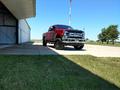
I bought some 20x9 +20 offset wheels for my 2018 CCSB F250. I also ordered two sets of tires Nitto Ridge Grappler tires one in 37x12.50r20 and one in 35x12.50r20.
Since I had already intended to level my truck, I am going to try to fit the 37's on my new 20x9 wheels first. If I can't stand the finished product, I send those back and use my 35s, no harm no foul.
I've seen some posts saying 20x9 +20 offset will work with no rubbing, but have also heard some conflicting stories. Can I get some input from someone that has tried this setup? I saw a YouTube video of a Ford dealership selling a brand new F250 with a 2.5" level and 37's with a +20 offset wheel which leads me to believe it was doable.
Looking for input, thanks!
Since I had already intended to level my truck, I am going to try to fit the 37's on my new 20x9 wheels first. If I can't stand the finished product, I send those back and use my 35s, no harm no foul.
I've seen some posts saying 20x9 +20 offset will work with no rubbing, but have also heard some conflicting stories. Can I get some input from someone that has tried this setup? I saw a YouTube video of a Ford dealership selling a brand new F250 with a 2.5" level and 37's with a +20 offset wheel which leads me to believe it was doable.
Looking for input, thanks!
Thread Starter
|
More Turbo
Joined: May 2018
Posts: 590
Likes: 32
Nathan_2017's truck in this thread https://www.ford-trucks.com/forums/1...-offset-3.html is my inspiration
I'm see enough folks saying 20x9 +20 will fit 37s on a 2.5" leveled 2017/2018 F250 worked for them with no rubbing that I'm going to give it a shot.
I'm see enough folks saying 20x9 +20 will fit 37s on a 2.5" leveled 2017/2018 F250 worked for them with no rubbing that I'm going to give it a shot.

Laughing Gas


Joined: Apr 2012
Posts: 902
Likes: 51
From: Clark, WY
I may be old school but I have no idea why you youngsters insist on using offset instead of back spacing. Offset is a relative measurement to the width of a rim, while back spacing is a measurement from the mounting surface to the inside edge of the wheel. BS is what you need to be worried about when it comes to fitment (rubbing issues). Who cares how far the rims stick out, the only reason to care is aesthetics. On that note, the recent trend of low profile and wide tires that stick out way to far is not appealing to me. I really hope this fad fades soon. Just had to add that last part.
Trending Topics

Posting Guru
Joined: Apr 2004
Posts: 1,399
Likes: 1
From: Corinth, TX
I may be old school but I have no idea why you youngsters insist on using offset instead of back spacing. Offset is a relative measurement to the width of a rim, while back spacing is a measurement from the mounting surface to the inside edge of the wheel. BS is what you need to be worried about when it comes to fitment (rubbing issues). Who cares how far the rims stick out, the only reason to care is aesthetics. On that note, the recent trend of low profile and wide tires that stick out way to far is not appealing to me. I really hope this fad fades soon. Just had to add that last part.

I agree on the ugly tire-sticking-out problem. Whoever convinced people that's a thing they should do to their trucks? I actually saw some youtube video the other day that showed a meet of guys who clearly spent thousands upon thousands to modify their trucks... massive lifts, super complicated suspensions... giant wheels with low profile tires. How can you do anything offroad with no sidewalls? what's the point of all that ground clearance if your tires are completely useless anywhere but the street? ugh.
FTE Stories
Ford Trucks for Ford Truck Enthusiasts

Rezvani's Latest Post-Apocalytic Monster Is a Ford F-150 Raptor Underneath
Verdad Gallardo
Top 10 Most Expensive Ford Trucks Ever Sold on Bring a Trailer
Joe Kucinski
2027 Ford Super Duty Buyer's Guide (Every Model, Engine, & Package)
Brett Foote
Top 10 Ford Truck Tragedies
Joe Kucinski
AEV FXL Super Duty - the Super Duty Raptor Ford Doesn't Make
Brett Foote
Lobo Vs Lobo: Proof the F-150 Lobo Should Be Even Lower!
Michael S. Palmer
Ford's 2001 Explorer Sportsman Concept Looks For a New Home
Verdad Gallardo
10 Best Ford Truck Engines We Miss the Most!
Joe Kucinski
2026 Shelby F-150 Off-Road: Better Than a Raptor R?
Brett Foote
Laughing Gas
Joined: Apr 2012
Posts: 902
Likes: 51
From: Clark, WY
offset is actually the difference between the mounting surface and the *center* of the wheel (width-wise), regardless of the overall width. a 0 offset has the surface dead centered in the wheel. the +40 stock is 40mm towards the outside of the wheel. I think people use it because wheel manufacturers use it. you can always calculate backspacing using offset, if you prefer that. This image explains it well, IMO:.
Edit: just had a thought, maybe that is why they have their wheels sticking so far out. They only know offset and cannot figure out where the rim will sit,therefore they push them out to be safe so the don't touch the suspension

Posting Guru
Joined: Apr 2004
Posts: 1,399
Likes: 1
From: Corinth, TX
You are correct however, the offset alone does not tell you where the inside of the wheel will be in space, you have to know the width of the rim before you can figure that out. The placement you need to know for fitment is where the inside edge of the rim/tire will be. I stand by my point. BS tell you this in one easy measurement, while offset you have to know two measurements and do more math....
Edit: just had a thought, maybe that is why they have their wheels sticking so far out. They only know offset and cannot figure out where the rim will sit,therefore they push them out to be safe so the don't touch the suspension
Edit: just had a thought, maybe that is why they have their wheels sticking so far out. They only know offset and cannot figure out where the rim will sit,therefore they push them out to be safe so the don't touch the suspension
FWIW I totally agree with your logic, just wanted to be sure we were all speaking the same language. Also, when i bought the last few sets of wheels (for my fun car and my trucks), the manufacturer only listed offset, so I had to calculate the backspacing myself. it wasn't that difficult though. once you know you're going to have a 9" wide wheel, then you are looking at apples to apples comparisons when you consider the various offsets. it also helps you visualize how "deep dish" that wheel might be. For example, on my '98 cobra, I wanted to squeeze 305 tires on there so I knew I needed a 10" or 10.5" wide wheel. Not only did I want to avoid contact with the exhaust and the quad shock, but I also wanted to bring the tires out closer to flush with the fender. That body style has hips, and IMO looks anemic with the rear wheels so far recessed. having the offset measurement allowed me to get both backspacing and frontspacing, so I found the perfect fit

Mountain Pass
Joined: Feb 2018
Posts: 158
Likes: 0
I'll say this- I went with 35's on that rim size. I ordered my truck with the factory mud flaps and they rub a teeeeeeeeny bit with the wheel about 1/2 way to lock. Not enough to bother me, but if I had 37's, it would definitely be an issue. In other words, if you have mudflaps, you better grab a 6 pack and dremel.

Thread
Thread Starter
Forum
Replies
Last Post
seayya
1999 - 2003 7.3L Power Stroke Diesel
2
Jul 2, 2007 08:44 AM