


Offset not lining up

Thread Starter
|
New User
Joined: May 2018
Posts: 9
Likes: 0
Offset not lining up
Hi all
I bought my trucks (a 250) with the lift and a Dana 60 swap already in it. I have always noticed that the front end was slightly wider then the rear by about 2 inches. My question is, is this a common issue and what is the solution. I already have 2 inch spacers all around and need to keep them on the front for rubbing issues under turning. I I have also heard of guys running dually hubs as large spacers but wanted some more information.
Thank you
I bought my trucks (a 250) with the lift and a Dana 60 swap already in it. I have always noticed that the front end was slightly wider then the rear by about 2 inches. My question is, is this a common issue and what is the solution. I already have 2 inch spacers all around and need to keep them on the front for rubbing issues under turning. I I have also heard of guys running dually hubs as large spacers but wanted some more information.
Thank you

Mountain Pass
Joined: Sep 2009
Posts: 238
Likes: 14
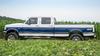
On my '97 F350 4X4, the front tread width (D60) was about 4" wider than the rear (Sterling 10.25). I used 2" spacers each side to bring the rear wheels out in line with front wheels. No more dog-track look. I don't know about the dually hubs you mention.
Fleet Owner


Joined: May 2009
Posts: 21,437
Likes: 76
From: Gilbert, PA
Hi all
I bought my trucks (a 250) with the lift and a Dana 60 swap already in it. I have always noticed that the front end was slightly wider then the rear by about 2 inches. My question is, is this a common issue and what is the solution. I already have 2 inch spacers all around and need to keep them on the front for rubbing issues under turning. I I have also heard of guys running dually hubs as large spacers but wanted some more information.
Thank you
I bought my trucks (a 250) with the lift and a Dana 60 swap already in it. I have always noticed that the front end was slightly wider then the rear by about 2 inches. My question is, is this a common issue and what is the solution. I already have 2 inch spacers all around and need to keep them on the front for rubbing issues under turning. I I have also heard of guys running dually hubs as large spacers but wanted some more information.
Thank you
Sounds like you have the wrong wheels in the front if you need to run a spacer.
Dually spacers are roughly 3" and that is A LOT of spacer on a 3/4 ton truck

Lead Driver


Joined: Jul 2017
Posts: 9,606
Likes: 1,175
From: San Jose, CA
But it's also very common for the front solid axle of a truck to be wider than the rear. It's how probably most trucks (at least non-dually trucks) were delivered from the factory.
Especailly true for the Dana 60 solid axles from '78 and '79.
My F350 is bone stock in that department, with the same wheels front and rear, and the front tires stick out of the fenders noticeably more than the rears. Even more than the same truck with a Dana 44 in the front.
It has to do with steering angles and such I believe (Ackerman angle maybe?) and is not really something to worry about.
But if you don't like it, you can certainly run spacers on the rear to take care of the visual aspect. Not sure if you'd even be able to feel the difference in drivability or not. If you've driven your truck daily for years, you could probably feel the difference.
Paul
Especailly true for the Dana 60 solid axles from '78 and '79.
My F350 is bone stock in that department, with the same wheels front and rear, and the front tires stick out of the fenders noticeably more than the rears. Even more than the same truck with a Dana 44 in the front.
It has to do with steering angles and such I believe (Ackerman angle maybe?) and is not really something to worry about.
But if you don't like it, you can certainly run spacers on the rear to take care of the visual aspect. Not sure if you'd even be able to feel the difference in drivability or not. If you've driven your truck daily for years, you could probably feel the difference.
Paul
Mountain Pass
Joined: Sep 2009
Posts: 238
Likes: 14
I assume Ford uses the same width Sterling 10.25 in all F250/350 models - be they 4X4, 4X2, SRW, or dually. Imagine the $ Ford saves by having the one-size-fits-all rear end. Correct me if I'm wrong. I do get the ironic humor of the "...rear tires out of the front tire's track", however.

Senior User
Joined: Apr 2018
Posts: 168
Likes: 0
From: Pasquotank, NC
The rear axle is suppose to be narrower than the front axle. My jeep is like that too. Not a Ford specific thing, it's common for handling reasons (please don't ask me specifics, I just know it's suppose to be that way). I suggest you leave it be. Most people won't notice it.
Trending Topics

i ain't rite
Joined: Mar 2005
Posts: 65,564
Likes: 5,600
From: Marlboro Mental Hospital.

I assume Ford uses the same width Sterling 10.25 in all F250/350 models - be they 4X4, 4X2, SRW, or dually. Imagine the $ Ford saves by having the one-size-fits-all rear end. Correct me if I'm wrong. I do get the ironic humor of the "...rear tires out of the front tire's track", however.
FTE Stories
Ford Trucks for Ford Truck Enthusiasts

3 Best / 3 Worst Parts of Modern Ford Ownership
Brett Foote
10 Amazing Upgrades That Solve Common Ford Truck Owner Headaches
Pouria Savadkouei
Every 2026 Ford Engine Explained
Brett Foote
10 Ugly Ford Trucks That We Still Kinda Love
Joe Kucinski
10 Things Every Truck Owner NEEDS (2026 Edition)
Michael S. Palmer
Rezvani's Latest Post-Apocalyptic Monster Is a Ford F-150 Raptor Underneath
Verdad Gallardo
Top 10 Most Expensive Ford Trucks Ever Sold on Bring a Trailer
Joe Kucinski
2027 Ford Super Duty Buyer's Guide (Every Model, Engine, & Package)
Brett Foote
Top 10 Ford Truck Tragedies
Joe Kucinski
Mountain Pass
Joined: Sep 2009
Posts: 238
Likes: 14
Thanks for your info...perhaps I was misinformed. The truth is elusive ofttimes.
Mountain Pass
Joined: Sep 2009
Posts: 238
Likes: 14
The rear axle is suppose to be narrower than the front axle. My jeep is like that too. Not a Ford specific thing, it's common for handling reasons (please don't ask me specifics, I just know it's suppose to be that way). I suggest you leave it be. Most people won't notice it.

Thread
Thread Starter
Forum
Replies
Last Post
good to doo
1973 - 1979 F-100 & Larger F-Series Trucks
6
Dec 7, 2014 11:30 AM