When you click on links to various merchants on this site and make a purchase, this can result in this site earning a commission. Affiliate programs and affiliations include, but are not limited to, the eBay Partner Network.
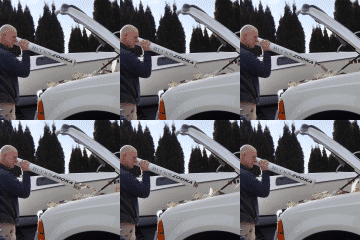
Here's the pics as promised. The base is 1/4" X 2" hitch tube welded into a wishbone, it slides into the front hitch which I drilled and tapped for a 3/8" bolt to take the slop out for stability. The sides are 1" X 3" 16 gauge tube, the steps are 1/2" X 1/2" 1/8" angle frames with expanded metal welded on top. The chest pad is made from two pieces of 1/8" X 1" X 2" angle that I rounded at both ends and drilled it out for the hinge pins that allow it to be adjustable and folding. I drilled two more sets of holes for removeable clevis pins to hold the chest pad at two different places when in use. The top is 3/4" plywood with a foam cover. All edges are rounded or capped and smoothed for safety. The wishbone folds up into the stair body, the chest pad folds down and it all hangs on the wall. It probably weighs 40-50 lbs, if I had to do it again I would consider aluminum. Or maybe lightening up the wishbone with 3/16",
oops almost forgot the two forward braces that keep the steps up are more 1" X 2" angle.
edit: just checked, the wishbone is 3/16"
If I could make a suggestion...
Drill a hitch pin hole in the end of that bottom piece of box steel (truck side) and fab a H shaped leg that extends under the truck.
Mine extends under the truck and I often lean way out past the platform and it is pretty solid
My injector breakout box has successfully kept any injectors from failing for over ten years now. All you need to do is make a tool, and the truck won't want to fail that part anymore.
My injector breakout box has successfully kept any injectors from failing for over ten years now. All you need to do is make a tool, and the truck won't want to fail that part anymore.
Measuring the MAP sensor output is almost impossible. That is because it is frequency based in HZ and not a DC voltage. Next time you purchase a digital volt ohm meter spend a few extra dollars and get one with a HZ option on the dial.
To measure the MAP output frequency find the MAP output wire to the PCM, usually the center connector on the plug. I don't like damaging wires any more than necessary so use a safety pin, borrowed from the wife, she probably won't want it back. Here is a picture of that pin stuck through the wire, some blood from my fingers were necessary to accomplish this task.
This was on my 97:
Next connect the positive lead on the meter to the safety pin and any ground to the negative lead. Set the meter to the HZ scale, turn the key ON but don't start. Here is a picture of the meter displaying the frequency at my altitude, guessing about 1700 feet above sea level.
If you are brave enough disconnect the MAP hose from intake and blow thru the hose, the HZ will go up a bit but not much. You can use a compressor as I did .. 0 to 20 PSI steps and the frequency went up proportional to the pressure indicating the MAP was functional. There are charts that show the conversion.
Will you use the every day, nope, but your buddies will really like the fact the MAP is working as designed.
That improvement is enticing, how are they mounted and how are they turned on and off?
That was one of my easier mods. I recall a hole in the hood support there, and I just shoved a 1/4" bolt through (going off memory) to a nylock. The tilt switch never did me any favors, so I installed a sealed switch under the hood - and I use the lights only when I need them. You can see the switch on the driver side firewall.
I did the math, and two of these LED assemblies use half the power of the one stock bulb - but the light quantity is remarkable... it lights up the area in front of the truck. Each disc puts out 500+ lumens, where the old bulb put out 265 lumens. To make matters worse, those 265 lumens were divided by 360 degrees of projection (half of the light aiming at the hood), where the disc aims all the light away from the hood.
In essence, installing two of these is like installing 8 of the old bulbs - but these discs divvy up less than an amp of juice.
I wish I could take credit for first finding these, but that honor goes to Woodnthings. I can tell you the get the clear lens, but the hue is still just a tad blue. The blue hue doesn't really bother me... it's better than black.
I have been using this for the last year and I am happy with light output and battery life. It is also corded so even with a dead battery it is usable. Works well under hood and for interior detailing.
This Hennessey Takes the Expedition Tremor's Off-Roading Capability to the Next Level
Slideshow: The VelociRaptor Expedition gains a lift, upgraded suspension, Brembo brakes, and trail-ready equipment while retaining the stock 440-horsepower EcoBoost V6.
Rezvani's Latest Post-Apocalyptic Monster Is a Ford F-150 Raptor Underneath
Slideshow: Called the Fortress, the 850-horsepower pickup combines Raptor underpinnings with military-inspired features, survival equipment, and a starting price of $285,000.




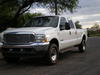


 My (not home made) version is quite old and has legs on wheels, like a cherry picker.