When you click on links to various merchants on this site and make a purchase, this can result in this site earning a commission. Affiliate programs and affiliations include, but are not limited to, the eBay Partner Network.
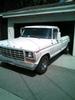
New to the forum here... found a lot of great info already but I'm struggling with an overheating issue issue on my new 1975 F-250 with the 460.
I know there is a freeze plug leaking that I'll be replacing soon but that shouldn't cause it to overheat unless a lot of coolant leaks out right? If the radiator is full I wouldn't think that would cause it to overheat.
What I've discovered recently is it seems to correlate to the RPMs of the engine. If I'm driving at 40 and keep it in 3rd gear (4 speed manual) instead of shifting to 4th like a normally would, the temp stays in a normal range.
Similarly, if I get stuck at a long light or a railroad crossing, it'll start overheating unless I rev the engine up a thousand or so RPMs and hold it.
So obviously it seems that if the fan is running faster it's doing okay.
Where is the needle at when you say "overheating"? It may not actually be overheating because I think these needles run higher than a new vehicle. Also, the temp sensor could be wonky, or the 41 year old gauge could be suspect. Lots of people run aftermarket gauges to replace the stock gauges.
I am betting you are not running a fan shroud. Some people dont use the shroud but in my experience, I had to have it or I would overheat at stop lights.
First thing I would do.
Disconnect the lower radiator hose and drain the coolant. Then run water into the radiator and see if it comes out fast or it seems like you have crap built up in there. Then I would remove the thermostat and run water into it and see what kind of crap comes out. Run water into both the radiator and engine until it is clear. After that, I would hook the hoses back up, without the thermostat, and run it until it is warmed up. Let it cool then remove the lower hose again and let it drain. I would keep doing this until it ran clear. Then I would remove the feeze plug and run a garden hose into the top of the radiator and see if more crap came out of the freeze plug, then drain it again, replace the freeze plug, buy a new thermostat, upper and lower hose and fill with proper coolant.
Good suggestions offered already. All I can add is:
1. When you have the radiator drained, get a flashlight and look at the capillaries down the fill hole on top of radiator to see if they are partially clogged or not. If clogged you need to have radiator "rodded out" or replaced.
2. From the pictures, it appears that you are running an after market "flex" fan. These have been known to cause problems as they age by not pulling enough air at low rpm.
3. Finally, if you are not going to be running a fan should then you should shim the fan out to 1/2 inch from face of radiator. As far back as yours is now, the fan is not pulling the amount of air through the radiator as it should.
And yes, they would all have had a shroud by default. At least the full bed pickups did when expected to be used as trucks. I can only assume that Ford would do the same thing for this truck even if it started life out as a cab & chassis only with the expectation of a flat bed or other accessory setup.
In the very old days, shrouds were not as common. But by '75 I'm pretty sure they were ubiquitous.
And yes, they do help.
A shroud is not a cure for every cooling problem, but they're there for a reason and really do help.
A good fan is a must too, so as someone pointed out, your aftermarket fan might not be pulling it's weight.
We've been doing a lot of testing over in the Early Bronco world and have found that, for those rigs at least, the factory style 18" fans with 8 blades or more, pull the most air. The later model Explorer fans with 11 blades (I think?) are wicked strong when it comes to pulling air even at low engine speeds.
There's an episode of "Engine Masters" over on YouTube that tests the power loss of different types of fans, but does not address the flow unfortunately.
But it's interesting that the factory fans took the most power in most cases too. More power loss can indicate less efficiency of course, but very likely also means it's pulling more air too.
One observation for yours is that you also have the smaller of the two radiators available. With "small" not being literal of course, as they're quite big. But the "big" radiator is a monster!
I always substituted the larger one when I could, but I don't imagine that Ford was prone to undersizing even the small one. So it should work just fine if all else is functioning as expected.
And that includes not just the fan, but the water pump (they get old too), the coolant (it gets old too), the engine block getting clogged, and more important than many might think, the engine tune itself is critical.
And by tune I mean carburetor jetting and ignition timing and PCV function.
Back then lean mixtures and retarded timing were the flavor of the day. A known commodity when it came to combustion and post combustion (exhaust) heat and funky temps in the engines.
So you've got a few things to fiddle with probably.
But since you can also sense the radiator is not burning hot, then your gauge may just be misleading you. Not in just it's accuracy, but where you expect the needle to be.
Ah yes. That would be a great reason to actually have the big radiator after all. I totally forgot you said it was a 460.
I'm guessing that all factory 460 installations had the larger radiator from the sound of what Number Dummy said.
And I wanted to add a couple more observations too:
1. Even though those batter cable lugs are expected to be temporary, they can actually work very well in a semi-permanent capacity. But your cable ends are getting corroded noticeably, so it's time to either super clean them or replace the cables with better ones. I use 2ga or larger on my trucks. It's not a "must-do" kind of thing, but I consider a little overkill in that department to be a good thing. Just installed some 1ga cables on my '79 in fact.
2. I do see a grounding strap over on the passenger side inner fender to the firewall. This looks to be the original one from the hood that's been repurposed. I still think you should add one from the engine to the firewall, but this one would at least act as a slightly better bond from the front clip to the cab. Unless there is nothing from the battery that is. In which case it's only next to useless.
I do see a (10ga?) wire at the negative lug of the battery, but can't see where it goes. If it goes to the fender near the starter relay, that's good. If it goes to the core support or grille, that's good for the lights, but not necessarily for anything else.
3. I don't see a voltage regulator. Is it there but just hidden? When the engine is running do you get roughly 14.5 volts at the battery?
4. Almost first in importance, definitely get a battery hold down. I know legions of owners run around on bungee cords all the time. But it's super bad juju and should never be allowed.
In a confined space it's one thing. In your open compartment where the battery could take an easy header into the fan, you're just asking for big trouble in little whereveryouare.
5. A suggestion that would cost a few more bucks, but with this unknown condition engine that's already sporting a leaky core plug, you might consider de-rusting the engine block with a product by Evap-o-Rust company specifically for engine blocks.
You drain and flush any anti-freeze that might still be in the system (hopefully it's there!) and run this stuff with water for however long you feel like. Typically a day or two is going to let it do it's job, but a week would be even better.
The best thing about it is that when you drain it out in a pan, you can throw it on your lawn as an iron-oxide fertilizer! No kidding. Do it myself with the normal stuff. Haven't personally used the engine block stuff yet, but have had such great results with the regular stuff I'm a big fan.
And personally I'd run water only for awhile. Maybe with an additive to help keep the pump alive and rust dead if you're going to run water for more than a week or two, but it's perfectly fine while you're diagnosing and changing things around. And keeps you from having to drain, re-drain, and drain again, more expensive and harder to dispose of correctly anti-freeze.
Very curious about the voltage regulator though. Let us know where it's hiding.
Two different mounting schemes too.
When I first got my '79 the owner had said that he'd had a radiator issue and could not get the Super Cooling model at the moment, so replaced the original with the smaller standard one.
One of the first things I did was to track down a big one. Which, of course, did not fit because it had the mounts like the OP has, with the big flanges on each side as part of the support.
Took three tries, with the first two places insisting that they were all the same. The third place thought so too, but was willing to dig deeper until he found the right one.
Mine has the flange mounts as part of the radiator's side frames and just bolts to holes on the support. Probably the same holes that the other style's separate flanges bolt to?
I thought I'd seen trucks where those flanges were welded, but it seems like they would have bolted them on if they were going to run two different styles.
You guys rock! I feel like I've learned more about my truck in the last day than the last several weeks randomly browsing different sites.
I had no idea the 460 wasn't an option on the 4WD F250s. Definitely good to know.
In terms of the overheating, I'll be adding a new fan and shroud to my list of things I'll be doing in addition to the flush and freeze plug replacement.
I measured the radiator this morning and it's definitely the Standard at 19 3/4" high.
1TonBasecamp:
Thanks for the additional suggestions. I'll definitely be securing the battery better. The first projects I worked on were related to the wiring as the headlights were flashing on and off and the instrument panel lights weren't working. Ended up replacing the headlight switch and dimmer switch and then taking out the aftermarket stereo someone improperly wired into the dash lights causing the fuse to continually blow.
In terms of the voltage, just fired it up and checked at the battery and it was 15.1 V. Not quite sure what the regulator looks like on these (or where it typically is) so I'm not sure what I'm looking for.
Thanks again to all for the suggestions. I'll be working on it some this weekend but also have a kitchen remodel in progress so it might be a couple weeks before I can make all the suggested changes here.
Kitchen-smitchen. You know which job is more fun!
But housework can actually be more rewarding. Gives you a good feeling for later, when you're out in the garage digging through years of PO (previous owner) mods.
That 15.1 is rockin'. Perhaps considered a tad high, but certainly not in the danger zone.
If you ever test and it goes over 15.5 though, it's time to consider a new regulator to keep the battery from overcharging. If your truck has only the warning lamp on the dash, you only know when it has stopped charging. If an ammeter, you're lucky if it works (the old Early Bronco inductive ammeters were actually pretty good, but the full-size "shunted" ammeters sucked from what I can tell), but if a volt-meter has been retrofitted (or a good ammeter) you can monitor things like that without needing to touch probes to the battery manually.
A great diagnostic tool these days is a plug-in digital volt-meter you just stick into the cigarette lighter socket. Voila! Volts!
And if you're like me, you just leave it in to check out now and then.
The alternator's voltage regulator can look like this: WILD HORSES 4X4 Off-Road Bronco Parts and Accessories (note #6017) if it's been replaced with a more modern integrated circuit type. Or, it it's the original points-style, it will have the same basic shape and footprint as the one pictured, but be taller and usually painted blue or black.
In later year trucks ('78 and '79 at least) it was mounted to the vertical face of the fender skirt about 10" back from the battery.
On earlier model trucks, and those with the various engine options, it might have moved around a bit. I've seen them next to the radiator, and on different parts of the wheel well/inner fender, but it will almost always be within a foot or less of the battery. Just for convenience and wiring. Between the alternator and battery is where it's duties lie anyway.
So look around a bit. Could be next to the radiator, could be hidden somewhere else. You never know about trucks when they get this old. Too many owners think they are wiring experts. And often prove the opposite to be true.
Rezvani's Latest Post-Apocalytic Monster Is a Ford F-150 Raptor Underneath
Slideshow: Called the Fortress, the 850-horsepower pickup combines Raptor underpinnings with military-inspired features, survival equipment, and a starting price of $285,000.