




82 5.8w Points Conversion

Thread Starter
|
New User
Joined: Apr 2017
Posts: 12
Likes: 0
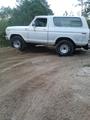
82 5.8w Points Conversion
Hey guys so im looking for a conversion kit for my 82 to change to Electronic Igniton.Ive heard points are less reliable and dont provide as hot as spark.My problem is i cant find a kit besides the Pertronix and ive heard terrible things about them.Can anyone point me in the right direction?
Thread Starter
|
New User
Joined: Apr 2017
Posts: 12
Likes: 0
the previous owner had points put on it because of the bomb....doesnt make sense since he had the motor built but I just shake my head.How would I go back and change it to electronic?Thanks for the reply.

Fleet Mechanic
Joined: Sep 2003
Posts: 1,716
Likes: 15

You will need a DuraSpark II distributor with the proper gear on the end for your year and camshaft gear, a ICM (Ignition Control Module, goes on the fender) for your engine setup, wiring between. I guess it's possible that the wiring may still be hanging there, look up your year and engine on Rock Auto, look at distributors and ICM's. And see the plugs on them, maybe the wiring with those plugs are still there. If not, you will need a diagram, and buy the pigtail plugs to make up your own harness for them.
Thread Starter
|
New User
Joined: Apr 2017
Posts: 12
Likes: 0
I've heard of that, of people looking for 1993 and earlier Dodge diesel pickups, because there was no electronics running those.
You will need a DuraSpark II distributor with the proper gear on the end for your year and camshaft gear, a ICM (Ignition Control Module, goes on the fender) for your engine setup, wiring between. I guess it's possible that the wiring may still be hanging there, look up your year and engine on Rock Auto, look at distributors and ICM's. And see the plugs on them, maybe the wiring with those plugs are still there. If not, you will need a diagram, and buy the pigtail plugs to make up your own harness for them.
You will need a DuraSpark II distributor with the proper gear on the end for your year and camshaft gear, a ICM (Ignition Control Module, goes on the fender) for your engine setup, wiring between. I guess it's possible that the wiring may still be hanging there, look up your year and engine on Rock Auto, look at distributors and ICM's. And see the plugs on them, maybe the wiring with those plugs are still there. If not, you will need a diagram, and buy the pigtail plugs to make up your own harness for them.
Fleet Mechanic
Joined: Sep 2003
Posts: 1,716
Likes: 15
If your Bronco was my daily driver
 , I would convert it back to stock. If it was just a play truck, then maybe a decent Pertronix kit would be simplest. Or keep a spare set of points and needed tools with you at all times!
Pertronix History:
Pertronix - The original Pertronix kit had a major flaw... if you left the ignition in "Run", but the engine not running, their design could not handle the continuous current through the ignition coil if the points happened to be closed, and would burn up!!! What a crappy design, nobody thought of that!
Then they came out with the "Pertronix II", which handled that condition without burning up. There are a lot of classic car folks that have converted original points to Pertronix. I kept mine points, but then I grew up with carbs and points and etc.
Ford Points - Ford used the "bend it and try again (and again...)" method of setting point gap. An iterative process that was a pain, using a feeler gauge, having the engine set so the points rubbing block was at the tip of the distributor's cam, and then bending the side of the points to get the required gap. Then run it and check with a Dwell Meter, find it off, go back and feel and bend again, etc.
GM Points - On the other hand, all my GM cars with points were a breeze to set, because their points had a spring-loaded adjustment allen-head screw in the side of them. And the distributor had a little square slide up/down metal shutter in the side of the distributor cap. So after installing the new points, I would just attach my Dwell Meter, and crank the starter. If it started, lift the shutter, insert allen wrench, and turn it until I got the proper dwell right on. If it wouldn't start, adjust points more open or closed to get it to run, then fine-tune. SIMPLE! I think GM held a patent on the concept, so nobody else had it.
That ends today's obsolete-tech history lesson!

Post Fiend
Joined: Apr 2002
Posts: 19,311
Likes: 97
From: Waterloo, Iowa
Contact points are not adjusted by bending anything, not sure where you are getting your information. The gap was set with a feeler gauge or a matchbook cover and tightened down with a screw that secures the points to the breaker plate. This gets the gap close enough so the engine will start and run, but setting the gap using a dwell meter will offer better results and is the actual way to do it. The GM method sure is a lot easier though.
Points and coils can be ruined in the same way as early Pertronix units and for the same reason, if the points happen to be closed when the key is left ON.
Points and coils can be ruined in the same way as early Pertronix units and for the same reason, if the points happen to be closed when the key is left ON.
Trending Topics
Thread Starter
|
New User
Joined: Apr 2017
Posts: 12
Likes: 0
Oh, you misunderstood me. My reference to the 1993 & earlier Dodge diesel was just in regards to some people preparing for "surviving" a nuclear war, like your truck's previous owner seemed to be.
If your Bronco was my daily driver , I would convert it back to stock. If it was just a play truck, then maybe a decent Pertronix kit would be simplest. Or keep a spare set of points and needed tools with you at all times!
Pertronix History:
Pertronix - The original Pertronix kit had a major flaw... if you left the ignition in "Run", but the engine not running, their design could not handle the continuous current through the ignition coil if the points happened to be closed, and would burn up!!! What a crappy design, nobody thought of that!
Then they came out with the "Pertronix II", which handled that condition without burning up. There are a lot of classic car folks that have converted original points to Pertronix. I kept mine points, but then I grew up with carbs and points and etc.
Ford Points - Ford used the "bend it and try again (and again...)" method of setting point gap. An iterative process that was a pain, using a feeler gauge, having the engine set so the points rubbing block was at the tip of the distributor's cam, and then bending the side of the points to get the required gap. Then run it and check with a Dwell Meter, find it off, go back and feel and bend again, etc.
GM Points - On the other hand, all my GM cars with points were a breeze to set, because their points had a spring-loaded adjustment allen-head screw in the side of them. And the distributor had a little square slide up/down metal shutter in the side of the distributor cap. So after installing the new points, I would just attach my Dwell Meter, and crank the starter. If it started, lift the shutter, insert allen wrench, and turn it until I got the proper dwell right on. If it wouldn't start, adjust points more open or closed to get it to run, then fine-tune. SIMPLE! I think GM held a patent on the concept, so nobody else had it.
That ends today's obsolete-tech history lesson!
If your Bronco was my daily driver
, I would convert it back to stock. If it was just a play truck, then maybe a decent Pertronix kit would be simplest. Or keep a spare set of points and needed tools with you at all times!Pertronix History:
Pertronix - The original Pertronix kit had a major flaw... if you left the ignition in "Run", but the engine not running, their design could not handle the continuous current through the ignition coil if the points happened to be closed, and would burn up!!! What a crappy design, nobody thought of that!
Then they came out with the "Pertronix II", which handled that condition without burning up. There are a lot of classic car folks that have converted original points to Pertronix. I kept mine points, but then I grew up with carbs and points and etc.
Ford Points - Ford used the "bend it and try again (and again...)" method of setting point gap. An iterative process that was a pain, using a feeler gauge, having the engine set so the points rubbing block was at the tip of the distributor's cam, and then bending the side of the points to get the required gap. Then run it and check with a Dwell Meter, find it off, go back and feel and bend again, etc.
GM Points - On the other hand, all my GM cars with points were a breeze to set, because their points had a spring-loaded adjustment allen-head screw in the side of them. And the distributor had a little square slide up/down metal shutter in the side of the distributor cap. So after installing the new points, I would just attach my Dwell Meter, and crank the starter. If it started, lift the shutter, insert allen wrench, and turn it until I got the proper dwell right on. If it wouldn't start, adjust points more open or closed to get it to run, then fine-tune. SIMPLE! I think GM held a patent on the concept, so nobody else had it.
That ends today's obsolete-tech history lesson!
FTE Stories
Ford Trucks for Ford Truck Enthusiasts

Rezvani's Latest Post-Apocalytic Monster Is a Ford F-150 Raptor Underneath
Verdad Gallardo
Top 10 Most Expensive Ford Trucks Ever Sold on Bring a Trailer
Joe Kucinski
2027 Ford Super Duty Buyer's Guide (Every Model, Engine, & Package)
Brett Foote
Top 10 Ford Truck Tragedies
Joe Kucinski
AEV FXL Super Duty - the Super Duty Raptor Ford Doesn't Make
Brett Foote
Lobo Vs Lobo: Proof the F-150 Lobo Should Be Even Lower!
Michael S. Palmer
Ford's 2001 Explorer Sportsman Concept Looks For a New Home
Verdad Gallardo
10 Best Ford Truck Engines We Miss the Most!
Joe Kucinski
2026 Shelby F-150 Off-Road: Better Than a Raptor R?
Brett Foote
Thread
Thread Starter
Forum
Replies
Last Post
agaristo77
1961 - 1966 F-100 & Larger F-Series Trucks
8
Aug 20, 2011 06:43 AM
cwooten63
Small Block V8 (221, 260, 289, 5.0/302, 5.8/351W)
6
Feb 8, 2006 08:26 PM
niteowl
Performance & General Engine Building
3
Nov 20, 2000 07:31 PM