When you click on links to various merchants on this site and make a purchase, this can result in this site earning a commission. Affiliate programs and affiliations include, but are not limited to, the eBay Partner Network.
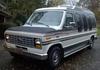
84 ford e150 clubwagon
Replacing some old brake lines and I think this block is a proportioner. Anyway this sensor just randomly came off. What is it and does it need replaced or just pushed back onto the nub it was on or?
Also, can I replaced the ribbed line with regular?
The diagram in that link labels the black piece as a bleeder rod. Is there something I do (like crack it open like the individual breeders?) to help get air out?
I'm sure all the fluid leaked out of the lines leading to it and the master cylinder while the output lines were off today.
The valve for a 1985 E150 looks like this one (yours is probably the same), I am not positive because my Ford Service Manual does not specify a difference in E150 Club Wagon valve. My manual shows the valve fits F150-250 4x4 or 3x4, Bronco, E150,
It shows a different valve for the E250-350. That valve does have the bleeder rod on the end of it.
The part number on the valve lacks the last letter " E4TZ-2B257-?"
NumberDummy would know the correct part number for your van. Finding one would be a problem. There are companies that make aftermarket valves that will match up if you need to replace the valve.
As to bleeding the valve, I have never had to bleed one. The term "bleed" may be a little misleading in a sense.
This is my understanding.
Lets say a rear brake line rusts into and you loose the rear brakes. The differential valve pin/rod in the middle of the valve will slide to one side and close off the rear brake line fluid flow. When the differential valve pin slides over it also raised the pin in the brake warning light switch and your dash light comes on. The same thing happens if it is a front brake line except the differential valve pin/rod moves to the opposite side and closes off the fluid to the front lines.
So lets say you are bleeding the front brakes. The pressure drops and the valve thinks you have a leak. The differential valve pin/rod slides over to close off the fluid flow to the front brake lines and stays there. Now you can no longer bleed the front brakes until you reset the differential valve pin/rod. Same if it is the rear brakes you are bleeding. Again I have never had this to happen to me while bleeding brakes.
If this does happen while you are bleeding the brakes here is the instructions to center the differential valve pin/rod on a 1985 e150.
Fill the master cylinder.
Turn the ignition switch to ACC.
Press the brake peddle and the pin/rod will center itself.
Perhaps on the valve for the E250-350 that has the bleeder rod, you have to manually reset it?
So you are not actually bleeding air out of the valve itself. I have seen pictures of valves that do have a actual bleeder fitting on them but ours does not.
These two videos might help understand the valve. It is a aftermarket valve but does the same thing as our valves do. The second video is about Chrysler and gives you an overview of history and how the valves work.
Thanks everyone! First time going this far into the brakes. Normally I would just splice a piece into the end of a rusted line but I wanted to go ahead and do everything I could because it was needing rear brakes done anyway. So I'm a little nervous that everything will work when done.
You will do fine and there are lots of people to help if you have problems!
Depending on how far you dig into replacing parts, you might want to think about the Pressure Differential Valve while there is one available. I have never had to replace one on any old car I owned and though rarely, they do go bad. I think the cast or non brass ones can rust inside just like a wheel cylinder. There are some companies who offer rebuild kits but it would need to be for your valve.
There are also companies that build new replacements. With some of the replacements you have to rework the lines.
Then again just because it looks bad on the outside doesn't affect the inside, it could be spotless.
There are also ways to test it with a pressure gauge at each port but I do not know the specs.
Are your lines rusting on the inside or from the inside out?
How clean is the inside of the master cylinder and wheel cylinders?
HEre is a video of a guy dissembling one on his Dodge Dakota, very similar to ours. IT will give you an idea whats inside. If I was doing it I would make sure I could replace it first! If you cant find a rebuild kit, perhaps a hydraulic shop might be able to match up some of the O-rings
This Hennessey Takes the Expedition Tremor's Off-Roading Capability to the Next Level
Slideshow: The VelociRaptor Expedition gains a lift, upgraded suspension, Brembo brakes, and trail-ready equipment while retaining the stock 440-horsepower EcoBoost V6.
Rezvani's Latest Post-Apocalyptic Monster Is a Ford F-150 Raptor Underneath
Slideshow: Called the Fortress, the 850-horsepower pickup combines Raptor underpinnings with military-inspired features, survival equipment, and a starting price of $285,000.