



Questions about EGTs

Thread Starter
|
Hotshot
Joined: Jan 2010
Posts: 10,060
Likes: 491
From: Bristol, TN.
Questions about EGTs
I have been doing a lot of reading about senors, sensor function, and how to test them. I understand we add a gauge to monitor EGTs, because the PCM does not monitor them directly.
Here are the questions. It seems there are sensors for an incredible number of functions for engine function or protection.
1. If EGTs are so important, why no sensor for them?
2. Are they monitored indirectly in some other way?
3. If EGTs exceed 1300 degrees, will the vanes in the turbo really self-destruction under otherwise normal operating conditions or will the engine derate?
Here are the questions. It seems there are sensors for an incredible number of functions for engine function or protection.
1. If EGTs are so important, why no sensor for them?
2. Are they monitored indirectly in some other way?
3. If EGTs exceed 1300 degrees, will the vanes in the turbo really self-destruction under otherwise normal operating conditions or will the engine derate?

Hotshot


Joined: Mar 2014
Posts: 10,750
Likes: 1,065
From: Douglassville, PA
I do not believe that EGTs are an issue with a stock set up, thus no need for Ford or IH to include them. Since the PCM has no knowledge of high EGTs there could be no derating and probable component destruction.

FTE Leadership Emeritus


Joined: May 2014
Posts: 27,350
Likes: 5,945
From: Lake Hartwell, GA

As Mark said, EGT's are not an issue on a stock truck, even if it has exhaust and CAC leaks. They will not be at a desirable level, but will not self destruct the engine. EGT's are in fact monitored in newer diesel trucks, but not ours.
They are not monitored at all in the 7.3's that we drive and love. Other than the added gauge of course.
I don't believe the turbo itself is the problem when EGT's approach the 1250-1300 degree range, I believe it is the piston head itself. If I recall correctly (mind you I am hours into the beer now) the melting point of the piston heads is roughly around 1500 degrees and by the time the sensor in the manifold reaches 1300 degrees the internal engine temperatures are approaching very dangerous levels. This is another reason why post turbo/down pipe sensors are not advised.
I suppose that some damage could be done to the turbo from high levels of EGT's, but the real reason for monitoring is the engine internals.
Again, I think I am 90% right, but someone with a lot more experience and knowledge will be along shortly.
They are not monitored at all in the 7.3's that we drive and love. Other than the added gauge of course.
I don't believe the turbo itself is the problem when EGT's approach the 1250-1300 degree range, I believe it is the piston head itself. If I recall correctly (mind you I am hours into the beer now) the melting point of the piston heads is roughly around 1500 degrees and by the time the sensor in the manifold reaches 1300 degrees the internal engine temperatures are approaching very dangerous levels. This is another reason why post turbo/down pipe sensors are not advised.
I suppose that some damage could be done to the turbo from high levels of EGT's, but the real reason for monitoring is the engine internals.
Again, I think I am 90% right, but someone with a lot more experience and knowledge will be along shortly.

More Turbo
Joined: May 2016
Posts: 717
Likes: 9
Many of the newer Trucks have them. Most over the road trucks have them. Why none on ours? Generally, stock programming de-fuels to prevent high-get's. When you get into tuners and overloading your rating EGT's become a concern.
Thermocouples (Probes) are added to the exhaust so the operator can monitor.
The primary damage is to the Piston and Cylinders. Excessive heat will burn through a piston top in no time flat. Moderate over time will destroy ring sealing and valve seals. Turbo Bearings are the part which is affected by heat. Throwing something off-balance at that RPM destroys the innards.
1,300*F - 1,500*F is easily handled so long as its not for an extended period of time under load if monitored, the driver merely removes his foot from the accelerator to de-fuel the cylinders. Otherwise, the latter of the two above occur.
$1,700*F - 2,000*F + will toast the piston. Even for a brief period done just once or twice under load. You see this a lot where NO is used.
When you see a 7.3L passing you hauling a 8,500+ load on a hill, he's eventually headed to the repair shop and then the Bank. Many try to keep up with the 6.0L - totally differ animal.
Thermocouples (Probes) are added to the exhaust so the operator can monitor.
1,300*F - 1,500*F is easily handled so long as its not for an extended period of time under load if monitored, the driver merely removes his foot from the accelerator to de-fuel the cylinders. Otherwise, the latter of the two above occur.
$1,700*F - 2,000*F + will toast the piston. Even for a brief period done just once or twice under load. You see this a lot where NO is used.
When you see a 7.3L passing you hauling a 8,500+ load on a hill, he's eventually headed to the repair shop and then the Bank. Many try to keep up with the 6.0L - totally differ animal.
FTE Leadership Emeritus
Joined: May 2014
Posts: 27,350
Likes: 5,945
From: Lake Hartwell, GA
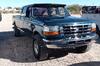
For example, when towing my 12K lbs 5th wheel through the mountains of TN I can maintain 65 MPH when boosting 25-27 PSI in 4th gear and EGT's around 1100 degrees. Of course, if I put the tune into something different than the heavy town the EGT's will climb with the trailer in tow and I will be in trouble.
Things like intake, intercooler, water injector, properly sized turbo and no leaks will help produce clean power and keep EGT's under control.
Hotshot
Joined: Dec 2012
Posts: 11,270
Likes: 1,654
From: Las Cruces New Mexico
I'm with sous on this one. Remember the higher the RPM the lower the egs in some cases, I had to go 70-75 up hill on my 3.55 geared auto OBS to keep in the happy median of the EGT's any slower the egts started to climb slowly to 1250° buy stayed there if I took OD of I would had to go slower which is bad news since the speed limit is 75 where I go camping.

Lead Driver
Joined: Sep 2010
Posts: 7,793
Likes: 50
My truck definitely has an issue then. Can't hold sustained mph in tow, with egt's in check. She'll hit 1200* no problem, and I'm stock.
. Would low compression, bad injectors..etc, result in low boost and higher then normal egt's? (total combined probably around 12k)
. Would low compression, bad injectors..etc, result in low boost and higher then normal egt's? (total combined probably around 12k)
Trending Topics
Thread Starter
|
Hotshot
Joined: Jan 2010
Posts: 10,060
Likes: 491
From: Bristol, TN.
My truck definitely has an issue then. Can't hold sustained mph in tow, with egt's in check. She'll hit 1200* no problem, and I'm stock.
. Would low compression, bad injectors..etc, result in low boost and higher then normal egt's? (total combined probably around 12k)
. Would low compression, bad injectors..etc, result in low boost and higher then normal egt's? (total combined probably around 12k)
The part about the internals holing at elevated EGTs makes sense. The information, even on FTE, is all over the universe about what are safe EGTs, what happens when you exceed them, and how long you can run with them elevated, so I appreciate the input.

Steve
FTE Stories
Ford Trucks for Ford Truck Enthusiasts

Top 10 Most Expensive Ford Trucks Ever Sold on Bring a Trailer
Joe Kucinski
2027 Ford Super Duty Buyer's Guide (Every Model, Engine, & Package)
Brett Foote
Top 10 Ford Truck Tragedies
Joe Kucinski
AEV FXL Super Duty - the Super Duty Raptor Ford Doesn't Make
Brett Foote
Lobo Vs Lobo: Proof the F-150 Lobo Should Be Even Lower!
Michael S. Palmer
Ford's 2001 Explorer Sportsman Concept Looks For a New Home
Verdad Gallardo
10 Best Ford Truck Engines We Miss the Most!
Joe Kucinski
2026 Shelby F-150 Off-Road: Better Than a Raptor R?
Brett Foote
2027 Super Duty Carhartt Package First Look: 12 Things You NEED to Know!
Michael S. Palmer
FTE Leadership Emeritus
Joined: May 2014
Posts: 27,350
Likes: 5,945
From: Lake Hartwell, GA
Here is my way of thinking about how my truck runs and how EGT's are reflected. I have the ZF6 manual, so keeping the RPM's where I want them is up to me, not the PCM/truck which makes it easier to control the EGT's.
So, when I am towing my 12K lbs 5th wheel on a flat surface the truck is running about 700-900 degrees, 1800 RPM and 5-10 PSI boost. It takes less than a second for the EGT temperature to change from one to the other though and does not really need to be monitored.
Climbing a hill if the truck is in 5th gear and I think it will be fine I will let the cruise control stay on and keep an eye on the RPM's and completely disregard the MPH. The MPH will maintain if the RPM's maintain and the EGT's will maintain if the RPM's stay high. If I think the hill will be a bit much for 5th gear, I drop it into 4th just before starting up the hill and get the boost up to 25-27 and the RPM's up to 2400 or so and the EGT's stay around 1000-1100. I do keep an eye on the EGT's, but since they are at eye level in the gauge pod it is not a big deal for me to glance over. I have learned where the EGT's should be/are when the truck is in different situations, so when I look over at the gauge I am just double checking.
RPM's, heavy tow tune and no leaks in the exhaust or intake system are the keys to having a happy truck when towing heavy. Getting to that desired boost level, MPH or RPM is where larger injectors and turbos come into play. Although, having those things can make EGT's lower as well if tuned right and the truck is near 100%
One word of advice I can offer in regards to EGT's that I have learned is this. Do not worry about the needle until it gets to 1250. Do not worry if it goes from 500 to 1000 in a split second. Do not worry if you are maintaining 1000 degrees. The truck will run all day long and safely at 1100 degrees. It will run safely at 1200 degrees for a short period while running up a grade, say 10 minutes or so. I have come to the conclusion that over 1200 is no mans land and I need to change something in the way of RPM, MPH or boost in order to get the EGT's under control.
Now, if it starts to climb past 1200 you should evaluate what is happening and stop that from happening in the future. Is the truck in the wrong tune, is the tune too hot, are the RPM's too low, is the exhaust system tight, is the intake system tight, does your truck run hot on a normal basis?
Every situation is different because none of us have the exact same truck as another. Even if we did, we are not pulling the exact same trailer up the same grade, so taking EGT's from another member and comparing it to yours is a good idea, but not the law. If your truck runs at 900 degrees on a flat towing heavy and mine runs at 800, it doesn't matter because both temperatures are safe.
I hope this clears things up a bit and does not make it like mud. If I have just added to the confusion, please let me know and I will try to put it another way.
So, when I am towing my 12K lbs 5th wheel on a flat surface the truck is running about 700-900 degrees, 1800 RPM and 5-10 PSI boost. It takes less than a second for the EGT temperature to change from one to the other though and does not really need to be monitored.
Climbing a hill if the truck is in 5th gear and I think it will be fine I will let the cruise control stay on and keep an eye on the RPM's and completely disregard the MPH. The MPH will maintain if the RPM's maintain and the EGT's will maintain if the RPM's stay high. If I think the hill will be a bit much for 5th gear, I drop it into 4th just before starting up the hill and get the boost up to 25-27 and the RPM's up to 2400 or so and the EGT's stay around 1000-1100. I do keep an eye on the EGT's, but since they are at eye level in the gauge pod it is not a big deal for me to glance over. I have learned where the EGT's should be/are when the truck is in different situations, so when I look over at the gauge I am just double checking.
RPM's, heavy tow tune and no leaks in the exhaust or intake system are the keys to having a happy truck when towing heavy. Getting to that desired boost level, MPH or RPM is where larger injectors and turbos come into play. Although, having those things can make EGT's lower as well if tuned right and the truck is near 100%
One word of advice I can offer in regards to EGT's that I have learned is this. Do not worry about the needle until it gets to 1250. Do not worry if it goes from 500 to 1000 in a split second. Do not worry if you are maintaining 1000 degrees. The truck will run all day long and safely at 1100 degrees. It will run safely at 1200 degrees for a short period while running up a grade, say 10 minutes or so. I have come to the conclusion that over 1200 is no mans land and I need to change something in the way of RPM, MPH or boost in order to get the EGT's under control.
Now, if it starts to climb past 1200 you should evaluate what is happening and stop that from happening in the future. Is the truck in the wrong tune, is the tune too hot, are the RPM's too low, is the exhaust system tight, is the intake system tight, does your truck run hot on a normal basis?
Every situation is different because none of us have the exact same truck as another. Even if we did, we are not pulling the exact same trailer up the same grade, so taking EGT's from another member and comparing it to yours is a good idea, but not the law. If your truck runs at 900 degrees on a flat towing heavy and mine runs at 800, it doesn't matter because both temperatures are safe.
I hope this clears things up a bit and does not make it like mud. If I have just added to the confusion, please let me know and I will try to put it another way.
Thread Starter
|
Hotshot
Joined: Jan 2010
Posts: 10,060
Likes: 491
From: Bristol, TN.
Thanks, I have been perhaps a bit too vigilant in watching my EGTs. I am also thinking doing some things with the turbo and exhaust system may help keep them lower in the future.
I do have some concerns regarding increased noise level, if I move ahead with modifications however.
I do have some concerns regarding increased noise level, if I move ahead with modifications however.
FTE Leadership Emeritus
Joined: May 2014
Posts: 27,350
Likes: 5,945
From: Lake Hartwell, GA
Noises were a concern of mine as well, and I will tell you that with the RiffRaff 4/4 wheel, high flow turbo outlet, EBPV delete, MBRP 4" exhaust and AIS intake the noise level is not anything more than stock other than when the turbo gets into the 22+ PSI range. Even then, it is not very loud at all and my wife and I can have a conversation at normal voice levels even pushing 25 PSI with the windows up.
Smooth and quick flowing exhaust keeps EGT's down. Smooth and quick flowing intake keeps the EGT's down. RPM's 2000-2800 when climbing keeps the EGT's down. You have to find where too much modifying is too much for your and your needs.
Watching EGT's closely at first to learn the truck is a good thing to do. If your truck is stock and you have the gauge for gee-wiz sake, then it is merely another dial to look at when you feel like it. If you have some modifications and a tuner, then you should learn your truck and how it behaves climbing grades, descending grades and cruising along the flats.
I hope this helps Steve, if not shoot me a PM and we can exchange phone numbers and have a chat about your specific questions and concerns.
I don't know everything, but I feel I have learned enough over the past couple of years and have a good grasp on how my truck is designed to work and how it is happiest. The 7.3 is a beast, and with the right compliment of equipment to feed it and help it come alive, it can do a lot more than what people think.
EDIT: I think you are in the TN area, if you are headed down to FL maybe you would want to swing by the N. GA area (Lake Hartwell) and I can take you for a spin in my truck with some of the parts you are thinking of installing.
Smooth and quick flowing exhaust keeps EGT's down. Smooth and quick flowing intake keeps the EGT's down. RPM's 2000-2800 when climbing keeps the EGT's down. You have to find where too much modifying is too much for your and your needs.
Watching EGT's closely at first to learn the truck is a good thing to do. If your truck is stock and you have the gauge for gee-wiz sake, then it is merely another dial to look at when you feel like it. If you have some modifications and a tuner, then you should learn your truck and how it behaves climbing grades, descending grades and cruising along the flats.
I hope this helps Steve, if not shoot me a PM and we can exchange phone numbers and have a chat about your specific questions and concerns.
I don't know everything, but I feel I have learned enough over the past couple of years and have a good grasp on how my truck is designed to work and how it is happiest. The 7.3 is a beast, and with the right compliment of equipment to feed it and help it come alive, it can do a lot more than what people think.
EDIT: I think you are in the TN area, if you are headed down to FL maybe you would want to swing by the N. GA area (Lake Hartwell) and I can take you for a spin in my truck with some of the parts you are thinking of installing.

Hotshot


Joined: Jan 2011
Posts: 18,849
Likes: 179
From: Puget Sound
I have been told by those in the know, plus I looked it up, plus my ISSPRO EV2s are marked - 1250 degrees F is the line of death. That is not on the turbo, ups, downs, or butts - that is on the exhaust manifold. The "official" word I got was 1250 degrees is OK for 2 minutes - then heat soak starts to take hold. The higher the EGT, the quicker the heat soak gets you - but I never found a graph on this. I will say this: My EGT alarms (dual EGTs) are set to trigger at 1200 degrees - to compensate for any inaccuracies in the probes or the gauges. I wouldn't want a 50-degree error to involve the mother of all Buck$Zooka blasts.

More Turbo
Joined: Oct 2013
Posts: 584
Likes: 1
I can easily hit 1250 with a stock truck. I have found that plugging the the red tube to the waste gate helps a LOT with reducing EGTs. You end up throwing an over boost code, and it's hard to manage the boost level to prevent that.
I'm not saying that all stock truck will go over 1250 with a large load, but I am positive that you can fairly easily blow past 1250 in some trucks and you don't need to be in the western mountains to do it.
I'm not saying that all stock truck will go over 1250 with a large load, but I am positive that you can fairly easily blow past 1250 in some trucks and you don't need to be in the western mountains to do it.
Thread Starter
|
Hotshot
Joined: Jan 2010
Posts: 10,060
Likes: 491
From: Bristol, TN.
I can easily hit 1250 with a stock truck. I have found that plugging the the red tube to the waste gate helps a LOT with reducing EGTs. You end up throwing an over boost code, and it's hard to manage the boost level to prevent that.
I'm not saying that all stock truck will go over 1250 with a large load, but I am positive that you can fairly easily blow past 1250 in some trucks and you don't need to be in the western mountains to do it.
I'm not saying that all stock truck will go over 1250 with a large load, but I am positive that you can fairly easily blow past 1250 in some trucks and you don't need to be in the western mountains to do it.
Steve
Hotshot

Joined: Dec 2006
Posts: 14,069
Likes: 17
From: Melbourne, Ky
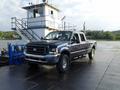
As far as noise goes, my 02 has a 38R with the AIS system, and the turbo whistle is horrible at the 2.5 lbs of boost to the 4.5lbs of boost. Which is where it runs most of the time driving! I really wish I could get rid of that without going back to a stock turbo. It really builds boost quick, and I love how it responds. Guess that's just one of the pay[offs I have to endure.