


Where does the fuel go?

Thread Starter
|
Post Fiend
Joined: Apr 2002
Posts: 19,311
Likes: 97
From: Waterloo, Iowa
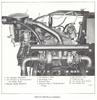
Not so much in the fuel bowl - it evaporates, this is the result after sitting in the garage for a few weeks without starting. There's none in the accelerator pump either, since there's no squirts of fuel or "pump shot" when working the throttle.
But also what happens, say for example when starting the truck every day or other day, it always starts right up instantly. But if more than a few days pass, say about a week, then there is always a long period of starter required, maybe 10 seconds cranking to get fuel into the accelerator pump? This doesn't make any sense to me, as there is all kinds of fuel in the bowl after a week. Doesn't the engine vacuum pull fuel out of the bowl durimg engine crank?
Even in this picture, there is plenty of fuel in the bowl in terms of starting. I've read this is common with 2100? Can't remember if the Holley did the same deal. Seems like it did though. What I'll normally do if it's been a few weeks, is pour about a teaspoon of fuel down the carb throat, to save wear and tear on the battery and starter and it fires right off. Paid particular attention on the carb rebuild about using a new power valve and gasket, and reefing it down about as tight as I dared. So I don't think it's leaking down. The accelerator pump is part of theproblem?
But also what happens, say for example when starting the truck every day or other day, it always starts right up instantly. But if more than a few days pass, say about a week, then there is always a long period of starter required, maybe 10 seconds cranking to get fuel into the accelerator pump? This doesn't make any sense to me, as there is all kinds of fuel in the bowl after a week. Doesn't the engine vacuum pull fuel out of the bowl durimg engine crank?
Even in this picture, there is plenty of fuel in the bowl in terms of starting. I've read this is common with 2100? Can't remember if the Holley did the same deal. Seems like it did though. What I'll normally do if it's been a few weeks, is pour about a teaspoon of fuel down the carb throat, to save wear and tear on the battery and starter and it fires right off. Paid particular attention on the carb rebuild about using a new power valve and gasket, and reefing it down about as tight as I dared. So I don't think it's leaking down. The accelerator pump is part of theproblem?
Laughing Gas
Joined: Dec 2010
Posts: 1,091
Likes: 14
From: Tucson, Arizona
It's a mystery all right. I have the exact same symptoms on my '66 F100 only on a 390 with a new Edelbrock 600 cfm 4 bbl. I always reckoned it had something to do with the nature of today's (so called) gasoline and Arizona's exceedingly hot and dry conditions. Funnily enough, I have the same 600 Edelbrock on my 302 powered '66 Mustang and the symptoms are largely similar, but not quite so bad. It's a mystery to me. It just is what it is.
Laughing Gas


Joined: May 2002
Posts: 872
Likes: 36
From: Ohio
Seems to be common problem with the old vehicles. My 69 Tbird does the same. Maybe we have all gotten used to the fuel injected cars of today When I had an old Edsel, it was bad as well. However, I think it takes a couple of weeks before I notice an extremely long crank time. I only have Fords as my collector cars, so I'm not sure if it's only a Ford problem. It's probably related to the fuel. It does cause lots of problems in the old vehicles.
When I had an old Edsel, it was bad as well. However, I think it takes a couple of weeks before I notice an extremely long crank time. I only have Fords as my collector cars, so I'm not sure if it's only a Ford problem. It's probably related to the fuel. It does cause lots of problems in the old vehicles.
Fleet Mechanic

Joined: Jan 2014
Posts: 1,534
Likes: 278
From: Billings Montana
It is called evaporation and dissipation. Fuel evaporates in the bowl and the vapors dissipate out through the squirters or the ventuies that supply fuel to the intake. As far as it not firing right up after a 2 o3 day sit. Same principle. The fuel vapors that are in the cylinders and intake also dissipate after a time, and there is nothing to fire until the engine has turned over long enough to pull fuel back into the engine.
Logistics Pro
Joined: Mar 2005
Posts: 3,771
Likes: 80
From: tujunga, calif
I have a similar problem with all three of my cars, Holley 1V, Holley 4V, and a 4100, 4100 seems to be the worst. It's evaporation and I think these ethanol fuels evaporate faster then the old gas of years ago. All the old carbs have vented fuel bowls which doesn't help as compared to modern sealed fuel systems.
Thread Starter
|
Post Fiend
Joined: Apr 2002
Posts: 19,311
Likes: 97
From: Waterloo, Iowa
I don't use corn squeezins in this, it doesn't store well and causes other issues. Today's fuel probably is part of it though though.
But the accelerator pump cavity has a passage connecting it from the fuel bowl and seems like it should work. Maybe try several pumps on the accelerator instead of just a couple, if it's been sitting a while.
So long as the fuel bowl isn't bone dry, seems like it should light off right away, but it doesn't.
But the accelerator pump cavity has a passage connecting it from the fuel bowl and seems like it should work. Maybe try several pumps on the accelerator instead of just a couple, if it's been sitting a while.
So long as the fuel bowl isn't bone dry, seems like it should light off right away, but it doesn't.
Trending Topics
Logistics Pro
Joined: Mar 2005
Posts: 3,771
Likes: 80
From: tujunga, calif
You could try pumping it by hand while watching and see if it eventually starts pumping through the squirters. If it does it is possible the check valve/ball for the squirters isn't sealing and letting the fuel drain back to the pump.
FTE Stories
Ford Trucks for Ford Truck Enthusiasts

Top 10 Most Expensive Ford Trucks Ever Sold on Bring a Trailer
Joe Kucinski
2027 Ford Super Duty Buyer's Guide (Every Model, Engine, & Package)
Brett Foote
Top 10 Ford Truck Tragedies
Joe Kucinski
AEV FXL Super Duty - the Super Duty Raptor Ford Doesn't Make
Brett Foote
Lobo Vs Lobo: Proof the F-150 Lobo Should Be Even Lower!
Michael S. Palmer
Ford's 2001 Explorer Sportsman Concept Looks For a New Home
Verdad Gallardo
10 Best Ford Truck Engines We Miss the Most!
Joe Kucinski
2026 Shelby F-150 Off-Road: Better Than a Raptor R?
Brett Foote
2027 Super Duty Carhartt Package First Look: 12 Things You NEED to Know!
Michael S. Palmer
Senior User
Joined: Jun 2015
Posts: 239
Likes: 3
I have the exact same issue with my 2150 carb. Now that I put non-ethanol gas in it though I notice a big improvement. Ethanol evaporates quickly. Also has a lower boiling point so more prone to vapor locks with ethanol fuel.


Thread
Thread Starter
Forum
Replies
Last Post
Connecticut Calvin
1948 - 1956 F1, F100 & Larger F-Series Trucks
10
May 12, 2017 01:43 PM
Motosk813
1980 - 1986 Bullnose F100, F150 & Larger F-Series Trucks
5
Mar 23, 2016 09:02 PM