


High vs Low Altitude IDI Timing


Thread Starter
|
Cargo Master
Joined: Oct 2012
Posts: 3,067
Likes: 42
From: California
High vs Low Altitude IDI Timing
I just wanted to find out your opinions on how an IDI should run at high and low elevations. Since these engines don't have computers to control the timing and fuel, it looks like we have to just pick a setting and hope for the best.
I've tuned my engine at basically sea level in Los Angeles, but after a recent trip to 7000+ft in the mountains, I noticed some performance lag. Is this relatively normal for an engine tuned for zero elevation? The engine ran fine, but there was a decent amount of black smoke at half-throttle above 8000 feet. It felt like the turbo was working harder to bring in more oxygen, but maybe it wasn't keeping up with the fuel supply, thus the black smoke.
Do any of you guys adjust your timing or fuel screw settings if you travel to or from higher altitude locations? Or do you just drive it, and eventually you'll be back at a normal elevation where it'll be back to normal?
I've tuned my engine at basically sea level in Los Angeles, but after a recent trip to 7000+ft in the mountains, I noticed some performance lag. Is this relatively normal for an engine tuned for zero elevation? The engine ran fine, but there was a decent amount of black smoke at half-throttle above 8000 feet. It felt like the turbo was working harder to bring in more oxygen, but maybe it wasn't keeping up with the fuel supply, thus the black smoke.
Do any of you guys adjust your timing or fuel screw settings if you travel to or from higher altitude locations? Or do you just drive it, and eventually you'll be back at a normal elevation where it'll be back to normal?
Laughing Gas
Joined: Mar 2006
Posts: 1,161
Likes: 2
From: Tri-Cities, TN
At the elevations around here, I have to be judicious with my right foot or it will smoke a lot. I roll on the accelerator, never mat it. I've taken the truck to FL twice, and it's tough to get any smoke at all at low elevation unless I'm being stupid and lugging it in a high gear and then stomp on it. Even then there is barely any smoke. More O2 = less smoke. It seems to me that around 5k feet elevation is where I start to notice the difference, below that little smoke potential, above it I can fog an entire neighborhood.
Postmaster
Joined: Aug 2010
Posts: 2,554
Likes: 6
From: Northern Arizona
Ford offered a high altitude calibrated IP, but I was told it just delivered less fuel. Mine got a little smokey under load at 7,000-9,000 but nothing to worry about. I just down shifted or backed out of the throttle if it got too black. I ran the low altitude pump and it was NA. It definitely had a little less power at altitude but timing still felt right. I just wasn't getting the air to burn the fuel.

More Turbo
Joined: Apr 2015
Posts: 625
Likes: 13
From: W. of Seattle, Kitsap P.
Interesting question for several reasons but from what I have read, I agree with Ford F834. The pump timing - at least by the piezoelectric ferometer method - should remain the same at different elevations but the fuel air mix is what changes. With lower atmospheric pressure at higher elevations = less air density at higher elevations the fuel delivery requirement will be less.
Another timing factor is Cetane value of the fuel but I've also read that this is not a concern when timing with a ferometer.
I think that both elevation (change in atmospheric pressure) and Cetane value were considerations for accurate timing with the old luminescent probe method.
A few months ago I was doing a lot of technical searches and calculations trying to figure out how vacuum changes at higher elevations with lower atmospheric pressure would affect vacuum adjustments of the Vacuum Regulator Valve that regulates vacuum for proper C-6 transmission shifting. I didn't reach a conclusion on that but I assumed (right or wrong) that it is relative and the adjustment values will remain the same at different elevations. I'm still not clear as to weather an accurate VRV setting at 5,000 ft. for example will remain accurate when moving to approximate sea level elevations. Does anyone reading this have any knowledge or opinion about that?
If I was going to live and drive regularly at higher elevations - (above 3,000 ft?) I would re-adjust the fuel delivery accordingly for optimal combustion.
I don't want my truck to smoke any more than what is minimally necessary and thus attract unwanted attention.
Otherwise, if it's a temporary situation of just driving over some mountains I would compensate for it as others have mentioned. Although, if I was towing a heavy load and blowing a lot of smoke I would be very tempted to adjust the fuel delivery for the time that I would be driving at higher elevations. It just makes sense to maintain optimal fuel delivery.
Another timing factor is Cetane value of the fuel but I've also read that this is not a concern when timing with a ferometer.
I think that both elevation (change in atmospheric pressure) and Cetane value were considerations for accurate timing with the old luminescent probe method.
A few months ago I was doing a lot of technical searches and calculations trying to figure out how vacuum changes at higher elevations with lower atmospheric pressure would affect vacuum adjustments of the Vacuum Regulator Valve that regulates vacuum for proper C-6 transmission shifting. I didn't reach a conclusion on that but I assumed (right or wrong) that it is relative and the adjustment values will remain the same at different elevations. I'm still not clear as to weather an accurate VRV setting at 5,000 ft. for example will remain accurate when moving to approximate sea level elevations. Does anyone reading this have any knowledge or opinion about that?
If I was going to live and drive regularly at higher elevations - (above 3,000 ft?) I would re-adjust the fuel delivery accordingly for optimal combustion.
I don't want my truck to smoke any more than what is minimally necessary and thus attract unwanted attention.
Otherwise, if it's a temporary situation of just driving over some mountains I would compensate for it as others have mentioned. Although, if I was towing a heavy load and blowing a lot of smoke I would be very tempted to adjust the fuel delivery for the time that I would be driving at higher elevations. It just makes sense to maintain optimal fuel delivery.
Postmaster
Joined: Aug 2010
Posts: 2,554
Likes: 6
From: Northern Arizona
I never felt the need to mess with the IP living at 7,000' in Flagstaff AZ. For around town and normal hauling I never had any appreciable haze. If I was pulling a mountain grade with the GVOD on, I would get some haze but not bad. If I was towing a trailer on the same grade it would look like the forest was on fire. I needed a turbo. I would have to turn off the overdrive or even drop to 3rd depending on the load. It would still haze pretty heavy but not black.
Postmaster


Joined: Dec 2004
Posts: 2,941
Likes: 28
From: Maple Valley, WA
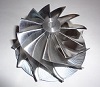
Nick, I think that is just the nature of your turbo. I think you might benefit from a .84 turbine housing on that turbo, especially since you have head studs now, it will get that turbo to get on top of itself a lot sooner, which is the biggest issue at higher altitude. With all the miles you put on that van, I think you would really like that .84 T4 housing, and its nearly a drop in for the 1.15 you have.
Trending Topics
Thread Starter
|
Cargo Master
Joined: Oct 2012
Posts: 3,067
Likes: 42
From: California
Maybe an upgrade on the turbo housing would be in order. When I stomp it with the GVOD on and i'm hauling a lot, I can't reach 11psi. Hypermax says they designed the system to max out at 12, so I've hit the top end. My EGTs never exceed 900 deg F even in the worst scenarios, so I got room to improve.
The other upgrades I'm looking to doing is moving one of my batteries to the underside, then using that space to install a cold-air filter box. That'll free up room in the engine bay to run pipes to an intercooler mounted under my winch bumper or above my tranny cooler. F. These vans have no friggin room.
The other upgrades I'm looking to doing is moving one of my batteries to the underside, then using that space to install a cold-air filter box. That'll free up room in the engine bay to run pipes to an intercooler mounted under my winch bumper or above my tranny cooler. F. These vans have no friggin room.

Thread
Thread Starter
Forum
Replies
Last Post
dakotajeep
Pre-Power Stroke Diesel (7.3L IDI & 6.9L)
6
Dec 1, 2008 11:39 AM
