


Dent Side on the Interstate

Thread Starter
|
Logistics Pro
Joined: Jun 2012
Posts: 4,063
Likes: 2
From: Southeastern IL
Dent Side on the Interstate
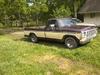
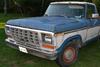
Hey guys. I am very interested in buying a F-350 off a guy who lives a good distance away. I am still talking with the guy making sure the trucks up to snuff for the drive (which I'm sure it is... hes on FTE). If the truck checks out, the plan is to fly out and drive it home. Theres just one issue: the truck running gear wasn't made for modern day speed limits. Its a 390, C6, with 4.10 gears. Have ya cringed yet? 4.10 gears are fairly deep, but nothing a gasser cant handle. But add into effect the 70 mph speed limit of an interstate plus the 1:1 ratio of a C6... that's 3,444 rpm. Screaming.
Theres many things I can do to make this truck more travel friendly... once I get it home. But my options are slim where it sits. My biggest question is: is that too high RPM for a big block over a long distance? I'm still kicking around ideas about what to do to get it home but my options require a ton of work(tranny swap, gear swap, gear vendors)
Theres many things I can do to make this truck more travel friendly... once I get it home. But my options are slim where it sits. My biggest question is: is that too high RPM for a big block over a long distance? I'm still kicking around ideas about what to do to get it home but my options require a ton of work(tranny swap, gear swap, gear vendors)
Moderator & parts slinger


Joined: Feb 2007
Posts: 50,271
Likes: 5,824
From: S/W Missouri, Polk county

Maybe just for the road trip you can change the tire size to a taller tire to help with the gearing?
Here is part of a nice article: Why Does Tire Height Affect Cruise RPM?
Sometimes you'll hear people talk about "effective gear ratio" to explain the drop in cruise rpm after installing taller tires or the increase in rpm with shorter tires. Here's their theory: If a car starts with 3.50:1 gears and 26-inch-tall tires, but the tires are then swapped to 30-inchers, then the effective gear ratio is 3.08:1. In other words, the cruise rpm with 3.50:1 gears and 30-inch tires is the same as it would be if the 26-inch tires were retained and 3.08:1 gears were installed.
We don't like this concept because it's complicated and irrelevant. You can't walk up to a car at cruise night and calculate it's "effective gear ratio" unless you know its original tire size. Many people will say, "It's got 3.73:1 gears, but they act like 3.50s because the tires are taller." Taller than what? There is no standard from which to compare. Besides, "effective gear ratio" implies that a ratio has been changed, but tire size has no effect on axle ratio at all. Here's proof: If you have 4.10:1 gears, then the driveshaft will turn 4.1 times for each revolution of the tires regardless of their size.
However, changes in tire diameter do affect the car's cruise rpm, and perhaps its acceleration, because you've altered the number of tire revolutions per mile. For example, a tire with a true diameter of 26 inches has a circumference of 81.68 inches; a tire 30 inches tall has a circumference of 94.25 inches. That means each time the 30-inch tire completes one revolution it will move the car about 12-1/2 inches farther than the one revolution of the 26-inch tires. Therefore, the taller tire requires less input rpm (engine speed) to travel the same distance. Conversely, shorter tires require more engine speed per mph. That's why shorter tires seem to act like lower axle gears, and taller tires seem to act like higher gears.
There are two other reasons taller tires can tend to reduce acceleration. First, taller usually means bigger, which means heavier. Secondly, taller tires have a greater static loaded radius, or the distance from the center of the axle shaft to the ground when the tire is installed at operating pressure and loaded with the weight of the vehicle. The greater the static loaded radius, the greater the length of the lever between the axle and the ground, the greater the tire's ability to resist the acceleration of the car. However, taller tires also have a larger contact patch than shorter tires, so the dragstrip advantages usually outweigh any disadvantages of taller tires, especially when the proper axle gears are chosen to compensate for the tire size.
Here is part of a nice article: Why Does Tire Height Affect Cruise RPM?
Sometimes you'll hear people talk about "effective gear ratio" to explain the drop in cruise rpm after installing taller tires or the increase in rpm with shorter tires. Here's their theory: If a car starts with 3.50:1 gears and 26-inch-tall tires, but the tires are then swapped to 30-inchers, then the effective gear ratio is 3.08:1. In other words, the cruise rpm with 3.50:1 gears and 30-inch tires is the same as it would be if the 26-inch tires were retained and 3.08:1 gears were installed.
We don't like this concept because it's complicated and irrelevant. You can't walk up to a car at cruise night and calculate it's "effective gear ratio" unless you know its original tire size. Many people will say, "It's got 3.73:1 gears, but they act like 3.50s because the tires are taller." Taller than what? There is no standard from which to compare. Besides, "effective gear ratio" implies that a ratio has been changed, but tire size has no effect on axle ratio at all. Here's proof: If you have 4.10:1 gears, then the driveshaft will turn 4.1 times for each revolution of the tires regardless of their size.
However, changes in tire diameter do affect the car's cruise rpm, and perhaps its acceleration, because you've altered the number of tire revolutions per mile. For example, a tire with a true diameter of 26 inches has a circumference of 81.68 inches; a tire 30 inches tall has a circumference of 94.25 inches. That means each time the 30-inch tire completes one revolution it will move the car about 12-1/2 inches farther than the one revolution of the 26-inch tires. Therefore, the taller tire requires less input rpm (engine speed) to travel the same distance. Conversely, shorter tires require more engine speed per mph. That's why shorter tires seem to act like lower axle gears, and taller tires seem to act like higher gears.
There are two other reasons taller tires can tend to reduce acceleration. First, taller usually means bigger, which means heavier. Secondly, taller tires have a greater static loaded radius, or the distance from the center of the axle shaft to the ground when the tire is installed at operating pressure and loaded with the weight of the vehicle. The greater the static loaded radius, the greater the length of the lever between the axle and the ground, the greater the tire's ability to resist the acceleration of the car. However, taller tires also have a larger contact patch than shorter tires, so the dragstrip advantages usually outweigh any disadvantages of taller tires, especially when the proper axle gears are chosen to compensate for the tire size.
Thread Starter
|
Logistics Pro
Joined: Jun 2012
Posts: 4,063
Likes: 2
From: Southeastern IL
Maybe a combo of both? Taller tires and slow er down lol
A 285/75R16 @ 70 would be 3200 rpm
A 285/75R16 @ 65 would be 2970 rpm
WAY better than 3444 lol. My only problem is going to be finding a way to get them there
A 285/75R16 @ 70 would be 3200 rpm
A 285/75R16 @ 65 would be 2970 rpm
WAY better than 3444 lol. My only problem is going to be finding a way to get them there
Trending Topics

Postmaster
Joined: Nov 2015
Posts: 2,769
Likes: 7
From: O-O-O-Oreilly's

Personally, as a dent owner, I am grateful that mine even moves, so 55-60 works fer me if it works fer her.

FTE Stories
Ford Trucks for Ford Truck Enthusiasts

Top 6 Best Deals Available on New Fords & Lincolns Right Now
Brett Foote
This Hennessey Takes the Expedition Tremor's Off-Roading Capability to the Next Level
Verdad Gallardo
Top 10 Fords at 2026 Carlisle Ford Nationals
Joe Kucinski
3 Best / 3 Worst Parts of Modern Ford Ownership
Brett Foote
10 Amazing Upgrades That Solve Common Ford Truck Owner Headaches
Pouria Savadkouei
Every 2026 Ford Engine Explained
Brett Foote
10 Ugly Ford Trucks That We Still Kinda Love
Joe Kucinski
10 Things Every Truck Owner NEEDS (2026 Edition)
Michael S. Palmer
Rezvani's Latest Post-Apocalyptic Monster Is a Ford F-150 Raptor Underneath
Verdad Gallardo

Fleet Mechanic


Joined: Dec 2007
Posts: 1,514
Likes: 340
From: Wildwood Pa
How many miles do you have to drive, & how long do you have to make the trip??
You can always stay off the interstate, & cruise on 2 lane roads. The pace is slower, & the scenery is much better.
You can always stay off the interstate, & cruise on 2 lane roads. The pace is slower, & the scenery is much better.

New User
Joined: Oct 2015
Posts: 14
Likes: 0
How long is 'a good way away'?
I doubt 3600 would blow it up over a few hundred miles. More wear, yes, but if it's healthy I can't imagine it being a big deal.
On a side note - transport is surprisingly affordable if you are in not in a hurry. I paid no more the $600 to get my truck home to Chicago from Montana... Seems like a great deal to me, especially if you factor in my time as having any value, and fuel / hotel cost. I worked with a load broker, and told him "I'm not looking for retail transport - I'm looking to fill someone's empty truck, and pay for their gas home" It took 3 weeks to find a truck, and a week for it to get to the pickup. The truck was paid for, and i had the title wayyyyyy before I had the truck! (Arranged with seller in advance that this is how it was going to work with supporting wording in the bill of sale)
God forbid any kind of mechanical difficulty on the road, and the almost nessecity of having a shop fix it with parts at what ever cost they are available ($$$). It seems like a better deal to me the more I think about it!
If transport is impossible, then just slowwwww down - it'll be good!
I doubt 3600 would blow it up over a few hundred miles. More wear, yes, but if it's healthy I can't imagine it being a big deal.
On a side note - transport is surprisingly affordable if you are in not in a hurry. I paid no more the $600 to get my truck home to Chicago from Montana... Seems like a great deal to me, especially if you factor in my time as having any value, and fuel / hotel cost. I worked with a load broker, and told him "I'm not looking for retail transport - I'm looking to fill someone's empty truck, and pay for their gas home" It took 3 weeks to find a truck, and a week for it to get to the pickup. The truck was paid for, and i had the title wayyyyyy before I had the truck! (Arranged with seller in advance that this is how it was going to work with supporting wording in the bill of sale)
God forbid any kind of mechanical difficulty on the road, and the almost nessecity of having a shop fix it with parts at what ever cost they are available ($$$). It seems like a better deal to me the more I think about it!
If transport is impossible, then just slowwwww down - it'll be good!



Hotshot


Joined: Feb 2004
Posts: 10,862
Likes: 2,624
From: The Shenandoah Valley
Steve McQueen sure wasn't worried about the RPMs of the 390 in that Mustang .... 
Haven't done the match so I'll accept the idea that 3444 rpm = 70 for this
Back when that truck was built .... 3400 was "Purrring" for sure. But purely in deference to it age and maybe miles and wear .... 60 (maybe 65) mph sounds good. I'ld shoot for a purely arbitrary number like 3,000 rpm cruise .... and you'll get used to it. Check oil at every gas stop, look for leaks from coolant, oil, trans, diff.
Back in the '70s I drove for a U S Mail Contract Carrier between Lynchburg & Danville, Va. and while some trips involved side stops at Evington, Lynch Sta., AltaVista, Hurt, Gretna, Chatham, Dry Fork, Blairs on the way into D-ville .... many times it was a straight shot down US 29 and my favorite truck was a '74 F350 with stretched frame, a box body intended for a 2 ton, 4 speed, side saddle tank 30 gallons extra , and it originally had a 300I-6 with 4.56 rear gears .... boss man changed to a 390 when that 6 blowed ..... and that was one sweet hauling truck up White Oak Mtn there on 29 south of Chatham .... when loaded heavy with Sears catalogs I'ld drop to 3rd on that grade but normal loads, she'ld walk up at the same 60-65 I run every time. The other trucks with 4.10s always needed a drop to 3rd to conquer that grade. We didn't baby them .... for sure they were pulling more than 3400 in 3rd.
__________________________________________________ ___
15" rolling radius (center of axle shaft to ground, accounts for deflection) X 2 = 30" rolling diameter assumed.
Pi is 3.1416.
Pi X 30" = 94.248" each revolution of said tire.
94.248" devided by 12 = 7.854 feet per revolution.
70 miles per hour devided by 60 = 1.1666 miles per minute.
1.1666 miles X 5280 = 7,186.25 feet per minute.
7186.25 devided by 7.854 = 914.97 tire revolutions to go that 1.1666 miles in a minute.
914.97 X 4.10 gear = 3751.37 engine revolutions per minute to go 1.1666 miles a minute or .... 70 MPH
I think you'll find the tire is a bit taller though.
Haven't done the match so I'll accept the idea that 3444 rpm = 70 for this
Back when that truck was built .... 3400 was "Purrring" for sure. But purely in deference to it age and maybe miles and wear .... 60 (maybe 65) mph sounds good. I'ld shoot for a purely arbitrary number like 3,000 rpm cruise .... and you'll get used to it. Check oil at every gas stop, look for leaks from coolant, oil, trans, diff.
Back in the '70s I drove for a U S Mail Contract Carrier between Lynchburg & Danville, Va. and while some trips involved side stops at Evington, Lynch Sta., AltaVista, Hurt, Gretna, Chatham, Dry Fork, Blairs on the way into D-ville .... many times it was a straight shot down US 29 and my favorite truck was a '74 F350 with stretched frame, a box body intended for a 2 ton, 4 speed, side saddle tank 30 gallons extra , and it originally had a 300I-6 with 4.56 rear gears .... boss man changed to a 390 when that 6 blowed ..... and that was one sweet hauling truck up White Oak Mtn there on 29 south of Chatham .... when loaded heavy with Sears catalogs I'ld drop to 3rd on that grade but normal loads, she'ld walk up at the same 60-65 I run every time. The other trucks with 4.10s always needed a drop to 3rd to conquer that grade. We didn't baby them .... for sure they were pulling more than 3400 in 3rd.
__________________________________________________ ___
15" rolling radius (center of axle shaft to ground, accounts for deflection) X 2 = 30" rolling diameter assumed.
Pi is 3.1416.
Pi X 30" = 94.248" each revolution of said tire.
94.248" devided by 12 = 7.854 feet per revolution.
70 miles per hour devided by 60 = 1.1666 miles per minute.
1.1666 miles X 5280 = 7,186.25 feet per minute.
7186.25 devided by 7.854 = 914.97 tire revolutions to go that 1.1666 miles in a minute.
914.97 X 4.10 gear = 3751.37 engine revolutions per minute to go 1.1666 miles a minute or .... 70 MPH
I think you'll find the tire is a bit taller though.

Post Fiend
Joined: Apr 2002
Posts: 19,311
Likes: 97
From: Waterloo, Iowa
When our .mil unit deployed to the Balkans they sent all the vehicles, even a Humvee that the mechs hadn't/couldn't fix yet, wouldn't shift out of 1st or Low. Real screamer. 15 or 20 mph top speed? Not much anyway. Platoon sergeant drove it from Thessaloniki, Greece all the way to Macedonia. Glad it wasn't me.