When you click on links to various merchants on this site and make a purchase, this can result in this site earning a commission. Affiliate programs and affiliations include, but are not limited to, the eBay Partner Network.
Hi guys. I am a new Ford F100 owner and have some questions. My truck is a 1973 F100 Custom. It has manual brakes, front disc, rear drum. It may sound funny to you seasoned truck owners but you more or less have to stand on the brake pedal to stop. The truck wants to go! So my question is, could I purchase a new brake master cylinder with the power booster and directly replace my existing master cylinder? Is it this simple, or is more involved? Power brakes would be a nice upgrade. Thanks for the help.
Welcome to FTE and congrats on your '73 F100. In case you haven't read it yet, you should read the first four threads at the top of the forum page for our trucks. There is more than enough info, knowledge, and expedience there. Not only can you convert to power brakes but you can even upgrade from a stock set-up. FYI, we love to see pics and hear about upgrades that have been done to your truck.
No, it is not equipped with power steering. Unfortunately I overlooked that detail when I bought the truck. I read somewhere I thought that 1973 models had power steering, i now know it was an option, not standard equipment.
You can add power brakes fairly easily, but it's not a simple "add a booster" deal.
Between the booster and firewall is a bracket with a bell crank assy. that you'll need to come up with. It's also advisable to get the brake pedal to go with it.
Thanks for the help. Do you know where I could find these parts?
The bracket was never sold separately by Ford, it only came with the booster.
The best place is either a "want to buy" add here on FTE or scrounge the local salvage yards if there are any near you.
No, it is not equipped with power steering. Unfortunately I overlooked that detail when I bought the truck. I read somewhere I thought that 1973 models had power steering, i now know it was an option, not standard equipment.
Shucks.
Well heck, why not install a PS pump to power the hydroboost?.. And leave it manual steering?
With respect to the vacuum operated brake boosters in the Dentside trucks, some had a bellcrank (cantilever) mechanism and others didn't. Some booster input rods connected from the back of the booster directly to the brake pedal without the bellcrank assembly.
There were single diaphragm booster designs and there were dual diaphragm booster designs. Obviously, a dual diaphragm unit will have more output force since it has nearly twice the diaphragm surface area of a single diaphragm booster.
For simplicity, it would probably be best, if you're going to run a vacuum booster, to find one from a '73-'77 model F100-F350. Many '78/'79 boosters had a revised pedal ratio which would necessitate changing out the pedal hanger in your truck for the later model pedal hanger.
My '69 F100 originally had manual brakes. In 2012, I installed a factory Bendix dual diaphragm booster from a '75 F350 in my truck. It doesn't have the bellcrank assembly. The booster input rod connects directly to my stock brake pedal. I have since added power steering and '77 F100 front disc brakes --MAJOR improvements.
'75 F350 dual diaphragm brake booster.
Ford C-2 power steering pump/brackets from an '82 F150 Bullnose that had a 300 inline six. The Saginaw power steering gear box/pitman arm are from a '78 F150.
With respect to the vacuum operated brake boosters in the Dentside trucks, some had a bellcrank (cantilever) mechanism and others didn't. Some booster input rods connected from the back of the booster directly to the brake pedal without the bellcrank assembly.
There were single diaphragm booster designs and there were dual diaphragm booster designs. Obviously, a dual diaphragm unit will have more output force since it has nearly twice the diaphragm surface area of a single diaphragm booster.
For simplicity, it would probably be best, if you're going to run a vacuum booster, to find one from a '73-'77 model F100-F350. Many '78/'79 boosters had a revised pedal ratio which would necessitate changing out the pedal hanger in your truck for the later model pedal hanger.
My '69 F100 originally had manual brakes. In 2012, I installed a factory Bendix dual diaphragm booster from a '75 F350 in my truck. It doesn't have the bellcrank assembly. The booster input rod connects directly to my stock brake pedal. I have since added power steering and '77 F100 front disc brakes --MAJOR improvements.
'75 F350 dual diaphragm brake booster.
Ford C-2 power steering pump/brackets from an '82 F150 Bullnose that had a 300 inline six. The Saginaw power steering gear box/pitman arm are from a '78 F150.
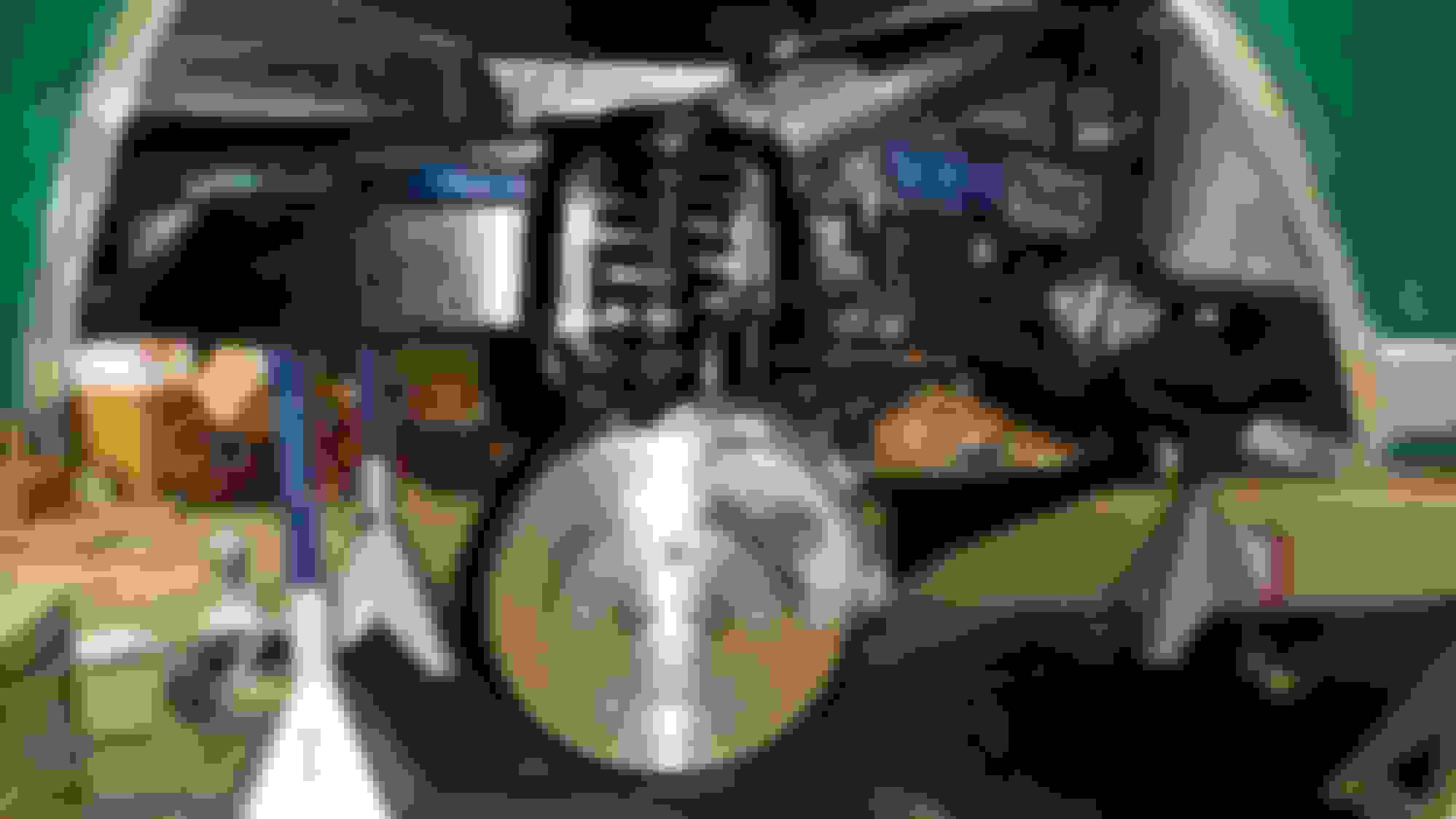
1977 F100 disc brake front suspension.
What is the master cylinder off of? (I know its new, just from what application?)
Just for curiosity's sake, what condition is your brake system in?
I just finished rebuilding my 74 F100's manual brake system with all new parts and the pedal is firm, but doesn't take both feet to slide all four wheels if necessary.
I also recently rebuilt the brake system on a 51 IH pickup with four wheel drums and have great pedal feel and can lock all four if necessary. I have learned that when they get this old, it's a good idea to start with all new parts.
Like I said, just curious what you've done so far...
I too have a 73 F100 with standard trans, manual brakes, front discs. I have sourced a 73 power MC and a 73 booster and bell crank. I see so many threads and questions about Pedals. I have read 73 were a pedal on their own, then 74-77, 78-79. I too wonder if my manual pedal/clutch setup will work with this conversion? If not would I need 74-77 pedals or 78-79? could someone maybe help? I do not mind modifying the brake pedal if necessary, I have only read where pedals are not even? Thanks, Mike
It's possible someone in the past thought it was a good idea to install a master cylinder with a larger piston diameter as well. Good for a firm pedal with larger brakes, and good for exercising your leg muscles(!) but not so good for your braking confidence.
Or, with the state of parts computers in the beginning, and the general state of lackadaisical-ness in parts stocking, they may have just received the wrong part in the box.
I like power brakes, but agree with the others that your manual brakes should still stop you well if they're all in good and properly sorted shape.
This Hennessey Takes the Expedition Tremor's Off-Roading Capability to the Next Level
Slideshow: The VelociRaptor Expedition gains a lift, upgraded suspension, Brembo brakes, and trail-ready equipment while retaining the stock 440-horsepower EcoBoost V6.
Rezvani's Latest Post-Apocalyptic Monster Is a Ford F-150 Raptor Underneath
Slideshow: Called the Fortress, the 850-horsepower pickup combines Raptor underpinnings with military-inspired features, survival equipment, and a starting price of $285,000.


















 then 74-77, 78-79.


