







Muffler Delete = $$$

Thread Starter
|
FTE-Spread The Knowledge


Joined: Feb 2008
Posts: 2,284
Likes: 240

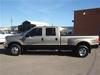
That's hilarious! Now that you mention it we did smell something funny at a Colorado rest area, but it turned out that it wasn't taters getting baked. I was however curious why I was experiencing a decrease in fuel mileage, and thought I would share the final solution. Unlike Trump, who's first loan from his father was a "mere" million dollars, saving money is important. I would rather fund my kids future, than fund oil producers who divert profits to destabilize peace to artificially inflate energy prices. Reducing my carbon footprint, and saving the Earth for future generations is a win-win, while you listen to the turbo spin!
Senior User
Joined: Aug 2012
Posts: 307
Likes: 0
From: thornton CO
Try selling CRAZY on a different forum, I don't think anyone buys it around here.

Lead Driver

Joined: Dec 2006
Posts: 7,092
Likes: 145
From: San Diego, CA
All my modifications, aftermarket parts, and bloody knuckles (my truck's snack of choice) have resulted in me being able to beat a Chevy Aveo in a heads up race. 
I've kept the same mpg throughout but have a lot more power in all the right places and have been known to surprise an Accord or two on the freeway onramp.
I consider getting more power for the same fuel economy an increase in mpg (just on the other side of the equals sign).
I've kept the same mpg throughout but have a lot more power in all the right places and have been known to surprise an Accord or two on the freeway onramp.
I consider getting more power for the same fuel economy an increase in mpg (just on the other side of the equals sign).
Thread Starter
|
FTE-Spread The Knowledge
Joined: Feb 2008
Posts: 2,284
Likes: 240
Our 56 Chevy was straight piped, not sure if you can accurately describe an F-350's exhaust "straight," as it winds over Dana mountain, but it sure sounds good. We did have to use a calculator, because we ran out of fingers and toes, to find out that we will be using 285 gallons of fuel LESS each year. Ms. Petrol, my 3rd grade teacher, taught us about supply and demand. She said if you cut demand, you lower price. Just imagine if every American driver cut fuel demand by only half that amount each year. Oil producers would not have enough profit's to fund extremist groups, and our American soldiers could come home.

Elder User

Joined: Jul 2015
Posts: 914
Likes: 4
All my modifications, aftermarket parts, and bloody knuckles (my truck's snack of choice) have resulted in me being able to beat a Chevy Aveo in a heads up race.
I've kept the same mpg throughout but have a lot more power in all the right places and have been known to surprise an Accord or two on the freeway onramp.
I've kept the same mpg throughout but have a lot more power in all the right places and have been known to surprise an Accord or two on the freeway onramp.
I got into a bit of a highway pissing contest last night with an annoying little Audi A4 that kept buzzing around in all the wrong places. Imagine his or her surprise when they were rather firmly denied the ability to pass me on the right and cut me off. I would guess they were surprised to see a beat up mismatched multi colored old work truck leave them eating an earful of screaming Powerstroke and related turbo sounds, to go with the proverbial dust.
I consider getting more power for the same fuel economy an increase in mpg (just on the other side of the equals sign).
Thread Starter
|
FTE-Spread The Knowledge
Joined: Feb 2008
Posts: 2,284
Likes: 240
YES, if I can repeat the test with the same results with no unknown variables, it's scientifically proven.
FTE Stories
Ford Trucks for Ford Truck Enthusiasts

10 Best Ford Truck Engines We Miss the Most!
Joe Kucinski
2026 Shelby F-150 Off-Road: Better Than a Raptor R?
Brett Foote
2027 Super Duty Carhartt Package First Look: 12 Things You NEED to Know!
Michael S. Palmer
10 Most Surprising 2026 Ford Truck Features!
Joe Kucinski
Top 10 Ford Trucks Coming to Mecum Indy 2026
Brett Foote
5 Best / 5 Worst Ford Truck Wheels of All Time
Joe Kucinski
Ford Super Duty: 5 Things Owners LOVE, 5 Things They LOATHE!
Joe Kucinski
Every 2026 Ford Truck Engine RANKED from WORST to FIRST!
Michael S. Palmer
The Best F-150 Deal of Every Trim Level (XL through Raptor)
Joe Kucinski
FTE Leadership Emeritus


Joined: May 2014
Posts: 27,344
Likes: 5,941
From: Lake Hartwell, GA

I see where you argument is and I also see how it is more often than not construed as just ignorance. Although, I agree that getting the same amount of work done (by the truck) with less effort because of how efficient the truck is running can be considered a perceived MPG increase.
For example, I am just now finishing up installing a bunch of performance enhancing modifications, but not because I want to drive faster or pull heavy loads. I simply want the truck to run more efficient and work less in order to accomplish the same tasks. This to me is a perceived MPG increase because I don't have to have my foot into the skinny pedal as much going up a grade because of the mods I have done.
In regards to your straight pipe adding 4 MPG, I am confident you had some sort of a blockage that was killing the exhaust flow.
For example, I am just now finishing up installing a bunch of performance enhancing modifications, but not because I want to drive faster or pull heavy loads. I simply want the truck to run more efficient and work less in order to accomplish the same tasks. This to me is a perceived MPG increase because I don't have to have my foot into the skinny pedal as much going up a grade because of the mods I have done.
In regards to your straight pipe adding 4 MPG, I am confident you had some sort of a blockage that was killing the exhaust flow.
Elder User
Joined: Jul 2015
Posts: 914
Likes: 4
IF the muffler was in fact responsible for the gain, then the gain would go away after the muffler was reinstalled.
ALL variables must be the same for each test, except for the thing being tested. That means exact same fuel, same route traveled, exact same weather conditions, same weight/load in the vehicle, same tire pressures, and EXACT same driver/operating parameters.
Unfortunately, this last one is very difficult to achieve outside of a laboratory. Even a small variation in traffic can have a big impact on the result.
Regardless of whether you find the above procedure cumbersome, inconvenient, unreasonable, or even impossible ( assuming the old muffler was thrown away or damaged in the removal); if you haven't followed it, then you haven't "scientifically proven" your hypothesis.
What you have is questionable circumstantial results, which defy commonly accepted wisdom.
As others have stated, while it is possible that you have genuinely experienced a 4 mpg increase since removing your muffler, that much improvement would only be possible if your old muffler was either of a design far more restrictive then a stock muffler ( or even most aftermarket mufflers, as I don't think there are any reports of people losing significant fuel mileage from aftermarket muffler installs), or the old muffler was degraded/damaged in such a way that it was much more restrictive then when new. It IS possible that it could have been internally collapsed, from corrosion/age, resulting in significant restriction.
That said, even if your mpg gain is accurate, it is most definitely not something that most people should expect to see. It is also quite possible you might have also seen some or all of the gain by installing a new replacement muffler.
Are you sure you did ABSOLUTELY nothing else to your truck at that time? Didn't change the oil, check/change the tire pressure, change/top off any other fluids, finally clean out a bunch of junk you had been carting around behind the seat or in the bed, change the air filter, change any sensors, replace or charge batteries, replace the alternator, brake repairs, etc......????? Did you buy your fuel at the exact same station both before and after the muffler? Its possible fuels from different stations could have a different cetane rating. Maybe one hadn't yet switched to winter fuel yet?
Also, I don't see any details on how you did your "calculations".
Thread Starter
|
FTE-Spread The Knowledge
Joined: Feb 2008
Posts: 2,284
Likes: 240
We did 3 runs before delete and after. They were city, interstate & under load so to keep RPM's basically constant. Each run was conducted during the same time of day and within a 4 day period. So temp, weather conditions, load weight, fuel were constant. We did see a 1 cent increase in fuel price but the fuel was identical and they did not refill station tanks during our test period, though fuel price was not used in calculations. The test can easily withstand the close scrutiny of data.


Logistics Pro

Joined: Nov 2006
Posts: 3,663
Likes: 363
From: Fallon,NV & Bainbridge OH


Thread
Thread Starter
Forum
Replies
Last Post
CHRISTIANMAN316
1999 - 2003 7.3L Power Stroke Diesel
4
May 3, 2005 02:57 PM