


Electrical Gremlin
More Turbo

Joined: Mar 2003
Posts: 665
Likes: 6
From: Detroit suburb
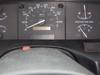
There is a correction to be made the amp gauge is fluctuating. It goes from one end of the gauge to the other. Down to zero when it's idling and up to max when it's accelerating. Is there an external voltage regulator on the truck that I need to be looking for or is there some other electrical problem that could be causing this. I'm beyond frustrated now.
"I have an amp gauge and the gauge isn't fluctuating. It's almost in the center where it's supposed to be at, It doesn't fluctuate at all. "
I'll stand behind other's comments that new or rebuilt does not necessarily mean good, you have to test and verify what your truck is doing compared to what is expected. You need to get some direct amperage readings at different RPM levels. Electrical gremlins sometimes can be tough, but you have to methodically track and rule things out, or hire someone who can do this for you. Sure, the simple one's you most certainly want to do yourself if you are able. I gave you some suggestions for some items that were more advanced issues, assuming you have ruled out the other basic items, hope you get to that point soon .....
Cheers .....

Elder User
Joined: Aug 2012
Posts: 567
Likes: 2
I will add an important piece of advice i recently read that was posted by the member Old Paint:
All the electronics on this truck are a massive system. Its not just the alternator pumping electricity to everything through a couple wires. (obviously right, but that's the point)
You have several wires and several more connections, as well as fuses (two connections per fuse) and fusable links and releys that could potentially cause an electrical issue. All of wich add resistance to the electricity under normal conditions, so add just one corroded connector in the chain and its a recipe for gremlins!
It goes Alternator->starter relay->distribution panel->fuse box->then finally to your guages->then it has to properly ground to the cab, and the cab back to the negative post.
A break or corrosion at ANY point can cause issues.
One of the most important connections of all is the post on the starter solenoid with all the ring wire connectors on it. So many things are powered from that point. Double check, clean, and contact grease/antisieze that connection as well as the solenoids connection to the side of the engine bay.
Like I said before, it may just be a bad alt, but all this should be checked just as preventative maintenance on a truck of this vintage.
Good luck and Merry Christmas!!
All the electronics on this truck are a massive system. Its not just the alternator pumping electricity to everything through a couple wires. (obviously right, but that's the point)
You have several wires and several more connections, as well as fuses (two connections per fuse) and fusable links and releys that could potentially cause an electrical issue. All of wich add resistance to the electricity under normal conditions, so add just one corroded connector in the chain and its a recipe for gremlins!
It goes Alternator->starter relay->distribution panel->fuse box->then finally to your guages->then it has to properly ground to the cab, and the cab back to the negative post.
A break or corrosion at ANY point can cause issues.
One of the most important connections of all is the post on the starter solenoid with all the ring wire connectors on it. So many things are powered from that point. Double check, clean, and contact grease/antisieze that connection as well as the solenoids connection to the side of the engine bay.
Like I said before, it may just be a bad alt, but all this should be checked just as preventative maintenance on a truck of this vintage.
Good luck and Merry Christmas!!

Thread Starter
|
Senior User
Joined: Jan 2014
Posts: 125
Likes: 0
From: Cornerbrook Newfoundland
So if it was the tensioner wouldn't I hear a squeal from the belt if it was slipping? If so I don't seem to have this problem. Seems like I'm going to have to strip the whole harness and I may have to look for the problem that way but not looking forward to that
Elder User
Joined: Aug 2012
Posts: 567
Likes: 2
I wouldnt strip the harness neccesarily. You should be able to clean and grease the connections with it in the truck. Most of the cab electrical issue threads here seem to end with a problem getting power to the cab or grounding back from the cab.
These trucks have dealt with so much road salt over the years its no wonder. Thats why i always liberally grease cleaned exposed connections and grounds with anti-sieze (conductive), and fill sealed clip on connectors with die-electric/silicon grease.
Hopefully after you hit some of the usual suspect connections/grounds you will have good news to report back!

Elder User
Joined: May 2013
Posts: 533
Likes: 5
Check all of the alternator connections and battery connections, after that test or get tested the alternator output. Come back with real numbers and someone here will figure it out for you.

Lead Driver


Joined: Aug 2006
Posts: 5,670
Likes: 12
From: Sand Lake, MI
When it happen on mine no the belt didn't make a sound, was working fine then one morning fired it up to plow to notice the voltage was low.
Had to clear lots so off I went after noticing that the second i gave it a little gas it was in fact charging. Sure I looked it over a minute but couldn't find a bad connection or anything obviously wrong with it and at first figured the alt was throwing in the towel, no I didn't check the belt it didn't make a sound.
I had a couple of lots to clear first so I proceeded to do so, it was only when the steering assist dropped out at idle did it dawn on me what as happening that the accessory belt was slipping. Nothing else wrong just the belt slipping.
The belt didn't make any noise so my first assumption was that it wasn't the problem and at least up until that moment, until then I had full power steering all the time up till then was normal driving or clearing snow in straight line going back and forth style.
Again I'm not saying that is for sure your problem, I'm only stating it exactly matches my trucks symptoms of a slipping belt.
What I am suggesting is that you make sure that your belt is not wore out, that it is tight that your tensioner is working 100% of its operating range, that you take a minute and make sure it is not the cause of your troubles.
Doesn't sound like you've done anything to rule that out.
Keep in mind my tensioner worked just not to its full range as when "new", once the belt wore down just beyond the tensioners usable range to keep it tight the belt slipped on the alternators pulley, there by causing the amp reading to rise and fall dependent on idle speed/just above idle speeds.
But hey if you don't want to take a minute and check the accessory drive system? even though you clearly have no clue what the problem is?
don't....
Had to clear lots so off I went after noticing that the second i gave it a little gas it was in fact charging. Sure I looked it over a minute but couldn't find a bad connection or anything obviously wrong with it and at first figured the alt was throwing in the towel, no I didn't check the belt it didn't make a sound.
I had a couple of lots to clear first so I proceeded to do so, it was only when the steering assist dropped out at idle did it dawn on me what as happening that the accessory belt was slipping. Nothing else wrong just the belt slipping.
The belt didn't make any noise so my first assumption was that it wasn't the problem and at least up until that moment, until then I had full power steering all the time up till then was normal driving or clearing snow in straight line going back and forth style.
Again I'm not saying that is for sure your problem, I'm only stating it exactly matches my trucks symptoms of a slipping belt.
What I am suggesting is that you make sure that your belt is not wore out, that it is tight that your tensioner is working 100% of its operating range, that you take a minute and make sure it is not the cause of your troubles.
Doesn't sound like you've done anything to rule that out.
Keep in mind my tensioner worked just not to its full range as when "new", once the belt wore down just beyond the tensioners usable range to keep it tight the belt slipped on the alternators pulley, there by causing the amp reading to rise and fall dependent on idle speed/just above idle speeds.
But hey if you don't want to take a minute and check the accessory drive system? even though you clearly have no clue what the problem is?
don't....

Cargo Master
Joined: Mar 2007
Posts: 2,935
Likes: 34
From: Arcadia, Fla
Ok, I see everybody talking about a amp gauge. These years trucks never had the amp gauge only the 86 and older ones do. A 95 truck is a voltage gauge and is not a most accurate one too.
Best to check with a good volt meter at the battery to see how much charging voltage is going to the battery at various RPMs . The plug in volt meter(shown in photo) ones are good but can show a voltage drop as in my case with the 89 F250. For charging issues it best to check right at the battery.
Most likely is the belt slipping as others have said. 2nd problem is bad grounds from the CAB TO CHASSIS/battery ground post. 3rd problem is probably a bad connection along the power feeds going from battery to power box,bulkhead connectors and various circuits. That will be the most PITA to find(like what is occurring with my 89 F250) as you will have to meter out where the voltage drop is occurring.
Best to check with a good volt meter at the battery to see how much charging voltage is going to the battery at various RPMs . The plug in volt meter(shown in photo) ones are good but can show a voltage drop as in my case with the 89 F250. For charging issues it best to check right at the battery.
Most likely is the belt slipping as others have said. 2nd problem is bad grounds from the CAB TO CHASSIS/battery ground post. 3rd problem is probably a bad connection along the power feeds going from battery to power box,bulkhead connectors and various circuits. That will be the most PITA to find(like what is occurring with my 89 F250) as you will have to meter out where the voltage drop is occurring.
Elder User
Joined: Aug 2012
Posts: 567
Likes: 2
Eddie makes a good point.
Also, I don't think we have established whether the apparent voltage drop is actually NORMAL, or truly dropping low enough to start causing a problem through draining the battery.
The more accessories turned on, the less voltage available to charge the battery, but it only becomes a problem when the voltage going to the battery approaches what, 13 volts? The dropping of the gauge may not indicate a true drop of voltage to a bad level. So while the blower motor slowing down may be an annoyance, its not truly a problem unless the battery is simultaneously being drained.
Here is an excellent thread on this same subject:
https://www.ford-trucks.com/forums/6...is-on-3-a.html
I may have missed it in the thread, but, have we confirmed how low the voltage is actually getting in the OPs truck (with a volt-meter) rather than taking the inaccurate gauge at its face value?
Also, I don't think we have established whether the apparent voltage drop is actually NORMAL, or truly dropping low enough to start causing a problem through draining the battery.
The more accessories turned on, the less voltage available to charge the battery, but it only becomes a problem when the voltage going to the battery approaches what, 13 volts? The dropping of the gauge may not indicate a true drop of voltage to a bad level. So while the blower motor slowing down may be an annoyance, its not truly a problem unless the battery is simultaneously being drained.
Here is an excellent thread on this same subject:
https://www.ford-trucks.com/forums/6...is-on-3-a.html
I may have missed it in the thread, but, have we confirmed how low the voltage is actually getting in the OPs truck (with a volt-meter) rather than taking the inaccurate gauge at its face value?
FTE Stories
Ford Trucks for Ford Truck Enthusiasts

AEV FXL Super Duty - the Super Duty Raptor Ford Doesn't Make
Brett Foote
Lobo Vs Lobo: Proof the F-150 Lobo Should Be Even Lower!
Michael S. Palmer
Ford's 2001 Explorer Sportsman Concept Looks For a New Home
Verdad Gallardo
10 Best Ford Truck Engines We Miss the Most!
Joe Kucinski
2026 Shelby F-150 Off-Road: Better Than a Raptor R?
Brett Foote
2027 Super Duty Carhartt Package First Look: 12 Things You NEED to Know!
Michael S. Palmer
10 Most Surprising 2026 Ford Truck Features!
Joe Kucinski
Top 10 Ford Trucks Coming to Mecum Indy 2026
Brett Foote
5 Best / 5 Worst Ford Truck Wheels of All Time
Joe Kucinski
Post Fiend
Joined: Apr 2002
Posts: 19,311
Likes: 97
From: Waterloo, Iowa
The plug-in Innova units may not be dead-nuts accurate at the cigar lighter socket but plenty close enough for our purposes here. Just want to see what's going on when the fan motor starts sagging. We're interested mostly in the differences in voltage rather than the absolute value. I can guarantee though, when a motor spools down like that - guess what - the voltage is sagging. Even if the alternator is ruled out (don't discount it) this is a job for "voltage drop" testing. Guaranteed, if done right, it will find the choke point. All that's needed is a voltmeter.
(If you think you maybe know what "voltage drop" testing is but don't know _for sure_, look it up. Either you know it or you don't.) It's going to be a cable, maybe the crimp, or connection at the frame, or firewall, something like that. Or all of them. Each connection is additive in terms of resistance. Even an invisible layer of skunge is enough to prevent good electron transfer. This "fools" the voltage regulator and reduces alternator effectiveness, robs engine starters of necessary current, overheats switches, dims headlights, etc. Grind down to bright shiny metal and tighten securely, coat with vaseline or NO-OX to prevent corrosion.
(If you think you maybe know what "voltage drop" testing is but don't know _for sure_, look it up. Either you know it or you don't.) It's going to be a cable, maybe the crimp, or connection at the frame, or firewall, something like that. Or all of them. Each connection is additive in terms of resistance. Even an invisible layer of skunge is enough to prevent good electron transfer. This "fools" the voltage regulator and reduces alternator effectiveness, robs engine starters of necessary current, overheats switches, dims headlights, etc. Grind down to bright shiny metal and tighten securely, coat with vaseline or NO-OX to prevent corrosion.
Cargo Master
Joined: Mar 2007
Posts: 2,935
Likes: 34
From: Arcadia, Fla
Here's my electrical gremlin in my 89 F250.
The instrument cluster voltage gauge drops to the low side(this also causes the oil pressure gauge to read much higher and temp gauge lower too) when ever I use the blower(high speed), headlights, brake lights turn signals and ect. Even the cig lighter socket is affected as a plug in volt meter will show around 10 to 11 volts. Now at the battery with above gremlin showing, I get a solid 14.4 volts going to the battery. That was with a 2G alternator till I swapped a 130amp 3G one in place as the infamous connector starting to melt on the 2G alternator. Even with 3G alternator problem still present.
I ran a heavy 10 gauge wire directly from the cab(off wiper motor ground point) to ground post of the battery, still no change. So that eliminated a grounding issue.
I finally traced the voltage drop back to the bulkhead connection on the firewall. As I know where the problem is, I just live with it till I upgrade the wiring harness.
One thing I did to properly chase a voltage drop is use a direct ground wire for the meter to the battery ground side. I did that as you could have a bad ground and will be chasing two problems and really confuse yourself.
You think this gremlin problem is hard, try finding a ground fault in a fire alarm panel system!!!
The instrument cluster voltage gauge drops to the low side(this also causes the oil pressure gauge to read much higher and temp gauge lower too) when ever I use the blower(high speed), headlights, brake lights turn signals and ect. Even the cig lighter socket is affected as a plug in volt meter will show around 10 to 11 volts. Now at the battery with above gremlin showing, I get a solid 14.4 volts going to the battery. That was with a 2G alternator till I swapped a 130amp 3G one in place as the infamous connector starting to melt on the 2G alternator. Even with 3G alternator problem still present.
I ran a heavy 10 gauge wire directly from the cab(off wiper motor ground point) to ground post of the battery, still no change. So that eliminated a grounding issue.
I finally traced the voltage drop back to the bulkhead connection on the firewall. As I know where the problem is, I just live with it till I upgrade the wiring harness.
One thing I did to properly chase a voltage drop is use a direct ground wire for the meter to the battery ground side. I did that as you could have a bad ground and will be chasing two problems and really confuse yourself.
You think this gremlin problem is hard, try finding a ground fault in a fire alarm panel system!!!
Thread Starter
|
Senior User
Joined: Jan 2014
Posts: 125
Likes: 0
From: Cornerbrook Newfoundland
This bulkhead connection, is it one wire that runs into this connection that could cause this problem, if so, what colour wire is it and would it be possible instead of putting a whole new harness in to just by pass that particular wire where does this wire run to? is it running into the alternator connector?
More Turbo
Joined: Mar 2003
Posts: 665
Likes: 6
From: Detroit suburb
For this one, shouldn't this be solved by the negative ground to the fender somewhere near the battery and starter solenoid ? Fender should be bolted to Cab and transfer energy that way, would you agree ?
Elder User
Joined: Aug 2012
Posts: 567
Likes: 2
This bulkhead connection, is it one wire that runs into this connection that could cause this problem, if so, what colour wire is it and would it be possible instead of putting a whole new harness in to just by pass that particular wire where does this wire run to? is it running into the alternator connector?
Cargo Master
Joined: Mar 2007
Posts: 2,935
Likes: 34
From: Arcadia, Fla
Its the big round connector(87 to 91 trucks, 92 up are rectangle) On the firewall below the brake booster. There are multiple power feeds going through that connector depending on year of truck.
I never found a schematic diagram of that bulkhead connector for my 89 truck which make it harder to figure out. I did find one for a 94 truck rectangle bulkhead connector once.
Cargo Master
Joined: Mar 2007
Posts: 2,935
Likes: 34
From: Arcadia, Fla
When I run a ground wire, I put it directly on the battery neg post then ground the cab directly. The fenders bolt onto the cab and can cause bad grounding points as corrosion occurs between the metal parts.
That way makes sure for a good grounding.