


Hydroboost Upgrade
Lead Driver


Joined: Apr 2011
Posts: 6,399
Likes: 40
From: El Dorado, Arkansas
The '78-'80 Lincoln Versailles also had hydroboost brakes.
Their Ford C-2 PS pump was plumbed for two return lines.
The rebuilt PS pump can be had from O'Reilly Auto Parts for $47.00 plus a $5.00 core charge.
MasterPro Power Steering 711-2113 - Power Steering Pump | O'Reilly Auto Parts
Their Ford C-2 PS pump was plumbed for two return lines.
The rebuilt PS pump can be had from O'Reilly Auto Parts for $47.00 plus a $5.00 core charge.
MasterPro Power Steering 711-2113 - Power Steering Pump | O'Reilly Auto Parts
Thread Starter
|
Cargo Master


Joined: Jul 2003
Posts: 2,738
Likes: 20
From: Four Oaks, NC
<a href="http://s1020.photobucket.com/user/crazycracker289/media/F-100/69%20F100%20Brake%20Upgrade/IMG_0289_zpslbz5294d.jpg.html" target="_blank"><img src="http://i1020.photobucket.com/albums/af330/crazycracker289/F-100/69%20F100%20Brake%20Upgrade/IMG_0289_zpslbz5294d.jpg" border="0" alt="F100 Firewall Brake Mount photo IMG_0289_zpslbz5294d.jpg"/></a>
The dimensions of the bolt holes in the firewall are 3-1/4 x 2-1/8 and the opening is centered on the lower bolts. I decided to lower my hydroboost bolt holes by 1/2 inch so that the bolt heads would not be right up against the widest part of the hydro-body. Since the pedal linkage can move up & down this 1/2 won't affect it at all.
<a href="http://s1020.photobucket.com/user/crazycracker289/media/F-100/69%20F100%20Brake%20Upgrade/IMG_0286_zpswhf68hxl.jpg.html" target="_blank"><img src="http://i1020.photobucket.com/albums/af330/crazycracker289/F-100/69%20F100%20Brake%20Upgrade/IMG_0286_zpswhf68hxl.jpg" border="0" alt="Redrill the Hydroboost Bracket photo IMG_0286_zpswhf68hxl.jpg"/></a>
Redrilled hydroboost bracket. The bolt size is 3/8 but I made the holes larger so that I have some "wiggle room" in case my dimensions are not perfect.
The dimensions of the bolt holes in the firewall are 3-1/4 x 2-1/8 and the opening is centered on the lower bolts. I decided to lower my hydroboost bolt holes by 1/2 inch so that the bolt heads would not be right up against the widest part of the hydro-body. Since the pedal linkage can move up & down this 1/2 won't affect it at all.
<a href="http://s1020.photobucket.com/user/crazycracker289/media/F-100/69%20F100%20Brake%20Upgrade/IMG_0286_zpswhf68hxl.jpg.html" target="_blank"><img src="http://i1020.photobucket.com/albums/af330/crazycracker289/F-100/69%20F100%20Brake%20Upgrade/IMG_0286_zpswhf68hxl.jpg" border="0" alt="Redrill the Hydroboost Bracket photo IMG_0286_zpswhf68hxl.jpg"/></a>
Redrilled hydroboost bracket. The bolt size is 3/8 but I made the holes larger so that I have some "wiggle room" in case my dimensions are not perfect.
Thread Starter
|
Cargo Master
Joined: Jul 2003
Posts: 2,738
Likes: 20
From: Four Oaks, NC
This is what I will be using to mount the hydroboost unit to the firewall. The heavy duty spacers are 7/8 diameter with 3/8 hole and 1-3/4 tall. I know we figured mathematically earlier that 1-1/2 inches would put it just about exactly where the original pushrod was, but I got to thinking that the pedal has always been a little high for my taste, so by spacing the booster out an additional 1/4 inch I should lower the pedal by 1-1/2 inches (assuming 6:1 pedal ratio). These spacers are made of stainless steel so they will look good bare without ever seeing a spot of rust. The bolts are grade 8 galvanized flange head bolts, 2-1/2 inches long. You can also see a short piece of 2-1/8 exhaust pipe, I trimmed this down to 1-3/4 inches to match the height of the stainless spacers, and will put this in the center to protect the pushrod linkage and cover the firewall hole.
<a href="http://s1020.photobucket.com/user/crazycracker289/media/F-100/69%20F100%20Brake%20Upgrade/IMG_02911_zps1cptbrm1.jpg.html" target="_blank"><img src="http://i1020.photobucket.com/albums/af330/crazycracker289/F-100/69%20F100%20Brake%20Upgrade/IMG_02911_zps1cptbrm1.jpg" border="0" alt="Hydroboost Mounting photo IMG_02911_zps1cptbrm1.jpg"/></a>
<a href="http://s1020.photobucket.com/user/crazycracker289/media/F-100/69%20F100%20Brake%20Upgrade/IMG_02911_zps1cptbrm1.jpg.html" target="_blank"><img src="http://i1020.photobucket.com/albums/af330/crazycracker289/F-100/69%20F100%20Brake%20Upgrade/IMG_02911_zps1cptbrm1.jpg" border="0" alt="Hydroboost Mounting photo IMG_02911_zps1cptbrm1.jpg"/></a>

Hotshot


Joined: Mar 2013
Posts: 14,255
Likes: 199
From: Phoenix, Az.
I'm with Steve. Notice how in both cases the return nipple for the hydroboost is up high and away from the standard return nipple. Maybe the flow and or pressure back feeds from one system to the other? At only $49.00 I'd buy one. If nothing else just swap out the reservoirs. I believe "IT'S BETTER TO BE SAFE THAN SORRY".
Thread Starter
|
Cargo Master
Joined: Jul 2003
Posts: 2,738
Likes: 20
From: Four Oaks, NC
I converted my 67 XL because I used the rear calipers from a 78 Town Car and the vacuum booster would not give enough assist. I have a 32 valve modular engine and am using the stock power steering pump with plastic CV reservoir, I plumbed the return through a 1/2" npt "T" fitting. I am using the original finned cooler that came with the car. So far so good.
Lead Driver
Joined: Apr 2011
Posts: 6,399
Likes: 40
From: El Dorado, Arkansas
Hold the phone....
A 6:1 pedal ratio is fine with a MANUAL brakes setup but, if you're going to actually change the pedal ratio (not the same thing as changing the pedal height, relative to the floor), you would want to LOWER the pedal ratio to something on the order of ~4:1.
To actually reduce the pedal ratio (mechanical advantage), you would need to move the physical location of the pedal pin to a lower point on the upright portion of the brake pedal --that may present some difficulty, given the curvature of the pedal upright just below the current location of the pedal pin.
A 6:1 pedal ratio and hydroboost brakes probably means you need to install 3-point seat belts, so you won't be eating the steering wheel every time you put the brakes on, due to a high pedal ratio and a powerful hydroboost brake unit.
The input rod needs to apply in a straight line into the back of the hydroboost unit. You don't want the input rod going in at an angle. This will side-load the piston and wear the seal out.
'78 and '79 trucks actually had a revised pedal ratio, where the brake pedal pivot (fulcrum) was made lower on the pedal support. If the '78/'79 model with power brakes had a manual transmission, the clutch pivoted separately from the brake pedal --They didn't work off the same pivot like the previous models.
You may have to consider getting one of these later model pedal/pedal hangers to be able to (effectively) reduce the required pedal ratio for this adaptation.
A 6:1 pedal ratio is fine with a MANUAL brakes setup but, if you're going to actually change the pedal ratio (not the same thing as changing the pedal height, relative to the floor), you would want to LOWER the pedal ratio to something on the order of ~4:1.
To actually reduce the pedal ratio (mechanical advantage), you would need to move the physical location of the pedal pin to a lower point on the upright portion of the brake pedal --that may present some difficulty, given the curvature of the pedal upright just below the current location of the pedal pin.
A 6:1 pedal ratio and hydroboost brakes probably means you need to install 3-point seat belts, so you won't be eating the steering wheel every time you put the brakes on, due to a high pedal ratio and a powerful hydroboost brake unit.
The input rod needs to apply in a straight line into the back of the hydroboost unit. You don't want the input rod going in at an angle. This will side-load the piston and wear the seal out.
'78 and '79 trucks actually had a revised pedal ratio, where the brake pedal pivot (fulcrum) was made lower on the pedal support. If the '78/'79 model with power brakes had a manual transmission, the clutch pivoted separately from the brake pedal --They didn't work off the same pivot like the previous models.
You may have to consider getting one of these later model pedal/pedal hangers to be able to (effectively) reduce the required pedal ratio for this adaptation.
Thread Starter
|
Cargo Master
Joined: Jul 2003
Posts: 2,738
Likes: 20
From: Four Oaks, NC
Hold the phone....
A 6:1 pedal ratio is fine with a MANUAL brakes setup but, if you're going to actually change the pedal ratio (not the same thing as changing the pedal height, relative to the floor), you would want to LOWER the pedal ratio to something on the order of ~4:1.
To actually reduce the pedal ratio (mechanical advantage), you would need to move the physical location of the pedal pin to a lower point on the upright portion of the brake pedal --that may present some difficulty, given the curvature of the pedal upright just below the current location of the pedal pin.
A 6:1 pedal ratio and hydroboost brakes probably means you need to install 3-point seat belts, so you won't be eating the steering wheel every time you put the brakes on, due to a high pedal ratio and a powerful hydroboost brake unit.
The input rod needs to apply in a straight line into the back of the hydroboost unit. You don't want the input rod going in at an angle. This will side-load the piston and wear the seal out.
'78 and '79 trucks actually had a revised pedal ratio, where the brake pedal pivot (fulcrum) was made lower on the pedal support. If the '78/'79 model with power brakes had a manual transmission, the clutch pivoted separately from the brake pedal --They didn't work off the same pivot like the previous models.
You may have to consider getting one of these later model pedal/pedal hangers to be able to (effectively) reduce the required pedal ratio for this adaptation.
A 6:1 pedal ratio is fine with a MANUAL brakes setup but, if you're going to actually change the pedal ratio (not the same thing as changing the pedal height, relative to the floor), you would want to LOWER the pedal ratio to something on the order of ~4:1.
To actually reduce the pedal ratio (mechanical advantage), you would need to move the physical location of the pedal pin to a lower point on the upright portion of the brake pedal --that may present some difficulty, given the curvature of the pedal upright just below the current location of the pedal pin.
A 6:1 pedal ratio and hydroboost brakes probably means you need to install 3-point seat belts, so you won't be eating the steering wheel every time you put the brakes on, due to a high pedal ratio and a powerful hydroboost brake unit.
The input rod needs to apply in a straight line into the back of the hydroboost unit. You don't want the input rod going in at an angle. This will side-load the piston and wear the seal out.
'78 and '79 trucks actually had a revised pedal ratio, where the brake pedal pivot (fulcrum) was made lower on the pedal support. If the '78/'79 model with power brakes had a manual transmission, the clutch pivoted separately from the brake pedal --They didn't work off the same pivot like the previous models.
You may have to consider getting one of these later model pedal/pedal hangers to be able to (effectively) reduce the required pedal ratio for this adaptation.
Let me explain a little better, by moving the hydrobooster out 1-1/2 inches, the pushrod will be almost exactly where it was before. But by adding another 1/4 inch to that, that effectively lowers the pedal by 1-1/2 inches (1/4 inch times 6 (this is where the pedal ratio comes in) is 1-1/2 inches) so my pedal won't be up as high as it was. Which I feel like mine was higher than it should have been so this will correct that. When I replaced the master cylinder a few years ago it brought the pedal up about an inch and I never liked it there.
Lead Driver
Joined: Apr 2011
Posts: 6,399
Likes: 40
From: El Dorado, Arkansas
True pedal ratio has to do with mechanical advantage (leverage) of the drivers input force onto the brake pedal and the resultant (multiplied) output force it will yield.
To determine pedal ratio, you would measure the overall distance between the foot pad to the fulcrum and then divide that by total distance between the pedal fulcrum to the pedal pin (where the input rod to the booster attaches)
Correctly Calculating Brake Pedal Ratio | Master Power Brakes
The smaller the MC bore diameter, the greater the output pressure you will have, for the same given amount of applied force on the brake pedal.
If the pedal ratio (as explained above and in the link) doesn't change and you have too small a bore diameter on the MC, the brakes will REALLY be overly sensitive to the application of the brake pedal.
I'm only trying to offer you some advise in the interest of helping you to avoid a destiny towards disappointment and unpleasant results.
I'm not the foremost authority on brakes but, I do have a LOT of experience with Ford brake systems .... their maintenance, installation, conversion, modification and adaptation.
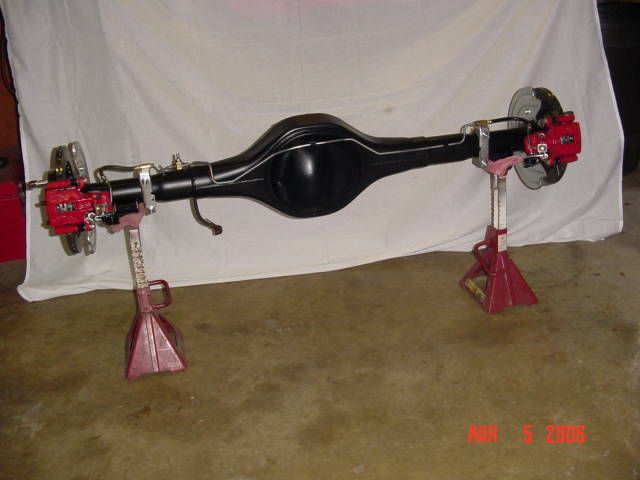
I designed the adapter brackets that put these Lincoln Mk VII rear discs on the 9-inch rear end housing of this '65 Mustang that was used as the 'test mule' for devoloping this setup.
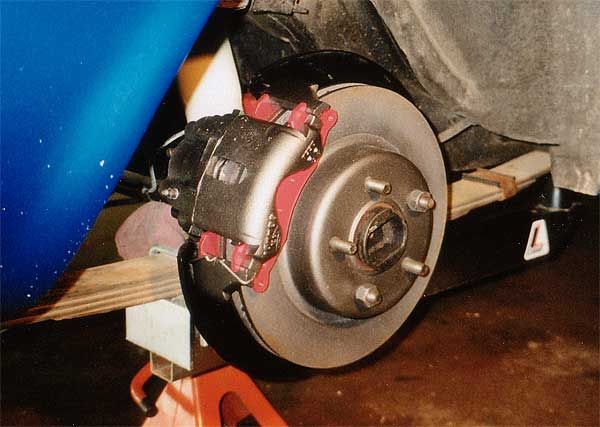
A testimonial by a guy in Texas who bought a set of these Mk VII rear disc adapter brackets from me (I was "ultrastang", in that case).
LINK: Disc Brakes
Another rear disc brake adapter bracket setup I designed, to put '94-'04 SN95 Mustang V6/GT 10.5" solid rotor rear discs on an early Mustang. (1965 fastback).
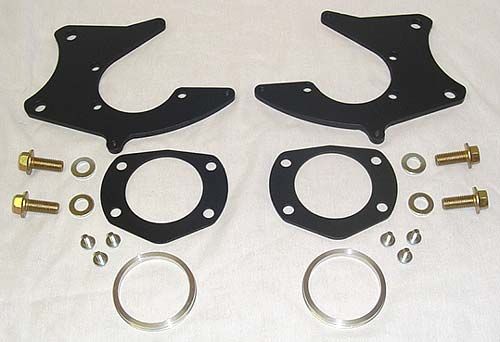
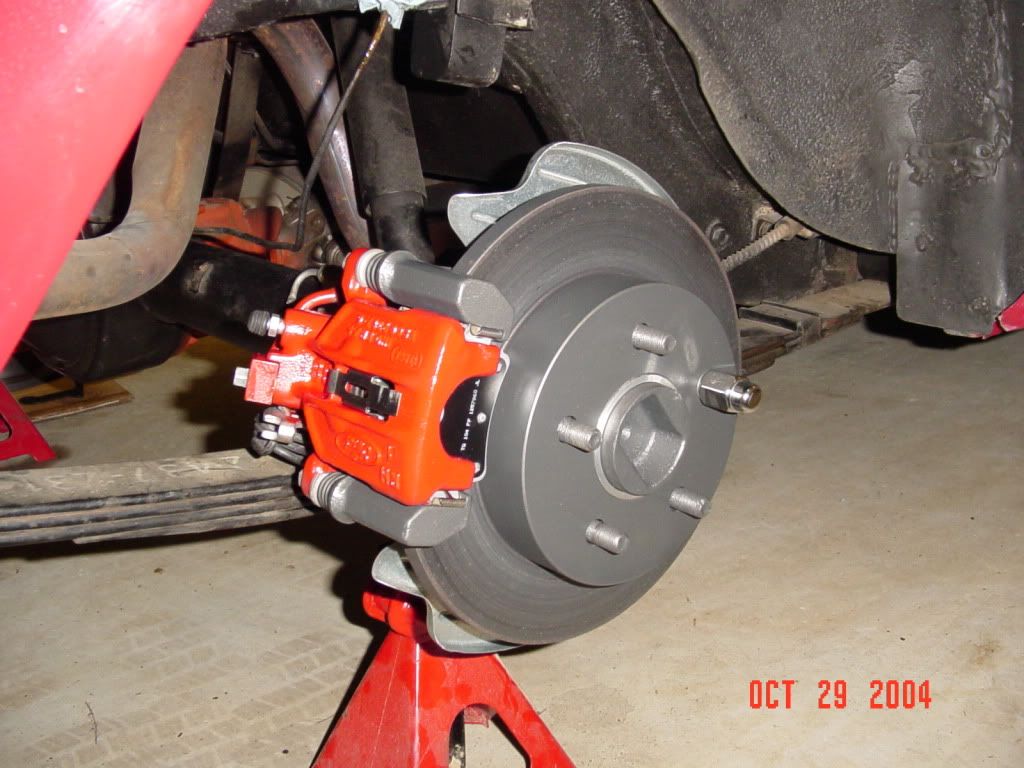
I developed another adapter bracket setup to put the 11.65" ventilated rear rotors from a '94-'04 Cobra Mustang onto a Ford 8-inch or small bearing 9-inch rear end housing.
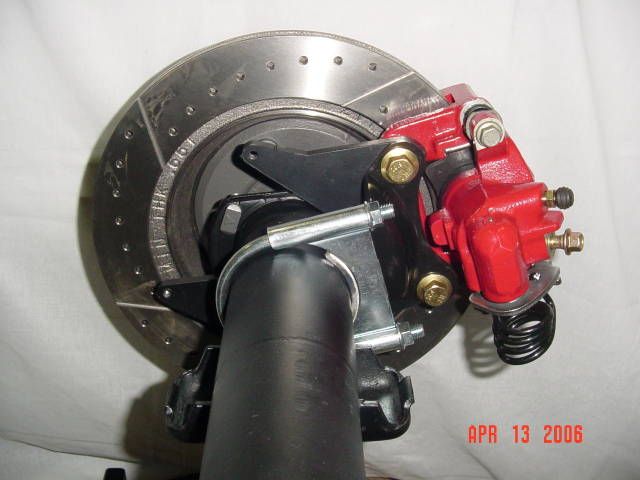
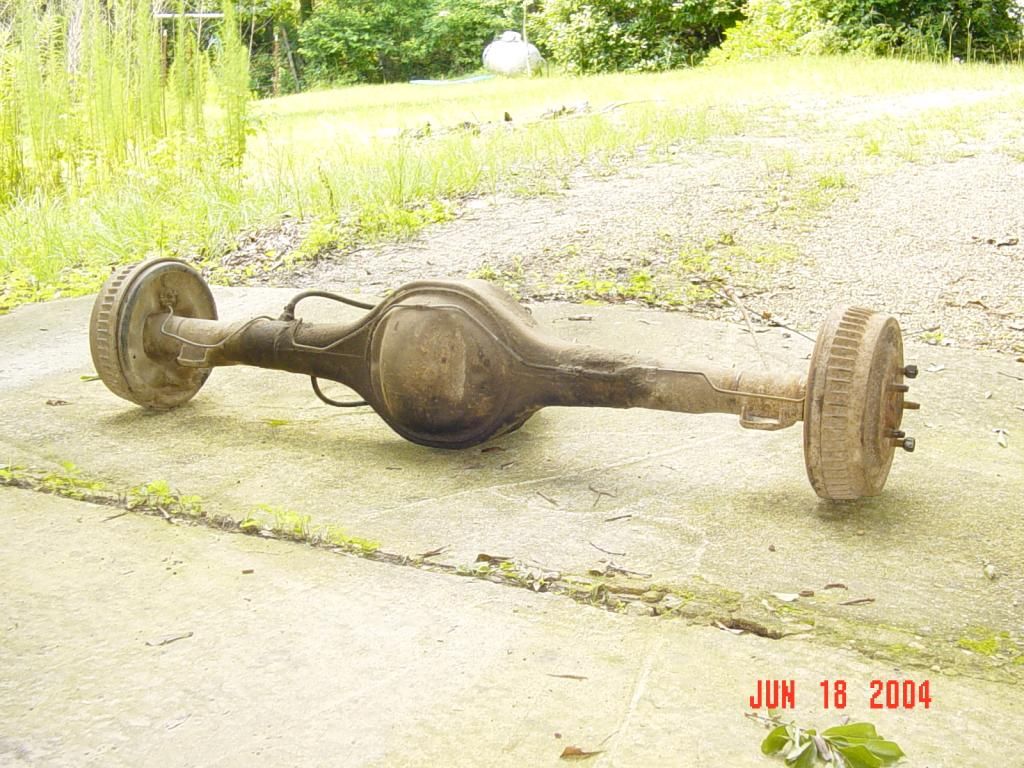
'80 model Mercury Monarch drum brake 9-inch rear end before adapting the Cobra rear discs onto it.
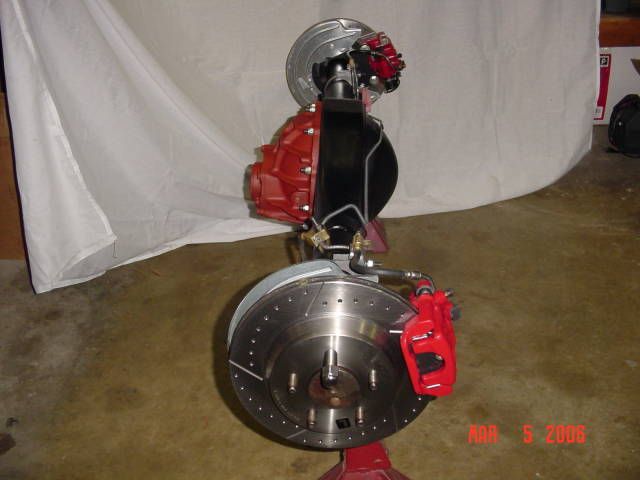
After.
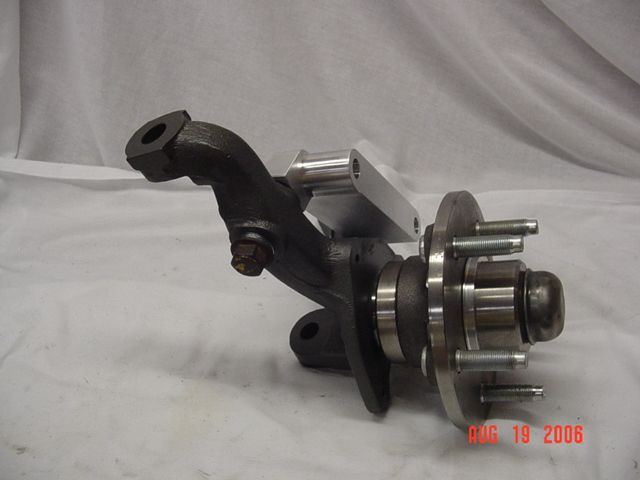
6061-T6 billet aluminum bracket I designed to mount a '94-'04 13" Cobra Mustang front disc brake rotor and aluminum twin piston PBR front caliper onto the '75-'80 Granada front spindles on my '68 Mustang.
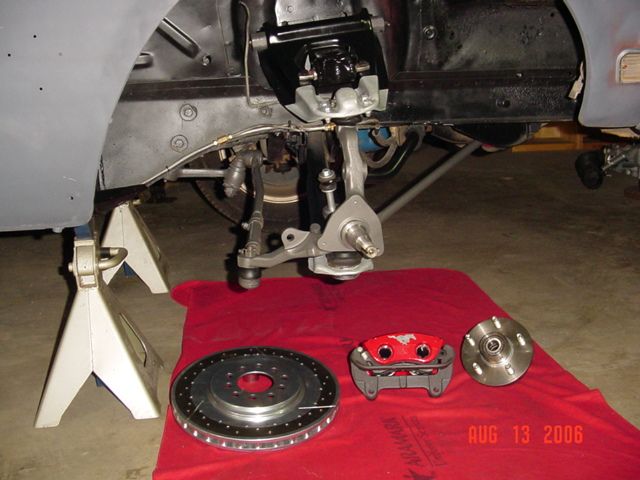
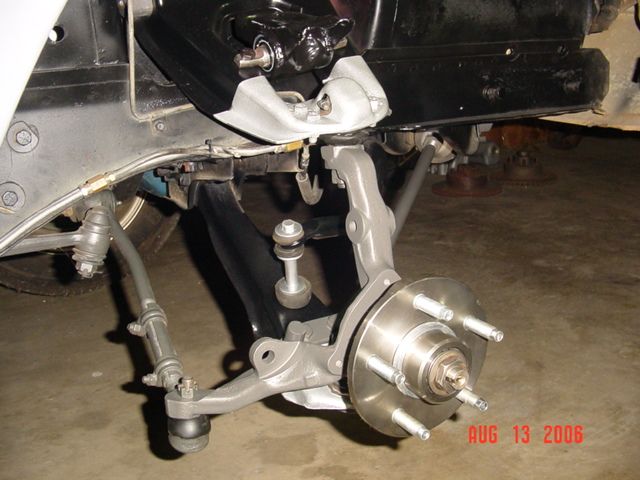
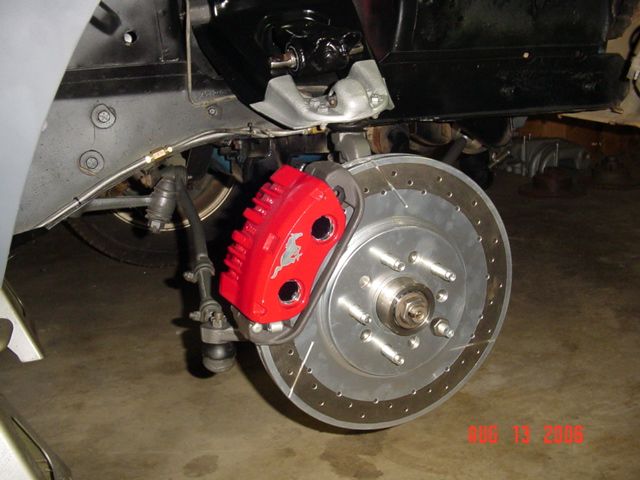
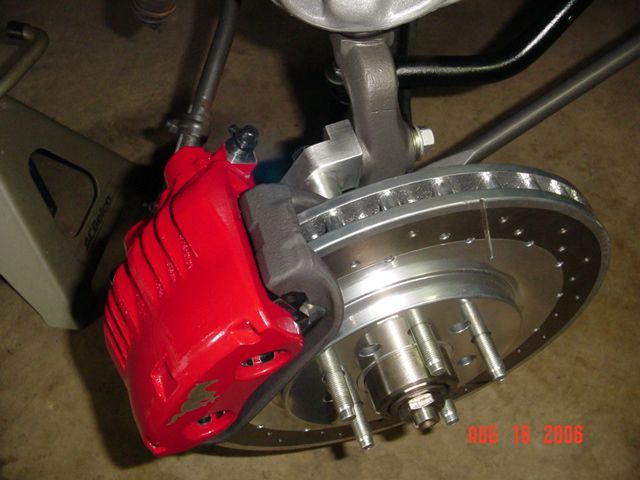
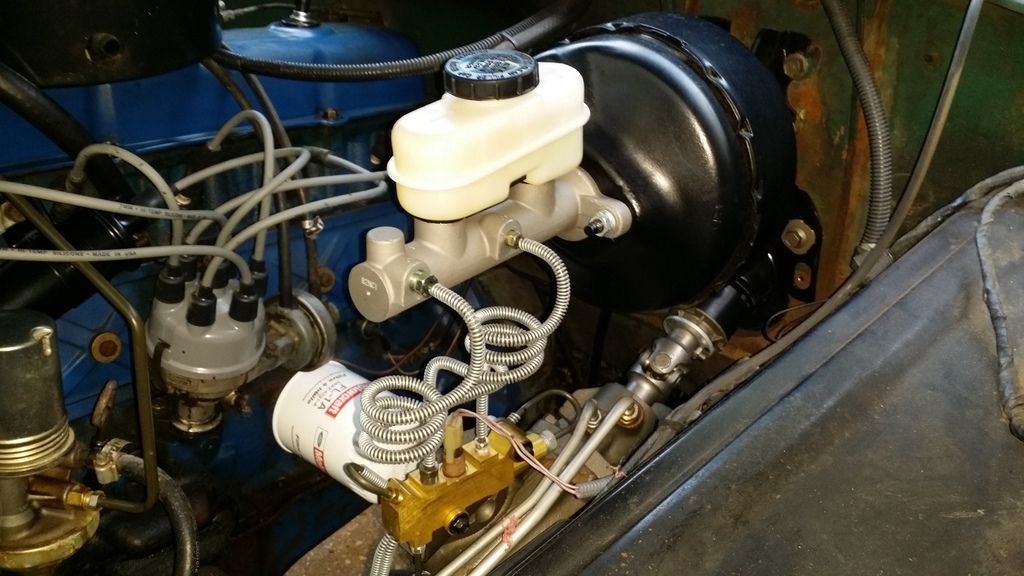
Some of the different MCs and/or boosters I've installed.
'65 Mustang, '89 2.3L Fox Mustang brake booster, '99 Mustang V6 MC.
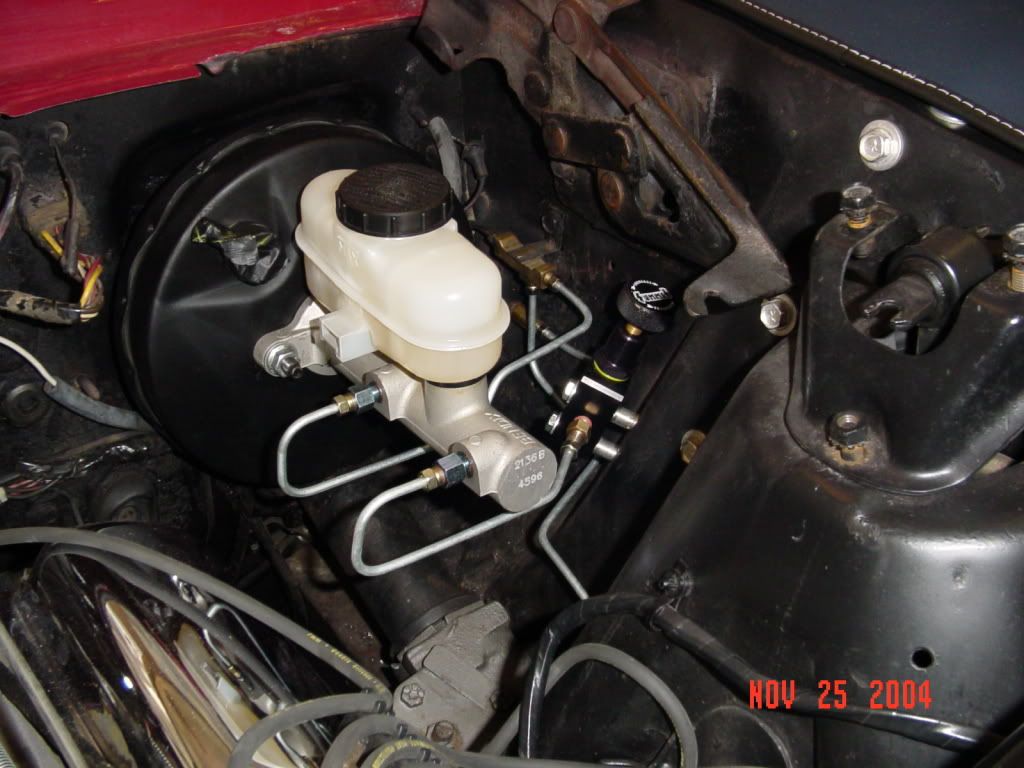
'65 Mustang, 2.3L Mustang brake booster, '95 Ford Explorer MC.
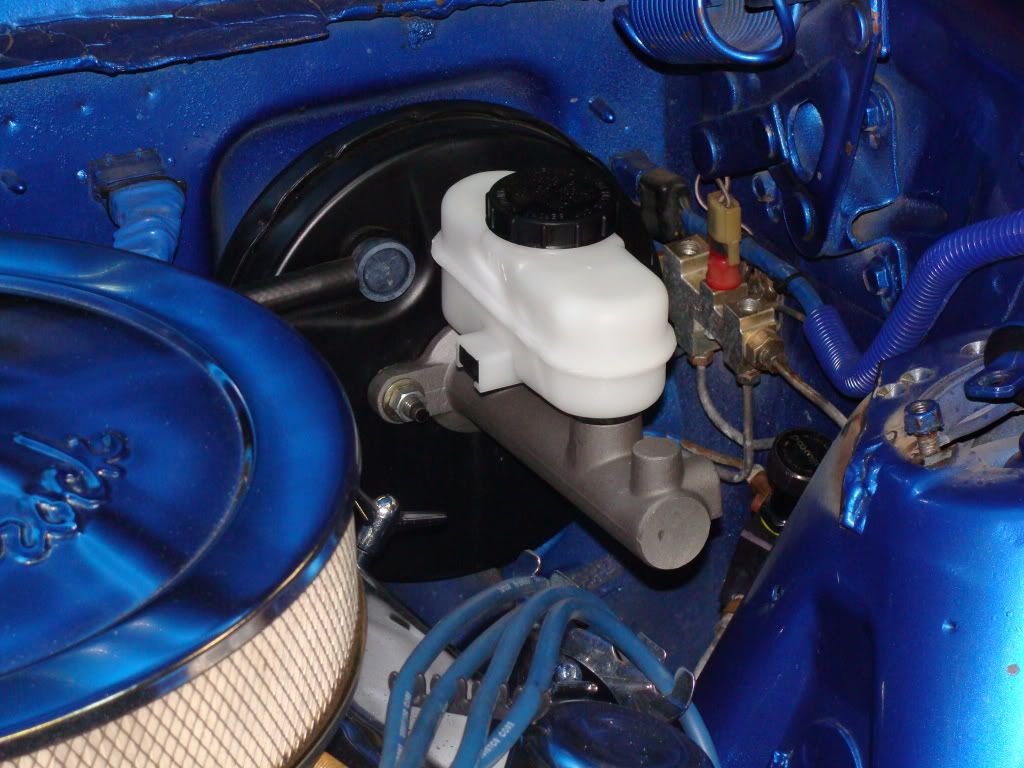
'65 Mustang, '90 5.0L Mustang GT dual diaphragm booster, Explorer MC.
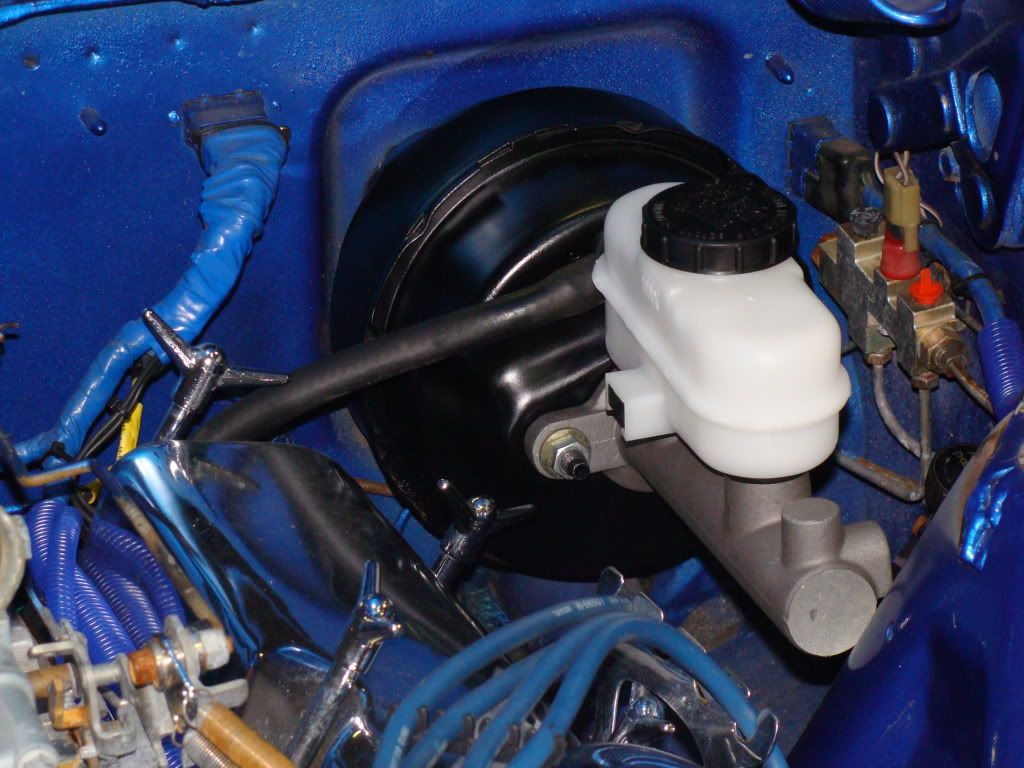
'75 F350 dual diaphragm brake booster, 1.00" bore MC, '69 F100.
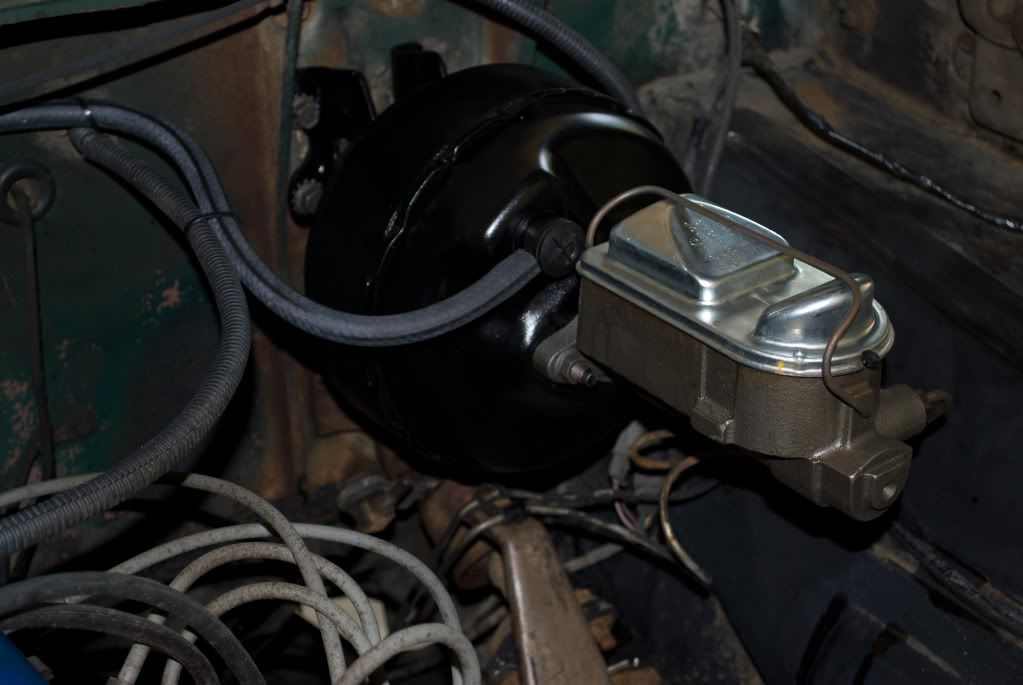
'65 F100 converted from single reservoir MC to a dual reservoir.

'65 Mustang, 2.3L Mustang booster, '96 Ford Windstar MC.
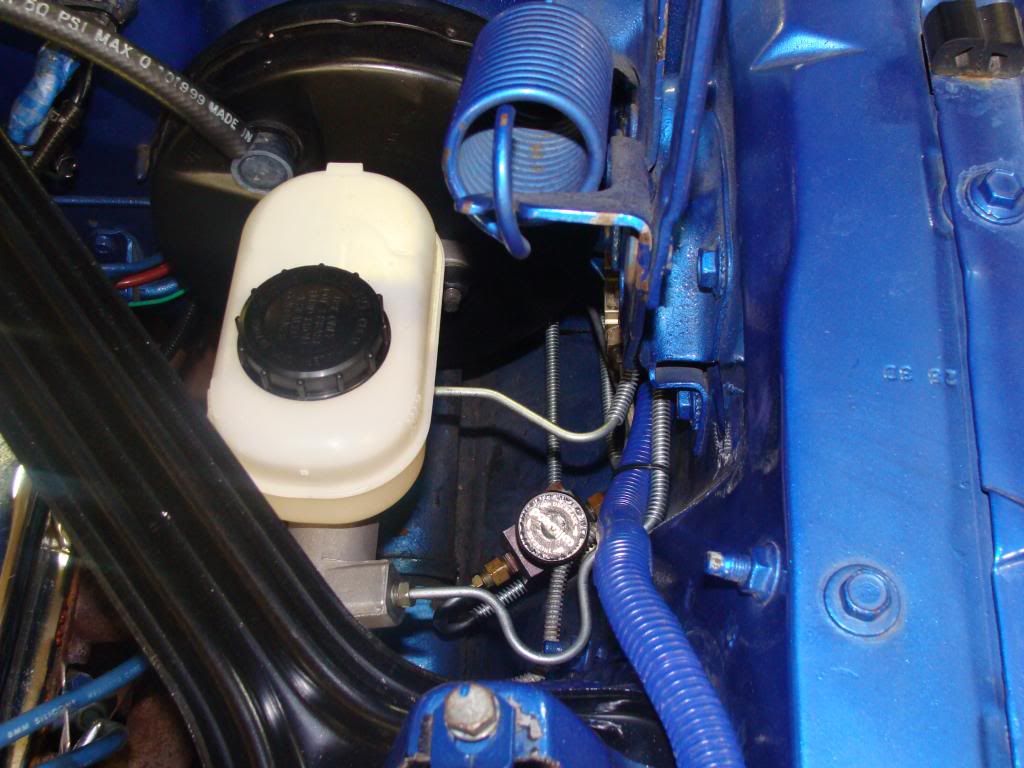
'68 Mustang, 5.0L Mustang dual diaphragm booster, Explorer MC.

1996 SN95 Mustang GT hydroboost unit.

...fitted up in a '68 Mustang.
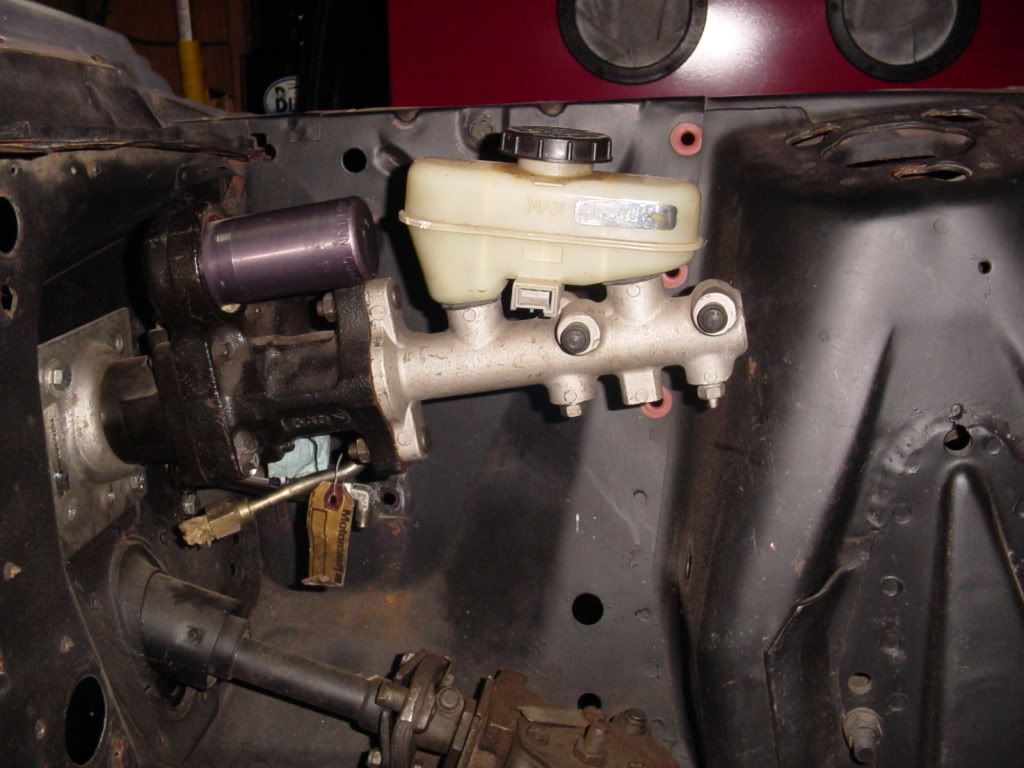
'69 F100 Ranger (my truck), '75 F350 dual diaphragm booster, '95 Explorer MC, '84 F150 disc/drum brake valve.
....and the list still goes on from there.
To determine pedal ratio, you would measure the overall distance between the foot pad to the fulcrum and then divide that by total distance between the pedal fulcrum to the pedal pin (where the input rod to the booster attaches)
Correctly Calculating Brake Pedal Ratio | Master Power Brakes
The smaller the MC bore diameter, the greater the output pressure you will have, for the same given amount of applied force on the brake pedal.
If the pedal ratio (as explained above and in the link) doesn't change and you have too small a bore diameter on the MC, the brakes will REALLY be overly sensitive to the application of the brake pedal.
I'm only trying to offer you some advise in the interest of helping you to avoid a destiny towards disappointment and unpleasant results.
I'm not the foremost authority on brakes but, I do have a LOT of experience with Ford brake systems .... their maintenance, installation, conversion, modification and adaptation.
I designed the adapter brackets that put these Lincoln Mk VII rear discs on the 9-inch rear end housing of this '65 Mustang that was used as the 'test mule' for devoloping this setup.

A testimonial by a guy in Texas who bought a set of these Mk VII rear disc adapter brackets from me (I was "ultrastang", in that case).
LINK: Disc Brakes
Another rear disc brake adapter bracket setup I designed, to put '94-'04 SN95 Mustang V6/GT 10.5" solid rotor rear discs on an early Mustang. (1965 fastback).


I developed another adapter bracket setup to put the 11.65" ventilated rear rotors from a '94-'04 Cobra Mustang onto a Ford 8-inch or small bearing 9-inch rear end housing.

'80 model Mercury Monarch drum brake 9-inch rear end before adapting the Cobra rear discs onto it.

After.


6061-T6 billet aluminum bracket I designed to mount a '94-'04 13" Cobra Mustang front disc brake rotor and aluminum twin piston PBR front caliper onto the '75-'80 Granada front spindles on my '68 Mustang.


Some of the different MCs and/or boosters I've installed.
'65 Mustang, '89 2.3L Fox Mustang brake booster, '99 Mustang V6 MC.

'65 Mustang, 2.3L Mustang brake booster, '95 Ford Explorer MC.

'65 Mustang, '90 5.0L Mustang GT dual diaphragm booster, Explorer MC.

'75 F350 dual diaphragm brake booster, 1.00" bore MC, '69 F100.

'65 F100 converted from single reservoir MC to a dual reservoir.

'65 Mustang, 2.3L Mustang booster, '96 Ford Windstar MC.

'68 Mustang, 5.0L Mustang dual diaphragm booster, Explorer MC.

1996 SN95 Mustang GT hydroboost unit.

...fitted up in a '68 Mustang.

'69 F100 Ranger (my truck), '75 F350 dual diaphragm booster, '95 Explorer MC, '84 F150 disc/drum brake valve.

....and the list still goes on from there.
FTE Stories
Ford Trucks for Ford Truck Enthusiasts

Top 10 Fords at 2026 Carlisle Ford Nationals
Joe Kucinski
3 Best / 3 Worst Parts of Modern Ford Ownership
Brett Foote
10 Amazing Upgrades That Solve Common Ford Truck Owner Headaches
Pouria Savadkouei
Every 2026 Ford Engine Explained
Brett Foote
10 Ugly Ford Trucks That We Still Kinda Love
Joe Kucinski
10 Things Every Truck Owner NEEDS (2026 Edition)
Michael S. Palmer
Rezvani's Latest Post-Apocalyptic Monster Is a Ford F-150 Raptor Underneath
Verdad Gallardo
Top 10 Most Expensive Ford Trucks Ever Sold on Bring a Trailer
Joe Kucinski
2027 Ford Super Duty Buyer's Guide (Every Model, Engine, & Package)
Brett Foote
Thread Starter
|
Cargo Master
Joined: Jul 2003
Posts: 2,738
Likes: 20
From: Four Oaks, NC
A couple of hours scrubbing, cleaning, degreasing, and then painting to make it look nice & pretty (because as any high school kid will tell you, "looks matter") 
<a href="http://s1020.photobucket.com/user/crazycracker289/media/F-100/69%20F100%20Brake%20Upgrade/IMG_0293_zpso6iwzjse.jpg.html" target="_blank"><img src="http://i1020.photobucket.com/albums/af330/crazycracker289/F-100/69%20F100%20Brake%20Upgrade/IMG_0293_zpso6iwzjse.jpg" border="0" alt="Cleaned and repainted hydrobooster photo IMG_0293_zpso6iwzjse.jpg"/></a>
<a href="http://s1020.photobucket.com/user/crazycracker289/media/F-100/69%20F100%20Brake%20Upgrade/IMG_0293_zpso6iwzjse.jpg.html" target="_blank"><img src="http://i1020.photobucket.com/albums/af330/crazycracker289/F-100/69%20F100%20Brake%20Upgrade/IMG_0293_zpso6iwzjse.jpg" border="0" alt="Cleaned and repainted hydrobooster photo IMG_0293_zpso6iwzjse.jpg"/></a>
Thread Starter
|
Cargo Master
Joined: Jul 2003
Posts: 2,738
Likes: 20
From: Four Oaks, NC
True pedal ratio has to do with mechanical advantage (leverage) of the drivers input force onto the brake pedal and the resultant (multiplied) output force it will yield.
To determine pedal ratio, you would measure the overall distance between the foot pad to the fulcrum and then divide that by total distance between the pedal fulcrum to the pedal pin (where the input rod to the booster attaches)
Correctly Calculating Brake Pedal Ratio | Master Power Brakes
The smaller the MC bore diameter, the greater the output pressure you will have, for the same given amount of applied force on the brake pedal.
If the pedal ratio (as explained above and in the link) doesn't change and you have too small a bore diameter on the MC, the brakes will REALLY be overly sensitive to the application of the brake pedal.
I'm only trying to offer you some advise in the interest of helping you to avoid a destiny towards disappointment and unpleasant results.
I'm not the foremost authority on brakes but, I do have a LOT of experience with Ford brake systems .... their maintenance, installation, conversion, modification and adaptation.
I designed the adapter brackets that put these Lincoln Mk VII rear discs on the 9-inch rear end housing of this '65 Mustang that was used as the 'test mule' for devoloping this setup.
A testimonial by a guy in Texas who bought a set of these Mk VII rear disc adapter brackets from me (I was "ultrastang", in that case).
LINK: Disc Brakes
Another rear disc brake adapter bracket setup I designed, to put '94-'04 SN95 Mustang V6/GT 10.5" solid rotor rear discs on an early Mustang. (1965 fastback).
I developed another adapter bracket setup to put the 11.65" ventilated rear rotors from a '94-'04 Cobra Mustang onto a Ford 8-inch or small bearing 9-inch rear end housing.
'80 model Mercury Monarch drum brake 9-inch rear end before adapting the Cobra rear discs onto it.
After.
6061-T6 billet aluminum bracket I designed to mount a '94-'04 13" Cobra Mustang front disc brake rotor and aluminum twin piston PBR front caliper onto the '75-'80 Granada front spindles on my '68 Mustang.
Some of the different MCs and/or boosters I've installed.
'65 Mustang, '89 2.3L Fox Mustang brake booster, '99 Mustang V6 MC.
'65 Mustang, 2.3L Mustang brake booster, '95 Ford Explorer MC.
'65 Mustang, '90 5.0L Mustang GT dual diaphragm booster, Explorer MC.
'75 F350 dual diaphragm brake booster, 1.00" bore MC, '69 F100.
'65 F100 converted from single reservoir MC to a dual reservoir.
'65 Mustang, 2.3L Mustang booster, '96 Ford Windstar MC.
'68 Mustang, 5.0L Mustang dual diaphragm booster, Explorer MC.
1996 SN95 Mustang GT hydroboost unit.
...fitted up in a '68 Mustang.
'69 F100 Ranger (my truck), '75 F350 dual diaphragm booster, '95 Explorer MC, '84 F150 disc/drum brake valve.
....and the list still goes on from there.
To determine pedal ratio, you would measure the overall distance between the foot pad to the fulcrum and then divide that by total distance between the pedal fulcrum to the pedal pin (where the input rod to the booster attaches)
Correctly Calculating Brake Pedal Ratio | Master Power Brakes
The smaller the MC bore diameter, the greater the output pressure you will have, for the same given amount of applied force on the brake pedal.
If the pedal ratio (as explained above and in the link) doesn't change and you have too small a bore diameter on the MC, the brakes will REALLY be overly sensitive to the application of the brake pedal.
I'm only trying to offer you some advise in the interest of helping you to avoid a destiny towards disappointment and unpleasant results.
I'm not the foremost authority on brakes but, I do have a LOT of experience with Ford brake systems .... their maintenance, installation, conversion, modification and adaptation.
I designed the adapter brackets that put these Lincoln Mk VII rear discs on the 9-inch rear end housing of this '65 Mustang that was used as the 'test mule' for devoloping this setup.
A testimonial by a guy in Texas who bought a set of these Mk VII rear disc adapter brackets from me (I was "ultrastang", in that case).
LINK: Disc Brakes
Another rear disc brake adapter bracket setup I designed, to put '94-'04 SN95 Mustang V6/GT 10.5" solid rotor rear discs on an early Mustang. (1965 fastback).
I developed another adapter bracket setup to put the 11.65" ventilated rear rotors from a '94-'04 Cobra Mustang onto a Ford 8-inch or small bearing 9-inch rear end housing.
'80 model Mercury Monarch drum brake 9-inch rear end before adapting the Cobra rear discs onto it.
After.
6061-T6 billet aluminum bracket I designed to mount a '94-'04 13" Cobra Mustang front disc brake rotor and aluminum twin piston PBR front caliper onto the '75-'80 Granada front spindles on my '68 Mustang.
Some of the different MCs and/or boosters I've installed.
'65 Mustang, '89 2.3L Fox Mustang brake booster, '99 Mustang V6 MC.
'65 Mustang, 2.3L Mustang brake booster, '95 Ford Explorer MC.
'65 Mustang, '90 5.0L Mustang GT dual diaphragm booster, Explorer MC.
'75 F350 dual diaphragm brake booster, 1.00" bore MC, '69 F100.
'65 F100 converted from single reservoir MC to a dual reservoir.
'65 Mustang, 2.3L Mustang booster, '96 Ford Windstar MC.
'68 Mustang, 5.0L Mustang dual diaphragm booster, Explorer MC.
1996 SN95 Mustang GT hydroboost unit.
...fitted up in a '68 Mustang.
'69 F100 Ranger (my truck), '75 F350 dual diaphragm booster, '95 Explorer MC, '84 F150 disc/drum brake valve.
....and the list still goes on from there.
I don't know the exact pedal ratio of my truck and I don't really need to know it because I don't plan to change it, I use 6:1 as my guestimate because that is a very common ratio used and all I needed it for was to make a rough estimate of how much farther to move my booster out. We'll see tomorrow whether or not the pedal sits about right for what I want, I've lost my daylight for today and I am pretty much worn out now after fighting that hydro unit into place.
I would like your opinion on m/c for this truck, I have decided to go with a 1-1/8 bore unit. That's about 25% more fluid with the same amount of pedal push, but with the hyrdobooster my pedal effort will probably still be considerably less. Do you think that's a good choice?
Lead Driver
Joined: Apr 2011
Posts: 6,399
Likes: 40
From: El Dorado, Arkansas
Those brackets look good, nice quality setups. If you are a member of "allfordmustangs.com" I hang out there too, in the Class Tech section (same name).
I don't know the exact pedal ratio of my truck and I don't really need to know it because I don't plan to change it, I use 6:1 as my guestimate because that is a very common ratio used and all I needed it for was to make a rough estimate of how much farther to move my booster out. We'll see tomorrow whether or not the pedal sits about right for what I want, I've lost my daylight for today and I am pretty much worn out now after fighting that hydro unit into place.
I would like your opinion on m/c for this truck, I have decided to go with a 1-1/8 bore unit. That's about 25% more fluid with the same amount of pedal push, but with the hyrdobooster my pedal effort will probably still be considerably less. Do you think that's a good choice?
I don't know the exact pedal ratio of my truck and I don't really need to know it because I don't plan to change it, I use 6:1 as my guestimate because that is a very common ratio used and all I needed it for was to make a rough estimate of how much farther to move my booster out. We'll see tomorrow whether or not the pedal sits about right for what I want, I've lost my daylight for today and I am pretty much worn out now after fighting that hydro unit into place.
I would like your opinion on m/c for this truck, I have decided to go with a 1-1/8 bore unit. That's about 25% more fluid with the same amount of pedal push, but with the hyrdobooster my pedal effort will probably still be considerably less. Do you think that's a good choice?
If the pedal ratio of the setup being adapted isn't being reduced more inline with what a boosted system's pedal ratio would be (closer to the 4:1 ratio), the only other way to offset the potential sensitivity of the brakes is to go bigger with the bore diameter of the MC.
I'm very certain you don't want to be at 1.00" or lower on the MC bore. Minimum starting point would be at 1-1/6" to 1-1/8" but, you may have to go greater than this.
The smaller the MC bore, the more output pressure the MC will produce. The trade-off is a longer pedal travel and the pedal may not feel as firm.
The bigger the MC bore, the less forward travel the brake pedal will have. It will move a greater volume of fluid for a given brake pedal application but, it will have a lower output pressure.
Too large of a diameter on the MC bore size and the pedal will be very stiff and hard to depress and, it may make it very difficult to get the truck to stop within a reasonable distance.
I haven't used the style of hydroboost you have so, I don't have an actual point of reference or experience to go by in precisely what's needed.
There's just certain laws of physics and hydraulics that apply to any brake system. Finding out what the specific combination of parts is going to be is just going to be an area of experimenting and sorting out what the happy medium will be, to make it work to your satisfaction.
To start, I would say to use a MC in the 1-1/8" to 1-1/4" range. You will know from that point if the brakes are too sensitive that you'll have to go up in bore diameter on the MC. If the brakes are hard to apply, you'll have to go down in bore size.
Good luck with your conversion.

Thread Starter
|
Cargo Master
Joined: Jul 2003
Posts: 2,738
Likes: 20
From: Four Oaks, NC
This is what I will be using to mount the hydroboost unit to the firewall. The heavy duty spacers are 7/8 diameter with 3/8 hole and 1-3/4 tall. I know we figured mathematically earlier that 1-1/2 inches would put it just about exactly where the original pushrod was, but I got to thinking that the pedal has always been a little high for my taste, so by spacing the booster out an additional 1/4 inch I should lower the pedal by 1-1/2 inches (assuming 6:1 pedal ratio). These spacers are made of stainless steel so they will look good bare without ever seeing a spot of rust. The bolts are grade 8 galvanized flange head bolts, 2-1/2 inches long. You can also see a short piece of 2-1/8 exhaust pipe, I trimmed this down to 1-3/4 inches to match the height of the stainless spacers, and will put this in the center to protect the pushrod linkage and cover the firewall hole.
<a href="http://s1020.photobucket.com/user/crazycracker289/media/F-100/69%20F100%20Brake%20Upgrade/IMG_02911_zps1cptbrm1.jpg.html" target="_blank"><img src="http://i1020.photobucket.com/albums/af330/crazycracker289/F-100/69%20F100%20Brake%20Upgrade/IMG_02911_zps1cptbrm1.jpg" border="0" alt="Hydroboost Mounting photo IMG_02911_zps1cptbrm1.jpg"/></a>
<a href="http://s1020.photobucket.com/user/crazycracker289/media/F-100/69%20F100%20Brake%20Upgrade/IMG_02911_zps1cptbrm1.jpg.html" target="_blank"><img src="http://i1020.photobucket.com/albums/af330/crazycracker289/F-100/69%20F100%20Brake%20Upgrade/IMG_02911_zps1cptbrm1.jpg" border="0" alt="Hydroboost Mounting photo IMG_02911_zps1cptbrm1.jpg"/></a>
Lead Driver
Joined: Apr 2011
Posts: 6,399
Likes: 40
From: El Dorado, Arkansas

Once all the obstacles are gotten over though, the effort is usually worth it in the end.
Cargo Master
Joined: Feb 2003
Posts: 2,341
Likes: 5
From: Sacramento
I think it would be easier to cut the spacers down 1/8" at a time. Widdle em down til you get the desired pedal.