


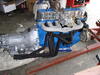
engine goin in finally!!
Lead Driver


Joined: Mar 2008
Posts: 7,182
Likes: 380
From: Near Los Angeles
This is nothing to be alarmed about. I am simply shocked at the price difference between the Isky valve springs and the Comp springs: $48 as opposed to $138. Yes, I know the Isky springs are double springs.
I'm also surprised that the Comp springs give only 80 psi at the seat, and the Isky, using only the outside spring supplies 120 psi. The Isky 256 or the 262 are not radical cams. Why does Isky sell such a strong spring?
Note: 24 Isky steel keepers cost almost as much as the Comp v.springs. I wondered why the checkout girl was wearing a mask, and it wasn't Halloween.
I'm also surprised that the Comp springs give only 80 psi at the seat, and the Isky, using only the outside spring supplies 120 psi. The Isky 256 or the 262 are not radical cams. Why does Isky sell such a strong spring?
Note: 24 Isky steel keepers cost almost as much as the Comp v.springs. I wondered why the checkout girl was wearing a mask, and it wasn't Halloween.
Thread Starter
|
Laughing Gas

Joined: Aug 2011
Posts: 1,116
Likes: 0
Well..and is the isky springs your talking about supposed to go with the Mil-A-Mor?
I ask because I was reading on some other posts about how the amount of time the valves are open affect the kind of power.If they open longer with higher lift, then the more horse power you have..but the faster they close then then more torque and bottom end youll have.
Maybe theyre so strong to facilitate the closing of the valve faster to make more bottom end and conserve fuel, hence the Mil a mor?
I ask because I was reading on some other posts about how the amount of time the valves are open affect the kind of power.If they open longer with higher lift, then the more horse power you have..but the faster they close then then more torque and bottom end youll have.
Maybe theyre so strong to facilitate the closing of the valve faster to make more bottom end and conserve fuel, hence the Mil a mor?
Thread Starter
|
Laughing Gas
Joined: Aug 2011
Posts: 1,116
Likes: 0
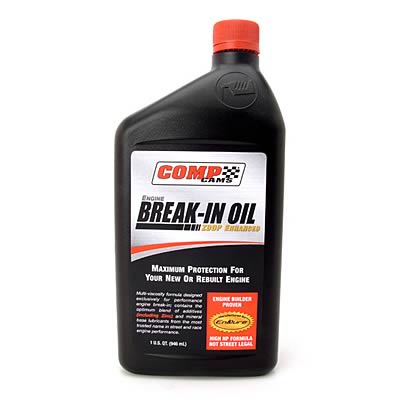
Also..I watched that vid from comp about the flat tappet break in. It seems like comp likes to say to use acual BREAK IN OIL in the break in. I know some guys just use oil and add a break in additive. Any thoughts?

Postmaster
Joined: Mar 2005
Posts: 2,949
Likes: 6
From: Earth
I think all three Isky grinds for the 300 recommend the same springs.
The springs don't affect how quickly the valve closes, that's a function of the cam lobe. Other than the obvious keeping the valve closed, the springs ensure the lifter stays on the cam. Lifters bouncing up and down on the cam rather than sliding along the lobe surface would be a bad thing. When you hear the term valve float or floating the valves at high rpm it's a symptom of weak valve springs.
Break in oil is just oil with the break in additive already mixed in. As long as you use a quality oil to begin with then using a bottle of break in additive should be fine.
The springs don't affect how quickly the valve closes, that's a function of the cam lobe. Other than the obvious keeping the valve closed, the springs ensure the lifter stays on the cam. Lifters bouncing up and down on the cam rather than sliding along the lobe surface would be a bad thing. When you hear the term valve float or floating the valves at high rpm it's a symptom of weak valve springs.
Break in oil is just oil with the break in additive already mixed in. As long as you use a quality oil to begin with then using a bottle of break in additive should be fine.

Fleet Mechanic
Joined: Aug 2009
Posts: 1,771
Likes: 9
From: Western Washington
A good 30wt break in oil should fit the bill, it is a bit more expensive, but it's worth it.

Just my $0.02
Sam
FTE Stories
Ford Trucks for Ford Truck Enthusiasts

Rezvani's Latest Post-Apocalytic Monster Is a Ford F-150 Raptor Underneath
Verdad Gallardo
Top 10 Most Expensive Ford Trucks Ever Sold on Bring a Trailer
Joe Kucinski
2027 Ford Super Duty Buyer's Guide (Every Model, Engine, & Package)
Brett Foote
Top 10 Ford Truck Tragedies
Joe Kucinski
AEV FXL Super Duty - the Super Duty Raptor Ford Doesn't Make
Brett Foote
Lobo Vs Lobo: Proof the F-150 Lobo Should Be Even Lower!
Michael S. Palmer
Ford's 2001 Explorer Sportsman Concept Looks For a New Home
Verdad Gallardo
10 Best Ford Truck Engines We Miss the Most!
Joe Kucinski
2026 Shelby F-150 Off-Road: Better Than a Raptor R?
Brett Foote
Lead Driver
Joined: Mar 2008
Posts: 7,182
Likes: 380
From: Near Los Angeles
Oh yeah! There has been peace for quite a while on the oil front. Great, let the oil wars break out once again.
I would add that napa sells the Valvoline racing oil with all the additives needed. Good luck.k
I would add that napa sells the Valvoline racing oil with all the additives needed. Good luck.k

Postmaster
Joined: Mar 2005
Posts: 2,949
Likes: 6
From: Earth
I would beg to differ, here's what my machinist told me: While a break in additive is better than nothing, a full break in oil is best. If an additive is just thrown in it doesn't mix with the oil as well on a molecular level, and the oil and additive "fight" for space on the cam lobe. A proper break in oil is mixed and doesn't have that issue.
A good 30wt break in oil should fit the bill, it is a bit more expensive, but it's worth it.
Just my $0.02
Sam
A good 30wt break in oil should fit the bill, it is a bit more expensive, but it's worth it.
Just my $0.02
Sam
Oil and the break-in additive will get thoroughly mixed together and dispersed if a drill is used to prime the oil pump and oiling system for 20-30 minutes prior to start up. Since that should be standard operating procedure for a new engine anyway paying double the price for pre-mixed oil is a waste. But it's not my money, so spend away.
Thread Starter
|
Laughing Gas
Joined: Aug 2011
Posts: 1,116
Likes: 0
Sorry to start the war again haha
I've heard about priming the engine..but how do i do that? I believe f250 said sometihng about popping the distributor out and using a drill to spin something?
I've heard about priming the engine..but how do i do that? I believe f250 said sometihng about popping the distributor out and using a drill to spin something?
Postmaster
Joined: Mar 2005
Posts: 2,949
Likes: 6
From: Earth
The oil pump is driven by the distributor - if you've ever removed a distributor from a Ford you've probably had to jiggle it around when you reinstalled to seat it on the oil pump drive shaft. There's a tool (kind of like a socket extension) that allows you to use a drill to turn the pump drive shaft to pressure up the oil system and prime the engine before start-up.
Set the engine to TDC on #1, mark the distributor, then prime prime prime for 20-30 minutes. Then quickly install the distributor and fire the engine. You want to allow as little oil as possible to drain back to the crankcase before starting and breaking in the engine after priming the oil system.
Set the engine to TDC on #1, mark the distributor, then prime prime prime for 20-30 minutes. Then quickly install the distributor and fire the engine. You want to allow as little oil as possible to drain back to the crankcase before starting and breaking in the engine after priming the oil system.

Tuned
Joined: Sep 2012
Posts: 367
Likes: 2
From: summerfield florida
F250 is right, with motor completely assembled, pull distributor and using oil pump drive shaft (an old one will do) spin the oil pump in a clockwise direction. You will have to make some sort of an extension so it will be long enough to reach the oil pump. As pressure rises, slowly rotate the crankshaft so that oil is distributed evenly thru the engine. You will be "good to go" when oil is pumped thru each push rod and every rocker arm is lubed. I like to dump a quart of oil on top of the valves, making sure each valve and pushrod is lubed well. Don't forget to lube the rocker arms, and the valve tips. If oil pressure does not rise, something is wrong. Do not start. Find out why. Good luck. ...jack

Thread
Thread Starter
Forum
Replies
Last Post
Otto396
1999 - 2003 7.3L Power Stroke Diesel
15
Nov 4, 2015 06:52 PM
Gigemags05
1980 - 1986 Bullnose F100, F150 & Larger F-Series Trucks
7
May 14, 2015 03:35 PM