


Basic Air Conditioning Question
Thread Starter
|
Logistics Pro


Joined: Apr 2004
Posts: 4,292
Likes: 5
From: NJ where fun comes to die

Basic Air Conditioning Question
This is as basic as it can be. What makes the freon cold? When I pick it up in cans it is room temperature. Does it need to be moving through a system? Or does it need to be under pressure? I think it is under pressure in the can it comes in or it wouldn't come out. Does it need a compressor? Does it need a fan to blow warm air over it?

Hotshot
Joined: Jan 2010
Posts: 10,060
Likes: 491
From: Bristol, TN.
This is as basic as it can be. What makes the freon cold? When I pick it up in cans it is room temperature. Does it need to be moving through a system? Or does it need to be under pressure? I think it is under pressure in the can it comes in or it wouldn't come out. Does it need a compressor? Does it need a fan to blow warm air over it?
The refrigerant enters the evaporator coil where the pressure is quickly reduced through an expansion valve and the refrigerant changes to a gas (boils) and absorbs the heat from the air passing over the evaporator coil from inside the vehicle. Think of it like allowing something to absorb heat and boil, at an extremely low temperature. When something changes from a liquid to a gas, it absorbs heat just like water absorbs heat when it boils. We usually think of it happening at high temperatures, but some substances boil at very low temperatures as is the case with the refrigerant in air conditioners.
There are ways to accomplish cooling without a compressor, but they are usually much less efficient.
Clear as mud, right?

Steve
.
Frmr Ford Trans Engr


Joined: Aug 1999
Posts: 24,725
Likes: 2,651
From: SE Florida
Thread Starter
|
Logistics Pro
Joined: Apr 2004
Posts: 4,292
Likes: 5
From: NJ where fun comes to die
Thank you for the replies.
So just putting freon in a sealed system won't do anything to make it cooler? For it to work it has to go through the system and changes and then go back and start over.
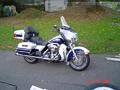
Is there anything that is at least cool on it's own and stays that way except maybe dry ice? My problem is I am trying to find a way to cool the oil in my motorcycle. It is air cooled, but stuck in traffic it gets so hot you want to get off. I feel like my legs are on fire. I have an oil cooler but oil coolers only work if you are moving. It gets so bad I have considered putting a side car on so I can have a generator to run a small air conditioner pointing towards my engine.
So just putting freon in a sealed system won't do anything to make it cooler? For it to work it has to go through the system and changes and then go back and start over.
Is there anything that is at least cool on it's own and stays that way except maybe dry ice? My problem is I am trying to find a way to cool the oil in my motorcycle. It is air cooled, but stuck in traffic it gets so hot you want to get off. I feel like my legs are on fire. I have an oil cooler but oil coolers only work if you are moving. It gets so bad I have considered putting a side car on so I can have a generator to run a small air conditioner pointing towards my engine.
Hotshot
Joined: Jan 2010
Posts: 10,060
Likes: 491
From: Bristol, TN.
Thank you for the replies.
So just putting freon in a sealed system won't do anything to make it cooler? For it to work it has to go through the system and changes and then go back and start over.
Is there anything that is at least cool on it's own and stays that way except maybe dry ice? My problem is I am trying to find a way to cool the oil in my motorcycle. It is air cooled, but stuck in traffic it gets so hot you want to get off. I feel like my legs are on fire. I have an oil cooler but oil coolers only work if you are moving. It gets so bad I have considered putting a side car on so I can have a generator to run a small air conditioner pointing towards my engine.
So just putting freon in a sealed system won't do anything to make it cooler? For it to work it has to go through the system and changes and then go back and start over.
Is there anything that is at least cool on it's own and stays that way except maybe dry ice? My problem is I am trying to find a way to cool the oil in my motorcycle. It is air cooled, but stuck in traffic it gets so hot you want to get off. I feel like my legs are on fire. I have an oil cooler but oil coolers only work if you are moving. It gets so bad I have considered putting a side car on so I can have a generator to run a small air conditioner pointing towards my engine.
Steve

Postmaster
Joined: Dec 2008
Posts: 3,940
Likes: 8
From: Southern Oregon Coast
I can't tell, exactly, what kind of bike that is but, this gadget looks interesting:
Harley Oil Cooler - Ultracool - Oil Cooling Systems for V-Twins Motorcycles
Harley Oil Cooler - Ultracool - Oil Cooling Systems for V-Twins Motorcycles
Trending Topics
Frmr Ford Trans Engr
Joined: Aug 1999
Posts: 24,725
Likes: 2,651
From: SE Florida
If you can invent something that does what you're asking you will own the world. It's called perpetual motion. You want something (cooling) without putting anything in (energy.) The laws of physics, as they are currently understood, say this is impossible.
If you come up with a system that works, just make it larger and it could power an entire city, or even nation, without spending anything on fuel. Electricity would not cost anything to make.
FTE Stories
Ford Trucks for Ford Truck Enthusiasts

10 Things Every Truck Owner NEEDS (2026 Edition)
Michael S. Palmer
Rezvani's Latest Post-Apocalyptic Monster Is a Ford F-150 Raptor Underneath
Verdad Gallardo
Top 10 Most Expensive Ford Trucks Ever Sold on Bring a Trailer
Joe Kucinski
2027 Ford Super Duty Buyer's Guide (Every Model, Engine, & Package)
Brett Foote
Top 10 Ford Truck Tragedies
Joe Kucinski
AEV FXL Super Duty - the Super Duty Raptor Ford Doesn't Make
Brett Foote
Lobo Vs Lobo: Proof the F-150 Lobo Should Be Even Lower!
Michael S. Palmer
Ford's 2001 Explorer Sportsman Concept Looks For a New Home
Verdad Gallardo
10 Best Ford Truck Engines We Miss the Most!
Joe Kucinski
Thread Starter
|
Logistics Pro
Joined: Apr 2004
Posts: 4,292
Likes: 5
From: NJ where fun comes to die
I can't tell, exactly, what kind of bike that is but, this gadget looks interesting:
Harley Oil Cooler - Ultracool - Oil Cooling Systems for V-Twins Motorcycles
Harley Oil Cooler - Ultracool - Oil Cooling Systems for V-Twins Motorcycles

Posting Guru
Joined: May 2011
Posts: 2,156
Likes: 0
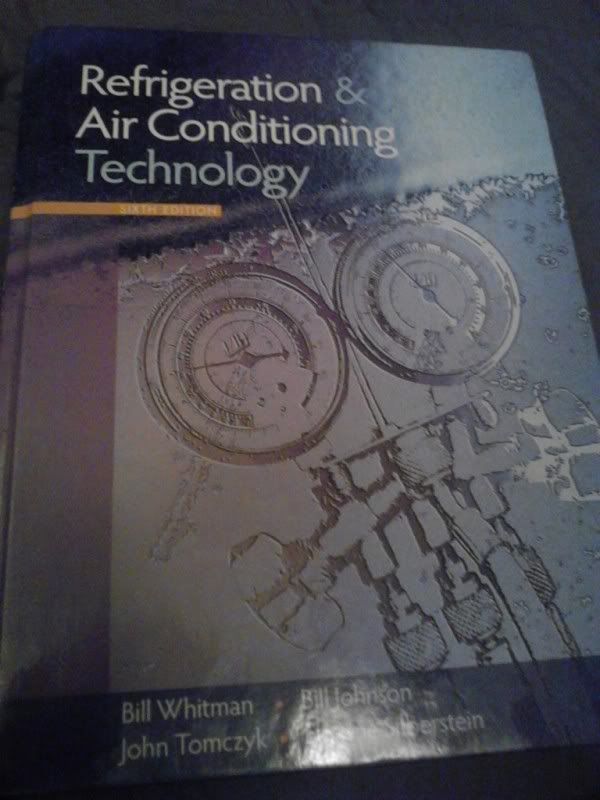
Get you one of these, from my hvac college classes. The Holy Bible of refrigeration.
Everything refrigerant is temperature/pressure related. Nothing will happen by freon simply sitting there. It has to be under a certain pressure and it it has to change state. This can not happen without a compressor, condenser, evaporator and air flow measured in cfm, cubic foot per minute.
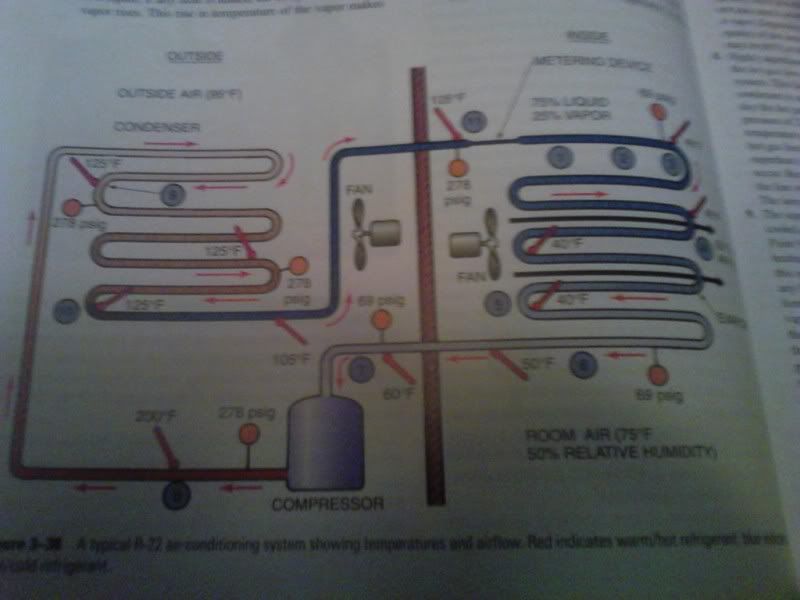
Everything refrigerant is temperature/pressure related. Nothing will happen by freon simply sitting there. It has to be under a certain pressure and it it has to change state. This can not happen without a compressor, condenser, evaporator and air flow measured in cfm, cubic foot per minute.
Posting Guru
Joined: May 2011
Posts: 2,156
Likes: 0
You can go on youtube and see videos as well.

Basic refrigeration cycle - Refrigeration and air conditioning DVD 1 - YouTube
Basic refrigeration cycle - Refrigeration and air conditioning DVD 1 - YouTube
Posting Guru
Joined: May 2011
Posts: 2,156
Likes: 0
Thread Starter
|
Logistics Pro
Joined: Apr 2004
Posts: 4,292
Likes: 5
From: NJ where fun comes to die
I can't tell, exactly, what kind of bike that is but, this gadget looks interesting:
Harley Oil Cooler - Ultracool - Oil Cooling Systems for V-Twins Motorcycles
Harley Oil Cooler - Ultracool - Oil Cooling Systems for V-Twins Motorcycles

Post Fiend
Joined: Jun 2001
Posts: 5,228
Likes: 5
From: Running Springs CA
Would an oil cooler with electric fans be simpler? Also, if you dont already have a temp gauge, how do you know its overheating? I wouldnt spend $479 just because I think its too hot without evidence. V-twin bikes normally use very high viscosity oils to start with, so they can take a lot of heat. Too cool (under 180F) and you will have other problems.
Thread Starter
|
Logistics Pro
Joined: Apr 2004
Posts: 4,292
Likes: 5
From: NJ where fun comes to die
Would an oil cooler with electric fans be simpler? Also, if you dont already have a temp gauge, how do you know its overheating? I wouldnt spend $479 just because I think its too hot without evidence. V-twin bikes normally use very high viscosity oils to start with, so they can take a lot of heat. Too cool (under 180F) and you will have other problems.
The thing I am faced with is that if the temps are in the normal range, then I have to get rid of the bike. It is much too hot to ride. I doubt if they are though because the computer is programmed to shut off the rear cylinder when the bike is at idle to lower the heat. But it only does it at high temps. Once it gets to 85 or so outside and I get into traffic, the rear cylinder shuts down at lights. So I am fairly certain it is running too hot. Probably running too lean.

Thread
Thread Starter
Forum
Replies
Last Post
gotjeepzj
1980 - 1986 Bullnose F100, F150 & Larger F-Series Trucks
11
Jun 14, 2010 09:36 AM
