
California Clean Air Rules Seem to Signal the Death of the Ford Super Duty Diesel
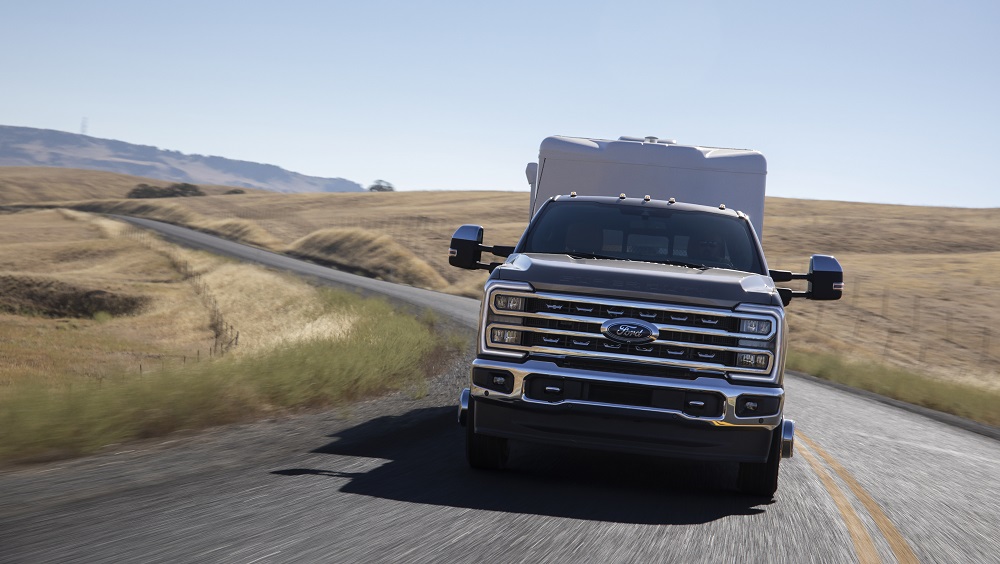
A number of manufacturers – including the Blue Oval – have sided with CARB on a deal that will mean the end of the Ford Super Duty diesel as we know it.
The ongoing push to significantly speed up EV adoption in the U.S. has come from multiple angles over the past couple of years, with certain states and the U.S. government enacting legislation aimed at making those types of vehicles more attractive, as well as more difficult to build and sell. One state leading this proverbial charge is California, which has long worked to enact stricter emissions rules and phase out ICE vehicles altogether. Now, that mission continues, as the California Air Resources Board (CARB) has just reached a pivotal agreement with the Truck and Engine Manufacturers Association (EMA) that will result in only zero-emissions trucks – including smaller variants like the Ford Super Duty diesel – being sold in the state beginning in 2036, according to the California Globe.
The sale of all new diesel big rig trucks and buses will be banned in California starting in 2036 under the Advanced Clean Fleets rule, one year after ICE-powered passenger vehicles face the same exact fate. Additionally, all trucks sold in California must be zero-emissions by 2042, and CARB is aiming to employ a completely zero-emissions truck and bus fleet by 2045, as well as have at least 1.6 million zero-emission medium- and heavy-duty trucks operating in the state by 2048.

While these measures previously passed without the support of actual truck manufacturers such as Ford, CARB just reached an agreement dubbed the Clean Truck Partnership with the EMA, which counts Ford, General Motors, Stellantis, and several other automakers among its members. In return, CARB will commit to deploying less stringent EPA regulations in regard to nitrous oxide emissions and will give automakers more time to meet these requirements.
“This agreement reaffirms EMA’s and its members’ longstanding commitment to reducing emissions and to a zero-emissions commercial vehicle future and it demonstrates how EMA and CARB can work together to achieve shared clean air goals,” said EMA President Jed Mandel. “Through this agreement, we have aligned on a single nationwide nitrogen oxide emissions standard, secured needed lead time and stability for manufacturers, and agreed on regulatory changes that will ensure continued availability of commercial vehicles. We look forward to continuing to work constructively with CARB on future regulatory and infrastructure efforts designed to support a successful transition to ZEVs.”

The EMA had previously opposed such measures, insisting that they would be too costly and burdensome on manufacturers, but it seems as if the concessions put forth by CARB were enough to sway it in that regard. However, many remain opposed to phasing out diesel-powered trucks so quickly, particularly as current battery technology is not viable for real-world use in such vehicles – through hydrogen may offer a suitable alternative.
“It’s good that CARB threw a few bones here for truck manufacturers, but this is all assuming that we will be in a much better place technology-wise in 2035 and 2036,” said Simon Bernard, a trucking advocate who works with a variety of trucking and shipping companies. “We need way better recharging times and more extensive testing to see if trucks can, long-term, still move forward with the same wear and tear that their gas and diesel counterparts are at.”
Photos: Ford
Join the Ford Truck Enthusiasts forums now!


You must be logged in to post a comment.