





How to replace your Super Duty Ball Joints

Thread Starter
|
Hotshot
Joined: Aug 2002
Posts: 12,679
Likes: 15
From: BC, Canada
How to replace your Super Duty Ball Joints
I figured that with all the discussion on replacing these ball joints that the next time I did a set I would take pictures and do a write-up on it.
Some of the things can be done in a bit different order. This is just the way I do it.
These instructions can also be used for replacing the axle U-joints and the wheel bearing/hub assembly.
The ball joints wear out which makes them loose but sometimes they are too tight which makes the steering not return very well so it wanders.
Before you start make sure you have new outer hub O-rings, wheel bearing/hub assembly O-rings, knuckle seals, axle dust seals and cotter pins as well as the ball joints or U-joints or wheel bearing/hub assemblies or whatever you are replacing. If you are replacing the wheel bearing/hub assemblies you might want to have new studs and nuts for them on hand too.
Click on the colored words to link to pictures of the procedures.
This didn't all fit on one page. Maybe that can be fixed later
Some of the things can be done in a bit different order. This is just the way I do it.
These instructions can also be used for replacing the axle U-joints and the wheel bearing/hub assembly.
The ball joints wear out which makes them loose but sometimes they are too tight which makes the steering not return very well so it wanders.
Before you start make sure you have new outer hub O-rings, wheel bearing/hub assembly O-rings, knuckle seals, axle dust seals and cotter pins as well as the ball joints or U-joints or wheel bearing/hub assemblies or whatever you are replacing. If you are replacing the wheel bearing/hub assemblies you might want to have new studs and nuts for them on hand too.
Click on the colored words to link to pictures of the procedures.
This didn't all fit on one page. Maybe that can be fixed later
Thread Starter
|
Hotshot
Joined: Aug 2002
Posts: 12,679
Likes: 15
From: BC, Canada
1) Raise the front of the truck off the ground and support it safely either on a hoist or with a floor jack and proper jack stands. Don't use concrete blocks, pieces of old wood etc. Having the truck fall on you will ruin your day 
2) Remove the front wheels.
3) Unplug the connector for the ABS sensor from behind the inner fender liner. Unclip it from the frame and from the brake hose.
4) Pry the caliper away from the caliper mount to compress the pistons in the caliper. Remove the bolts that hold the caliper mount to the steering knuckle and set the caliper and mount on top of the spring . Don't let the caliper hang by the hose. Also remove the vacuum hose that goes to the fitting on the knuckle if you have ESOF.
5) Remove the brake rotor . It may take some persuasion.
6) Remove the cotter pin and nut that attach the tie rod end to the knuckle.
Hit the side of the knuckle where the end goes through to pop the end out. If you use a pickle fork (tie rod separator) on this you may destroy the boot on the tie rod end.
7) Remove the outer hub by squeezing the retaining ring and then pulling the hub out. Sometimes it will take a bit of persuasion with a soft faced hammer to remove it.
8) Remove the snap ring and thrust washers from the axle.
9) Remove the bolt that holds the ABS sensor wiring to the knuckle.
10) Remove the 4 nuts that attach the wheel bearing/hub assembly to the knuckle and remove it. There are a few ways to remove the wheel bearing/hub assembly. You might try using a long punch and hitting the studs from behind (make sure you have new studs first), you might be able to pound a thin chisel in between the assembly and the knuckle to break it free, you might be able to use a 3 jaw puller pushing against the axle or you can reinstall the wheel and hit the back of the tire with a sledge hammer. It can be pretty hard to remove but it will come off.
11) Now that you've got the wheel bearing/hub assembly off you'll see the axle needle bearing or spindle bearing as it's sometimes called. If it is dry you will have to replace it and maybe the axle too if there is damage on it. If there is still grease in it you'll want to clean it out and regrease it.
12) Remove the thrust washer from the axle and note which direction it came off. The 4 grooves go to the back.
13) Remove the axle. I usually just pry it out with a pry bar on each side behind the housing dust seal. You can also tap it out from behind.
14) I find it easier to remove the knuckle seal with the axle still hanging in the knuckle. It comes off with a hammer and chisel or punch.
15) Now you can clean up the axle and closely check the U-joint to make sure it moves freely and doesn't bind or feel loose. Also examine the axle for any unusual wear etc.
16) While the knuckle is still attached I like to clean out the inside of it. If it's rust and dirty the new seals won't seal properly which can lead to bearing problems and also cause the ESOF to not work right. I use a ball hone on a drill to clean it out. You can use fine sandpaper if you don't have a hone. The main thing is to make sure the inside of the knuckle is clean and smooth.
17) Remove the lower and upper ball joint nuts. Some new ball joints come with nuts, some don't.
18) Using a pickle fork, knock the upper and lower ball joints out of the housing. Keeping one of the ball joint nuts on a few threads will keep the knuckle from falling off and landing on your toes
Now remove the knuckle.
19) Clean the end of the housing and inside the tube.
20) Now you're ready to remove the ball joints.
Start by removing the snap ring from the lower ball joint.
Remove the old ball joints either with a ball joint press or by pounding them out. First the lower and then the upper.
Clean the rust and junk from where the ball joints go into the knuckle. I steam clean the knuckle but it's not usually really necessary.
In our shop we have drivers to install the new ball joints but most people use a ball joint press so I won't show you that part. You should be able to get a ball joint press from a parts store or rental place. It should have instructions with it. Basically it is like a big C clamp with cups and spacers etc that will press the ball joints into the knuckle.
21) Install the knuckle onto the housing again and loosely install the nuts on the ball joints. Tighten the lower ball joint nut to 150 ft.lb. Tighten the upper ball joint nut to 70 lb.ft. and install a new cotter pin.
22) Next, install the new knuckle seal onto the axle. You'll need the special driver made for doing that or some people have made drivers out of PVC pipe. The seal has to bottom out on the axle.
23) Install a new dust seal on the axle. It usually just pushes on by hand but you may have to tap on it a bit.
24) Lube the outer sealing surface of the knuckle seal with good quailty wheel bearing grease or silicone dielectric grease and install the axle. The same tool that was used for installing the seal onto the axle gets used to install the axle into the steering knuckle. The axle can't go in too far so don't worry about the seal pushing out the back or anything. The driver pushes the axle in to the correct depth. Lightly grease the thrust washer and install in onto the axle with the 4 grooves to the back.
25) Clean and lube the needle bearing with good quality wheel bearing grease. The bearing needs to be packed with the grease. Force the grease in with your fingers until no more will go in. Replace the yellow O-ring on the wheel bearing/hub assembly. Make sure the 4 studs are in good shape and clean.
Install the wheel bearing/hub assembly into the knuckle and tighten the 4 nuts to 135 ft.lb.
26) Lightly grease the outer thrust washers and install in the order shown and then the snap ring to hold it all together. You may have to pry the axle out a bit to install the snap ring.
27) Replace the O-ring on the outer hub and install the hub.
28) Install the brake rotor. I use 1 nut to hold the rotor on and tight while I install the caliper.
29) Install the caliper and mount.
30) Hook up the ABS sensor connector, vacuum hose etc.
31) Reattach the tie rod end. Tighten the nut to 50 ft.lb. and install a new cotter pin.
2) Remove the front wheels.
3) Unplug the connector for the ABS sensor from behind the inner fender liner. Unclip it from the frame and from the brake hose.
4) Pry the caliper away from the caliper mount to compress the pistons in the caliper. Remove the bolts that hold the caliper mount to the steering knuckle and set the caliper and mount on top of the spring . Don't let the caliper hang by the hose. Also remove the vacuum hose that goes to the fitting on the knuckle if you have ESOF.
5) Remove the brake rotor . It may take some persuasion.
6) Remove the cotter pin and nut that attach the tie rod end to the knuckle.
Hit the side of the knuckle where the end goes through to pop the end out. If you use a pickle fork (tie rod separator) on this you may destroy the boot on the tie rod end.
7) Remove the outer hub by squeezing the retaining ring and then pulling the hub out. Sometimes it will take a bit of persuasion with a soft faced hammer to remove it.
8) Remove the snap ring and thrust washers from the axle.
9) Remove the bolt that holds the ABS sensor wiring to the knuckle.
10) Remove the 4 nuts that attach the wheel bearing/hub assembly to the knuckle and remove it. There are a few ways to remove the wheel bearing/hub assembly. You might try using a long punch and hitting the studs from behind (make sure you have new studs first), you might be able to pound a thin chisel in between the assembly and the knuckle to break it free, you might be able to use a 3 jaw puller pushing against the axle or you can reinstall the wheel and hit the back of the tire with a sledge hammer. It can be pretty hard to remove but it will come off.
11) Now that you've got the wheel bearing/hub assembly off you'll see the axle needle bearing or spindle bearing as it's sometimes called. If it is dry you will have to replace it and maybe the axle too if there is damage on it. If there is still grease in it you'll want to clean it out and regrease it.
12) Remove the thrust washer from the axle and note which direction it came off. The 4 grooves go to the back.
13) Remove the axle. I usually just pry it out with a pry bar on each side behind the housing dust seal. You can also tap it out from behind.
14) I find it easier to remove the knuckle seal with the axle still hanging in the knuckle. It comes off with a hammer and chisel or punch.
15) Now you can clean up the axle and closely check the U-joint to make sure it moves freely and doesn't bind or feel loose. Also examine the axle for any unusual wear etc.
16) While the knuckle is still attached I like to clean out the inside of it. If it's rust and dirty the new seals won't seal properly which can lead to bearing problems and also cause the ESOF to not work right. I use a ball hone on a drill to clean it out. You can use fine sandpaper if you don't have a hone. The main thing is to make sure the inside of the knuckle is clean and smooth.
17) Remove the lower and upper ball joint nuts. Some new ball joints come with nuts, some don't.
18) Using a pickle fork, knock the upper and lower ball joints out of the housing. Keeping one of the ball joint nuts on a few threads will keep the knuckle from falling off and landing on your toes
Now remove the knuckle.
19) Clean the end of the housing and inside the tube.
20) Now you're ready to remove the ball joints.
Start by removing the snap ring from the lower ball joint.
Remove the old ball joints either with a ball joint press or by pounding them out. First the lower and then the upper.
Clean the rust and junk from where the ball joints go into the knuckle. I steam clean the knuckle but it's not usually really necessary.
In our shop we have drivers to install the new ball joints but most people use a ball joint press so I won't show you that part. You should be able to get a ball joint press from a parts store or rental place. It should have instructions with it. Basically it is like a big C clamp with cups and spacers etc that will press the ball joints into the knuckle.
21) Install the knuckle onto the housing again and loosely install the nuts on the ball joints. Tighten the lower ball joint nut to 150 ft.lb. Tighten the upper ball joint nut to 70 lb.ft. and install a new cotter pin.
22) Next, install the new knuckle seal onto the axle. You'll need the special driver made for doing that or some people have made drivers out of PVC pipe. The seal has to bottom out on the axle.
23) Install a new dust seal on the axle. It usually just pushes on by hand but you may have to tap on it a bit.
24) Lube the outer sealing surface of the knuckle seal with good quailty wheel bearing grease or silicone dielectric grease and install the axle. The same tool that was used for installing the seal onto the axle gets used to install the axle into the steering knuckle. The axle can't go in too far so don't worry about the seal pushing out the back or anything. The driver pushes the axle in to the correct depth. Lightly grease the thrust washer and install in onto the axle with the 4 grooves to the back.
25) Clean and lube the needle bearing with good quality wheel bearing grease. The bearing needs to be packed with the grease. Force the grease in with your fingers until no more will go in. Replace the yellow O-ring on the wheel bearing/hub assembly. Make sure the 4 studs are in good shape and clean.
Install the wheel bearing/hub assembly into the knuckle and tighten the 4 nuts to 135 ft.lb.
26) Lightly grease the outer thrust washers and install in the order shown and then the snap ring to hold it all together. You may have to pry the axle out a bit to install the snap ring.
27) Replace the O-ring on the outer hub and install the hub.
28) Install the brake rotor. I use 1 nut to hold the rotor on and tight while I install the caliper.
29) Install the caliper and mount.
30) Hook up the ABS sensor connector, vacuum hose etc.
31) Reattach the tie rod end. Tighten the nut to 50 ft.lb. and install a new cotter pin.
Last edited by Racerguy; Mar 11, 2005 at 02:23 PM.
Thread Starter
|
Hotshot
Joined: Aug 2002
Posts: 12,679
Likes: 15
From: BC, Canada
32) Grease the ball joints if they are greaseable and install the wheels.
The wheel nuts get torqued to 140-150 ft.lb.
Double check for any loose bolts, missing cotter pins etc.
Check the oil level in the front axle in case any ran out of the tubes while it was apart.
Lower the truck down to the ground again.
Pump up the brakes a few times before you take off.
Drive slowly to make sure that everything feels ok. Check to make sure the 4x4 works too. After a short test drive recheck for anything loose and check the wheel nuts again.
The wheel nuts get torqued to 140-150 ft.lb.
Double check for any loose bolts, missing cotter pins etc.
Check the oil level in the front axle in case any ran out of the tubes while it was apart.
Lower the truck down to the ground again.
Pump up the brakes a few times before you take off.
Drive slowly to make sure that everything feels ok. Check to make sure the 4x4 works too. After a short test drive recheck for anything loose and check the wheel nuts again.

Senior User
Joined: Jul 2004
Posts: 322
Likes: 0
A person on this site sent me pictures of the seal driver-a person will probably want to make this. Also if you think the wheel bearing assembly is bad spend the $15.00 and get the new(from Ford) hub studs and nuts-both of these are from experience.

Freshman User
Joined: May 2005
Posts: 34
Likes: 0
Racerguy, first off let me say thanks great instructions, I used them to tear down my whole front end, replacing the seals, ball joints, axle suport bearings (reason I had to tear it down) etc.. I am trying to clean out the axle tubes and was wondering if you had any pointers on what works best to do this and also on installing the axle back through the tube so it dosn't pick up any grit from the tube. Thanks, any info would be greatly appreciated.
Kev
Kev
Trending Topics
Thread Starter
|
Hotshot
Joined: Aug 2002
Posts: 12,679
Likes: 15
From: BC, Canada
You're welcome
What we use at work for cleaning out the tubes is a piece of pipe with half of a big washer welded to the end of it. You can put the pipe into the tube with the 1/2 washer facing up so it doesn't push the junk in further. Then with the pipe in the tube you twist the pipe so the washer is down and drag the junk out of the tube.
What we use at work for cleaning out the tubes is a piece of pipe with half of a big washer welded to the end of it. You can put the pipe into the tube with the 1/2 washer facing up so it doesn't push the junk in further. Then with the pipe in the tube you twist the pipe so the washer is down and drag the junk out of the tube.
FTE Stories
Ford Trucks for Ford Truck Enthusiasts

3 Best / 3 Worst Parts of Modern Ford Ownership
Brett Foote
10 Amazing Upgrades That Solve Common Ford Truck Owner Headaches
Pouria Savadkouei
Every 2026 Ford Engine Explained
Brett Foote
10 Ugly Ford Trucks That We Still Kinda Love
Joe Kucinski
10 Things Every Truck Owner NEEDS (2026 Edition)
Michael S. Palmer
Rezvani's Latest Post-Apocalyptic Monster Is a Ford F-150 Raptor Underneath
Verdad Gallardo
Top 10 Most Expensive Ford Trucks Ever Sold on Bring a Trailer
Joe Kucinski
2027 Ford Super Duty Buyer's Guide (Every Model, Engine, & Package)
Brett Foote
Top 10 Ford Truck Tragedies
Joe Kucinski
Senior User
Joined: Oct 2005
Posts: 339
Likes: 5
From: St. Louis, MO
 Part #s and Prices
Ok, I finished my front end project and it took as long to find the parts as it did to complete the project (about 6 hours each - I worked slow and spent A LOT of time cleaning parts). For those wondering, I am not a mechanic (though I am mechanically inclined) and I have never touched this truck or any other Ford vehicle in the past. I didn't know what a ball joint, knuckle, U-joint, axle stub, or thrust washer was when I started. A huge thanks go to Racer and Fortyfords for their help throughout the project (and after).
Following is what I know regarding part numbers and prices - I hope this helps others avoid the same pain I endured finding parts. Everything I know is listed below - if it is not listed, I do NOT know. I used all Ford parts except the ball joints - I used NAPA for these. I'm told Ford now has greasable ball joints, but none of the dealers who gave me part numbers had them in stock.
Also, my 1999 F350 4x4 is a 1999.5 (I was just told that may make a difference in the parts needed - I'm happy to have the 'edit' button when posting).
Wheel Bearing:
Ford # C6tZ-3123-A $9.30 each
NAPA # B2110 $6.42 each
Small Knuckle Seal or "Dust Seal"
Ford # F81Z-1S175-HCA $15.46 each
NAPA # 21918 $8.99 each
National #710413 $7.84 each
Large Knuckle Seal or "Oil Seal" (pressed on with special tool)
Ford #F81Z-3254-CB $26.54 each
NAPA N/A N/A
Hub Assembly Seal (small yellow seal)
Ford #F81Z-4A322-AA $3.48 each
NAPA N/A N/A
Upper Ball Joint
NAPA #260-1248 $30.44 each
Lower Ball Joint
NAPA #260-1395 $48.69 each
Auto-Lock Hub
Ford #1C3Z-3B396-CA $279.00 each
I purchased my auto-lock hubs on ebay (new - still sealed in plastic) for $250 with shipping. My Ford dealer wanted $558.32 for the pair. Either way, the new hubs came with new o-ring seals, so I didn't need to buy these (and don't have numbers or prices). If my math is correct, this brings my total parts cost to $517.00 (my dealer wanted about $1,500).
For the ball joints, I "purchased" a press kit from Autozone for about $110, but it really works as a deposit. I returned the kit the next day (although they said I could keep it for up to 90 days) and they fully refunded my money to the last penny - a free rental in the end.
I made my own seal press for the large knuckle seal using 3 steel pipe pieces from lowes - $15.26 total amount spent and 3 minutes to assemble pieces.
I hope this helps everyone else doing this job.
Following is what I know regarding part numbers and prices - I hope this helps others avoid the same pain I endured finding parts. Everything I know is listed below - if it is not listed, I do NOT know.
I used all Ford parts except the ball joints - I used NAPA for these. I'm told Ford now has greasable ball joints, but none of the dealers who gave me part numbers had them in stock.Also, my 1999 F350 4x4 is a 1999.5 (I was just told that may make a difference in the parts needed - I'm happy to have the 'edit' button when posting).
Wheel Bearing:
Ford # C6tZ-3123-A $9.30 each
NAPA # B2110 $6.42 each
Small Knuckle Seal or "Dust Seal"
Ford # F81Z-1S175-HCA $15.46 each
NAPA # 21918 $8.99 each
National #710413 $7.84 each
Large Knuckle Seal or "Oil Seal" (pressed on with special tool)
Ford #F81Z-3254-CB $26.54 each
NAPA N/A N/A
Hub Assembly Seal (small yellow seal)
Ford #F81Z-4A322-AA $3.48 each
NAPA N/A N/A
Upper Ball Joint
NAPA #260-1248 $30.44 each
Lower Ball Joint
NAPA #260-1395 $48.69 each
Auto-Lock Hub
Ford #1C3Z-3B396-CA $279.00 each
I purchased my auto-lock hubs on ebay (new - still sealed in plastic) for $250 with shipping. My Ford dealer wanted $558.32 for the pair. Either way, the new hubs came with new o-ring seals, so I didn't need to buy these (and don't have numbers or prices). If my math is correct, this brings my total parts cost to $517.00 (my dealer wanted about $1,500).
For the ball joints, I "purchased" a press kit from Autozone for about $110, but it really works as a deposit. I returned the kit the next day (although they said I could keep it for up to 90 days) and they fully refunded my money to the last penny - a free rental in the end.
I made my own seal press for the large knuckle seal using 3 steel pipe pieces from lowes - $15.26 total amount spent and 3 minutes to assemble pieces.
I hope this helps everyone else doing this job.
Last edited by Miescha; Dec 12, 2005 at 09:22 PM.

Freshman User
Joined: Dec 2005
Posts: 30
Likes: 0
Hello,
I've got two questions concerning ball joints on my F250 Diesel.
When you change ball joints, is there a way to damage the speedometer cable?
The dealer who changed mine says no...but that is because I am accussing him of doing so. My speedo worked when I took my truck in to get the L side lower and upper ball joints changed. When I got it back the speedo would not work until I would get to around 35 mpg. When I was going about 35 the spedo would say 75. I had them check the wheel sensor but they said it was fine and that the problem was in the speedo head. I guess it could happen but I find it fishy.
I had the local ford dealer change L side upper and lower ball joints because they were wore out. Should I go ahead and change the R side too?
Thanks
Bryan
I've got two questions concerning ball joints on my F250 Diesel.
When you change ball joints, is there a way to damage the speedometer cable?
The dealer who changed mine says no...but that is because I am accussing him of doing so. My speedo worked when I took my truck in to get the L side lower and upper ball joints changed. When I got it back the speedo would not work until I would get to around 35 mpg. When I was going about 35 the spedo would say 75. I had them check the wheel sensor but they said it was fine and that the problem was in the speedo head. I guess it could happen but I find it fishy.
I had the local ford dealer change L side upper and lower ball joints because they were wore out. Should I go ahead and change the R side too?
Thanks
Bryan

Lead Driver
Joined: Sep 2003
Posts: 5,844
Likes: 6
From: Albuquerque

[QUOTE=Miescha]
Miescha -- Good list of the parts and part #'s. Appreciate you sharing that information!
One question: Do you have a picture that you can share of the seal press that you made from lowes? I did see another picture (here in the thread), but would like to compare your seal press.
Thanks!
biz

I made my own seal press for the large knuckle seal using 3 steel pipe pieces from lowes - $15.26 total amount spent and 3 minutes to assemble pieces.
One question: Do you have a picture that you can share of the seal press that you made from lowes? I did see another picture (here in the thread), but would like to compare your seal press.
Thanks!
biz
Thread Starter
|
Hotshot
Joined: Aug 2002
Posts: 12,679
Likes: 15
From: BC, Canada
Hi Bryanox and welcome to the forum
Your speedometer doesn't use a cable. It uses a reading from the VSS (Vehicle Speed Sensor) on the rear axle housing...no where close to the ball joints.
Your speedometer doesn't use a cable. It uses a reading from the VSS (Vehicle Speed Sensor) on the rear axle housing...no where close to the ball joints.
Fleet Mechanic

Joined: Jun 2004
Posts: 1,296
Likes: 1
From: Coal Valley, Illinois
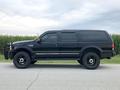
Miescha's homemade seal driver pic
Thanks to all for the ball joint replacement instructions, especially Racerguy for the write up and Miescha for the seal driver idea. After he described the driver, I knew exactly what he was talking about. Went to Lowes and purchased these parts:
1. 1 1/4" x 8" galvanized pipe
2. 1 1/4" flange
3. 1 1/4" cap
It was very easy and worked like a charm! Here is a pic.

1. 1 1/4" x 8" galvanized pipe
2. 1 1/4" flange
3. 1 1/4" cap
It was very easy and worked like a charm! Here is a pic.
Last edited by hink10; Jan 12, 2006 at 01:01 AM.



New User
Joined: Feb 2006
Posts: 13
Likes: 0

Just did a ball joint replacement on a 2000 F-250 Super Duty 4WD. Made extensive use of Racerguy's step by step procedure with great color pictures of most of the important steps. I tried several home garage methods of installing the KNUCLE SEALS: PVC pipe and C-clamps on each side, etc without success. I finally went to a Ford dealer where they had a seal driver designed for this seal, and paid them $20 to install them. But I figured that I got $20 worth of advice from the mechanic. He said, after the seal is installed on the axle, slip axle with seal through the knucle, and then slip the four hub studs through the knucle, and draw the axle and seal into place by tightening the four nuts in small increments to keep things straight. It worked like a charm, and I did not need to do any pounding which I do not like to do on anything. I thought about having an installation tool made, but I suspect that it would cost at least $20.