Is ceramic coating worth it?

Thread Starter
|
More Turbo

Joined: Jan 2010
Posts: 571
Likes: 8
Is ceramic coating worth it?
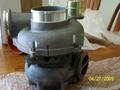
We have a 5 gal bucket of a ceramic paint here at work they use it on the outside of our burners was thinking about using it on the turbo and manifolds and up pipes. It's kind of a silver color not sure what the temp rating is but it works good on the burners and they are burning dust 24/7. I have heard it will cure some surge and spool up the turbo a bit faster just what I have seen before not sure of any truth or not.

Post Fiend
Joined: Sep 2006
Posts: 5,584
Likes: 0
From: Millbrook Alabama
If you are running with 500 HP and up it may help. If you are near stock (tuner intake exhaust) then you will not see a difference.
The ceramic coating will not make your turbo spool noticeably faster. It may lower your EGTs a slight bit though.
The ceramic coating will not make your turbo spool noticeably faster. It may lower your EGTs a slight bit though.

PREMIUM SPONSOR


Joined: Feb 2009
Posts: 6,038
Likes: 73
Heat energy is heat energy doesn't matter the power level, and there is no downside to retaining it rather than radiating it. The hard thing to know is how much your coating will retain though. We have tested alot of ceramic coatings and you would be amazed how many are barely more useful than if you powder coated it. Now having said that, is it going to make a SOTP or more horsepower? Not really, but it can help efficency.
Post Fiend
Joined: Feb 2008
Posts: 10,977
Likes: 5
From: Lancaster, Pa.
Other than a power enhancing project, your turbo and manifolds and anything else you hit will look sharp..
Last edited by big poppa; Oct 9, 2010 at 08:12 PM. Reason: Reworded
Trending Topics

Posting Guru
Joined: Jun 2008
Posts: 1,037
Likes: 0
From: Albuquerque
If it were me and the price was right (which it is), I'd do it and see what the results are, if any. LIke Mike said, it will sure help with the appearance. Really nothing to loose.
FTE Stories
Ford Trucks for Ford Truck Enthusiasts

AEV FXL Super Duty - the Super Duty Raptor Ford Doesn't Make
Brett Foote
Lobo Vs Lobo: Proof the F-150 Lobo Should Be Even Lower!
Michael S. Palmer
Ford's 2001 Explorer Sportsman Concept Looks For a New Home
Verdad Gallardo
10 Best Ford Truck Engines We Miss the Most!
Joe Kucinski
2026 Shelby F-150 Off-Road: Better Than a Raptor R?
Brett Foote
2027 Super Duty Carhartt Package First Look: 12 Things You NEED to Know!
Michael S. Palmer
10 Most Surprising 2026 Ford Truck Features!
Joe Kucinski
Top 10 Ford Trucks Coming to Mecum Indy 2026
Brett Foote
5 Best / 5 Worst Ford Truck Wheels of All Time
Joe Kucinski
Postmaster
Joined: Jun 2006
Posts: 2,647
Likes: 0
From: Fulltime RVer

The equation below gives EBP as a function of the CSHP=Compressor Shaft HP that's required to generate a given BP...
EBP={(AAP+PTPD)[{1-[(CSHP)/{(EGT+459.67)(1/158.7)(1+1/AFR)(MAF)(TTE)}]}^-3.8911] -(AAP)} psig
...and note that EGT appears in the denominator which means that everything else being the same a higher EGT will produce a given BP with a lower EBP!
Here's what I said at the end of post #14 here... 38R limits - Ford Truck Enthusiasts Forums
...If you add enough additional fuel to increase the EGT to 1150*F both the FWHP and the FWTE increase and that's because both the turbine and the diesel it's attached to are heat engines and in a future post I'll discuss the mechanics of how a turbine converts "heat energy" into TSHP=Turbine Shaft HP!...
...For now look in the row that gives the CSHP required and note that for BP=17 psig the turbine must produce 50 HP at it's output shaft! Assuming an 80% conversion efficiency from shaft HP into electrical power this would correspond to the output from a 30 kW wind turbine and if you Google one of those and see what the diameter of its blades are and then compare that diameter to a turbine wheel diameter you start to appreciate the power of heat energy!
Aeolos Wind Turbine Company ? 30kw Wind Turbine ? Wind Energy Generators ? Aeolos 30kw Wind Turbine...
...For now look in the row that gives the CSHP required and note that for BP=17 psig the turbine must produce 50 HP at it's output shaft! Assuming an 80% conversion efficiency from shaft HP into electrical power this would correspond to the output from a 30 kW wind turbine and if you Google one of those and see what the diameter of its blades are and then compare that diameter to a turbine wheel diameter you start to appreciate the power of heat energy!
Aeolos Wind Turbine Company ? 30kw Wind Turbine ? Wind Energy Generators ? Aeolos 30kw Wind Turbine...
The "converging nozzle" is essentially a lossless device that converts random motion "heat energy" into directed motion "velocity energy" and it's the directed motion of the exhaust flow exiting the nozzle that produces the thrust to propel a rocket or jet engine or to spin the turbine blades in a turbo-diesel engine. Since energy must be conserved the increase in directed motion "velocity energy" comes at the expense of the random motion "heat energy" and the decrease in exhaust gas "heat energy" per unit time adjusted for TTE=Turbo Turbine Efficiency gives the TSHP!
Even though the "converging nozzle" itself is a lossless device a TPR=Turbine Pressure Ratio where TPR=(AAP+EBP)/(AAP+PTPD) is required to accommodate a given TMGF=Turbine Mass Gas Flow through the nozzle. The EGT=Exhaust Gas Temperature is the pre-turbine value and PTGT=Post Turbine Gas Temperature. The temperature decrease (EGT-PTGT) of each pound mass (lbm) of exhaust gas flowing through the nozzle determines the amount of heat energy being consumed from the exhaust gas to power the spinning turbine blades and when one applies thermodynamics which relates the temperature decrease (EGT-PTGT) to the TPR the TSHP is given by... TSHP={(EGT)(1-TPR^-0.257)(TTE)(TMGF)}/(158.7) hp ...where the constant 158.7 accounts for the Btu/lbm/*F "heat capacity" of the exhaust gas and the conversion of Btu/min to HP!
So the bottom-line is that by retaining the heat energy in the exhaust flow the EGT is increased and this means a given TSHP can be produced with less EBP.


PREMIUM SPONSOR
Joined: Feb 2009
Posts: 6,038
Likes: 73

Thanks Eugene.

Elder User
Joined: Sep 2003
Posts: 582
Likes: 0
From: New Baden IL
Heat energy is heat energy doesn't matter the power level, and there is no downside to retaining it rather than radiating it. The hard thing to know is how much your coating will retain though. We have tested alot of ceramic coatings and you would be amazed how many are barely more useful than if you powder coated it. Now having said that, is it going to make a SOTP or more horsepower? Not really, but it can help efficency.
What types of ceramic etc are you seeing produce better results? When the International up-pipes where backorder everywhere two plus years ago, I went with DI's up pipes and had them ceramic coated. Personally, I'd do it just for ascetics; have you looked at your exhaust manifolds lately? They look like they have leprosy. Thanks for the info in advance!
Postmaster
Joined: Jun 2006
Posts: 2,647
Likes: 0
From: Fulltime RVer
Did anyone click on this link... Aeolos Wind Turbine Company ? 30kw Wind Turbine ? Wind Energy Generators ? Aeolos 30kw Wind Turbine ...and see that a 30 kW wind turbine needs to have a blade diameter of 41 ft in order to produce the same turbine shaft HP as a stock 7.3L PSD turbo?
For EGT in *F the equation I gave above for turbine shaft HP should've been... TSHP={(EGT+459.67)(1-TPR^-0.257)(TTE)(TMGF)}/(158.7) hp ...and since the exhaust mass gas flow into the turbine includes the inlet mass airflow plus the injected mass fuel flow the TMGF is given by... TMGF=(1+1/AFR)(MAF) ...and this gives...
TSHP={(EGT+459.67)(1-TPR^-0.257)(1+1/AFR)(MAF)(TTE)}/(158.7) hp
These 3 tables contain 113 numbered rows with parameters that characterize a stock 7.3L PSD doing a WOT run on a load dyno at various RPMs... http://ernesteugene.com/PSD/Stock_Input.jpg ... http://ernesteugene.com/PSD/Stock_Output1.jpg ... http://ernesteugene.com/PSD/Stock_Output2.jpg ...and in the following calculations I'll discuss how much of an effect insulating the exhaust manifold, up-pipes, and turbine exhaust housing might have on performance.
I'll use the 2600 RPM operating point (column 3) where AFR=25.3 (row #42) and MAF=39.8 lbm/min (row #81) and TTE=0.70 (row #10) ...and plugging these numbers into the above equation for TSHP gives... TSHP={(EGT+459.67)(1-TPR^-0.257)(1+1/AFR)(MAF)(TTE)}/(158.7)={(EGT+459.67)(1-TPR^-0.257)(1+1/25.3)(39.8)(0.70)}/(158.7)={(EGT+459.67)(1-TPR^-0.257)(0.182)} hp ...so if we only consider the interplay between EGT and TPR with everything else remaining the same we have...
TSHP={(EGT+459.67)(1-TPR^-0.257)(0.182)} hp.
But this equation needs to be solved for TPR so we can see how much the TPR decreases for a given TSHP when insulation is added to increase the EGT. I can show the steps if anyone's interested but for now here's the bottom-line...
TPR=[{1-[{(5.495)(TSHP)}/(EGT+459.67)]}^-1]^3.891
...and plugging TSHP=48 hp (row #105) and EGT=1,003*F (row #99) into this equation gives... TPR=[{1-[{(5.495)(TSHP)}/(EGT+459.67)]}^-1]^3.891=[{1-[{(5.495)(48)}/(1,003+459.67)]}^-1]^3.891=[{1-[(263.76)/(1,462.67)]}^-1]^3.891=[{1-[(0.18)]}^-1]^3.891=[{1-0.18}^-1]^3.891=[{0.82}^-1]^3.891=[1.22]^3.891=2.16 ...which agrees with TPR=2.16 (row #104).
Now for a "what if" assumption. What if everything else remains the same except that applying insulation increases the EGT by 100*F from 1,003*F to 1,103*F. Plugging EGT=1,103*F into the above equation to calculate TPR for the same TSHP=48 hp gives... TPR=[{1-[{(5.495)(TSHP)}/(EGT+459.67)]}^-1]^3.891=[{1-[{(5.495)(48)}/(1,103+459.67)]}^-1]^3.891=[{1-[(263.76)/(1,562.67)]}^-1]^3.891=[{1-0.169}^-1]^3.891=[{0.831}^-1]^3.891=[1.20]^3.891=2.03.
A TSHP=48 hp is needed for a BP=17 psig (row #39) and if everything else remains the same and if applying insulation increases the EGT by 100*F from 1,003*F to 1,103*F then the TPR that's required to produce a TSHP=48 hp decreases from TPR=2.16 to TPR=2.03 ...but what does this imply for lower EBP and less PHPL=Pumping HP Loss which is given by...PLHP={(EBP-BP)(RPM)}/(1,785.2) hp
Well TPR=(AAP+EBP)/(AAP+PTPD) and if you solve this equation for EBP you get... EBP={(TPR)(AAP+PTPD)}-AAP psig and if you plug in AAP=14.54 psia (row #2) and PTPD=2.2 psig which is defined in (row #13) but not shown on my output tables you get... EBP={(TPR)(14.54+2.2)}-14.54={(TPR)(16.74)}-14.54 ...and for the stock case with TPR=2.16 you get... EBP={(TPR)(16.74)}-14.54={(2.16)(16.74)}-14.54=36.16-14.54=21.6 psig ...which agrees with EBP=21.6 psig (row #40) ...and this gives a PLHP={(EBP-BP)(RPM)}/(1,785.2)={(21.6-17.0)(2,600)}/(1,785.2)=6.7 hp ...which agrees with PLHP=6.7 hp (row #49)!
Repeating the above calculations for the insulation case which lowers the TPR to TPR=2.03 gives... EBP={(TPR)(16.74)}-14.54={(2.03)(16.74)}-14.54=33.98-14.54=19.5 psig and this gives a PLHP={(EBP-BP)(RPM)}/(1,785.2)={(19.5-17.0)(2,600)}/(1,785.2)=3.6 hp ...so if applying insulation increases the EGT by 100*F from 1,003*F to 1,103*F then the EBP decreases from EBP=21.6 psig to EBP=19.5 psig and the PLHP decreases from PLHP=6.7 hp to PLHP=3.6 hp!
Well a gain of 3.1 hp sure doesn't seem like much but as the old saying goes every little bit helps if only just a little and keep in mind that this 3.1 hp increase occurs for the same VFF=13.307 gal/hr (row #43) fuel flow which means that the FWHP and the FWTE are both increased! I could conjure up some operating points where more FWHP is gained but I think the biggest performance benefit from insulating the exhaust manifold, up-pipes, and turbine exhaust housing is to lower the engine compartment temperature when under full load and this can result in significant gains due to reducing the turbo inlet air temperature ...especially for those who persist in using an "open element" air filter!
For EGT in *F the equation I gave above for turbine shaft HP should've been... TSHP={(EGT+459.67)(1-TPR^-0.257)(TTE)(TMGF)}/(158.7) hp ...and since the exhaust mass gas flow into the turbine includes the inlet mass airflow plus the injected mass fuel flow the TMGF is given by... TMGF=(1+1/AFR)(MAF) ...and this gives...
TSHP={(EGT+459.67)(1-TPR^-0.257)(1+1/AFR)(MAF)(TTE)}/(158.7) hp
These 3 tables contain 113 numbered rows with parameters that characterize a stock 7.3L PSD doing a WOT run on a load dyno at various RPMs... http://ernesteugene.com/PSD/Stock_Input.jpg ... http://ernesteugene.com/PSD/Stock_Output1.jpg ... http://ernesteugene.com/PSD/Stock_Output2.jpg ...and in the following calculations I'll discuss how much of an effect insulating the exhaust manifold, up-pipes, and turbine exhaust housing might have on performance.
I'll use the 2600 RPM operating point (column 3) where AFR=25.3 (row #42) and MAF=39.8 lbm/min (row #81) and TTE=0.70 (row #10) ...and plugging these numbers into the above equation for TSHP gives... TSHP={(EGT+459.67)(1-TPR^-0.257)(1+1/AFR)(MAF)(TTE)}/(158.7)={(EGT+459.67)(1-TPR^-0.257)(1+1/25.3)(39.8)(0.70)}/(158.7)={(EGT+459.67)(1-TPR^-0.257)(0.182)} hp ...so if we only consider the interplay between EGT and TPR with everything else remaining the same we have...
TSHP={(EGT+459.67)(1-TPR^-0.257)(0.182)} hp.
But this equation needs to be solved for TPR so we can see how much the TPR decreases for a given TSHP when insulation is added to increase the EGT. I can show the steps if anyone's interested but for now here's the bottom-line...
TPR=[{1-[{(5.495)(TSHP)}/(EGT+459.67)]}^-1]^3.891
...and plugging TSHP=48 hp (row #105) and EGT=1,003*F (row #99) into this equation gives... TPR=[{1-[{(5.495)(TSHP)}/(EGT+459.67)]}^-1]^3.891=[{1-[{(5.495)(48)}/(1,003+459.67)]}^-1]^3.891=[{1-[(263.76)/(1,462.67)]}^-1]^3.891=[{1-[(0.18)]}^-1]^3.891=[{1-0.18}^-1]^3.891=[{0.82}^-1]^3.891=[1.22]^3.891=2.16 ...which agrees with TPR=2.16 (row #104).
Now for a "what if" assumption. What if everything else remains the same except that applying insulation increases the EGT by 100*F from 1,003*F to 1,103*F. Plugging EGT=1,103*F into the above equation to calculate TPR for the same TSHP=48 hp gives... TPR=[{1-[{(5.495)(TSHP)}/(EGT+459.67)]}^-1]^3.891=[{1-[{(5.495)(48)}/(1,103+459.67)]}^-1]^3.891=[{1-[(263.76)/(1,562.67)]}^-1]^3.891=[{1-0.169}^-1]^3.891=[{0.831}^-1]^3.891=[1.20]^3.891=2.03.
A TSHP=48 hp is needed for a BP=17 psig (row #39) and if everything else remains the same and if applying insulation increases the EGT by 100*F from 1,003*F to 1,103*F then the TPR that's required to produce a TSHP=48 hp decreases from TPR=2.16 to TPR=2.03 ...but what does this imply for lower EBP and less PHPL=Pumping HP Loss which is given by...PLHP={(EBP-BP)(RPM)}/(1,785.2) hp
Well TPR=(AAP+EBP)/(AAP+PTPD) and if you solve this equation for EBP you get... EBP={(TPR)(AAP+PTPD)}-AAP psig and if you plug in AAP=14.54 psia (row #2) and PTPD=2.2 psig which is defined in (row #13) but not shown on my output tables you get... EBP={(TPR)(14.54+2.2)}-14.54={(TPR)(16.74)}-14.54 ...and for the stock case with TPR=2.16 you get... EBP={(TPR)(16.74)}-14.54={(2.16)(16.74)}-14.54=36.16-14.54=21.6 psig ...which agrees with EBP=21.6 psig (row #40) ...and this gives a PLHP={(EBP-BP)(RPM)}/(1,785.2)={(21.6-17.0)(2,600)}/(1,785.2)=6.7 hp ...which agrees with PLHP=6.7 hp (row #49)!
Repeating the above calculations for the insulation case which lowers the TPR to TPR=2.03 gives... EBP={(TPR)(16.74)}-14.54={(2.03)(16.74)}-14.54=33.98-14.54=19.5 psig and this gives a PLHP={(EBP-BP)(RPM)}/(1,785.2)={(19.5-17.0)(2,600)}/(1,785.2)=3.6 hp ...so if applying insulation increases the EGT by 100*F from 1,003*F to 1,103*F then the EBP decreases from EBP=21.6 psig to EBP=19.5 psig and the PLHP decreases from PLHP=6.7 hp to PLHP=3.6 hp!
Well a gain of 3.1 hp sure doesn't seem like much but as the old saying goes every little bit helps if only just a little and keep in mind that this 3.1 hp increase occurs for the same VFF=13.307 gal/hr (row #43) fuel flow which means that the FWHP and the FWTE are both increased! I could conjure up some operating points where more FWHP is gained but I think the biggest performance benefit from insulating the exhaust manifold, up-pipes, and turbine exhaust housing is to lower the engine compartment temperature when under full load and this can result in significant gains due to reducing the turbo inlet air temperature ...especially for those who persist in using an "open element" air filter!

Cargo Master
Joined: Mar 2008
Posts: 2,975
Likes: 19
From: Archdale,N.C.

Did anyone click on this link... Aeolos Wind Turbine Company ? 30kw Wind Turbine ? Wind Energy Generators ? Aeolos 30kw Wind Turbine ...and see that a 30 kW wind turbine needs to have a blade diameter of 41 ft in order to produce the same turbine shaft HP as a stock 7.3L PSD turbo?
For EGT in *F the equation I gave above for turbine shaft HP should've been... TSHP={(EGT+459.67)(1-TPR^-0.257)(TTE)(TMGF)}/(158.7) hp ...and since the exhaust mass gas flow into the turbine includes the inlet mass airflow plus the injected mass fuel flow the TMGF is given by... TMGF=(1+1/AFR)(MAF) ...and this gives...
TSHP={(EGT+459.67)(1-TPR^-0.257)(1+1/AFR)(MAF)(TTE)}/(158.7) hp
These 3 tables contain 113 numbered rows with parameters that characterize a stock 7.3L PSD doing a WOT run on a load dyno at various RPMs... http://ernesteugene.com/PSD/Stock_Input.jpg ... http://ernesteugene.com/PSD/Stock_Output1.jpg ... http://ernesteugene.com/PSD/Stock_Output2.jpg ...and in the following calculations I'll discuss how much of an effect insulating the exhaust manifold, up-pipes, and turbine exhaust housing might have on performance.
I'll use the 2600 RPM operating point (column 3) where AFR=25.3 (row #42) and MAF=39.8 lbm/min (row #81) and TTE=0.70 (row #10) ...and plugging these numbers into the above equation for TSHP gives... TSHP={(EGT+459.67)(1-TPR^-0.257)(1+1/AFR)(MAF)(TTE)}/(158.7)={(EGT+459.67)(1-TPR^-0.257)(1+1/25.3)(39.8)(0.70)}/(158.7)={(EGT+459.67)(1-TPR^-0.257)(0.182)} hp ...so if we only consider the interplay between EGT and TPR with everything else remaining the same we have...
TSHP={(EGT+459.67)(1-TPR^-0.257)(0.182)} hp.
But this equation needs to be solved for TPR so we can see how much the TPR decreases for a given TSHP when insulation is added to increase the EGT. I can show the steps if anyone's interested but for now here's the bottom-line...
TPR=[{1-[{(5.495)(TSHP)}/(EGT+459.67)]}^-1]^3.891
...and plugging TSHP=48 hp (row #105) and EGT=1,003*F (row #99) into this equation gives... TPR=[{1-[{(5.495)(TSHP)}/(EGT+459.67)]}^-1]^3.891=[{1-[{(5.495)(48)}/(1,003+459.67)]}^-1]^3.891=[{1-[(263.76)/(1,462.67)]}^-1]^3.891=[{1-[(0.18)]}^-1]^3.891=[{1-0.18}^-1]^3.891=[{0.82}^-1]^3.891=[1.22]^3.891=2.16 ...which agrees with TPR=2.16 (row #104).
Now for a "what if" assumption. What if everything else remains the same except that applying insulation increases the EGT by 100*F from 1,003*F to 1,103*F. Plugging EGT=1,103*F into the above equation to calculate TPR for the same TSHP=48 hp gives... TPR=[{1-[{(5.495)(TSHP)}/(EGT+459.67)]}^-1]^3.891=[{1-[{(5.495)(48)}/(1,103+459.67)]}^-1]^3.891=[{1-[(263.76)/(1,562.67)]}^-1]^3.891=[{1-0.169}^-1]^3.891=[{0.831}^-1]^3.891=[1.20]^3.891=2.03.
A TSHP=48 hp is needed for a BP=17 psig (row #39) and if everything else remains the same and if applying insulation increases the EGT by 100*F from 1,003*F to 1,103*F then the TPR that's required to produce a TSHP=48 hp decreases from TPR=2.16 to TPR=2.03 ...but what does this imply for lower EBP and less PHPL=Pumping HP Loss which is given by...PLHP={(EBP-BP)(RPM)}/(1,785.2) hp
Well TPR=(AAP+EBP)/(AAP+PTPD) and if you solve this equation for EBP you get... EBP={(TPR)(AAP+PTPD)}-AAP psig and if you plug in AAP=14.54 psia (row #2) and PTPD=2.2 psig which is defined in (row #13) but not shown on my output tables you get... EBP={(TPR)(14.54+2.2)}-14.54={(TPR)(16.74)}-14.54 ...and for the stock case with TPR=2.16 you get... EBP={(TPR)(16.74)}-14.54={(2.16)(16.74)}-14.54=36.16-14.54=21.6 psig ...which agrees with EBP=21.6 psig (row #40) ...and this gives a PLHP={(EBP-BP)(RPM)}/(1,785.2)={(21.6-17.0)(2,600)}/(1,785.2)=6.7 hp ...which agrees with PLHP=6.7 hp (row #49)!
Repeating the above calculations for the insulation case which lowers the TPR to TPR=2.03 gives... EBP={(TPR)(16.74)}-14.54={(2.03)(16.74)}-14.54=33.98-14.54=19.5 psig and this gives a PLHP={(EBP-BP)(RPM)}/(1,785.2)={(19.5-17.0)(2,600)}/(1,785.2)=3.6 hp ...so if applying insulation increases the EGT by 100*F from 1,003*F to 1,103*F then the EBP decreases from EBP=21.6 psig to EBP=19.5 psig and the PLHP decreases from PLHP=6.7 hp to PLHP=3.6 hp!
Well a gain of 3.1 hp sure doesn't seem like much but as the old saying goes every little bit helps if only just a little and keep in mind that this 3.1 hp increase occurs for the same VFF=13.307 gal/hr (row #43) fuel flow which means that the FWHP and the FWTE are both increased! I could conjure up some operating points where more FWHP is gained but I think the biggest performance benefit from insulating the exhaust manifold, up-pipes, and turbine exhaust housing is to lower the engine compartment temperature when under full load and this can result in significant gains due to reducing the turbo inlet air temperature ...especially for those who persist in using an "open element" air filter!
For EGT in *F the equation I gave above for turbine shaft HP should've been... TSHP={(EGT+459.67)(1-TPR^-0.257)(TTE)(TMGF)}/(158.7) hp ...and since the exhaust mass gas flow into the turbine includes the inlet mass airflow plus the injected mass fuel flow the TMGF is given by... TMGF=(1+1/AFR)(MAF) ...and this gives...
TSHP={(EGT+459.67)(1-TPR^-0.257)(1+1/AFR)(MAF)(TTE)}/(158.7) hp
These 3 tables contain 113 numbered rows with parameters that characterize a stock 7.3L PSD doing a WOT run on a load dyno at various RPMs... http://ernesteugene.com/PSD/Stock_Input.jpg ... http://ernesteugene.com/PSD/Stock_Output1.jpg ... http://ernesteugene.com/PSD/Stock_Output2.jpg ...and in the following calculations I'll discuss how much of an effect insulating the exhaust manifold, up-pipes, and turbine exhaust housing might have on performance.
I'll use the 2600 RPM operating point (column 3) where AFR=25.3 (row #42) and MAF=39.8 lbm/min (row #81) and TTE=0.70 (row #10) ...and plugging these numbers into the above equation for TSHP gives... TSHP={(EGT+459.67)(1-TPR^-0.257)(1+1/AFR)(MAF)(TTE)}/(158.7)={(EGT+459.67)(1-TPR^-0.257)(1+1/25.3)(39.8)(0.70)}/(158.7)={(EGT+459.67)(1-TPR^-0.257)(0.182)} hp ...so if we only consider the interplay between EGT and TPR with everything else remaining the same we have...
TSHP={(EGT+459.67)(1-TPR^-0.257)(0.182)} hp.
But this equation needs to be solved for TPR so we can see how much the TPR decreases for a given TSHP when insulation is added to increase the EGT. I can show the steps if anyone's interested but for now here's the bottom-line...
TPR=[{1-[{(5.495)(TSHP)}/(EGT+459.67)]}^-1]^3.891
...and plugging TSHP=48 hp (row #105) and EGT=1,003*F (row #99) into this equation gives... TPR=[{1-[{(5.495)(TSHP)}/(EGT+459.67)]}^-1]^3.891=[{1-[{(5.495)(48)}/(1,003+459.67)]}^-1]^3.891=[{1-[(263.76)/(1,462.67)]}^-1]^3.891=[{1-[(0.18)]}^-1]^3.891=[{1-0.18}^-1]^3.891=[{0.82}^-1]^3.891=[1.22]^3.891=2.16 ...which agrees with TPR=2.16 (row #104).
Now for a "what if" assumption. What if everything else remains the same except that applying insulation increases the EGT by 100*F from 1,003*F to 1,103*F. Plugging EGT=1,103*F into the above equation to calculate TPR for the same TSHP=48 hp gives... TPR=[{1-[{(5.495)(TSHP)}/(EGT+459.67)]}^-1]^3.891=[{1-[{(5.495)(48)}/(1,103+459.67)]}^-1]^3.891=[{1-[(263.76)/(1,562.67)]}^-1]^3.891=[{1-0.169}^-1]^3.891=[{0.831}^-1]^3.891=[1.20]^3.891=2.03.
A TSHP=48 hp is needed for a BP=17 psig (row #39) and if everything else remains the same and if applying insulation increases the EGT by 100*F from 1,003*F to 1,103*F then the TPR that's required to produce a TSHP=48 hp decreases from TPR=2.16 to TPR=2.03 ...but what does this imply for lower EBP and less PHPL=Pumping HP Loss which is given by...PLHP={(EBP-BP)(RPM)}/(1,785.2) hp
Well TPR=(AAP+EBP)/(AAP+PTPD) and if you solve this equation for EBP you get... EBP={(TPR)(AAP+PTPD)}-AAP psig and if you plug in AAP=14.54 psia (row #2) and PTPD=2.2 psig which is defined in (row #13) but not shown on my output tables you get... EBP={(TPR)(14.54+2.2)}-14.54={(TPR)(16.74)}-14.54 ...and for the stock case with TPR=2.16 you get... EBP={(TPR)(16.74)}-14.54={(2.16)(16.74)}-14.54=36.16-14.54=21.6 psig ...which agrees with EBP=21.6 psig (row #40) ...and this gives a PLHP={(EBP-BP)(RPM)}/(1,785.2)={(21.6-17.0)(2,600)}/(1,785.2)=6.7 hp ...which agrees with PLHP=6.7 hp (row #49)!
Repeating the above calculations for the insulation case which lowers the TPR to TPR=2.03 gives... EBP={(TPR)(16.74)}-14.54={(2.03)(16.74)}-14.54=33.98-14.54=19.5 psig and this gives a PLHP={(EBP-BP)(RPM)}/(1,785.2)={(19.5-17.0)(2,600)}/(1,785.2)=3.6 hp ...so if applying insulation increases the EGT by 100*F from 1,003*F to 1,103*F then the EBP decreases from EBP=21.6 psig to EBP=19.5 psig and the PLHP decreases from PLHP=6.7 hp to PLHP=3.6 hp!
Well a gain of 3.1 hp sure doesn't seem like much but as the old saying goes every little bit helps if only just a little and keep in mind that this 3.1 hp increase occurs for the same VFF=13.307 gal/hr (row #43) fuel flow which means that the FWHP and the FWTE are both increased! I could conjure up some operating points where more FWHP is gained but I think the biggest performance benefit from insulating the exhaust manifold, up-pipes, and turbine exhaust housing is to lower the engine compartment temperature when under full load and this can result in significant gains due to reducing the turbo inlet air temperature ...especially for those who persist in using an "open element" air filter!