



1996 powerstroke fuel lines?

Logistics Pro

Joined: Mar 2007
Posts: 4,604
Likes: 4
From: Claremore, OK
It seems like I read somewhere that Ford switched to synthetic rubber lines around '93 or '94. But I can't swear on that. At 15 years old...what do you have to lose if the fuel lines start to leak? They're reaching the end of their expected life anyway. But that's just my twisted way of thinking.

Hotshot
Joined: Jul 2008
Posts: 12,782
Likes: 2,142
From: N.GA Mountains

At 60psi, it'll go from sweating to spraying in a hurry! These ain't no IDI 'return lines'!

That said, it should be fine. AFAIK, ALL high-pressure fuel line is viton-lined, aka OK for B-100.

Be sure to use 30R9 'fuel injection hose' or similar if you decide to replace any of it. I used ptfe (teflon)-lined SS braided hose w/JIC swivel ends for all the fuel lines under the hood on my junk. You can do this style of hose DIY from discounthydraulichose.com - they also carry all the adapters, etc to get from JIC to NPT fittings on truck...

Senior User
Joined: Sep 2006
Posts: 123
Likes: 0
Its just 60psi of HOT, FLAMMABLE liquid spraying under the hood, don't worry! It will never fail 1/2 way up a bridge or on your way to the airport with mother-n-law, in the rain...
At 60psi, it'll go from sweating to spraying in a hurry! These ain't no IDI 'return lines'!
That said, it should be fine. AFAIK, ALL high-pressure fuel line is viton-lined, aka OK for B-100.
Be sure to use 30R9 'fuel injection hose' or similar if you decide to replace any of it. I used ptfe (teflon)-lined SS braided hose w/JIC swivel ends for all the fuel lines under the hood on my junk. You can do this style of hose DIY from discounthydraulichose.com - they also carry all the adapters, etc to get from JIC to NPT fittings on truck...
At 60psi, it'll go from sweating to spraying in a hurry! These ain't no IDI 'return lines'!
That said, it should be fine. AFAIK, ALL high-pressure fuel line is viton-lined, aka OK for B-100.
Be sure to use 30R9 'fuel injection hose' or similar if you decide to replace any of it. I used ptfe (teflon)-lined SS braided hose w/JIC swivel ends for all the fuel lines under the hood on my junk. You can do this style of hose DIY from discounthydraulichose.com - they also carry all the adapters, etc to get from JIC to NPT fittings on truck...
First of all Bio is not flammable, If your making it right. And second, I have had my 95 f250 running on Bio for 2 years and no problems with fuel lines or anything else for that matter.
Hotshot
Joined: Jul 2008
Posts: 12,782
Likes: 2,142
From: N.GA Mountains
Really??  Depending on the feed stock, it may have a higher flash point than dead dinosaur juice (diesel) - but it will certainly make the fire hotter if ya spray some B100 on it. A 1200*F exhaust manifold will be well above ignition temperature of any bio-d - no matter how ya make it! Please be careful.
Luckily, there is nothing to fear. The factory fuel lines should last as long as they would have - as long as you never allow bio-d on the OUTSIDE of them. That goes for heater hoses, vacuum lines and everything else made of rubber under the hood.
On a side note, there is finally a fuel stabilizer for VO-based fuels. This stuff should extend the life of VO and B100, preventing oxidative polymerization that leads to short filter life and build-up in fuel tank, lines and even engine heads/injectors. http://www.frybrid.com/vegstable.htm
Depending on the feed stock, it may have a higher flash point than dead dinosaur juice (diesel) - but it will certainly make the fire hotter if ya spray some B100 on it. A 1200*F exhaust manifold will be well above ignition temperature of any bio-d - no matter how ya make it! Please be careful. Luckily, there is nothing to fear. The factory fuel lines should last as long as they would have - as long as you never allow bio-d on the OUTSIDE of them. That goes for heater hoses, vacuum lines and everything else made of rubber under the hood.
On a side note, there is finally a fuel stabilizer for VO-based fuels. This stuff should extend the life of VO and B100, preventing oxidative polymerization that leads to short filter life and build-up in fuel tank, lines and even engine heads/injectors. http://www.frybrid.com/vegstable.htm

Freshman User
Joined: May 2005
Posts: 47
Likes: 0
From: Altoona PA
I think the lines to and from the tank will be fine, but the fuel lines that sit in the engine valley(next to the turbo) are sweating on my 97 powerstroke, I plan on replacing them when I find a kit to do so. I have put about 4000 miles on B-100 in this truck, my other I upgraded my other vehicles to viton hose and they have been trouble free.
Trending Topics
Hotshot
Joined: Jul 2008
Posts: 12,782
Likes: 2,142
From: N.GA Mountains
I just dropped my diesel tank to repair a leak and investigate poor fuel pressure and discovered the factory coating/lining is dissolved and falling off. I stopped using B100 after 1.5 yrs (45k miles?) because I was having fuel stability issues - due to the fact that a tank of diesel/B100 lasts me a loooong time since I only use it to start-up/shut-down. In addition to polymerized B100, I was finding this shiny, gritty stuff in my factory fuel filter - now I know it was the tank lining. I removed handfulls of it from the tank today and the screens/filter thingys in the tank were fubar. I took pics if anyone cares. 
B100 was waaaay more trouble than it was worth to me - and I was making it with a BioPro 190! SVO is sooooo much easier and cheaper. IMHO, the best thing to leave in these HOT, carbon steel heads overnite is diesel. Sorry for the hijack.
B100 was waaaay more trouble than it was worth to me - and I was making it with a BioPro 190!
SVO is sooooo much easier and cheaper. IMHO, the best thing to leave in these HOT, carbon steel heads overnite is diesel. Sorry for the hijack.
FTE Stories
Ford Trucks for Ford Truck Enthusiasts

2027 Ford Super Duty Buyer's Guide (Every Model, Engine, & Package)
Brett Foote
Top 10 Ford Truck Tragedies
Joe Kucinski
AEV FXL Super Duty - the Super Duty Raptor Ford Doesn't Make
Brett Foote
Lobo Vs Lobo: Proof the F-150 Lobo Should Be Even Lower!
Michael S. Palmer
Ford's 2001 Explorer Sportsman Concept Looks For a New Home
Verdad Gallardo
10 Best Ford Truck Engines We Miss the Most!
Joe Kucinski
2026 Shelby F-150 Off-Road: Better Than a Raptor R?
Brett Foote
2027 Super Duty Carhartt Package First Look: 12 Things You NEED to Know!
Michael S. Palmer
10 Most Surprising 2026 Ford Truck Features!
Joe Kucinski
Hotshot
Joined: Jul 2008
Posts: 12,782
Likes: 2,142
From: N.GA Mountains

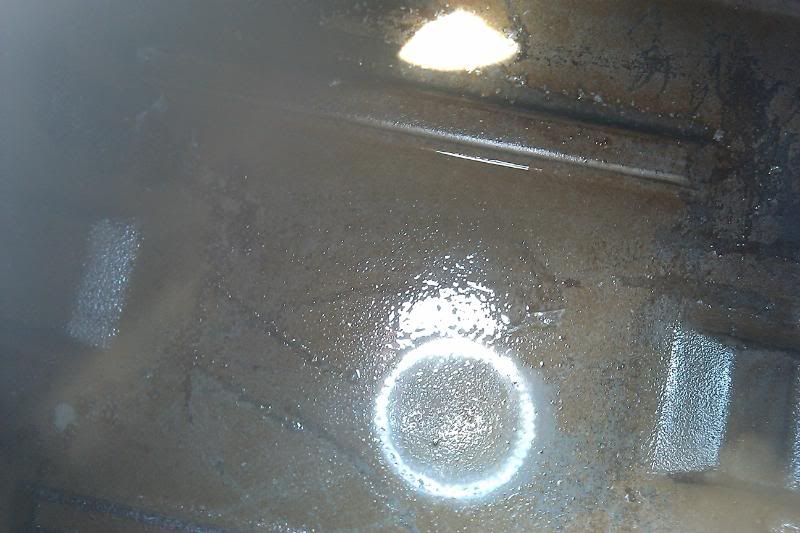
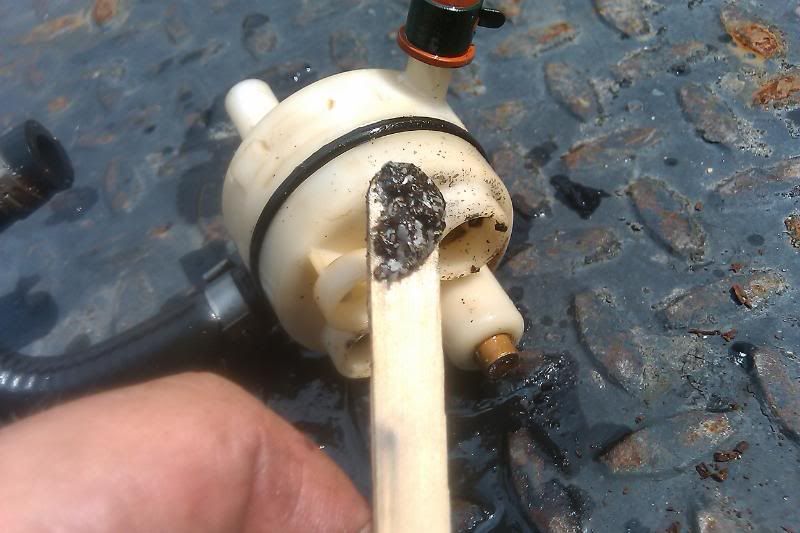

This was the result of 1.5yrs of B100 - probably about 60-70k miles??? However, I also burn SVO in a separate fuel system, so my tanks of B100 lasted a looooong time (I got 10k miles out of a single tank once...). After all of this happened, I just put good ole dead dinosaur fuel in the diesel tank.

FORD USER
Joined: Dec 2003
Posts: 376
Likes: 0
From: EARSTERN SHORE OF MD.

Was that a new tank when you first put b-100 in it. If it was I would not burn that b-100. I would guess old tank and I would say that what was left behind from deisel fuel, bio cleans that out. I also would say it depends on what kind of bio you are burning!
Hotshot
Joined: Jul 2008
Posts: 12,782
Likes: 2,142
From: N.GA Mountains
What may be difficult to see in the pics is the coating (gray stuff) is SOFT and wipes off the inside of the tank EASILY. This 'stuff' along with polymerized B100 is what you see in the screens inside the mixing chamber. My only solution here will be to remove the existing coating and have the tank re-sealed/coated.
I totally agree there is a HUGE variation in bio-d, from feedstock to processing - many things affect the characteristics of the 'fuel' we make. All I can say is we use a BioPro 190 which uses a acid/base esterification/transesterification reaction which produces higher yields (more efficient reaction) and a triple wash water washing to ensure no soaps, methanol or other chems are present in the finished fuel. We also performed 27/3 test, etc on every batch we make.
The fact remains - and the PROBLEM is, the stability if B100 is poor (without anti-chelating agents and anti-oxidants). The fact is, VO begins to degrade the moment it is squeezed out of the plant. The producers add enough BHT and citric acid to provide an acceptable life in the fryer, but beyond that all bets are off. The variations in feed stock include but are not limited to: the type of oil (PHO, canola, soy, rice oil, etc), the amount of time spent in the fryer (heat cycles), the type of food cooked in the oil, what metals the WVO was exposed to after the fryer (copper, carbon steel?), the type of pump used for collection, amount of UV exposure, etc, etc...
Polymerization is actually a fairly slow chemical reaction that starts LOOOOOOONG before you ever see any 'chicken skin'. This reaction is expedited by a few things including time, heat and exposure to oxygen and oxidants (primarily copper and carbon steel). You don't need all of these 'ingredients' enough of any single one can cause the reaction, but the more of any you have - the faster the reaction takes place.
The petroleum industry has gotten alot better at fuel stabilty with dino-fuels. I'm not that old and I can remember if ya left gas in a dirt bike or lawnmower over the winter, the varnish in carbs, etc was brutal!! The fact is, they have gotten better at 'stabilizing' these fuels - but these 'biofuels' are a whole new ballgame. In fact, currently no bio-d for sale 'at the pump' still meets the ASTM standards for 'stability'!!! This is largely why no OEM will recommend over B5 blends.
Anyway, I'm the first one to admit I ain't tooo brite!!
 I don't think that running B100 will ensure you get the results I did, in fact I'm sure the extended amounts of time the B100 was in my tank largely contributed to my problems. I would still recommend anyone using WVO for fuel learn about polymerization and use their fuel as soon as possible after making it. VO/B100 stabilizers like Vegstable or maybe BioExtend 30 are also a good insurance policy against long-term problems.
FORD USER
Joined: Dec 2003
Posts: 376
Likes: 0
From: EARSTERN SHORE OF MD.
I have dropped 2 tanks (97 f-250 7.3)(2001 f-350 7.3) over the last year due to failed fuel gauge senders, might be bio related. One tank (2008 f-350 6.4) to shorten drop tube. Tanks were clean as new tank. I first had bio made from linseed oil, then soybean oil, now it is chicken fat. I get all my fuel from a oil company that makes b-99,b-50,b-20, b-10,. All they sell is b-10, b-20 other(b-99,b-50) is for their use and mine, (b-99 is $4.00 )(b-50 $3.75 )(b-20 is $3.24) I changed to b-50 today, will change 3 to 4 weeks to b-20 for all winter! I have found filters are the main thing for running bio!

Thread
Thread Starter
Forum
Replies
Last Post
Robert Dingess
1994.5 - 1997 7.3L Power Stroke Diesel
1
Jan 23, 2015 08:18 PM
timmygyu
1994.5 - 1997 7.3L Power Stroke Diesel
2
May 14, 2014 05:16 PM
shortm
1994.5 - 1997 7.3L Power Stroke Diesel
5
Mar 10, 2012 09:32 PM
