


rear end brainstorm help from everyone

Thread Starter
|
Junior User
Joined: Mar 2010
Posts: 94
Likes: 0
rear end brainstorm help from everyone
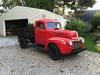
My 47 1 ton is going to need some rear end ideas from everyone. I have upgraded the front braking with eci's disc brake kit with 5 on 5.5 now need to upgrade the rear end from 5 on 7 to 5 on 5.5. This might make it easier to actually get aftermarket stock looking rims for my truck. I would like to make this truck my daily driver since i just sold my 1999 f150 which was my daily driver. My 47 is original down to tires(except paint it was painted in the 80's). The ultimate plan is to keep it stock looking and drivable at the same time. Everyones help and ideas have made this much easier for this young rookie thank you Mike.

Senior User
Joined: Aug 2006
Posts: 257
Likes: 0
From: Minnesota
The 1/2 ton rears are 5 on 5.5 The earlier open drive banjo is hard to get '42-'47. From '48-'56 I think the 1/2 tons were all a Dana style with a centered pinion. The 9" from '57 to '72 is probably the strongest of the bunch and the newer ones are much easier to get parts for -- ie brakes and bearing and even ring and pinion sets. The 9" is also the heaviest of the bunch. All of the ones listed are considered a direct bolt in on the 1/2 tons for width and spring spacing, and I think the same is true for the 1 ton as well -- someone will definitely let you you know if I am wrong on this. The one issue that you will have is drive shaft length, you may have to have one made for your truck and rear combo. The newer 1/2 ton rears are a couple inches wider, so don't fit well under the 1/2 ton with the fenders.
The Ford 8" is another viable option. Its lighter than the 9", still really durable, and again is newer so will have a good availability for parts. The 8" came in cars though so you will need to find one with a good width, you will most likely need to weld spring perches on to get them in the right spots. Also since they were for cars they will not have the 5.5" bolt circle, most people that run the 8" match the front to the back pattern. The axles though are supposed to be the same as the 9" 28 spline, so it might be possible to find some truck axles to fit or you could have axles made (I think Strange and Moser can make them -- but I would definitely check and get a cost before I went that route).
The Ford 8" is another viable option. Its lighter than the 9", still really durable, and again is newer so will have a good availability for parts. The 8" came in cars though so you will need to find one with a good width, you will most likely need to weld spring perches on to get them in the right spots. Also since they were for cars they will not have the 5.5" bolt circle, most people that run the 8" match the front to the back pattern. The axles though are supposed to be the same as the 9" 28 spline, so it might be possible to find some truck axles to fit or you could have axles made (I think Strange and Moser can make them -- but I would definitely check and get a cost before I went that route).
Postmaster
Joined: Jan 2009
Posts: 4,584
Likes: 3
From: Chesapeake, Va.
I suggest that you talk with a local custom wheel dealer to find out which wheels will fit the 5.5 pattern on the front and then go to a bone yard and do some measuring for overall width and also spring mountings as well as measure the offset of the pinion from center so you can have some options with your upgrade. A Dana would be nice but the Ford 8.8 that is used in the Lincoln Towncar or any of the big Fords will give good service but you may have to change the gears to be happy. The early 9 inch rears are weak and the only center sections to use are getting very scarce as they came in the 390,427 & 428powered GT 'stangs and pony cars.
Senior User
Joined: Aug 2006
Posts: 257
Likes: 0
From: Minnesota
Definitely measure your rear, to make sure. Measure between the surfaces of the drum that the wheel mounts to. Many people talk about measuring from (brake) backing plate to backing plate, but this likely will provide bad results. If you have the rear I am thinking of, most likely you will find that the wheel surface drum to drum will be 60 1/2". Then measure from center of the spring to center of the spring, it should be 40". Like I said all of the 1/2 tons from '42-'72 have these same measurements, so will just bolt in and put the wheels in roughly the same place with the 5 on 5.5" bolt circle. Through out those years they used different size brakes that change the offset of the backing plate, which is why you shouldn't use that measurement.
I assume that as stock as you say the truck is you are running the original flathead (doesn't matter if it is the 8 of 6 really) -- this means that you really don't need the Nodular carrier that Moto Mel is referring to for a 9" rear. Actually the 9" is considered to be one of the better rears all around and is not quite as weak as Moto would suggest. It has been the rear of choice for many racers over the years, although they did come in different flavors of performance and some of that can be correlated to the age of the rear, as the oldest carriers are considered the weakest structurally. Interestingly they are the one part that Chevy guys are willing to put into their muscle cars. They are also very well supported as companies like Strange still produce their own "Ford" 9" including the high performance nodular iron carriers and I have even seen aluminum carriers for light duty applications like the flathead that save weight. Other than weight the other big problem with the 9" from '57-'72 F100 is that because they were designed for heavier duty applications there will be a higher power loss transferred to the wheels ( I don't know if anyone has ever said anything for numbers so that you could do a comparison) Do some reading on the 9": Kevinstang's Ford Nine Inch Differential Page +
Like I said though, for the direct bolt in applications you have 3 flavors of rears to work with:
1. '42-'47 1/2 ton open drive banjo rear. This would be choice, they are old and cool looking rears. The most common ratios are 3.78:1 and 4.10:1 (although there are others, you are more likely in the trucks to find numbers bigger than the 4.10, finding the 3.5(?)s are really hard). I have looked around and it seems like you can get bearings and brake parts for these if only at the specialty places. The other negative is that they are old and cool looking. These truck rears are the ones that the guys hotroding the old Ford cars look for, they get the old look with the open drive so that they can easily drop a chev in front, so you are not the only one looking for this rear.
2. '48-'56 This is a nice little swap because the rear was designed for the low power engines of that era, so in that aspect are lighter than the later 9" and probably have less parasitic loss than the heavier duty 9". There are a ton of these on the road, so I would assume you can get parts for them -- I have never really looked. There are also a ton of guys swapping them out because they are putting 350 chevs up front and want something stronger with better gearing than the common low geared 4.1 and 3.7s that are found. Getting different ring and pinion is near impossible for either of the old ones. But you can likely got these cheap because overall they are not that desirable.
3. The infamous Ford 9" '57-'72 F100. They are easy to get parts for. If you check out ebay today you are likely to find almost any ring and pinion ratios you would desire. You can buy complete carriers setup with the gears that you want. The '68-'72 rear has the widest brakes of the bunch, the early housing starting in '57 I think is the nicest looking with more of a rounded rear of the housing. I think the early bearings were different than the later ones. The 9" from the 1/2 tons will have the pinion offset to the right by a couple of inches. This does not matter on the trucks and is only a factor on the cars when you have to keep the drive shaft in the tunnel (the centered pinion 9" in the cars have different length axles the offset pinion in the trucks has equal length axles)
It should also be noted that in some of the later year f100s you could also find a Dana instead of the 9", this is a very rare option that exists, but is not something I would go looking for.
Also remember that all of the 3/4 ton trucks had a different bolt pattern, so no F2s or F200 or F250s
The trucks newer than '72 had a wider rear and different spring spacing. Probably usable in your application with the flatbead but will need a little more work.
I assume that as stock as you say the truck is you are running the original flathead (doesn't matter if it is the 8 of 6 really) -- this means that you really don't need the Nodular carrier that Moto Mel is referring to for a 9" rear. Actually the 9" is considered to be one of the better rears all around and is not quite as weak as Moto would suggest. It has been the rear of choice for many racers over the years, although they did come in different flavors of performance and some of that can be correlated to the age of the rear, as the oldest carriers are considered the weakest structurally. Interestingly they are the one part that Chevy guys are willing to put into their muscle cars. They are also very well supported as companies like Strange still produce their own "Ford" 9" including the high performance nodular iron carriers and I have even seen aluminum carriers for light duty applications like the flathead that save weight. Other than weight the other big problem with the 9" from '57-'72 F100 is that because they were designed for heavier duty applications there will be a higher power loss transferred to the wheels ( I don't know if anyone has ever said anything for numbers so that you could do a comparison) Do some reading on the 9": Kevinstang's Ford Nine Inch Differential Page +
Like I said though, for the direct bolt in applications you have 3 flavors of rears to work with:
1. '42-'47 1/2 ton open drive banjo rear. This would be choice, they are old and cool looking rears. The most common ratios are 3.78:1 and 4.10:1 (although there are others, you are more likely in the trucks to find numbers bigger than the 4.10, finding the 3.5(?)s are really hard). I have looked around and it seems like you can get bearings and brake parts for these if only at the specialty places. The other negative is that they are old and cool looking. These truck rears are the ones that the guys hotroding the old Ford cars look for, they get the old look with the open drive so that they can easily drop a chev in front, so you are not the only one looking for this rear.
2. '48-'56 This is a nice little swap because the rear was designed for the low power engines of that era, so in that aspect are lighter than the later 9" and probably have less parasitic loss than the heavier duty 9". There are a ton of these on the road, so I would assume you can get parts for them -- I have never really looked. There are also a ton of guys swapping them out because they are putting 350 chevs up front and want something stronger with better gearing than the common low geared 4.1 and 3.7s that are found. Getting different ring and pinion is near impossible for either of the old ones. But you can likely got these cheap because overall they are not that desirable.
3. The infamous Ford 9" '57-'72 F100. They are easy to get parts for. If you check out ebay today you are likely to find almost any ring and pinion ratios you would desire. You can buy complete carriers setup with the gears that you want. The '68-'72 rear has the widest brakes of the bunch, the early housing starting in '57 I think is the nicest looking with more of a rounded rear of the housing. I think the early bearings were different than the later ones. The 9" from the 1/2 tons will have the pinion offset to the right by a couple of inches. This does not matter on the trucks and is only a factor on the cars when you have to keep the drive shaft in the tunnel (the centered pinion 9" in the cars have different length axles the offset pinion in the trucks has equal length axles)
It should also be noted that in some of the later year f100s you could also find a Dana instead of the 9", this is a very rare option that exists, but is not something I would go looking for.
Also remember that all of the 3/4 ton trucks had a different bolt pattern, so no F2s or F200 or F250s
The trucks newer than '72 had a wider rear and different spring spacing. Probably usable in your application with the flatbead but will need a little more work.

Thread
Thread Starter
Forum
Replies
Last Post
swing fixer
Brakes, Steering, Suspension, Tires, & Wheels
10
Feb 23, 2013 03:56 PM
47 flatbed
1947 and Older Ford Trucks
19
Dec 15, 2010 06:57 PM







