


shaZam-400 expectations

Thread Starter
|
Freshman User
Joined: Jan 2003
Posts: 42
Likes: 0
shaZam-400 expectations
I got the 9:1 pistons and a block for my upcoming 400. Here's thae plan:
9.0:1 cast pistons
Edlbrock Intake
MSD Blaster 2 coil, Distributer & 9mm wires
Summit timing gears
Summit re-build kit
Holley 750 carb
K&N, Headders-Flowmasters
Small porting (they claim a 30 HP gain) on 400 2V heads
Othermise pretty much stock
4 Questions-
1-what cam should I use?
2-how much porting is needed to really gain 30 HP-price?
3-how many ponies to you estimate with all this?
4-can I put my current holley 600 on it temporarily without burning it up running too lean?
Thanks Man
9.0:1 cast pistons
Edlbrock Intake
MSD Blaster 2 coil, Distributer & 9mm wires
Summit timing gears
Summit re-build kit
Holley 750 carb
K&N, Headders-Flowmasters
Small porting (they claim a 30 HP gain) on 400 2V heads
Othermise pretty much stock
4 Questions-
1-what cam should I use?
2-how much porting is needed to really gain 30 HP-price?
3-how many ponies to you estimate with all this?
4-can I put my current holley 600 on it temporarily without burning it up running too lean?
Thanks Man

Elder User

Joined: Feb 2001
Posts: 829
Likes: 0
From: Porterfield
shaZam-400 expectations
4 Questions-
1-what cam should I use?
Well Billy you have to decide what your going to use this motor for, You don't want to put a drag racing cam in a rock crawler
2-how much porting is needed to really gain 30 HP-price?
Here's some reading for you on this.
http://www.sa-motorsports.com/diyport.htm
http://www.projectbronco.com/Technic...e_build_up.htm
http://web.archive.org/web/200102050...k/shopnov.html
http://home.earthlink.net/~tcrocker/400.html
http://home.earthlink.net/~tcrocker/400build4.jpg
http://home.earthlink.net/~tcrocker/400build5.jpg
http://www.off-road.com/ford/flashback/400_power.html
3-how many ponies to you estimate with all this?
400 easy
4-can I put my current holley 600 on it temporarily without burning it up running too lean?
Yes you can just make sure you jet it up. say 86 in the rear 82 in the front .
1-what cam should I use?
Well Billy you have to decide what your going to use this motor for, You don't want to put a drag racing cam in a rock crawler
2-how much porting is needed to really gain 30 HP-price?
Here's some reading for you on this.
http://www.sa-motorsports.com/diyport.htm
http://www.projectbronco.com/Technic...e_build_up.htm
http://web.archive.org/web/200102050...k/shopnov.html
http://home.earthlink.net/~tcrocker/400.html
http://home.earthlink.net/~tcrocker/400build4.jpg
http://home.earthlink.net/~tcrocker/400build5.jpg
http://www.off-road.com/ford/flashback/400_power.html
3-how many ponies to you estimate with all this?
400 easy
4-can I put my current holley 600 on it temporarily without burning it up running too lean?
Yes you can just make sure you jet it up. say 86 in the rear 82 in the front .

Lead Driver


Joined: Nov 2000
Posts: 6,651
Likes: 352
From: Albuquerque
shaZam-400 expectations
I wouldn't get too carried away with the cam or the porting for a street engine. You might wind up with no low end grunt. A good bowl clean up and port match should do. Get rid of the exhuast air injector bumps if you have them.
I would spend some time on Crane Cams web site and pay close attention to matching the cam to your compression ratio.
I would spend some time on Crane Cams web site and pay close attention to matching the cam to your compression ratio.
Lead Driver
Joined: Nov 2000
Posts: 6,651
Likes: 352
From: Albuquerque
shaZam-400 expectations
Well compression is the catch 22 of these engines (street use). The more they have the better they run but, you need to stay at 9.5 or less for the street or 92 octane wont be enough. That of course is a generalization.

Posting Guru
Joined: Jun 2002
Posts: 1,099
Likes: 0
shaZam-400 expectations
Compression ratios suffer from a law of diminishing returns. The percent power increase is less with each point increased.
From David Vizard's Handbook,
8:1-9:1=2.0%
9:1-10:1=1.7%
10:1-11:1=1.5%
11:1-12:1=1.3%
12:1-13:1=1.2%
13:1-14:1=1.0%
http://www.dynomite.com/dyno-max-dat..._2000_demo.htm
From David Vizard's Handbook,
8:1-9:1=2.0%
9:1-10:1=1.7%
10:1-11:1=1.5%
11:1-12:1=1.3%
12:1-13:1=1.2%
13:1-14:1=1.0%
http://www.dynomite.com/dyno-max-dat..._2000_demo.htm

Senior User
Joined: Sep 2002
Posts: 434
Likes: 2
From: Oregon: Land of the Majes
Trending Topics

Laughing Gas

Joined: Feb 2003
Posts: 1,234
Likes: 3
From: In the woods of Oregon
 shaZam-400 expectations
So; raising compression from (8 to 1) to (9 to 1) on a 300hp engine is worth about 6hp? Is this pretty accurate? I was thinking it would be more like 30 or so hp. Any thoughts?
P.S. I agree high compression does sound cool.
P.S. I agree high compression does sound cool.
FTE Stories
Ford Trucks for Ford Truck Enthusiasts

Top 6 Best Deals Available on New Fords & Lincolns Right Now
Brett Foote
This Hennessey Takes the Expedition Tremor's Off-Roading Capability to the Next Level
Verdad Gallardo
Top 10 Fords at 2026 Carlisle Ford Nationals
Joe Kucinski
3 Best / 3 Worst Parts of Modern Ford Ownership
Brett Foote
10 Amazing Upgrades That Solve Common Ford Truck Owner Headaches
Pouria Savadkouei
Every 2026 Ford Engine Explained
Brett Foote
10 Ugly Ford Trucks That We Still Kinda Love
Joe Kucinski
10 Things Every Truck Owner NEEDS (2026 Edition)
Michael S. Palmer
Rezvani's Latest Post-Apocalyptic Monster Is a Ford F-150 Raptor Underneath
Verdad Gallardo
Thread Starter
|
Freshman User
Joined: Jan 2003
Posts: 42
Likes: 0
shaZam-400 expectations
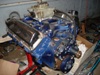
Shazam (or anybody), considering my parts combo listed above, I still will need this engine to give me power down to at least 1750 so I was thinking that a 218 degree intake duration would be about right for it. The thing that I can't decide on is the lift. I have two cams in mind, one has 218/228 degrees duration with .509" lift on intake and exhaust and the other has 216/216 duration with .524" of lift. Wich one will suit me best-starting today I'm gone for a week so please E-mail me-thanks man
PS-got a block-not sure if it's a 351 or 400. Serial # on crank is 1KA anybody know?
PS-got a block-not sure if it's a 351 or 400. Serial # on crank is 1KA anybody know?

Elder User
Joined: Sep 2001
Posts: 887
Likes: 1
From: Jax FL
shaZam-400 expectations
Originally posted by kopfenjager
So; raising compression from (8 to 1) to (9 to 1) on a 300hp engine is worth about 6hp? Is this pretty accurate? I was thinking it would be more like 30 or so hp. Any thoughts?
So; raising compression from (8 to 1) to (9 to 1) on a 300hp engine is worth about 6hp? Is this pretty accurate? I was thinking it would be more like 30 or so hp. Any thoughts?
8:1 - 212hp
9:1 - 226hp
10:1 - 239hp
11:1 - 251hp
12:1 - 262hp
13:1 - 271hp
14:1 - 279hp
so what brian posted seems pretty cose to spot on.
Laughing Gas
Joined: Feb 2003
Posts: 1,234
Likes: 3
From: In the woods of Oregon
 shaZam-400 expectations
But going from 212 to 226 is a 6% gain in horsepower not 2%. So is it 2% or 6.6%? Sill 6.6% isn't to bad 18 horsepower on a 300hp engine. I feel anything over say 3% would warant bumping up comp.
Elder User
Joined: Sep 2001
Posts: 887
Likes: 1
From: Jax FL
shaZam-400 expectations
my stock setup has some bad data in it that could have skewed the percentage. the point is you get a diminishing return the further you bump the cr. that might have a .030 over bore build in to it. we used to estimate 30-50hp when i was a lot younger. so i was surprised when i played with it.
Last edited by GT40man; Feb 9, 2003 at 10:45 PM.
Laughing Gas
Joined: Feb 2003
Posts: 1,234
Likes: 3
From: In the woods of Oregon
shaZam-400 expectations
I agree with the diminishing return concept. Also I have always heard 30hp to 50hp. Still, only gaining 3-6% hp, puts the money spent horsepower gained question in a new light. If I can get the ertel pistons, about 125$, then its worth it. If I have to go the 351c piston route, about 200$, it isn't worth it. Then again I'am just trying to go 3/4 fast at half price. Thanx for the feedback
Posting Guru
Joined: Jun 2002
Posts: 1,099
Likes: 0
shaZam-400 expectations
This is an excerpt from the page about compression.
"The gains shown are typical for engines using reletively short duration cams, like those in many street performance engines. As cam timing is increased (by installing a cam with more duration), the power gains from an increasing compression ratio become even greater than those shown in the chart. This is because the data illustrated in the chart is based on mechanical compression ratios. (IE, as determined by mathematical calculation from a fixed volume) and not on the dynamic ratios that continue to increase as induction efficiency increases. As the induction system s modified to improve breathing, the dynamic compression increases very much like increasing the size of the piston, since additional amounts of air and fuel are inducted into the cylinder. Induction efficiency can continue to improve even to the point of "packing" the cylinder with positive pressure (a volumetric efficiency over 100%) as is developed by some performance manifold and header combinations."
"The gains shown are typical for engines using reletively short duration cams, like those in many street performance engines. As cam timing is increased (by installing a cam with more duration), the power gains from an increasing compression ratio become even greater than those shown in the chart. This is because the data illustrated in the chart is based on mechanical compression ratios. (IE, as determined by mathematical calculation from a fixed volume) and not on the dynamic ratios that continue to increase as induction efficiency increases. As the induction system s modified to improve breathing, the dynamic compression increases very much like increasing the size of the piston, since additional amounts of air and fuel are inducted into the cylinder. Induction efficiency can continue to improve even to the point of "packing" the cylinder with positive pressure (a volumetric efficiency over 100%) as is developed by some performance manifold and header combinations."

Thread
Thread Starter
Forum
Replies
Last Post
cruz76
335 Series- 5.8/351M, 6.6/400, 351 Cleveland
16
Oct 19, 2016 05:35 PM
84f150guy
335 Series- 5.8/351M, 6.6/400, 351 Cleveland
4
Apr 8, 2005 04:23 PM
Hidome
335 Series- 5.8/351M, 6.6/400, 351 Cleveland
2
Feb 11, 2003 12:29 AM
elysium
Ford Inline Six, 200, 250, 4.9L / 300
20
Oct 24, 2001 04:47 PM
