



EBPV Issue...I Think...

Thread Starter
|
Elder User
Joined: Jun 2009
Posts: 999
Likes: 0
From: Easley, SC 29640
According to Jody Tipton, the PCM uses feedback from the EBPV sensor for fuel requirements under varying conditions. It would be interesting to see if your fuel mileage degrades by disconnecting the sensor rather than the EBPV solenoid at the pedestal.
To replace the "flapper" you would have to replace the exhaust outlet but if you are looking to get a non-EBPV pedestal, you can also get the outlet without the "flapper" or simply drill it out and plug the holes with small freeze plugs.
To replace the "flapper" you would have to replace the exhaust outlet but if you are looking to get a non-EBPV pedestal, you can also get the outlet without the "flapper" or simply drill it out and plug the holes with small freeze plugs.
Hey Guzzle...i disconnected the solenoid at the pedestal...just beside the EBPV accuator...i guess i thought that was the sensor...hmmmm, is the sensor i was thinking the one in front of the oil res. front and center behind the pulleys?? If thats the sensor, i left it alone...but, i do plan on using your destructions to clean the soot tube out one day...it just will NOT be today...luckily, with the cold weather, i have alot of free time to perform some of these PM items now...

Junior User
Joined: Oct 2008
Posts: 85
Likes: 1
From: Marblehead, MA
I'm having similar problems with my EBPV as well. With the latest cold snap my truck 'hisses' at cruising speeds. Some have said this is normal, some have said this is not normal. Hard to tell with words like 'hiss' and 'roar'.
I will tell you that it feels to me like the EBPV is sticking and not closing fully. My truck never makes a 'roar' or jet sounding noise. Just the hiss and it will stay around for 10 miles or so....It goes away when I hit the throttle.
To date I've replaced the EBPS tube, but not the sensor. The sensor is about $75 thru Ed....Am I wise to replace the sensor or does this seem more like something on the EBPV itself?
I will tell you that it feels to me like the EBPV is sticking and not closing fully. My truck never makes a 'roar' or jet sounding noise. Just the hiss and it will stay around for 10 miles or so....It goes away when I hit the throttle.
To date I've replaced the EBPS tube, but not the sensor. The sensor is about $75 thru Ed....Am I wise to replace the sensor or does this seem more like something on the EBPV itself?
Junior User
Joined: Oct 2008
Posts: 85
Likes: 1
From: Marblehead, MA
I'm having similar problems with my EBPV as well. With the latest cold snap my truck 'hisses' at cruising speeds. Some have said this is normal, some have said this is not normal. Hard to tell with words like 'hiss' and 'roar'.
I will tell you that it feels to me like the EBPV is sticking and not closing fully. My truck never makes a 'roar' or jet sounding noise. Just the hiss and it will stay around for 10 miles or so....It goes away when I hit the throttle.
To date I've replaced the EBPS tube, but not the sensor. The sensor is about $75 thru Ed....Am I wise to replace the sensor or does this seem more like something on the EBPV itself?
I will tell you that it feels to me like the EBPV is sticking and not closing fully. My truck never makes a 'roar' or jet sounding noise. Just the hiss and it will stay around for 10 miles or so....It goes away when I hit the throttle.
To date I've replaced the EBPS tube, but not the sensor. The sensor is about $75 thru Ed....Am I wise to replace the sensor or does this seem more like something on the EBPV itself?
Junior User
Joined: Oct 2008
Posts: 85
Likes: 1
From: Marblehead, MA
My question is the 'hissing' noise the EBPV getting stuck and only closing part way? I've searched the thread a bunch and can't come up with a solid answer. Again, this is a 'hissing' noise that comes at any cruising speed....it goes away when I further depress the throttle. It almost sounds like a boost leak, but obviously it's not that. When the 'hissing' is there I need to give the motor more throttle to keep moving.

Senior User
Joined: Apr 2009
Posts: 395
Likes: 1
From: Texas
FTE Stories
Ford Trucks for Ford Truck Enthusiasts

Top 10 Most Expensive Ford Trucks Ever Sold on Bring a Trailer
Joe Kucinski
2027 Ford Super Duty Buyer's Guide (Every Model, Engine, & Package)
Brett Foote
Top 10 Ford Truck Tragedies
Joe Kucinski
AEV FXL Super Duty - the Super Duty Raptor Ford Doesn't Make
Brett Foote
Lobo Vs Lobo: Proof the F-150 Lobo Should Be Even Lower!
Michael S. Palmer
Ford's 2001 Explorer Sportsman Concept Looks For a New Home
Verdad Gallardo
10 Best Ford Truck Engines We Miss the Most!
Joe Kucinski
2026 Shelby F-150 Off-Road: Better Than a Raptor R?
Brett Foote
2027 Super Duty Carhartt Package First Look: 12 Things You NEED to Know!
Michael S. Palmer
Fleet Mechanic
Joined: Feb 2005
Posts: 1,797
Likes: 1
From: Northern Colorado
I have done that in the past. Yesterday I unplugged the EBPS sensor on the front of the HPOP...I read that it will also disable the EBPV. Unplugging this sensor makes the 'hissing' noise stop.
My question is the 'hissing' noise the EBPV getting stuck and only closing part way? I've searched the thread a bunch and can't come up with a solid answer. Again, this is a 'hissing' noise that comes at any cruising speed....it goes away when I further depress the throttle. It almost sounds like a boost leak, but obviously it's not that. When the 'hissing' is there I need to give the motor more throttle to keep moving.
My question is the 'hissing' noise the EBPV getting stuck and only closing part way? I've searched the thread a bunch and can't come up with a solid answer. Again, this is a 'hissing' noise that comes at any cruising speed....it goes away when I further depress the throttle. It almost sounds like a boost leak, but obviously it's not that. When the 'hissing' is there I need to give the motor more throttle to keep moving.
The EBPV solenoid at the base of the turbo pedestal is what activates or Opens and Closes the exhaust valve. If the o-rings on the solenoid are leaking oil past them, the EBPV valve could partially close or not fully open.

Post Fiend
Joined: Nov 2007
Posts: 9,549
Likes: 14
From: Payson, AZ
I have never heard that by unplugging the EBPS the EBPV is deactivated, but I certainly don't know everything.
Try leaving the EBPS plugged up and unplugging the EBPV actuator and see if you still have the same symptoms. It would be nice if you could narrow down where that hissing is coming from.
Also with the EBPS unplugged the PCM may use a default value for EBP. The EBPS tube or sensor may be clogged with soot and the PCM is not getting an accurate EBP reading.
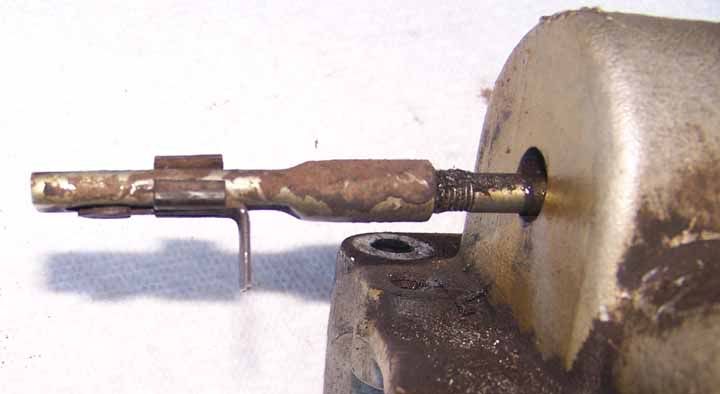
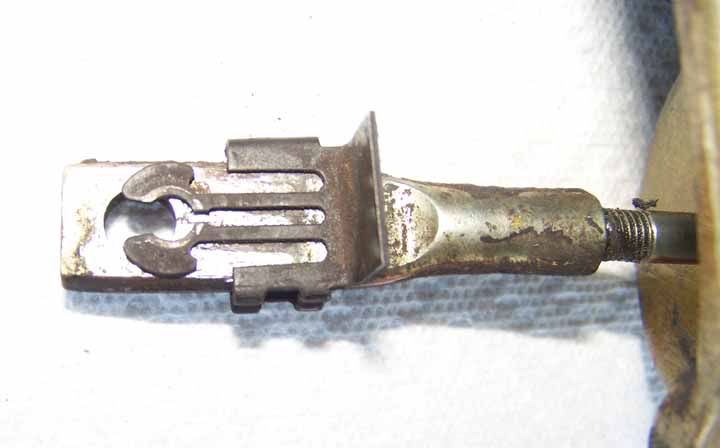
If you think the EBPV may be sticking you need to disconnect the rod from the EBPV actuator to the EBPV tang at the turbo exhaust housing and operate it by hand to check it for movement.
Here are a couple of pics of the clip that holds the rod to the tang. Using long needle nose pliers you can slide it toward the pedestal to release it.
Try leaving the EBPS plugged up and unplugging the EBPV actuator and see if you still have the same symptoms. It would be nice if you could narrow down where that hissing is coming from.
Also with the EBPS unplugged the PCM may use a default value for EBP. The EBPS tube or sensor may be clogged with soot and the PCM is not getting an accurate EBP reading.
If you think the EBPV may be sticking you need to disconnect the rod from the EBPV actuator to the EBPV tang at the turbo exhaust housing and operate it by hand to check it for movement.
Here are a couple of pics of the clip that holds the rod to the tang. Using long needle nose pliers you can slide it toward the pedestal to release it.

Postmaster
Joined: Dec 2008
Posts: 3,340
Likes: 2
An EBP signal that is detected out of range high or low by the PCM will cause the engine to ignore the EBP signal and disable exhaust back pressure operation. The NGS tool will display a fixed PID value of 43.5 PSI (300 kPa) for EBP when exhaust back pressure is in default. I have my sensor unplugged and have not noticed any loss in mileage or performance. Probably best to just unplug the solenoid at the turbo pedistal. I was being cheap and did not want to replace the broken tube. I did gut the flap on the exhaust side of the turbo.
Junior User
Joined: Oct 2008
Posts: 85
Likes: 1
From: Marblehead, MA
Closing the EPBV on the turbo exhaust outlet is what causes the hissing. It is restricting the exhaust gasses from exiting the turbo, creating backpressure and is designed to hasten the engine warm up time.
The EBPV solenoid at the base of the turbo pedestal is what activates or Opens and Closes the exhaust valve. If the o-rings on the solenoid are leaking oil past them, the EBPV valve could partially close or not fully open.
The EBPV solenoid at the base of the turbo pedestal is what activates or Opens and Closes the exhaust valve. If the o-rings on the solenoid are leaking oil past them, the EBPV valve could partially close or not fully open.
I still feel I'm at square one here....is the 'hising' then part of normal operating? It's been in the 20s here during the day, last week in the 30s/40s....hissing has been constant for the first 10/15 miles. At times I have felt as if the EBPV was closing more and it seemed more like a 'roar'.
Sorry for the cracker jack wording...can't come up with anything better.
Basically I'm just trying to figure out if there is a problem and if I should start by replacing the EBPS sensor. In reading some other posts here it seems that the EBPS and EBPV 'talk' to one another.

Thread
Thread Starter
Forum
Replies
Last Post
xbox73
1999 - 2003 7.3L Power Stroke Diesel
10
May 5, 2014 06:47 PM
