




Front suspension and why

Thread Starter
|
Senior User
Joined: Dec 2003
Posts: 140
Likes: 0
From: Marietta, GA
 Front suspension and why
I have been following a discussion on another forum regarding front suspensions. Sort of a MustangII vs all others debate. In the planning process, I am still undecided which way I am going to go. There are catalogs discussing 75% of a MII IFS.
So my question is, what did you do for your personal truck? MII, subframe from GM or Chrysler, or modify the stock leaf springs.
And then, why did you make that choice? Cost, personal abilities, or other
I am not trying to start any conflicts between members, I am just at a point to where I am trying to decide between MII or leaf spring modification.
Thanks
Bill
So my question is, what did you do for your personal truck? MII, subframe from GM or Chrysler, or modify the stock leaf springs.
And then, why did you make that choice? Cost, personal abilities, or other
I am not trying to start any conflicts between members, I am just at a point to where I am trying to decide between MII or leaf spring modification.
Thanks
Bill

Cargo Master


Joined: Apr 2005
Posts: 3,338
Likes: 167
From: Harpswell Maine
The significant IFS missing from the suspension topic is the Jaguar XJ6. If you want to pursue that there are a number of us in process installing it. It installs as a compete subframe. You do not cut off the frame rails to install it like you would on the GM or cut into the frame rails like you do for the volare. Fits really easily in the 52 and earlier trucks (32" wide rails)

Lead Driver
Joined: Apr 2002
Posts: 8,813
Likes: 13
From: Littleton, New Hampshire
I used a Chrysler front suspension and rear springs on my 48. The cost was very low (only paid $150 for the whole car - 87 Chrysler 5th Ave) and I wanted a soft ride and good handling. It was relatively easy to install. 
Cargo Master

Joined: Nov 2007
Posts: 2,292
Likes: 8
From: sparta ky.

IN KY. we do some strange things, I cut up the unibody of a 93 Z28 and married it with the stock 51 frame then rebolted the cradle and front suspenion back in used Z28 motor, tranny and rear end so everything from frame down is 93 Z28, LT1,700R4,4 wheel disc, so far so good but I had it all, why not use it, right.
Logistics Pro


Joined: Dec 2005
Posts: 4,644
Likes: 55
From: Moro Bay, AR
I am using a frame clip from a 87 Town Car, why? the frame was already butchered from a PO attempting to put a Volare suspension in and I already had the Lincoln. If I had it to do again, I would use a good frame and install the Jag suspension. My truck is not on the road yet, but I hope to drive it this summer.

Fleet Mechanic

Joined: Oct 2004
Posts: 1,725
Likes: 511
From: clinton,tn
i rebuilt the stock front end,added power disc brake's and a toyota power steering box. why? because it has worked good since 1949 and will be a daily driver.it will work better after doing all that.( i hope )
Trending Topics

New User
Joined: Jul 2006
Posts: 14
Likes: 0
From: Covenrty, Connecticut
Hi everyone.
I do not post very much but follow this forum on a daily basis. Go to the 1976-1972 F-100 sight and look down the first or second page for the thread labeled 06Crown Vic Front suspension. I asked about using the 2003-2006 Crown Vic suspensions on our forum about a year ago but did not get much of a reply. This new thread gives the information I was looking for. I have checked here in Connecticut and it looks like you can get the complete front suspension with the rack steering for around $500. I can not rebuilt the front end on the 54 F-100 and add disk breaks and power steering (Toyota) for under $1,200 - $1,500.
The crown vic suspension is the way I plan to go.
I think someone on this forum has also used this suspension.
Let me know what the rest ouy you feel about this.
Thanks
Rich
I do not post very much but follow this forum on a daily basis. Go to the 1976-1972 F-100 sight and look down the first or second page for the thread labeled 06Crown Vic Front suspension. I asked about using the 2003-2006 Crown Vic suspensions on our forum about a year ago but did not get much of a reply. This new thread gives the information I was looking for. I have checked here in Connecticut and it looks like you can get the complete front suspension with the rack steering for around $500. I can not rebuilt the front end on the 54 F-100 and add disk breaks and power steering (Toyota) for under $1,200 - $1,500.
The crown vic suspension is the way I plan to go.
I think someone on this forum has also used this suspension.
Let me know what the rest ouy you feel about this.
Thanks
Rich
FTE Stories
Ford Trucks for Ford Truck Enthusiasts

3 Best / Worst Features Of The 2025+ Ford Expedition
Brett Foote
10 Ways Ford is LOSING to the Competition
Joe Kucinski
Top 6 Best Deals Available on New Fords & Lincolns Right Now
Brett Foote
This Hennessey Takes the Expedition Tremor's Off-Roading Capability to the Next Level
Verdad Gallardo
Top 10 Fords at 2026 Carlisle Ford Nationals
Joe Kucinski
3 Best / 3 Worst Parts of Modern Ford Ownership
Brett Foote
10 Amazing Upgrades That Solve Common Ford Truck Owner Headaches
Pouria Savadkouei
Every 2026 Ford Engine Explained
Brett Foote
10 Ugly Ford Trucks That We Still Kinda Love
Joe Kucinski
Logistics Pro
Joined: Jul 2004
Posts: 4,365
Likes: 85
From: Utah
I was thinking about just sticking with the stock front end, and maybe just upgrading to disc brakes as well. mostly because I don't know what i'm doing, secondly because of cost, third because I decided to keep the truck fairly close to stock/original. fourth because I'm scared to get in to it to deep and get myself buried with no way out.
Why would you remove some leaf springs? just to lower the front a bit? I could see doing that to lower the front just a bit.
This is a good post,
You guys make it sound so easy to install the differnt front clips I could probably be swayed into changing my mind very easily, of course the cost issue comes up again! Hmmmmm decisions
Why would you remove some leaf springs? just to lower the front a bit? I could see doing that to lower the front just a bit.
This is a good post,
You guys make it sound so easy to install the differnt front clips I could probably be swayed into changing my mind very easily, of course the cost issue comes up again! Hmmmmm decisions
Cargo Master
Joined: Apr 2003
Posts: 2,578
Likes: 208
From: Murfreesboro, Tennessee

Well...about 10 years ago I met a guy who used FOMOCO Panther Platform front ends. I had a chance to ride in a 56 he had done and fell in love again. When I got my recent truck I was debating Volare or FOMOCO. It just so happens my buddy had a couple of 87 Crown Vic front clips around and 19K miles later I am still happy with my decision.
Hey 54 Fordpickup please IM me and let me know your progress. I work in a salvage yard part time and we had a 05 Crown Vic come thru and I have been that front clip everyday. It has the R&P and all. Never know when you might come up on another cab and frame. Guy can never be to prepared you know.
Hey 54 Fordpickup please IM me and let me know your progress. I work in a salvage yard part time and we had a 05 Crown Vic come thru and I have been that front clip everyday. It has the R&P and all. Never know when you might come up on another cab and frame. Guy can never be to prepared you know.

Hotshot
Joined: Oct 2004
Posts: 15,882
Likes: 88
From: Durham NC
With any discussion about the M II IFS you have to understand there are several "flavors" of IFS all refered to as "M II or M II Type".
1. The OEM design straight from the salvage yard, as used on the Fox bodied cars i.e. Mustang II, Pinto, Bobcat, Fairmont. This is a removable crossmember with a very recognizable layout. It used a wishbone upper control arm, and a single pivoted stamped lower control arm with a trailing strut that was rubber mounted to a bracket on the chassis behind the suspension. This system was made popular by the early Ford hotrod builders because it was compact, the right size and strength for a pre 40's chassis, and was very available. The lower control arm and strut from a distance resembled a beam axle and radius rod setup that most rodders were very familiar with.
2. 2nd generation: The aftermarket crossmember for use with OEM parts. The salvaged OEM swap popularity was driven by the magazines and the later era rodders started to notice and wanted to adapt the setup to their cars, but found the tread width was too narrow, so some started cutting and widening the crossmember to fit the fat fendered cars, which necessitated widening the R&P steering to match. The aftermarket manufacturers recognized a market and started building crossmembers and R&P parts to fit later chassis that still used OEM parts from the frame out. Then problems started to rear their ugly head. The OEM parts were designed for a 2000# commuter car and to be as cheap to manufacture as possible. The stamped control arms were not strong enough, the single lower control arm/trailing arm was a design that should have never have gotten past the drawing board stage, the springs were too weak to support a heavy V-8, and the little 9" brakes were a joke as far as stopping distance was concerned.
3. 3rd generation: aftermarket suspension/brake parts as direct replacement for OEM parts. The manufacturers started making upgrade parts that were designed to directly replace the undersized OEM parts for the people who had installed one of their crossmembers already, including a true wishbone lower control arm, larger brakes, heavier springs or coilovers and properly sized sway bars. These parts were quickly phased into a package deal with the crossmember. The only OEM M II parts used were the spindles, balljoints and bearings. The geometry remained as Ford designed it. This setup is still being sold as the lower priced setups.
4. 4th generation: The aftermarket IFS becomes all aftermarket. The popularity of the IFS kits caused some of the more racing oriented manufacturers to say "we are making all the parts ourselves so now let's also improve on Ford's original geometry" from a design for ease of low speed manuevering around a shopping center parking lot to one designed for performance handling. These are the ones being sold as a premium setup by people like Art Morrison and Heidts.
That all said, IMHO unless you are willing to put out the $$ for one of the 4th gen kits and have the skills necessary to install it properly/safely, I would stick with a modified beam axle setup, it can be made to give 90% of the ride and equal handling to any gen 2 or 3 setup (DON'T spend a second of thought or a dollar on a first gen setup).
Again IMHO any other OEM setup other than the Jag or C4 corvette component ones all have significant comprimises that accompany them.
1. The OEM design straight from the salvage yard, as used on the Fox bodied cars i.e. Mustang II, Pinto, Bobcat, Fairmont. This is a removable crossmember with a very recognizable layout. It used a wishbone upper control arm, and a single pivoted stamped lower control arm with a trailing strut that was rubber mounted to a bracket on the chassis behind the suspension. This system was made popular by the early Ford hotrod builders because it was compact, the right size and strength for a pre 40's chassis, and was very available. The lower control arm and strut from a distance resembled a beam axle and radius rod setup that most rodders were very familiar with.
2. 2nd generation: The aftermarket crossmember for use with OEM parts. The salvaged OEM swap popularity was driven by the magazines and the later era rodders started to notice and wanted to adapt the setup to their cars, but found the tread width was too narrow, so some started cutting and widening the crossmember to fit the fat fendered cars, which necessitated widening the R&P steering to match. The aftermarket manufacturers recognized a market and started building crossmembers and R&P parts to fit later chassis that still used OEM parts from the frame out. Then problems started to rear their ugly head. The OEM parts were designed for a 2000# commuter car and to be as cheap to manufacture as possible. The stamped control arms were not strong enough, the single lower control arm/trailing arm was a design that should have never have gotten past the drawing board stage, the springs were too weak to support a heavy V-8, and the little 9" brakes were a joke as far as stopping distance was concerned.
3. 3rd generation: aftermarket suspension/brake parts as direct replacement for OEM parts. The manufacturers started making upgrade parts that were designed to directly replace the undersized OEM parts for the people who had installed one of their crossmembers already, including a true wishbone lower control arm, larger brakes, heavier springs or coilovers and properly sized sway bars. These parts were quickly phased into a package deal with the crossmember. The only OEM M II parts used were the spindles, balljoints and bearings. The geometry remained as Ford designed it. This setup is still being sold as the lower priced setups.
4. 4th generation: The aftermarket IFS becomes all aftermarket. The popularity of the IFS kits caused some of the more racing oriented manufacturers to say "we are making all the parts ourselves so now let's also improve on Ford's original geometry" from a design for ease of low speed manuevering around a shopping center parking lot to one designed for performance handling. These are the ones being sold as a premium setup by people like Art Morrison and Heidts.
That all said, IMHO unless you are willing to put out the $$ for one of the 4th gen kits and have the skills necessary to install it properly/safely, I would stick with a modified beam axle setup, it can be made to give 90% of the ride and equal handling to any gen 2 or 3 setup (DON'T spend a second of thought or a dollar on a first gen setup).
Again IMHO any other OEM setup other than the Jag or C4 corvette component ones all have significant comprimises that accompany them.

Fleet Mechanic
Joined: Apr 2004
Posts: 1,443
Likes: 5
From: Willamette Valley, Oregon
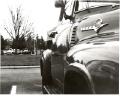
Rebuilt bone stock... Works GREAT! I drive it every day, its fun to drive, and feels like a pickup! Oh, I do have a power brake booster on the stock brakes, just for safety..